
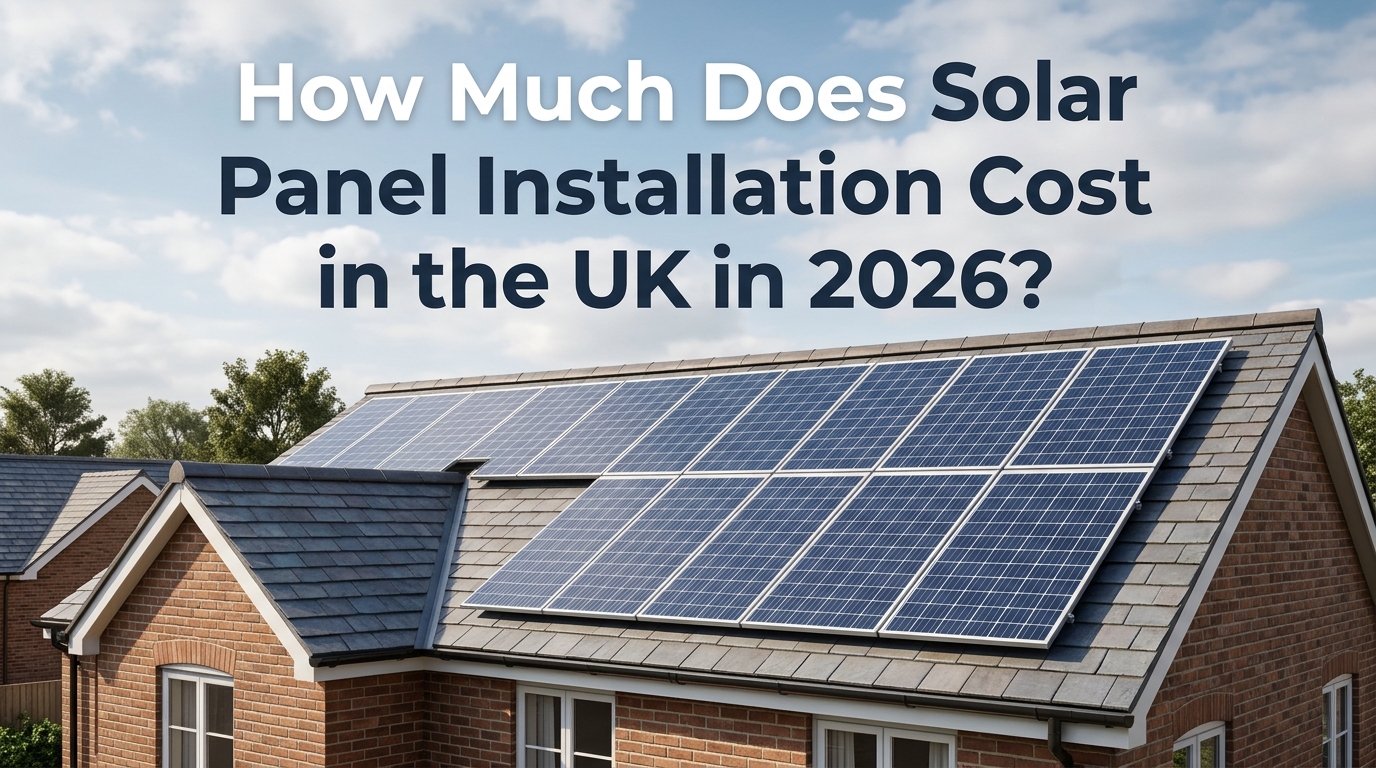

You might have noticed more solar panels appearing on roofs around your neighbourhood. With electricity bills taking a big bite out of household budgets, plenty of UK homeowners are looking at ways to make their own power.
Solar panels can help with that. They turn daylight into electricity, which you can use to run your fridge, washing machine, lights and other household appliances. You may also be able to earn money by sending spare electricity back to the grid.
But there is one thing most people want to know before picking up the phone: how much will it cost?
In 2026, a typical home solar panel system in the UK may cost around £6,000 to £8,000 without a battery. The price can rise if you choose a larger system or add battery storage. Your roof, equipment and installation needs will all affect the final quote.
Let’s look at what you can expect to pay and what to check before spending your hard-earned cash.
How Much Do Solar Panels Cost in the UK?
The price depends mainly on the size of the system. A small household may get by with fewer panels, while a larger family home may need more power.
Here are some guide prices for home installations in 2026:
| Solar system size | Estimated installed price |
|---|---|
| 3kW | £4,800–£6,000 |
| 4kW | £5,500–£7,500 |
| 5kW | £7,000–£8,500 |
| 6kW | £8,500–£10,000 |
These are estimates, not fixed prices. The amount you pay will depend on the panels, inverter, roof access and work needed.
For a useful comparison, the Energy Saving Trust gives a typical price of around £7,600 for an average 4.5kWp home solar system. Your own quote may be higher or lower. <Cite refs={[“turn105836search9″,”turn105836search7”]} />
What Do You Get for Your Money?
A solar quote should tell you more than the number of panels and the total price. It should explain what the installer will supply and fit.
A standard installation may include:
- Solar panels: These collect daylight and generate electricity.
- Inverter: This changes the electricity into a form your home can use.
- Roof mounting kit: Rails and brackets hold the panels in place.
- Wiring and electrical work: These connect the system to your home’s electrics.
- Scaffolding: This gives the installation team safe access to your roof.
- Labour: This covers fitting and connecting the equipment.
- Testing and handover: The installer checks the system and explains how to use it.
Read the quote carefully. Some companies include scaffolding and electrical work in the main price, while others list them separately. You do not want an unexpected bill landing on your doorstep halfway through the job.
How Much More Does a Solar Battery Cost?
A battery stores electricity your panels produce during the day. You can then use that power later, such as when you get home from work or switch on the oven in the evening.
Without a battery, spare electricity may be sent to the grid. With storage, you can keep some of it for your own use.
As a rough guide, adding a home battery may cost an extra £2,000 to £5,000 or more. The price depends on its capacity, brand and installation requirements.
Before buying one, think about when your household uses the most electricity.
For example:
- If someone is home during the day, you may use a good share of your solar power as it is generated.
- If everyone is out until the evening, a battery may help store power for later.
- If you already use little electricity, a large battery may be more than you need.
Ask your installer to price the system with and without a battery. That gives you a fair way to compare the options.
Why Do Solar Panel Prices Vary?
You could ask three installers to quote for the same house and get three different prices. That does not always mean someone is overcharging you. The work involved can vary from one roof to another.
1. The Size of Your System
More panels usually mean a higher total price. But the largest system is not always the best choice.
Think about your household’s electricity use. A system that matches your needs may offer better value than one that produces far more power than you can use.
2. Your Roof’s Shape and Condition
A simple roof is usually easier to work on. A steep roof, awkward layout or difficult access can add time and labour costs.
If your roof needs repairs, get them sorted before the panels go on. Taking panels off later to fix roof damage can be a costly nuisance.
3. The Panels You Choose
Solar panels come in different sizes, power ratings and levels of efficiency. More efficient panels can produce more electricity from a smaller roof area.
That can be useful if you have limited space. Still, do not choose panels on efficiency alone. Check their product warranty, performance warranty and expected output.
4. Where You Live
Labour rates and installation costs can differ across the UK. The distance an installer needs to travel and the amount of work involved can also affect the quote.
It is worth speaking to a few companies rather than accepting the first price you receive.
Can Solar Panels Really Cut Your Electricity Bills?
They can, but the savings depend on how you use electricity at home.
Your panels may produce plenty of power during a sunny afternoon. If your washing machine or dishwasher is running at that time, you can use more of the electricity you generate instead of buying it from your supplier.
You may get less benefit if most of your electricity use happens after dark and you do not have a battery.
Your savings will depend on:
- How much electricity your panels generate.
- How much of that power you use at home.
- Your electricity tariff.
- Whether you have battery storage.
- The amount you receive for exported electricity.
Solar output changes with the seasons. You will usually generate more during spring and summer than in the darker winter months. Panels can still work on cloudy days, though they will normally produce less power.
If you are comparing solar panel installations, ask the installer to estimate how much electricity your system may produce each year. A good quote should also explain how much of that power you are likely to use yourself.
Can You Get Paid for Spare Solar Electricity?
Yes. The Smart Export Guarantee (SEG) allows eligible homeowners to receive payments for electricity they send back to the grid.
For example, your panels may generate more electricity than your home needs on a bright afternoon. If your system is set up for export and you have an eligible tariff, you may be paid for the spare power.
Keep a few things in mind:
- Export rates vary between suppliers.
- You may need a suitable smart meter.
- Your system must meet the supplier’s requirements.
- It is worth comparing tariffs before signing up.
Do not assume every supplier pays the same rate. Check the terms and work out whether the offer suits your home.
Is There VAT or a Government Grant for Solar Panels?
Qualifying solar panel supplies and installations in residential properties currently benefit from a 0% VAT rate across the UK. Under current rules, this relief is due to end on 31 March 2027, after which the reduced 5% rate is expected to apply.
There is no single general government grant that every UK homeowner can claim for a standard solar panel installation. However, some households may qualify for help through wider energy-efficiency schemes or local support programmes.
Check the latest rules before making plans. Eligibility can depend on where you live, your household circumstances and the type of work being carried out. <Cite refs={[“turn105836search9″,”turn105836search12”]} />
How to Choose a Solar Installer Without Getting Caught Out
A low quote can look tempting, but it is not much use if the equipment is poor or the work is rushed. Take a little time to check the company before you agree to anything.
Here is what to do:
- Get three written quotes. Compare similar system sizes and equipment.
- Check the company’s credentials. Look for suitable MCS certification and relevant electrical qualifications.
- Ask about warranties. Check the cover for panels, the inverter and the installation work.
- Ask about expected output. Find out how much electricity the system should generate each year.
- Check for extra charges. Ask whether scaffolding, wiring and other work are included.
- Read the contract. Make sure the payment terms, installation dates and aftercare are clear.
A decent installer will answer your questions without rushing you. If someone pressures you to sign on the spot, there is nothing wrong with walking away and getting another quote.
Conclusion: Know the Real Cost Before You Commit
Solar panels can be a useful addition to a UK home, but the right setup depends on your roof, electricity use and budget. A typical system may cost around £6,000 to £8,000 without a battery in 2026, while battery storage will add to the bill.
Do not choose a system just because it has the most panels or the lowest advertised price. Check the equipment, warranties, expected output and all installation charges.
If you are checking solar panel installation cost, compare the full quote rather than looking at the headline figure. Ask what is included, what might cost extra and how much electricity the system could produce.
A clear quote and a reliable installer can make the whole process much easier. Get the facts first, then decide whether solar is the right move for your home.
Frequently Asked Questions
1. How much do solar panels cost for a three-bedroom house in the UK?
A three-bedroom home may suit a system of around 4kW to 5kW. As a guide, this could cost roughly £5,500 to £8,500 without a battery. The actual price depends on the roof and equipment.
2. Do solar panels work on cloudy days?
Yes. Solar panels use daylight, not just direct sunshine. They can still generate electricity when it is cloudy, although their output will usually be lower.
3. Is a solar battery worth buying?
It may be useful if your household uses more electricity in the evening. A battery stores spare solar power for later, but the extra cost should be weighed against the savings you may make.
4. Do I have to pay VAT on solar panel installation?
Qualifying residential solar panel installations currently have a 0% VAT rate. Under current rules, this is due to end on 31 March 2027, with a 5% rate expected afterwards.
5. Can I sell electricity that my solar panels do not use?
Yes. Through the Smart Export Guarantee, eligible households can receive payments for electricity they export to the grid. The rate depends on the supplier and tariff you choose.



Join the conversation