

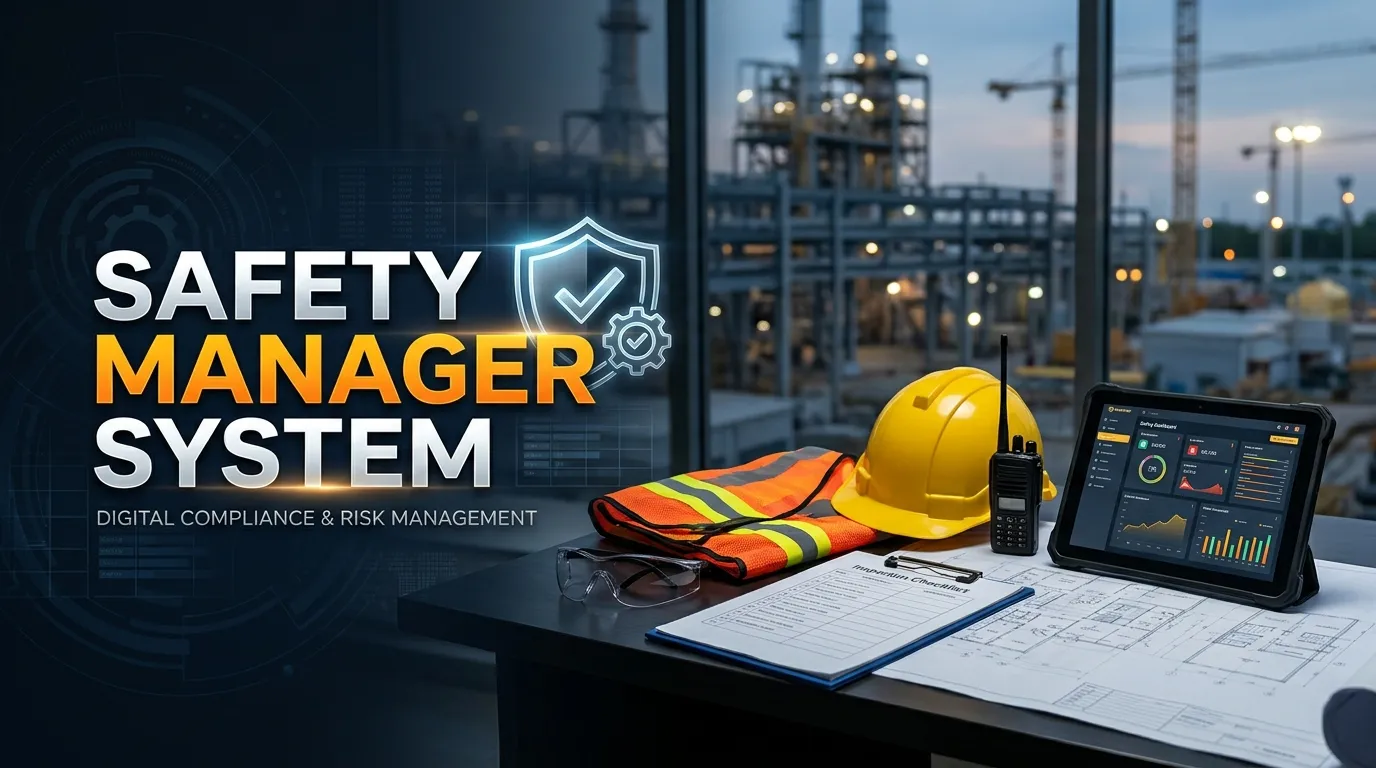

Managing workplace safety involves much more than conducting inspections and responding to accidents. Safety professionals must identify hazards, monitor employee health, maintain records, review safety procedures, and make sure preventive actions are followed. A Safety Manager System can help businesses organise these responsibilities and maintain better control over workplace risks. As technology continues to change how organisations operate, safety management is also moving towards digital tools, automated processes, and data-supported decisions. In 2027, businesses can expect these developments to influence how safety teams protect employees and manage daily operations.
The shift is already taking place across industries. Research from the National Safety Council (NSC) and Wolters Kluwer in 2026 found that 82% of surveyed organisations reported some level of AI use in their EHS programmes. However, many businesses still rely on a combination of digital and manual processes. This shows that future safety management will depend not only on new technology but also on how well companies integrate it into their existing procedures.
1. Artificial Intelligence in Workplace Safety
Artificial intelligence is expected to become a more common part of workplace safety management in 2027. Safety teams handle large amounts of information, including inspection reports, incident records, employee observations, and equipment maintenance details. Reviewing all this information manually can make it difficult to identify patterns.
AI-supported safety management software can analyse available records and highlight issues that may require attention. For example, if several employees report similar equipment problems or near misses in the same production area, an AI tool may identify the pattern and help the safety manager investigate further.
Businesses may use AI to support:
Identifying recurring workplace hazards.
Reviewing incident reports and safety records.
Analysing trends in workplace injuries.
Supporting safety inspections and reporting.
Highlighting areas that need further risk assessment.
The NSC and Wolters Kluwer’s 2026 research identifies incident prediction, hazard identification, compliance, and analytics as areas where organisations are applying AI. However, AI should support professional decisions rather than replace them. Safety managers still need to verify information and consider the actual working conditions before taking action.
2. Predictive Risk Assessment
Traditional safety management often focuses on incidents that have already happened. Businesses investigate accidents, identify their causes, and introduce measures to prevent similar events. Although this process remains important, organisations are increasingly interested in identifying warning signs before an incident occurs.
Predictive risk assessment uses information from inspections, equipment records, previous incidents, and workplace observations to identify potential problems.
For example, a manufacturing company may notice repeated reports of overheating machinery, delayed maintenance, or unusual equipment vibration. When these records are reviewed together, they may indicate a developing problem that requires attention.
In 2027, predictive safety tools are likely to receive more attention as businesses look for ways to move from reactive responses towards earlier risk identification.
However, predictions are only useful when the information behind them is reliable. Companies need accurate records, regular inspections, and experienced safety professionals who can evaluate the results.
3. Mobile Applications for Safety Managers
Safety managers rarely spend their entire working day in an office. They visit production areas, construction sites, warehouses, and other operational locations to inspect conditions and communicate with employees.
Mobile safety applications make it easier to complete these responsibilities while working on-site. Instead of returning to an office to update a paper form, a safety officer may be able to record an observation directly through a mobile device.
Depending on the software, mobile applications can support:
Digital safety inspection checklists.
Incident and near-miss reporting.
Photograph attachments for hazard records.
Maintenance and corrective action updates.
Employee safety training records.
Access to safety procedures and documents.
Imagine a safety officer inspecting a construction site and noticing that workers are not using the required protective equipment. They can record the observation, attach a photograph, and notify the responsible supervisor through the application.
This can reduce reporting delays and make it easier to follow up on safety concerns.
4. Wearable Technology and Smart Safety Monitoring
Wearable devices are another area that businesses may explore more actively in 2027. Depending on their design, these devices can monitor environmental conditions, worker movement, location, or exposure to certain workplace hazards.
For example, workers in high-temperature environments may use suitable monitoring devices to help identify conditions associated with heat stress. In some industrial settings, connected devices can also provide alerts when environmental readings reach predefined limits.
Smart monitoring technology may support:
Monitoring temperature and environmental conditions.
Detecting exposure to certain hazardous substances.
Supporting lone-worker safety arrangements.
Monitoring conditions around industrial equipment.
Providing alerts when specific safety thresholds are exceeded.
The International Labour Organization’s 2025 report, Revolutionizing Health and Safety: The Role of AI and Digitalization at Work, discusses how smart monitoring systems, automation, and connected technologies can help reduce hazardous exposure and improve working conditions.
Businesses must still consider privacy, device accuracy, employee consent, and appropriate data handling. Wearable technology should be introduced to protect workers, not create unnecessary surveillance or replace proper workplace controls.
5. Automation of Routine Safety Tasks
Safety professionals spend considerable time managing routine activities. These include scheduling inspections, sending training reminders, updating documents, assigning corrective actions, and preparing reports.
Safety automation can help businesses manage these tasks through predefined digital workflows. For example, a system may automatically notify a supervisor when an inspection is due or remind an employee when mandatory safety training needs renewal.
A modern Safety Manager System may offer automation for:
Inspection scheduling and reminders.
Corrective action assignments.
Training expiry notifications.
Incident follow-up.
Safety document reviews.
Routine performance reporting.
This can make daily safety administration more organised. When routine reminders and assignments are handled through a system, safety managers can spend more time visiting workplaces, reviewing hazards, and communicating with employees.
Automation should still allow responsible people to review important decisions. A notification that an inspection is complete, for example, does not prove that the workplace is safe. The quality of the actual inspection remains important.
6. Greater Focus on Employee Health and Human-Centred Safety
Workplace safety is often associated with physical hazards such as machinery, chemicals, electrical systems, and working at height. However, employee well-being also includes concerns such as fatigue, stress, mental health, and workload.
Businesses are gradually paying more attention to these human-centred risks. In its 2026 Safety Shift research, the NSC and Wolters Kluwer reported that 87% of surveyed professionals agreed that mental health belongs within the scope of EHS.
In 2027, safety management may place greater emphasis on recognising factors that affect employees beyond immediate physical hazards.
For example, long working hours and insufficient rest can affect concentration, which may increase the likelihood of mistakes when operating machinery or performing high-risk tasks. Safety managers can work with supervisors and HR teams to review work arrangements and identify areas that need attention.
Organisations may also use employee feedback, workplace assessments, and suitable reporting processes to identify concerns. Sensitive information should be handled carefully, with appropriate privacy protections and restricted access.
7. Digital Incident Reporting and Investigation
Paper-based incident reporting can make it difficult to collect complete information, especially when employees work across different sites or shifts. Digital reporting provides a more organised way to record incidents and track what happens afterwards.
Employees may be able to report injuries, unsafe conditions, equipment problems, and near misses through a mobile application or online platform. They can also provide photographs, location details, and descriptions of the event.
Once a report is submitted, the system may help the safety team assign an investigation, record findings, and monitor corrective actions.
This is important because reporting an incident is only the first step. Businesses also need to understand why it happened and whether their existing procedures were effective.
In 2027, digital incident management is likely to become more closely connected with analytics and automated workflows. This can help safety managers review recurring problems and identify areas where preventive measures need improvement.
8. Integration With Other Business Systems
Safety management does not operate separately from the rest of a business. Equipment maintenance, employee training, contractor activities, production schedules, and facility operations can all influence workplace safety.
When these activities are managed through disconnected systems, safety managers may not have all the information they need.
Integration allows a Safety Manager System to exchange relevant information with other business applications. For example, maintenance records can help safety teams review equipment-related risks, while HR systems may provide information about employee training completion.
This can reduce repeated data entry and make information easier to access.
Businesses should check integration options before selecting safety management software. The system should work with their existing tools where necessary and provide suitable access controls to protect business and employee information.
9. Digital Training and Virtual Reality Safety Simulations
Employee training is a major part of workplace safety, but traditional classroom sessions may not prepare workers for every situation they could face on the job.
Digital learning platforms can help organisations provide training materials, track completion, and refresh important safety instructions. Some businesses are also exploring virtual reality (VR) simulations to give employees practical experience in controlled environments.
For example, workers may practise responding to a fire, identifying hazards on a construction site, or following emergency evacuation procedures through a simulated scenario.
These tools can be particularly useful when real-life training would involve dangerous conditions or interrupt normal operations.
However, virtual training should complement practical instruction rather than replace it entirely. Employees still need to understand how to use actual equipment and follow the procedures required at their workplace.
10. Stronger Data Security and Responsible Technology Use
As more safety records move into digital platforms, protecting information will become an important responsibility for businesses. Incident reports, employee training details, inspection records, and occupational health information may contain confidential data.
A digital safety management platform should provide suitable security features, including:
Role-based access permissions.
Secure data storage and transmission.
Regular backups and recovery arrangements.
Activity records and audit trails.
Controlled access to sensitive employee information.
Businesses should also establish clear rules for using AI and automated safety tools. The 2026 NSC and Wolters Kluwer research highlights concerns about overreliance on AI and the need for clear guidelines.
This means organisations should understand how their systems use information, who can access it, and where human approval is required.
Preparing for Safety Manager System Trends in 2027
The future of workplace safety management will involve a closer connection between people, processes, and technology. AI, predictive risk assessment, mobile applications, wearable devices, automation, and digital training can give safety teams more ways to identify hazards and manage their responsibilities.
However, businesses should not adopt every new tool without considering its practical value. A small organisation may benefit most from digital inspections and incident reporting, while a large manufacturing company may need connected monitoring, predictive analytics, and integration across several departments.
The best starting point is to review existing safety challenges and identify where technology can help. When businesses combine reliable systems with employee participation, professional judgement, and regular workplace assessments, they can build a more organised approach to employee protection and long-term safety performance.


Join the conversation