


List
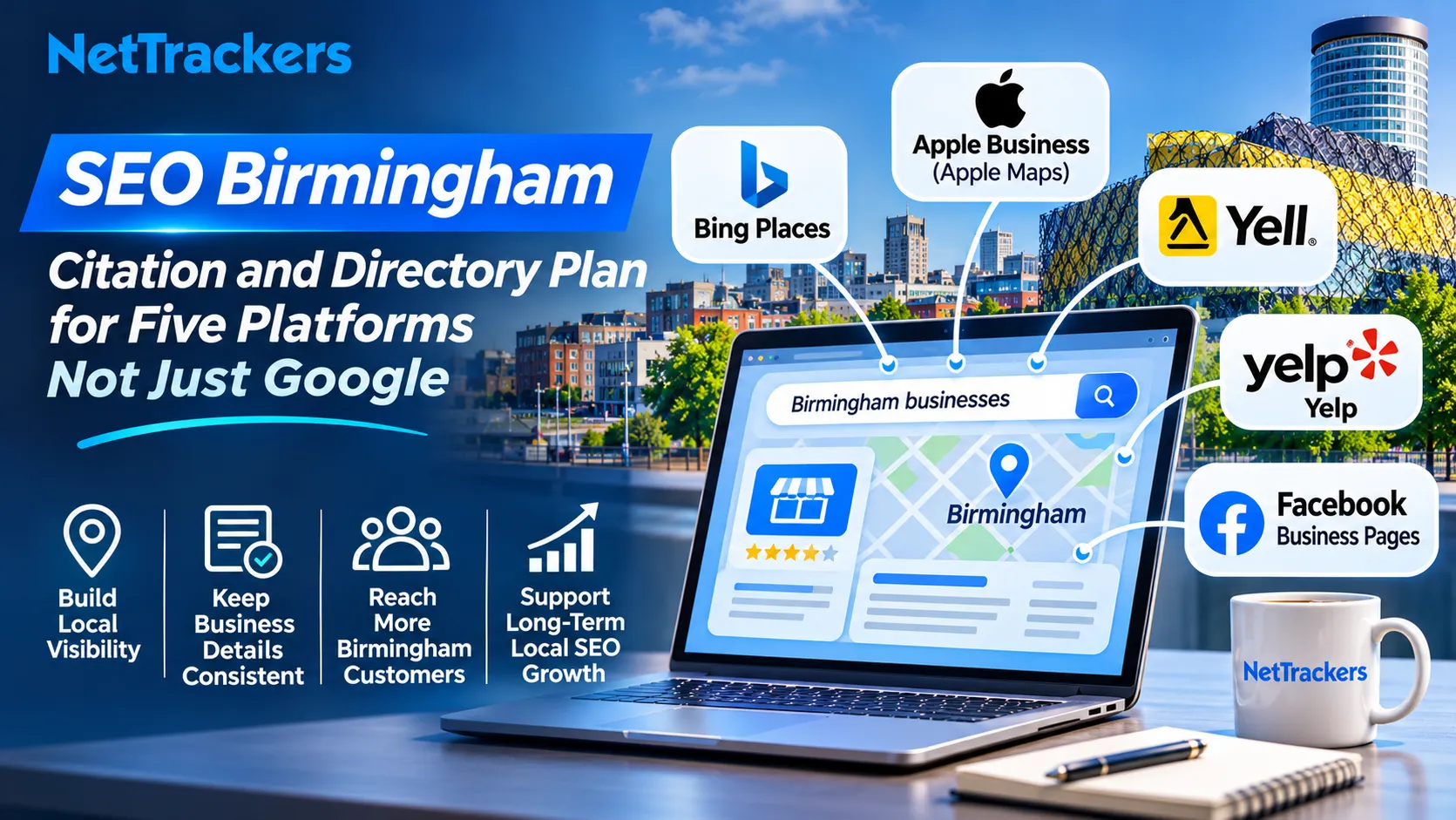
Local search visibility is essential for Birmingham businesses competing for customers across the West Midlands. Although Google Business Profile is an important part of local search optimisation, relying on one platform can limit a business’s discoverability. A comprehensive SEO Birmingham strategy should also consider trusted business directories, alternative search engines and established local listing platforms. Accurate business information across multiple websites helps customers find relevant contact details, services and locations. This guide explains five platforms worth prioritising and how Birmingham businesses can develop a practical citation strategy without wasting resources on low-quality directories.
Why SEO Birmingham Requires More Than Google Business Profile
Google Business Profile helps companies appear in Google Search and Maps, but customers also discover businesses through other platforms. Apple Maps, Bing, Yell, Yelp and Facebook can provide additional opportunities for business discovery and customer interaction. Listings on these platforms may contain business names, addresses, telephone numbers, opening hours and website information. Maintaining accurate information across relevant platforms can reduce customer confusion and support a consistent digital presence. However, creating directory listings does not guarantee improved Google rankings or placement in the local map pack.
What Are Local SEO Citations?
A local citation is an online reference to a business and its identifying information. Citations commonly include the business name, address and telephone number, often called NAP details. Some listings also include website links, categories, descriptions, photographs and customer reviews. These references help customers verify basic business details and can provide additional opportunities for discovery. The value of a citation depends on the relevance, accuracy and credibility of the website publishing it.
1. Bing Places for Business
Bing Places allows eligible businesses to manage their information across Microsoft’s Bing search ecosystem. Although Google receives substantial attention from local marketers, Bing can still provide an additional source of relevant customer discovery. Businesses can maintain details such as their location, contact information, business category and opening hours. Accurate information helps users understand what the business offers before visiting its website or making contact. Birmingham companies should therefore include Bing Places in their core local listing checklist.
How to Optimise Your Bing Listing
Start by checking whether an existing business listing already appears on Bing. Claim or create the appropriate listing and follow the platform’s current verification requirements. Ensure the name, address, telephone number and website match the business’s official information. Select relevant categories and provide an accurate description of the services offered. Review the listing after major changes to contact details, opening hours or business operations.
2. Apple Business for Apple Maps Visibility
Apple Business provides tools for managing business locations and how they appear within Apple Maps. The platform is particularly relevant for customers using Apple devices to search for businesses or obtain directions. Apple Business replaced the earlier Apple Business Connect branding in 2026, so businesses may encounter both names in older SEO resources. Eligible organisations can claim their location and manage relevant place information through Apple’s business platform. This makes Apple Maps an important consideration for companies maintaining a consistent presence across multiple mapping services.
What Birmingham Businesses Should Check
Confirm that the map pin corresponds to the correct business location. Review the public address, telephone number, website and relevant business category. Make sure opening hours reflect the location’s actual operating schedule. Where supported, add suitable photographs that accurately represent the business and its premises. Recheck the listing whenever the organisation relocates or changes its customer-facing information.
3. Yell for UK Business Directory Visibility
Yell is an established UK business directory that supports listings across a wide range of industries. Its basic listing option allows eligible businesses to publish important contact and service information. Birmingham companies can use Yell to provide another credible reference point for customers researching local suppliers. Relevant business categories and accurate descriptions help visitors understand the company’s services. Businesses should evaluate optional paid services separately rather than assuming that purchasing advertising will automatically improve Google rankings.
Creating a Useful Yell Profile
Search Yell for your existing business name before creating another profile. If a listing exists, follow the appropriate process to claim and update it. Use the correct business name, trading address, telephone number and website. Describe the principal services accurately without repeating location keywords unnaturally. Include suitable photographs and maintain the listing when business information changes.
4. Yelp for Reviews and Local Business Discovery
Yelp provides business profiles and customer reviews across multiple service categories. Although its relevance varies by industry and location within the UK, it can still provide an additional platform for customer research. Businesses should assess whether their target audience uses Yelp before investing significant resources in profile management. Accurate information and legitimate customer feedback are more useful than creating an account solely to obtain another backlink. Yelp should be treated as a potential customer discovery and reputation platform rather than a guaranteed ranking tactic.
Managing Your Yelp Business Profile
Check whether Yelp already displays a profile for the business. Claim the appropriate profile through the platform’s available business management process. Review its contact details, category, website and service information. Respond professionally to legitimate feedback while following Yelp’s rules on review solicitation. Avoid incentivised reviews, artificial ratings or attempts to manipulate customer sentiment.
5. Facebook Business Pages
Facebook business pages can provide an additional source of information for customers researching local organisations. Depending on the business, customers may use Facebook to check contact details, recent updates and public interactions. A well-maintained page can support brand recognition and provide another point of contact. However, creating a Facebook page does not automatically produce meaningful SEO benefits or qualified enquiries. Businesses should consider the platform’s relevance to their customers before committing to a regular publishing schedule.
Optimising Facebook Business Information
Use the organisation’s correct name and select the most relevant available business category. Keep the address, telephone number, website and opening hours consistent with official business information. Add a recognisable profile image and relevant photographs that accurately reflect the company. Ensure the contact methods shown on the page are monitored by the business. Review outdated posts or information that could confuse prospective customers.
Comparing the Five Citation Platforms
Each platform serves a different purpose within a local digital marketing strategy. Bing and Apple focus strongly on search and mapping experiences, while Yell and Yelp provide business directory information and review-related features. Facebook also offers opportunities for customer interaction and brand discovery. The most valuable platforms depend on customer behaviour, business category and available resources. Businesses should prioritise accurate listings on relevant sites rather than attempting submissions to hundreds of unrelated directories.
PlatformMain purposeKey optimisation priorityBing PlacesBing search and local discoveryAccurate business details and categoriesApple BusinessApple Maps location visibilityCorrect map pin, hours and contact detailsYellUK directory discoveryVerified business information and service categoriesYelpReviews and business discoveryAccurate profile and policy-compliant review managementFacebookSocial discovery and business contactComplete page information and monitored enquiries
Why NAP Consistency Matters for Local SEO
NAP consistency refers to maintaining accurate business names, addresses and telephone numbers across relevant online platforms. Inconsistent information can make it harder for customers to determine which details are current. This is particularly important when a business relocates, changes its telephone number or operates multiple branches. Citation auditing helps identify outdated listings that may still appear in search results. Consistency is a useful local SEO practice, although Google does not publish a specific number of matching citations required for rankings.
Creating a Master Business Information Record
Start by documenting the official business name, address, telephone number and website. Include the correct postcode, service categories, opening hours and a concise business description. Use this record as the reference when creating or updating directory profiles. Record any platform-specific differences required by listing rules without changing the actual business identity. A central record makes it easier to maintain accurate information across multiple services.
How to Audit Existing Birmingham Business Listings
Before creating new citations, businesses should investigate whether their information already appears online. Duplicate listings can create confusion, particularly when older profiles contain outdated contact details. Search using the business name, previous addresses, telephone numbers and relevant variations. Record which listings are accurate, which require updating and which may need to be merged or removed. An audit-first approach can prevent unnecessary submissions and reduce the time spent correcting conflicting information later.
A Practical Citation Audit Checklist
Audit fieldWhat to recordDirectory or platformName of listing websiteBusiness profile URLDirect link to the existing listingBusiness nameAccurate or requires correctionAddress and postcodeCurrent or outdatedTelephone numberCorrect or incorrectWebsite URLCorrect destinationVerification statusClaimed, unclaimed or pendingDuplicate listingYes or noLast reviewedDate of the latest checkRequired actionCreate, update, merge or monitor
Creating a 30-Day Birmingham Citation Plan
A structured timetable can help businesses complete citation work without overlooking important details. The first stage should focus on auditing existing listings and establishing the official business information record. The second stage involves claiming or creating relevant profiles across the five selected platforms. Subsequent work should address verification, duplicate listings and incomplete information. A final review can confirm which profiles are live and which require further action.
Week 1 – Audit and Prepare
Review existing listings across the five selected platforms and record their current information. Search for duplicate profiles, previous addresses and old telephone numbers that may still appear publicly. Prepare the master business information record and confirm the correct website landing page. Identify which platforms require account access or additional verification. This provides the foundation for an organised and consistent submission process.
Week 2 – Claim and Optimise Listings
Begin with the most relevant search and mapping platforms for the business. Claim existing profiles where possible rather than creating unnecessary duplicates. Complete available business information fields using accurate descriptions and categories. Upload appropriate photographs where the platform supports them. Document any pending verification steps so incomplete profiles are not overlooked.
Week 3 – Correct Inconsistencies
Compare each listing against the master business information record. Correct outdated contact details, inaccurate locations and inappropriate categories. Where duplicate entries exist, follow the platform’s established reporting or management procedures. Avoid creating additional accounts to bypass ownership or verification requirements. Update the tracking document after each correction has been submitted.
Week 4 – Verify and Measure
Confirm which listings are publicly visible and contain the intended business details. Check whether contact links, website URLs and other important functions operate correctly. Record referral traffic and relevant enquiries where reliable measurement is available. Note unresolved issues that require additional platform support or verification. Schedule periodic checks so the information remains accurate after the initial campaign.
Why Industry-Specific Citations Can Be More Valuable
General directories provide broad business discovery opportunities, but specialised platforms may reach a more relevant audience. A medical clinic, legal practice or property company may benefit from directories connected to its professional sector. These listings can help customers compare suppliers with relevant qualifications or service expertise. However, eligibility and accuracy requirements should be reviewed before creating profiles. Businesses should prioritise genuine relevance rather than submitting to every directory that offers a website link.
Consider Birmingham-Based Organisations
Local chambers of commerce, professional associations and credible business networks may provide suitable listing opportunities. Some organisations offer membership directories or public business profiles for eligible members. These references can be useful when they connect a company with a genuine local or professional audience. Businesses should verify membership conditions, costs and listing policies before applying. A relevant local reference is usually more meaningful than an unrelated directory submission with no clear customer benefit.
Scaling Citation Strategies Across UK Cities
Companies operating in several UK locations need a more structured approach to business information management. Each genuine location should have accurate details that reflect its actual operations. For businesses reviewing SEO Liverpool, local directories and regional organisations may differ from those relevant in Birmingham. Companies investing in SEO Edinburgh should also consider locally appropriate professional networks and the accuracy of Scottish business information. A multi-location strategy should preserve consistent brand identity without inventing additional offices or misleading location profiles.
Extending the Approach to Leeds and Sheffield
Businesses targeting SEO Leeds can apply the same core citation principles while identifying relevant organisations within West Yorkshire. Those working with an SEO Agency Sheffield should also evaluate credible local and sector-specific opportunities in South Yorkshire. The priority remains accurate business information and genuine location relevance rather than publishing identical listings without checking eligibility. Service-area businesses should follow each platform’s rules for displaying addresses and operating locations. This helps support legitimate regional visibility without creating misleading representations of physical premises.
How NetTrackers Supports Local SEO for Birmingham Businesses
NetTrackers provides SEO Birmingham services focused on local search visibility, technical optimisation and commercially relevant search opportunities. Its Birmingham offering considers the needs of businesses competing across the city and surrounding West Midlands markets. A local SEO strategy may include Google Business Profile improvements, location-focused content and relevant citation analysis. Directory work should complement these activities rather than replace useful website content or technical SEO. Businesses can evaluate the most suitable priorities according to their industry, service areas and existing search performance.
Combining Citations With Website Optimisation
Directory listings are only one component of a complete local SEO strategy. Websites also need accurate service information, accessible navigation and relevant content addressing customer needs. Location pages should explain genuine services and local coverage rather than repeat the same generic text for every city. Appropriate internal links and technical configurations help search engines discover and interpret important pages. Strong website foundations make it easier for customers to continue their journey after finding the business through a directory.
Measuring Citation Campaign Performance
A successful citation campaign should be measured through accuracy and customer outcomes rather than submission volume alone. Businesses can monitor the number of verified profiles, corrections completed and unresolved duplicate listings. Referral traffic and enquiries may provide additional information about the value of individual platforms. However, changes in Google Maps rankings should not automatically be attributed to directory submissions. Local rankings also depend on relevance, distance, prominence and other factors outside the control of citation campaigns.
Citation KPIs Worth Tracking
KPIMeasurement objectiveAccurate listingsProfiles matching official business detailsVerified profilesSuccessfully claimed and managed listingsDuplicate correctionsConflicting profiles resolvedReferral visitsWebsite traffic from directory platformsDirectory enquiriesCalls or leads attributable to listingsBusiness information errorsOutdated or inconsistent detailsLocal search performanceBroader changes in relevant local visibility
Frequently Asked Questions
Do Business Directories Still Help Local SEO?
Relevant directories can support business discovery and provide accurate information to prospective customers. They may also generate referral traffic and legitimate website links. However, Google does not promise better rankings simply because a company appears in more directories. Businesses should focus on credible platforms that match their location and industry. Accurate listings and genuine customer value matter more than the total number of submissions.
How Many Citations Does a Birmingham Business Need?
There is no official Google requirement for a particular number of citations. The appropriate number depends on the business category, available directories and local competition. Establishing accurate profiles on major relevant platforms is a sensible starting point. Additional specialist or regional citations can be considered where they offer genuine value. Publishing hundreds of low-quality directory submissions is not a reliable substitute for broader SEO improvements.
Should Businesses Pay for Directory Listings?
Some directories provide free basic profiles alongside optional paid advertising or enhanced listing packages. Businesses should evaluate whether paid features offer measurable exposure to their intended audience. A paid listing should not be purchased solely because a directory claims it will guarantee Google rankings. Costs, contractual terms and potential commercial benefits deserve careful review. Free accurate listings may be sufficient for many businesses.
Can a Service-Area Business Create Directory Listings?
Some platforms allow eligible businesses to define service areas rather than display a customer-facing shop or office. However, eligibility rules and address-display options differ between providers. Businesses should follow the relevant platform’s requirements and avoid presenting a virtual or nonstaffed location as a physical office. Customers must be able to identify how the organisation actually provides its services. Accurate representations help protect trust and reduce the risk of listing suspension.
How Often Should Citations Be Updated?
Businesses should review important listings whenever their contact information, address, hours or services change. Periodic checks can also identify duplicate entries and unexpected edits. Multi-location organisations may need a more frequent review process because each branch has separate details. A central tracking document can simplify ongoing maintenance. Citation management should be treated as a recurring accuracy task rather than a one-time submission exercise.
Conclusion
Google Business Profile remains important, but Birmingham businesses should not overlook other relevant discovery platforms. Bing Places, Apple Business, Yell, Yelp and Facebook provide additional ways for customers to find accurate business information. A practical SEO Birmingham citation strategy should begin with an audit, prioritise credible platforms and maintain consistent details over time. Businesses should also evaluate specialist directories and genuine regional opportunities when they serve the intended audience. NetTrackers can help organisations align citation management with broader local search optimisation and lead generation objectives.
Improve Your Local Visibility With NetTrackers
NetTrackers supports UK businesses through local search optimisation, technical SEO, keyword research and location-focused content. Its approach considers both search visibility and the commercial objectives of the organisation. Businesses can explore citation auditing and directory management as part of a wider local digital strategy. Call +44 20 4572 4940 or visit NetTrackers to discuss your requirements. A structured assessment can help identify the most relevant improvements for your Birmingham business.



Join the conversation