


Scrum is one of the most popular Agile frameworks used by teams to manage projects and deliver products effectively. It helps teams work in small steps, understand priorities, and improve continuously.
When learning Scrum, two important terms that every professional should understand are Product Backlog and Sprint Backlog. Both are used to manage work, but they have different purposes.
Many beginners get confused between these two terms. In this blog, let’s understand the Product Backlog and Sprint Backlog, their key differences, and how they work together in Scrum.
What Is a Product Backlog?
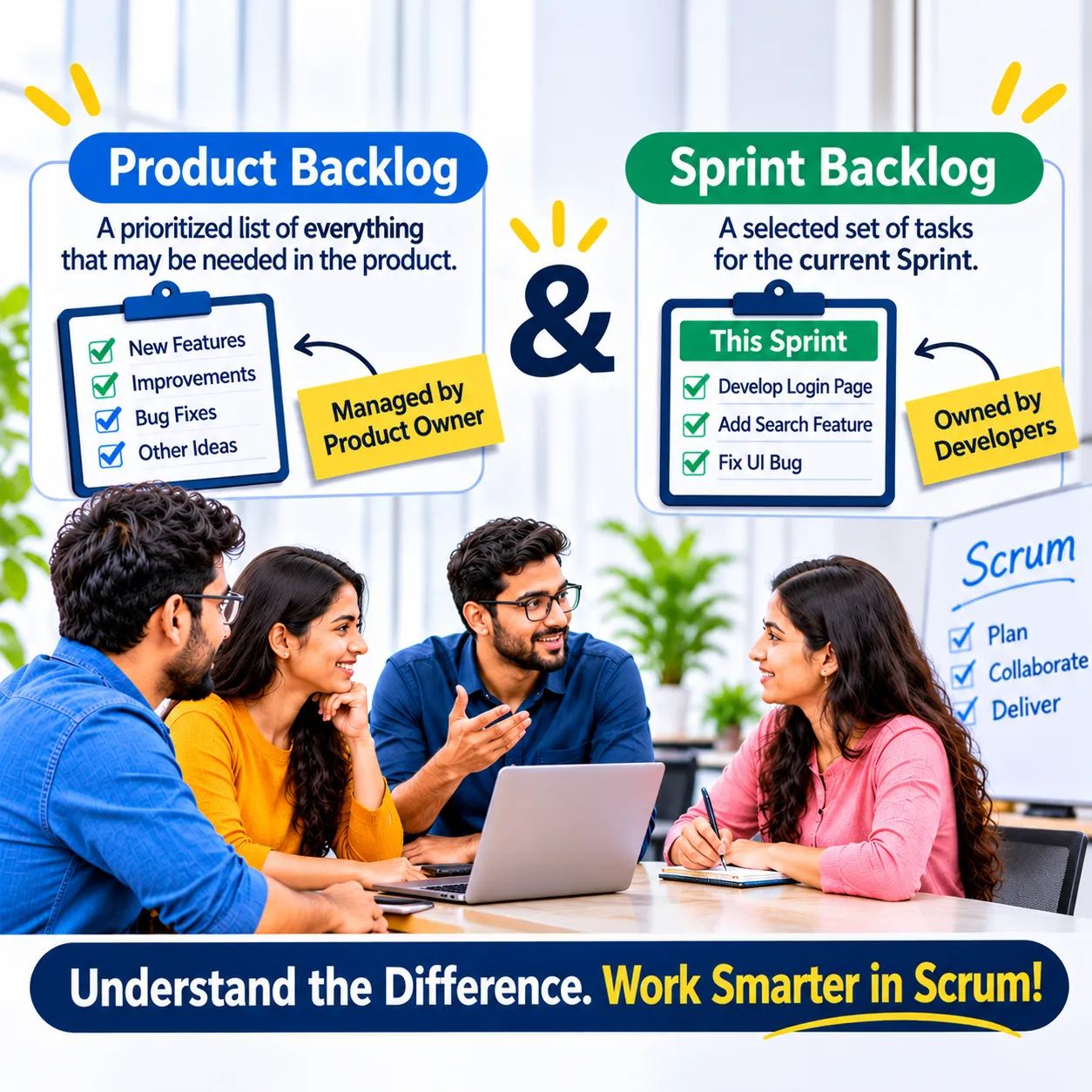
A Product Backlog is an ordered list of everything that may be needed to improve a product. It includes new features, improvements, bug fixes, and other changes required for the product.
The Product Owner is responsible for effective Product Backlog management. They make sure that the backlog is clear, organized, and prioritized based on product goals and stakeholder needs.
For example, if a company is developing an online shopping application, its Product Backlog may include:
User registration and login
Product search options
Shopping cart functionality
Online payment options
Order tracking
Customer reviews
These items are arranged based on their importance and value to the product.
The Product Backlog is not fixed. It changes as the product develops and new customer requirements come in.
What Is a Sprint Backlog?
A Sprint Backlog is the set of Product Backlog items selected for a particular Sprint, along with a plan for delivering the Sprint Goal.
In simple words, it explains what the Developers plan to work on during the current Sprint and how they intend to complete that work.
The Sprint Backlog is created during Sprint Planning and is owned by the Developers.
For example, if the team is working on an online shopping application, they may select these tasks for a two-week Sprint:
Create the user login page
Develop the registration feature
Add password validation
Test the login functionality
The Developers update the Sprint Backlog throughout the Sprint as they learn more about the work.
Product Backlog vs Sprint Backlog: Key Differences
Although both backlogs help manage project work, they have some important differences.
Contains all known work needed for product improvement
Contains selected work for the current Sprint
Managed by the Product Owner
Owned and managed by the Developers
Focuses on long-term product goals
Focuses on the current Sprint Goal
Continuously updated and refined
Updated throughout the Sprint
Includes features, improvements, and fixes
Includes selected Product Backlog items and the delivery plan
Used across the product’s development
Used during a specific Sprint
Understanding these differences helps Scrum teams plan their work more effectively.
How Are Product Backlog and Sprint Backlog Connected?
The Product Backlog and Sprint Backlog work together to help Scrum teams deliver value.
The process starts with the Product Backlog. The Product Owner orders the items based on product needs and priorities.
During Sprint Planning, the Scrum Team discusses which Product Backlog items can be completed during the upcoming Sprint.
The Developers then create a plan for delivering the selected items and achieving the Sprint Goal. This plan becomes part of the Sprint Backlog.
During the Sprint, Developers track their progress and update the Sprint Backlog whenever necessary.
At the end of the Sprint, the team reviews the completed work and collects feedback. This feedback may lead to changes or new items in the Product Backlog.
This process continues in every Sprint and helps the product improve over time.
Why Are Both Backlogs Important in Scrum?
Both backlogs play an important role in successful Scrum implementation.
The Product Backlog helps teams understand what needs to be developed, while the Sprint Backlog helps them focus on what they can work on during the current Sprint.
The Product Owner helps ensure that the Product Backlog is ordered according to product value and requirements.
The Sprint Backlog helps Developers understand their work and collaborate towards a common Sprint Goal.
Regular backlog refinement, Sprint Reviews, and feedback help teams identify improvements and make better decisions.
Both backlogs make work visible and help everyone understand the product’s progress.
Learn Scrum with HelloSM
Understanding Scrum concepts like Product Backlog, Sprint Backlog, Sprint Planning, and Product Owner responsibilities is important for anyone who wants to build a career in Agile.
HelloSM helps professionals improve their Scrum and Agile knowledge through learning and training opportunities.
If you are looking for an online Scrum training institute in India or exploring Scrum training in Hyderabad, learning these fundamental concepts can be a great starting point.
Whether you are a beginner, IT professional, Scrum Master, or aspiring Product Owner, developing a strong understanding of Scrum can help you work confidently in Agile teams.
Product Backlog and Sprint Backlog are two important parts of the Scrum framework. The Product Backlog contains the ordered work needed to improve the product, while the Sprint Backlog focuses on the work selected for the current Sprint and the plan to achieve the Sprint Goal.
Both help Scrum teams stay organized, improve collaboration, and deliver value continuously.
Understanding the difference between these backlogs will help you become more confident in applying Scrum practices in real-world projects.



Join the conversation