

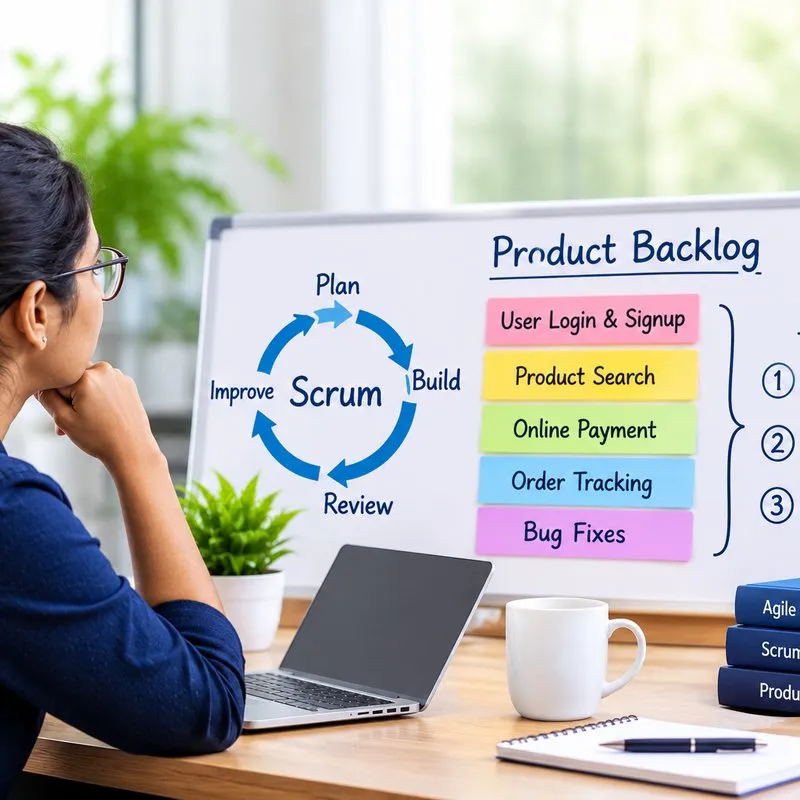

Every successful product starts with a good plan. But how do teams decide what to build first, what needs improvement, and what can wait? This is where a product backlog plays an important role. In Agile project management, a product backlog helps teams organise their work and focus on the right priorities. It gives everyone a clear idea of what needs to be developed and what value each task brings to customers.
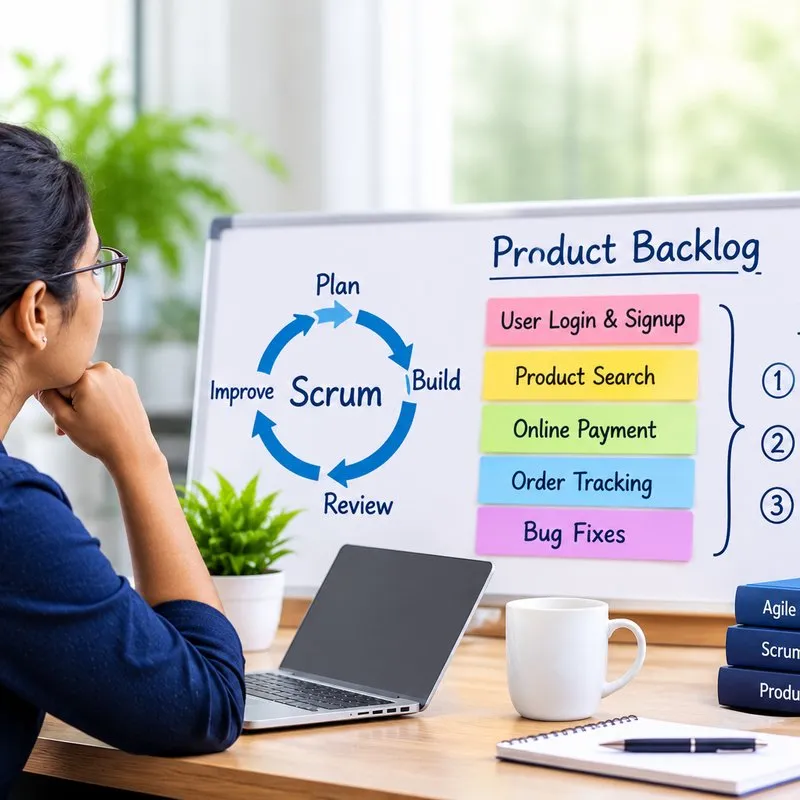
Whether you are a beginner, Product Owner, Scrum Master, or project manager, understanding how to create and prioritize a product backlog can help you manage projects more effectively. Let’s understand the process in simple steps.
What Is a Product Backlog?
A product backlog is a list of all the tasks, features, improvements, bug fixes, and requirements needed to develop a product. It is an important part of the Scrum framework and is managed by the Product Owner.
Think of it as a to-do list for a product development team. However, it is not just a normal list. Each item is organised based on its importance, business value, customer needs, and urgency. For example, if a team is developing a shopping app, its product backlog may include:
User registration and login.
Product search and filters.
Online payment options.
Shopping cart.
Order tracking.
Customer feedback.
Bug fixes and performance improvements.
This list helps the team understand what needs to be done during product development.
Why Is Product Backlog Important in Scrum?
A well-managed product backlog makes project work easier and more organised. Here are some important benefits:
1. Clear Direction: Everyone understands what the product needs and what the team should work on next.
2. Better Team Communication: Developers, Product Owners, and Scrum Masters can discuss requirements and share ideas.
3. Focus on Customer Needs: Teams can give priority to features that provide more value to customers.
4. Easy Planning: A clear backlog helps teams prepare for upcoming Sprints.
5. Flexibility: New ideas, customer feedback, and changing business requirements can be added whenever needed.
How to Create a Product Backlog in Simple Steps
Creating a product backlog does not have to be difficult. Follow these simple steps to get started.
1. Understand the Product Vision
Before creating a backlog, understand what you want to achieve with the product. Ask a few basic questions:
Who will use this product?
What problem will it solve?
What are the main business goals?
What do customers expect?
A clear product vision helps the team work towards a common goal.
2. Collect Requirements and Ideas
The next step is to collect ideas from customers, stakeholders, business teams, and developers. These ideas can include new features, improvements, technical updates, and bug fixes.
For example, if you are developing a mobile banking app, customers may request faster login, easy money transfers, and better transaction history. Add these requirements to the product backlog for further discussion.
3. Write Clear Product Backlog Items
Every backlog item should be easy to understand. A common way to write requirements is through user stories. For example:
“As a customer, I want to reset my password so that I can access my account if I forget my login details.”
This format helps the development team understand who needs the feature and why it is important.
4. Estimate the Work
After adding backlog items, the team should discuss how much effort each item may require.
Scrum teams often use Story Points to estimate the complexity, effort, and uncertainty involved in completing a task.
Estimation helps teams understand the workload and plan their Sprints more effectively.
How to Prioritize a Product Backlog
Creating a backlog is only the first step. The next important task is deciding which items should come first.
Here are some simple methods to prioritize a product backlog.
1. Prioritize Based on Business Value
Give higher priority to features that support important business goals or solve major customer problems.
For example, adding a secure payment option to an e-commerce app may be more important than changing the colour of a button.
2. Use the MoSCoW Method
The MoSCoW method divides backlog items into four categories:
Must Have: Features that are essential.
Should Have: Important features that can follow essential work.
Could Have: Useful features that are not urgent.
Won’t Have (for now): Features that are not planned for the current period.
This method helps teams understand what needs immediate attention.
3. Consider Customer Feedback
Customer feedback is an important part of product development. Features that solve common customer problems should receive proper attention.
Regular feedback helps Product Owners make better decisions about backlog priorities.
4. Review and Update the Backlog Regularly
A product backlog is not a fixed document. It changes as business needs and customer expectations change.
The Product Owner should regularly review, refine, and reorder backlog items. This activity is commonly called Product Backlog Refinement.
The goal is to keep the backlog clear, relevant, and ready for future Sprint Planning.
Common Mistakes to Avoid While Managing a Product Backlog
Even experienced teams can make mistakes while managing their backlogs.
Avoid these common problems:
Adding too many unnecessary tasks.
Writing unclear user stories.
Ignoring customer feedback.
Keeping outdated requirements.
Giving equal priority to every task.
Not involving the development team in discussions.
Remember, a good product backlog should help the team focus on valuable work rather than create confusion.
Learn Product Backlog Management with HelloSM
Understanding product backlog creation and prioritization is an important skill for anyone working in Agile and Scrum.
If you want to improve your Scrum knowledge, learning from experienced trainers and practical examples can make a difference.
HelloSM can be explored by professionals looking for Scrum training and Agile learning support. Understanding concepts such as Product Backlog Management, Sprint Planning, Product Ownership, and backlog refinement can help you become more confident in Agile project environments.
Whether you are preparing for a Scrum certification or improving your project management skills, focus on learning concepts that you can apply in real projects.
A product backlog is more than a list of tasks. It is a useful tool that helps Agile teams understand priorities, manage requirements, and deliver value to customers.
By understanding the product vision, collecting requirements, writing clear user stories, estimating work, and prioritizing tasks, teams can manage their product backlogs effectively.
Start with simple steps, review your backlog regularly, and keep your team focused on what matters most.
Frequently Asked Questions
1. Who is responsible for creating and managing the product backlog?
The Product Owner is accountable for effective Product Backlog management. They ensure that backlog items are clear, organised, and prioritised according to product goals. Developers and stakeholders can also contribute ideas and information.
2. What are the best methods to prioritize a product backlog?
Some popular methods include MoSCoW, business value prioritization, customer feedback, and value-based prioritization. The best method depends on the product goals and team requirements.
3. How often should a product backlog be updated?
A product backlog should be updated regularly whenever new requirements, customer feedback, or business changes arise. Product Backlog Refinement helps keep items clear, relevant, and ready for upcoming Sprints.



Join the conversation