

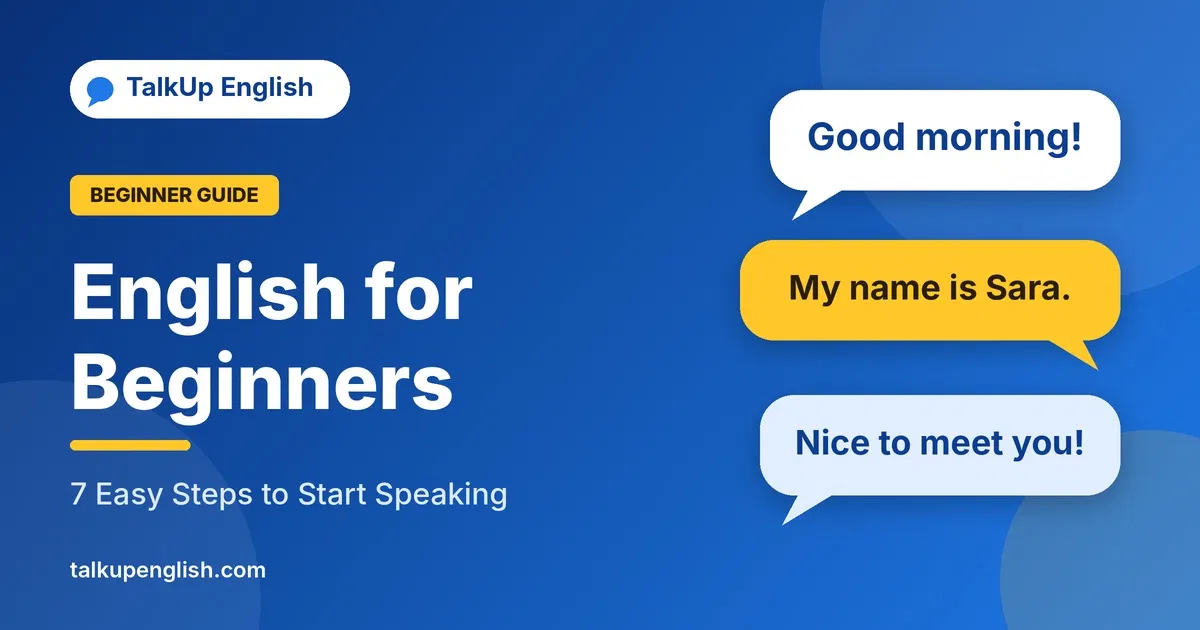

If you are
searching for English for beginners, you probably feel two things at once:
excitement to start and confusion about where to begin. There are thousands of
videos, apps and books online, and very few of them tell you what to do first.
At TalkUp English, we help new
learners turn that confusion into a simple plan. This guide gives you seven
easy steps you can start today, even if you only have 20 minutes a day.
Why Most Beginners Struggle (and How to Avoid It)
Most people do
not fail because English is too hard. They fail because they study without a
system. They jump between apps, memorise long word lists and wait until they
feel “ready” to speak. Good English for beginners is built on the
opposite approach: a few clear steps, repeated every day.
The seven steps
below follow the order in which real learners make progress. Do them one by one
and you will always know what to study next.
Step 1: Learn the Alphabet and Basic Sounds
Start with the
26 letters and the sounds they make. English spelling is not always logical, so
listening matters as much as reading. Say each letter out loud, then practise
short words like cat, ship and three. Ten minutes a day is enough. A clear base
here will save you months of confusion later.
Step 2: Learn 100 Everyday Words First
You do not need
thousands of words to begin. A small group of common words appears in almost
every conversation. Focus on these categories:
•
People and family: I, you, he, she, mother,
father, friend
•
Daily actions: eat, drink, work, sleep, go,
come, study
•
Places and things: home, school, shop, water,
phone, car
•
Numbers, days and colours: one to twenty, Monday
to Sunday, red, blue, green
Learn five to
ten words a day, and always learn them inside a short sentence so you remember
how they are used.
Step 3: Build Simple Sentences
Words alone
will not take you far, so move to sentences quickly. English usually follows
the order subject, verb, object, as in “I drink tea.” Choose English for beginners material that
gives you ready-to-use sentences, such as “I am from Pakistan” or
“Can you help me, please?” When a sentence is useful in real life,
you remember it faster and feel more confident using it.
Step 4: Follow Short, Structured Lessons
Random videos
feel productive, but structure is what creates progress. Look for English lessons for beginners that
teach one idea at a time, give you examples and include a small task to
practise. A lesson that takes 15 to 20 minutes and ends with you speaking or
writing a few sentences is far better than an hour of passive watching.
When you
compare courses, check that the English language for beginners is explained
clearly and slowly, with real situations such as shopping, travel and
introductions.
Step 5: Listen Every Day
Your ears need
training. Spend ten minutes each day listening to slow, clear English: beginner
podcasts, short stories or simple conversations. You will not understand
everything, and that is fine. The goal is to get used to the rhythm and sound
of the language. Replay the same short audio three or four times, and each time
you will catch more words.
Step 6: Speak from Day One
This is the
step that changes everything. Many beginner English learners wait
until their grammar is perfect, but speaking is how you improve. Start small:
introduce yourself aloud, describe your room, or repeat sentences after an
audio lesson. Record your voice and listen back. Mistakes are part of the
process, not proof that you are failing.
Step 7: Track Your Progress and Stay Consistent
Keep a simple
notebook or note on your phone. Each day, write the new words you learned and
one sentence using each. Every Sunday, review the week. Seeing your list grow
is a powerful motivator, and it shows you that small daily effort adds up.
Here is an easy
weekly rhythm to follow:
•
Monday to Friday: 20 minutes of lessons, 10
minutes of listening, 5 minutes of speaking
•
Saturday: repeat the week’s sentences aloud and
record yourself
•
Sunday: review your notebook and rest
Common Mistakes Beginner English Learners Make
•
Studying only grammar. Rules help, but you also
need listening and speaking.
•
Translating word for word. Learn whole phrases
instead.
•
Using too many resources. Pick one or two and
finish them.
•
Giving up after a bad week. Missing a day is
normal. Just restart the next day.
•
Being afraid of mistakes. Every fluent speaker
made thousands of them.
Final Thoughts: Your English for Beginners Journey Starts Today
Learning
English is not about talent. It is about a clear plan and steady practice.
Learn the sounds, collect everyday words, build simple sentences, follow short
lessons, listen daily, speak early and track your progress. Follow these seven
steps for three months and you will notice a real difference.
Pick Step 1 and
do it right now. Your first English conversation is closer than you think.
Frequently Asked Questions
1. What is the best way to start
English for beginners?
Start with the
alphabet and sounds, then learn around 100 common words and build simple
sentences. Add short daily lessons, listening practice and speaking from the
first week.
2. How long does it take beginner
English learners to speak?
With 30 to 45
minutes of daily practice, most beginner English learners can hold simple
conversations in three to six months. Speaking early makes this faster.
3. Are free English lessons for
beginners enough?
Yes, free
lessons can be enough if they are structured and you practise every day. Choose
lessons that teach one topic at a time and give you exercises, then add a
speaking partner when you can.
4. What should I learn first in the
English language for beginners?
Learn
greetings, introductions, numbers, common verbs and the basic sentence order
(subject, verb, object). These cover most everyday situations.
5. Can I learn English for beginners
without a teacher?
Yes. Many
people start on their own with guides, audio and speaking practice. A teacher
or tutor becomes useful later, for feedback on pronunciation and mistakes.
6. How does TalkUp English help
beginners?
TalkUp English
publishes practical guides on everyday English, speaking practice,
pronunciation and study plans, written in simple language for new learners.



Join the conversation