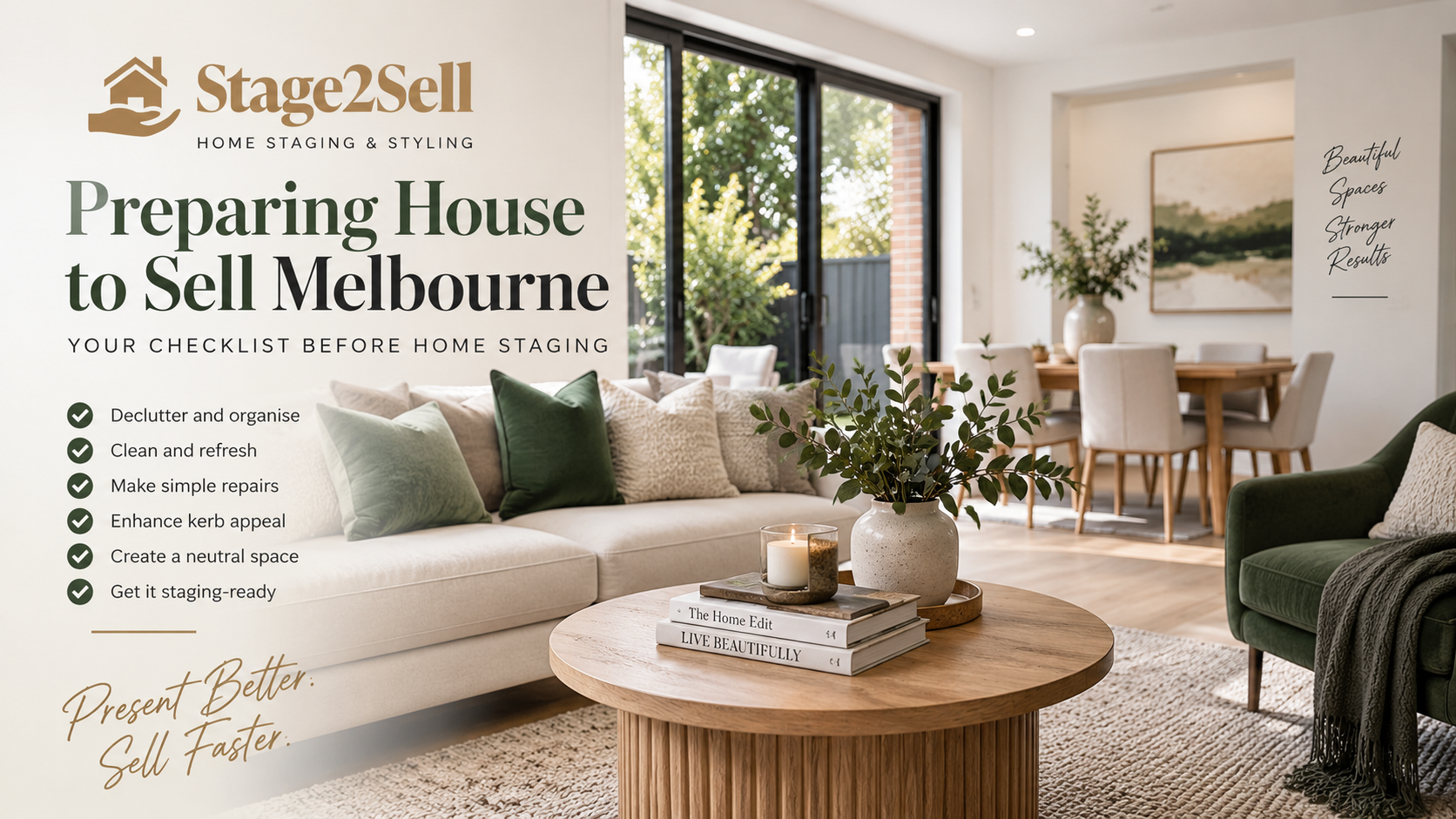
Preparing house to sell melbourne is best approached as a practical sales-preparation decision. Preparing a house to sell in Melbourne starts before furniture is delivered or photography is booked. The most useful first steps are to remove visual clutter, clean thoroughly, complete small repairs, improve light, confirm access, and decide which existing items will stay. A home that is staging-ready gives the stylist a cleaner canvas and reduces last-minute decisions before the campaign begins.
Stage2Sell’s own staging guidance places preparation before installation, not after it. Sellers can use the company’s existing preparation checklist and staging process as a practical reference, then move into full, partial or premium styling once the property is ready.
Related Stage2Sell resource preparing your home for sale checklist
Why preparation matters before home staging Melbourne
Preparation and styling solve different problems. Cleaning, repairs and decluttering make the property easier to assess; professional styling then uses furniture, artwork and accessories to explain scale, flow and room purpose. If those first tasks are skipped, even attractive furniture can end up competing with excess belongings, unfinished maintenance or awkward room layouts.
Stage2Sell asks sellers to think about room counts, staging type, access and timing before a quote is finalised. That makes sense because the stylist needs to know what is actually being presented to buyers. The company’s published FAQs also ask for a clean property, accessible keys, connected electricity and the agent’s contact details before installation.
Step 1 Declutter without stripping the home of function
Decluttering is not the same as making a home empty. The goal is to remove enough visual noise that buyers can understand the rooms quickly. Start with benchtops, open shelving, bedside tables, bathroom surfaces and high-traffic living areas. Then reduce duplicate furniture, oversized storage pieces and personal collections that interrupt sightlines.
For occupied properties, keep the items that still help the home function and present well. A dining table can explain a dining zone. A correctly scaled bed can show bedroom capacity. What usually causes problems is having too many pieces in the same area, especially when they narrow walkways or hide windows.
Stage2Sell’s advice on preparing your home for sale specifically recommends clearing surfaces, packing away personal items and minimising furniture to reveal more floor space. That is a useful benchmark for sellers who are unsure how much to remove.
Step 2 Deep clean the spaces buyers examine closely
A clean property photographs better and makes styling feel intentional. Focus on kitchens, bathrooms, floors, windows, mirrors, skirting boards and any surface that catches light. Cupboards and wardrobes should also be organised because buyers may open them during inspections.
Useful next read home staging Melbourne
Do not rely on décor to distract from cleaning issues. Dust on window tracks, soap residue on shower glass or grease around appliances can undermine an otherwise polished presentation. Fresh air matters too, especially in homes that have been closed for several days before photography.
For sellers using house staging Melbourne services, cleaning should be completed before installation day. That reduces the risk of cleaners moving hired furniture or accessories after the stylist has finished.
Step 3 Complete small repairs before the stylist arrives
Minor defects can become more obvious once a room is simplified. Loose handles, chipped paint, damaged light fittings, visible wall marks and doors that do not close properly are worth addressing before styling. The objective is not to renovate every room; it is to remove small distractions that can make buyers question overall maintenance.
Prioritise defects that are visible in listing photographs or encountered during a normal inspection. A quick repair at the entrance, kitchen or main living area can matter more than a cosmetic job in a low-priority storage space.
If you are unsure where to stop, separate maintenance from improvement. Fix obvious faults first. Only then consider optional changes such as repainting a feature wall or replacing a dated fitting.
Step 4 Improve natural light and simplify window areas
Natural light is one of the easiest presentation assets to lose through heavy curtains, dirty glazing or furniture placed too close to windows. Clean the glass, open blinds fully for photography, and remove items that block major light sources. Dark corners can then be supported with lamps during styling.
Useful next read property styling packages
Stage2Sell’s current Melbourne staging advice repeatedly emphasises light, simple styling and room flow. That approach is especially useful in apartments and compact homes where every visual line matters.
Mirrors can support light, but placement should be deliberate. A mirror that reflects a cluttered hallway or utility area can create more visual noise rather than improving the room.
Step 5 Decide which rooms deserve staging priority
Not every property needs every room styled to the same level. The living room, dining area and main bedroom usually carry strong visual weight because they appear prominently online and help buyers imagine everyday life. Secondary bedrooms, studies and outdoor areas can be included when they strengthen the campaign.
This is where the distinction between full and partial styling becomes useful. A vacant property may need a complete scheme, while an occupied property may only need selected rooms refined. Stage2Sell offers both approaches, along with premium styling for properties requiring a more elevated presentation.
Before requesting a quote, make a simple list of rooms that will appear in photography, rooms buyers will inspect, and rooms that currently feel difficult to understand. That gives the stylist a clearer brief.
Step 6 Prepare practical access for installation day
Good staging preparation is also logistical. Confirm that keys are available, electricity is connected, parking and loading access are understood, and the property can be entered at the agreed time. If an agent is coordinating access, share the correct contact details in advance.
Useful next read professional home staging process
Stage2Sell states that it asks for at least five days’ notice where possible, although faster installations may be available depending on stock. Its local service pages also describe many installation days as taking only a few hours once planning is complete. That efficiency depends on the home being ready when the team arrives.
Apartment sellers should check lift bookings, loading zones and building rules. Sellers with pets or children should also tell the stylist who will remain in the home during the campaign so appropriate measures can be discussed.
How local Melbourne service pages can support planning
Location pages are useful when sellers want examples of how the same staging principles apply to different property markets. Stage2Sell publishes dedicated pages for suburbs including Carnegie, Chadstone, Altona, Williamstown, Tarneit, Caroline Springs, Hoppers Crossing, Newport, Laverton and Werribee. These pages consistently separate full, partial and premium staging and explain how sellers can choose the level of presentation that fits the property.
For preparation purposes, the practical takeaway is to avoid copying another property room for room. Use local examples to understand the standard of presentation, then prepare your own home according to its layout, condition and campaign requirements.
Common mistakes when preparing a house to sell
Several preparation mistakes create unnecessary work later. Sellers sometimes remove every item, leaving an occupied home without enough functional furniture for partial styling. Others postpone cleaning until after installation, or keep large personal pieces because they are useful day to day even though they interrupt the sales presentation.
Another mistake is treating preparation as decoration. Buying random cushions or artwork before a styling consultation can create duplication and may not fit the final scheme. It is usually better to spend the preparation budget on cleaning, repairs and storage first.
Key takeaways
Prepare first, style second. Remove visual clutter, clean thoroughly, repair obvious defects, open up natural light and confirm practical access before installation. Decide which furniture can stay and which rooms need the strongest presentation. Then use the stylist’s plan to finish the property rather than trying to decorate the home independently.
Frequently Asked Questions
How early should I start preparing my house for sale in Melbourne?
Start as soon as the sales timeline is known. Decluttering, repairs and cleaning can take longer than expected, while the styling team also needs time to assess the property and arrange furniture.
Do I need to remove all my furniture before staging?
No. Occupied homes can use partial styling when suitable furniture is already available. The stylist can identify what should stay, move or be supplemented.
What should be finished before staging installation day?
The home should be clean, keys accessible, electricity connected and access arrangements confirmed. Major clutter and agreed furniture removals should also be completed.
Which rooms should I prepare first?
Prioritise the living room, dining area and main bedroom, then work through the remaining spaces that will appear in photography or inspections.
Can I prepare the property myself and only hire furniture?
You can handle cleaning, decluttering and basic preparation yourself, but the furniture plan should still consider scale, layout and the target buyer rather than simply filling empty rooms.
Final recommendation
Use the article guidance to define the presentation problem first, then choose the staging scope that solves it. For a property-specific recommendation, request a free Stage2Sell quote.
Standalone FAQ for schema use
How early should I start preparing my house for sale in Melbourne?
Start as soon as the sales timeline is known. Decluttering, repairs and cleaning can take longer than expected, while the styling team also needs time to assess the property and arrange furniture.
Do I need to remove all my furniture before staging?
No. Occupied homes can use partial styling when suitable furniture is already available. The stylist can identify what should stay, move or be supplemented.
What should be finished before staging installation day?
The home should be clean, keys accessible, electricity connected and access arrangements confirmed. Major clutter and agreed furniture removals should also be completed.
Which rooms should I prepare first?
Prioritise the living room, dining area and main bedroom, then work through the remaining spaces that will appear in photography or inspections.
Can I prepare the property myself and only hire furniture?
You can handle cleaning, decluttering and basic preparation yourself, but the furniture plan should still consider scale, layout and the target buyer rather than simply filling empty rooms.