

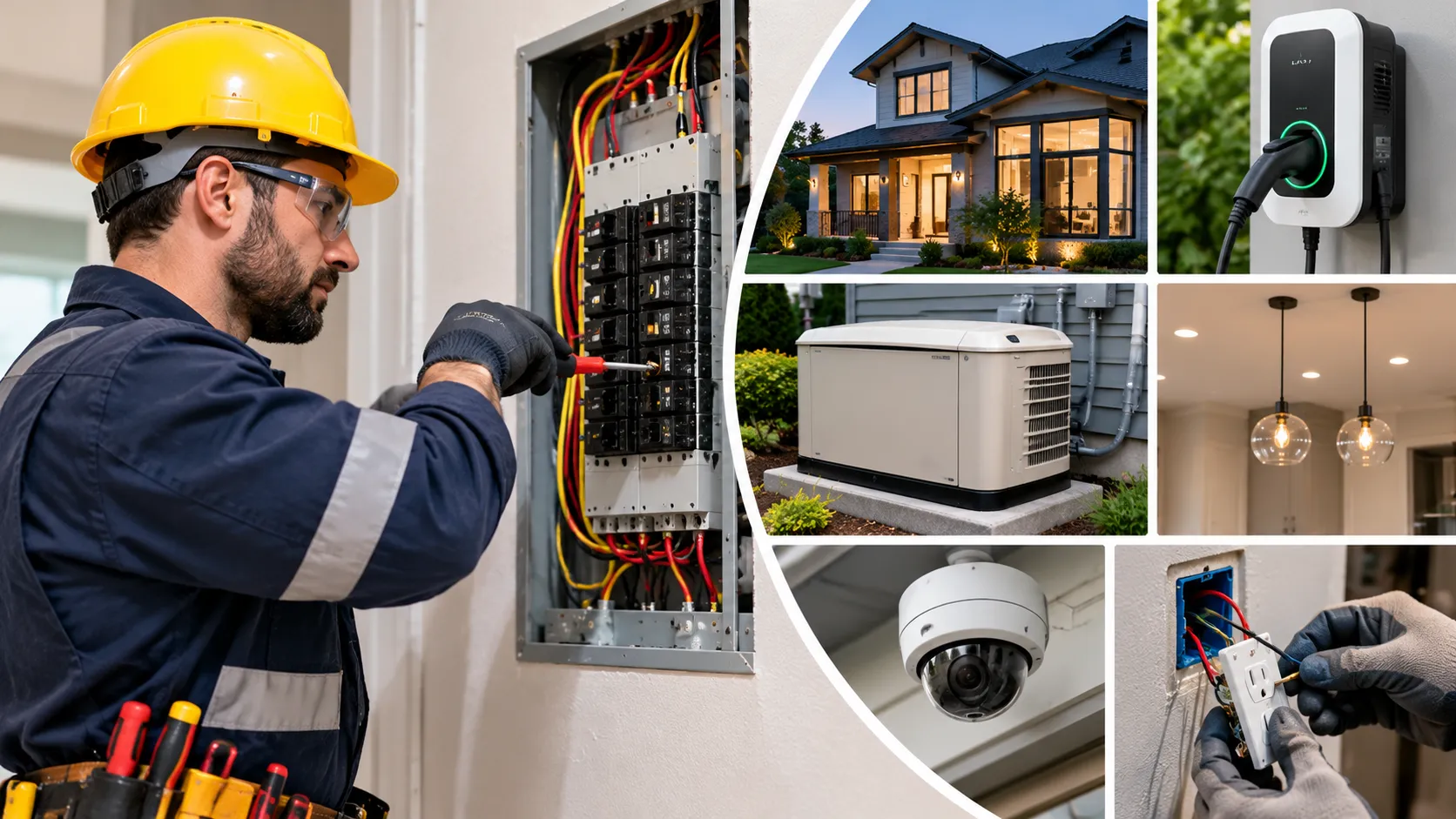

Hiring an electrician is not just about finding someone who can replace a damaged outlet or install a new light. Electrical work affects your property’s safety, power capacity and ability to support everyday equipment. Choosing the wrong contractor can lead to repeated faults, unfinished work, unexpected costs or electrical problems that become expensive to correct.
For homeowners and business owners in New Britain, Connecticut, the decision deserves careful attention. A contractor handling a small wiring repair may need a different level of experience from someone upgrading an electrical panel, wiring a new building or installing an EV charging station.
1. Check the Electrician’s Connecticut Licence
Start with licensing before comparing prices or arranging installation dates.
Connecticut requires individuals performing electrical work to hold the appropriate state-issued electrical licence. The licence category determines the type and scope of work an individual can legally perform.
For example, an E-1 licence covers unlimited electrical contracting work, while an E-2 licence is for an unlimited electrical journeyperson working under a properly licensed contractor.
One important detail is that Connecticut licenses individuals, not electrical companies. Therefore, when evaluating an electrical business, ask which licensed contractor will be responsible for your project.
You can verify credentials through the Connecticut Department of Consumer Protection’s official eLicense portal.
Before hiring, check:
The electrician’s full name and licence number
Whether the credential is active
Whether the licence covers your required work
Who will supervise or carry out the electrical work
Whether the contractor can arrange the required permits
Do not rely only on a licence number displayed in an advertisement. Check the details against the official state record.
2. Choose Experience That Matches Your Electrical Project
Not every electrical job requires the same knowledge or equipment. A professional who regularly handles residential lighting may not necessarily have the experience needed for a commercial electrical upgrade.
Before hiring, explain exactly what you need and ask whether the contractor has completed similar work.
For example:
For a residential property: Ask about wiring repairs, outlet installation, lighting, electrical panel upgrades and whole-home rewiring.
For a commercial building: Discuss electrical distribution, dedicated circuits, lighting systems, equipment connections and future capacity requirements.
For an industrial property: Ask about experience with higher electrical demands, machinery connections and the specific operating requirements of your facility.
A qualified electrician should be able to explain how the proposed work relates to your existing electrical system.
If you need a residential electrician New Britain CT, look for someone familiar with household wiring, circuit breakers, lighting installations and the electrical demands of modern appliances.
For larger projects, ask for examples of comparable installations rather than relying on general claims about years in the industry.
3. Make Sure the Contractor Offers the Service You Need
Before contacting an electrician, identify the actual problem or improvement you want to complete.
Some electrical companies focus on repairs, while others handle installations, replacements and larger upgrade projects. Choosing a contractor with the right service experience can make the process more straightforward.
Here are common services worth discussing.
Electrical Installation
New construction, home renovations and commercial improvements often require new wiring, outlets, switches, circuits and lighting connections.
A contractor should understand the property’s layout, electrical requirements and equipment before recommending an installation.
Electrical Panel Upgrades
An older panel may not have enough capacity for additional electrical loads.
For example, installing an EV charger, adding major appliances or expanding a property can increase demand on the existing system.
An electrical contractor should assess the current panel, connected loads and planned improvements before recommending an upgrade.
Electrical Repairs
Repeated breaker trips, flickering lights, damaged outlets and unexplained power loss may indicate an underlying fault.
A proper repair should identify the cause rather than simply reset a breaker or replace a component without investigating the problem.
Generator Installation
A backup generator can help maintain power to selected essential systems during an outage.
The installation needs to account for generator capacity, electrical connections, transfer equipment and the property’s requirements.
EV Charger Installation
Home and commercial EV chargers add electrical demand. Before installation, the electrician should assess the existing panel, available capacity, charger specifications and the required circuit.
A contractor offering several electrical services can be useful when your project involves more than one type of work.
4. Check Insurance and Ask About Responsibility
Electrical work involves risks, particularly when it includes panel modifications, new circuits or major installations.
Ask the contractor for proof of appropriate insurance before work begins. Confirm that the coverage is current and understand what it applies to.
You should also establish who is responsible for the project, including:
The person supervising the electrical work
Any subcontractors involved
Required inspections and permits
Protection of the work area
Repairs if an installation does not operate as expected
These questions are particularly important for commercial properties, renovation projects and new construction.
A professional company should be comfortable explaining its responsibilities rather than leaving you uncertain about who is handling the work.
5. Compare Written Estimates, Not Just Prices
Price is an important part of choosing an electrician, but the lowest estimate is not automatically the best value.
Two contractors may quote different amounts because they are proposing different materials, labour requirements or installation methods.
For example, one estimate for an electrical panel upgrade might include the panel equipment, circuit work, permits and related installation tasks. Another may cover only the equipment and basic labour.
Ask each contractor to explain the scope of work.
A useful estimate should identify:
The electrical problem or planned installation
Materials and equipment included
Labour charges
Permit or inspection costs, where applicable
Expected project duration
Additional charges that may arise
Payment arrangements
If a contractor gives you a price without inspecting the relevant equipment or understanding the project, ask how that estimate was calculated.
Clear pricing helps you compare the actual work being offered rather than choosing based on a single number.
6. Read Reviews and Look for Relevant Project Experience
Customer reviews can help you understand how an electrician communicates, manages appointments and handles completed work.
However, do not make your decision based on star ratings alone.
Look for comments that describe the type of service you need. A review mentioning a successful generator installation may be more relevant if you are planning a backup power system than a review about replacing a single light fixture.
Pay attention to repeated feedback about:
Arrival times and scheduling
Explanation of electrical problems
Quality of installation
Cleanliness after the work
Communication about costs
Handling of follow-up questions
You can also ask for examples of similar projects.
A reliable electrician New Britain should be able to explain the work involved and help you understand what to expect before the project begins.
7. Understand Permits and Electrical Inspections
Some electrical projects require permits and inspections. This is particularly important when work involves new installations, significant modifications or changes to a property’s electrical system.
The requirements depend on the work being performed and the local building authority.
Before approving the project, ask:
Does this job require an electrical permit?
Who will apply for it?
Which inspections are required?
Will the contractor coordinate the inspection?
Will you receive relevant documentation after completion?
Do not assume that every repair has the same permit requirements. Your contractor should explain which requirements apply to the specific job.
Proper permitting and inspection help establish whether the work has been completed according to the applicable requirements.
8. Look for Clear Communication and a Practical Work Plan
Good communication is especially important when electrical work affects your daily routine or business operations.
A contractor should explain the problem in understandable terms, outline the proposed solution and tell you whether power interruptions are expected.
For a residential project, you may need to arrange access to the property or plan around temporary power interruptions.
For a commercial property, electrical work may need to fit around opening hours, equipment use and staff schedules.
Before the work starts, confirm:
The planned start date
Estimated completion time
Areas where access is required
Whether electricity will need to be switched off
How unexpected problems will be communicated
If an electrician cannot explain the basic work plan, ask for clarification before signing an agreement.
Residential vs Commercial Electrical Contractors: What Is the Difference?
Residential and commercial electrical projects have different requirements. Understanding this difference can help you choose the right service provider.
Typical properties
Houses, apartments and residential buildings
Offices, retail spaces and commercial facilities
Common jobs
Wiring, outlets, lighting and panel upgrades
Power distribution, lighting and equipment connections
Electrical demand
Based on household appliances and usage
Depends on equipment, business operations and building size
Scheduling
Usually arranged around household access
May need to fit business operating hours
Project planning
Focuses on household safety and functionality
Often involves operational continuity and wider system requirements
If you are hiring a commercial electrician New Britain CT, ask whether the contractor has handled projects with similar electrical loads and operational requirements.
For homeowners, a residential specialist may be more suitable for everyday repairs, lighting improvements and household electrical upgrades.
Some electrical contractors serve both markets, but you should still confirm their experience with your particular project.
Warning Signs to Watch for When Hiring an Electrician
A contractor’s behaviour before the job begins can tell you a lot about how the project may be handled.
Be cautious if someone:
Refuses to provide licence details
Cannot explain the proposed work
Gives a vague estimate without defining the scope
Pressures you into immediate payment
Suggests bypassing required permits or inspections
Cannot provide proof of appropriate insurance
Offers an unusually low price without explaining what is included
Avoids answering questions about responsibility and supervision
Connecticut’s Department of Consumer Protection recommends checking professional credentials before hiring. Its public eLicense system allows consumers to review licence information and status.
If you are comparing electricians new britain ct, use the same questions for each contractor. This makes it easier to identify differences in experience, pricing and project planning.
When Should You Contact an Electrical Repair Professional?
Some electrical problems should not be left until a convenient time.
Repeated breaker trips, flickering lights, buzzing outlets, damaged wiring and unexplained power loss can indicate faults that need investigation.
Certain warning signs require more urgent attention:
Burning smells: An unusual burning odour near an outlet, switch or electrical panel may indicate overheating.
Sparking: Sparks from an outlet or electrical equipment should not be ignored.
Smoke: Smoke coming from electrical equipment or wiring requires immediate attention.
Exposed or damaged wiring: Damaged electrical components can create shock and fire hazards.
If there is smoke, fire or immediate danger, move away from the affected area and contact emergency services. Do not touch exposed wiring or attempt to investigate a potentially live electrical fault yourself.
For non-emergency problems, arrange an assessment rather than relying on temporary fixes.
If you are searching for electrical repair New Britain CT, describe the symptoms clearly when contacting the contractor. Explain when the problem started, which areas are affected and whether the issue happens repeatedly.
This information can help the electrician understand the situation before arriving.
Questions to Ask Before Hiring an Electrical Contractor
Before making your final decision, ask these practical questions:
1. Are you appropriately licensed for this electrical work?
Ask for the responsible electrician’s licence details and verify the credential through Connecticut’s official eLicense portal.
2. Have you completed similar projects?
Experience with comparable repairs or installations helps establish whether the contractor understands your requirements.
3. Will you provide a written estimate?
A written estimate should explain the work, materials, labour and any expected additional costs.
4. Will the project require a permit or inspection?
Ask who will arrange the necessary approvals and coordinate inspections.
5. What happens if additional problems are discovered?
Agree on how unexpected work and additional charges will be discussed before they are carried out.
6. Do you provide emergency electrical services?
If quick assistance matters to you, confirm availability and any additional emergency service charges.
These questions help you make a more informed decision before work begins.
Why Consider NAIT Electrical Services LLC in New Britain, CT?
Once you understand what to look for, the next step is finding an electrical company that offers services relevant to your property.
NAIT Electrical Services LLC provides residential, commercial and industrial electrical services in New Britain and surrounding Central Connecticut communities.
According to its website, the company brings more than 22 years of electrical industry experience and offers installation, repair and replacement services.
Its work includes:
Electrical wiring and circuit installation
Outlet and switch installation
Electrical panel upgrades
200-amp service upgrades
Lighting installation
Whole-home rewiring
Generator installation
EV charger installation
Fire alarm and security camera installation
Electrical troubleshooting and repairs
The company also states that it is licensed and insured and offers 24/7 emergency electrical services.
Whether you need help with a faulty circuit, a planned panel upgrade or a new electrical installation, you can discuss your project requirements with its team.
Visit NAIT Electrical Services LLC or call (203) 609-5477 to request an estimate.
Frequently Asked Questions
1. How do I find a reliable electrician in New Britain CT?
Start by checking the electrician’s Connecticut licence, relevant project experience and insurance. Then compare written estimates, customer feedback, project timelines and the contractor’s explanation of the proposed work.
2. Does Connecticut require electricians to be licensed?
Yes. Connecticut requires individuals performing electrical work to hold the appropriate state electrical licence. The licence category determines which work they can perform and whether they can contract independently.
3. How can I verify an electrical contractor’s licence?
Use the Connecticut Department of Consumer Protection’s eLicense portal at https://www.elicense.ct.gov. Search using the electrician’s name or licence number and check that the credential is active and appropriate for the work.
4. When should I hire an electrical contractor instead of attempting a DIY repair?
Hire a qualified professional for wiring changes, panel work, new circuits, damaged electrical components and other work involving electrical systems. These jobs can create shock and fire risks if handled incorrectly.
5. What services does an electrical contractor in New Britain provide?
Depending on the contractor, services may include electrical installation, troubleshooting, wiring repairs, lighting, panel upgrades, generator installation, EV charger connections and commercial electrical improvements.



Join the conversation