

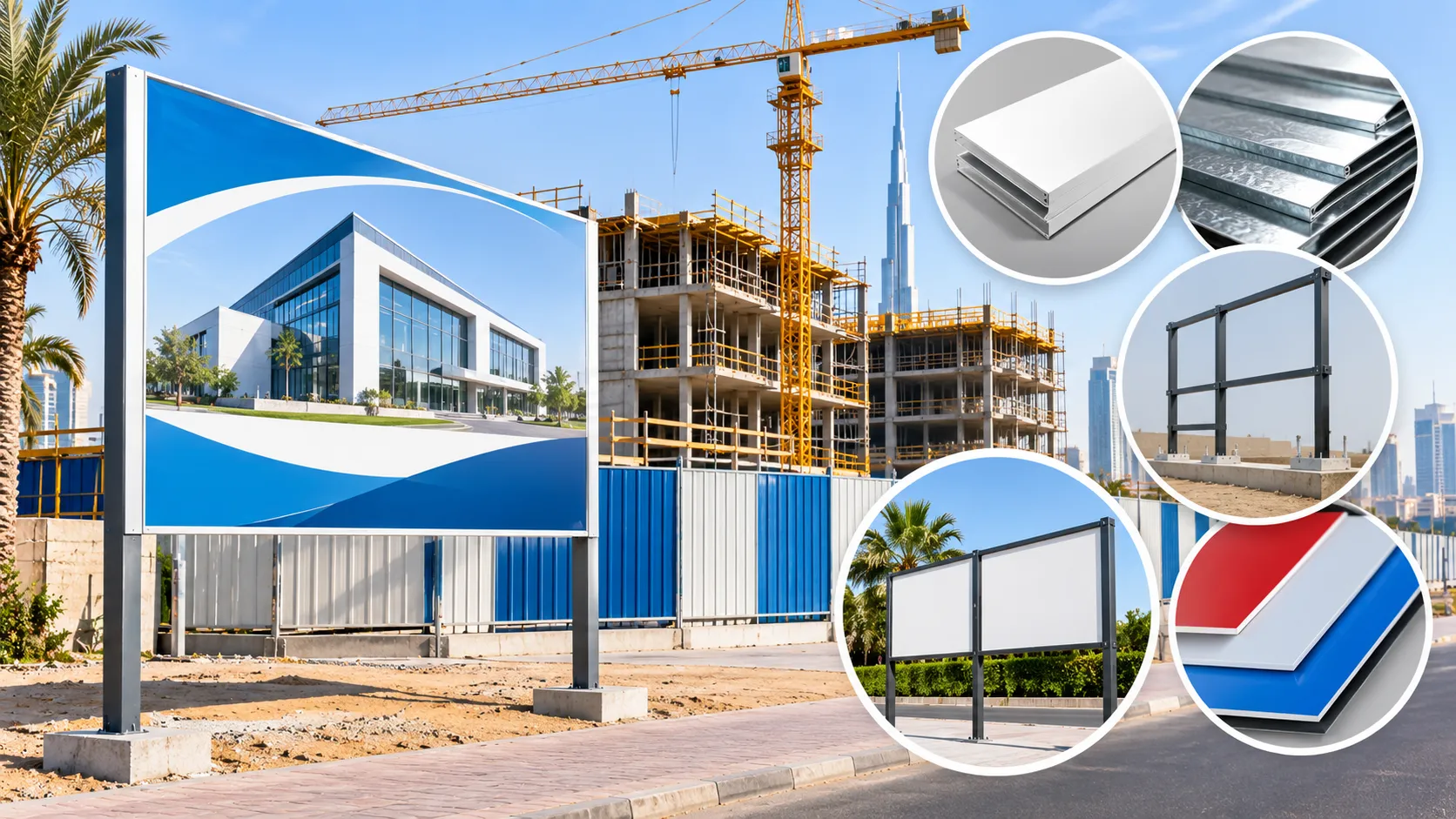

A construction project involves many people, from contractors and engineers to consultants, workers, suppliers and visitors. Everyone needs clear information about the work taking place, the companies responsible and the safety requirements around the site. This is where project sign boards play an important role.
A well-designed project sign board does more than display a project name. It helps identify the development, communicate essential details, improve site visibility and present a professional image to the public. In the UAE, where residential developments, commercial buildings and infrastructure projects are constantly developing, clear and durable construction signage is an important part of site organisation.
What Are Project Sign Boards?
Project sign boards are information and identification boards installed at construction sites, infrastructure developments, commercial properties and other project locations. They display important details about a project and help people understand what is being developed and which organisations are responsible for the work.
These boards are commonly placed near the main entrance or another prominent location where they can be seen by workers, visitors and members of the public.
A typical construction project sign board may display:
Project name and description
Developer or property owner details
Main contractor information
Consultant details
Project or permit reference numbers
Expected project dates, where required
Relevant authority information
Safety instructions or notices, where applicable
Company logos and project branding
The exact information depends on the project type, location and requirements of the relevant authority.
Unlike ordinary advertising boards, project signage has an important informational purpose. It helps identify a development and provides details that may be required for site management, public awareness or regulatory purposes.
Why Are Project Sign Boards Important for Construction Sites?
Construction sites are busy environments where clear communication matters. A properly designed sign board helps make important project information visible without requiring people to enter the site or contact the construction team.
Here are some of the main reasons construction companies use them.
1. Provide Essential Project Information
One of the main purposes of a construction site sign board is to communicate important project details.
Visitors, inspectors and members of the public can identify the project and find relevant information about the developer, contractor and consultant. This makes the site easier to recognise and helps create transparency around the development.
2. Improve Professional Appearance
The appearance of a construction site can influence how people view the company managing the project.
A clean, properly designed sign board with organised information and consistent branding creates a more professional impression. It also gives developers and contractors an opportunity to present their company identity clearly.
3. Support Site Identification
Large construction areas can contain multiple contractors, work zones and access points. Clear project identification helps workers, suppliers and visitors recognise the correct location.
This is particularly useful for large residential communities, commercial developments, industrial facilities and infrastructure projects.
4. Improve Communication and Visibility
A sign board provides a visible place for important project information. Its layout, lettering, contrast and placement should make the content easy to read from an appropriate distance.
Good visibility is especially important when boards are installed near roads, entrances or busy construction areas.
5. Help Meet Applicable Site Requirements
Certain authorities require construction projects to display specific information on site boards. Requirements can cover the information shown, board positioning, readability, maintenance and approved design.
However, these requirements are not identical throughout the UAE. Contractors should check the rules that apply to their project location rather than assuming that one design will be accepted everywhere.
What Information Should a Construction Project Sign Board Display?
The information displayed depends on the project and the relevant authority’s requirements. However, most project information boards include several common details.
Project Name and Description
The project name should be easy to identify. A short description may also explain whether the development is residential, commercial, industrial or infrastructure-related.
Developer or Client Details
The board may include the name of the property owner, developer or organisation responsible for the project.
Main Contractor Information
The main contractor is responsible for carrying out the construction work. Displaying the contractor’s details helps identify the company managing the site activities.
Consultant Information
Engineering and architectural consultants may also need to be identified, depending on the project requirements.
Permit and Reference Numbers
Some project boards require permit numbers, plot information or other official references. These details should be checked against the relevant approval documents.
Project Dates
Start dates, expected completion dates and other project milestones may be included when required or appropriate.
Safety and Emergency Information
Construction sites may need separate safety notices, emergency contacts and warning signs. These should be positioned where workers and visitors can easily see them.
Important: A project information board is not automatically a replacement for mandatory construction safety signs. Warning signs, mandatory instructions, emergency notices and traffic signs serve different purposes and may have separate design and placement requirements.
Different Types of Project Sign Boards
Not every construction project needs the same type of signage. The board’s design and structure should match the site’s size, location, environment and communication requirements.
1. Standard Construction Project Sign Boards
These boards display general project information, including the project name, developer, contractor, consultant and other relevant details.
They are commonly used at residential developments, commercial buildings, villas and general construction sites.
2. Large Infrastructure Project Sign Boards
Infrastructure developments often cover larger areas and involve several contractors and consultants.
Large-format signage can help display project details clearly while providing enough space for logos, diagrams, maps and additional information.
These boards may be suitable for road developments, bridges, public infrastructure and major industrial projects.
3. Temporary Project Sign Boards
Temporary sign boards are used for projects with a limited construction period or changing site requirements.
They can be designed for installation during a particular phase of development and removed when the project is completed.
Their support structure should be suitable for the intended installation period and site conditions.
4. Branded Construction Sign Boards
Some developers and contractors prefer signage that follows their corporate identity.
These boards may include company logos, brand colours, project graphics and organised visual layouts. The design should maintain a balance between branding and any mandatory information.
5. Double-Sided Project Sign Boards
Double-sided boards display information from two viewing directions. They can be useful at sites where people approach the entrance from different directions.
The final design should consider the available space, viewing angles, support structure and applicable installation requirements.
Which Materials Are Best for Project Sign Boards?
Material selection affects a sign board’s appearance, durability, maintenance and performance in outdoor environments.
In the UAE, outdoor signage may experience strong sunlight, high temperatures, dust, humidity and occasional heavy rain. Therefore, choosing suitable materials is important for maintaining readability and structural condition.
Here are some commonly used materials.
Aluminium Composite Panel (ACP)
ACP panels are commonly used for outdoor signage because they provide a smooth surface for printing and a neat finish.
They are suitable for project boards that require detailed graphics, company logos and clearly displayed information.
Galvanised Steel
Galvanised steel is commonly used in support frames and structural components because of its strength and protective zinc coating.
It can be suitable for larger sign boards that require a strong supporting structure. The design should account for the board’s dimensions, wind exposure and installation conditions.
Mild Steel
Mild steel can be used to manufacture frames, support structures and other fabricated components.
Appropriate surface preparation and protective finishing are important, particularly when the structure will remain outdoors.
Protective Paint and Coatings
Outdoor steel components may require suitable protective coatings to help reduce corrosion and surface deterioration.
The right coating depends on the material, environmental exposure and maintenance requirements.
Printing Materials
The printing method also affects the board’s appearance and readability.
Common options include:
UV-resistant printing for outdoor graphics
Reflective vinyl where improved visibility is required
Flex printing for suitable signage applications
High-quality printed graphics for company branding and project information
The most suitable combination depends on the board’s purpose, viewing distance, expected lifespan and budget.
How to Design an Effective Project Sign Board
A good sign board should communicate information clearly. Adding too many graphics or using complicated layouts can make important details difficult to read.
Consider these design principles when planning your signage.
Keep the Layout Organised
Arrange information into clear sections. Place the project name prominently, followed by contractor and consultant details and other required information.
A logical layout helps viewers understand the board quickly.
Use Readable Fonts
Choose simple fonts with clear letter shapes. Avoid decorative typefaces for important project details.
Text size should be appropriate for the board’s dimensions and the distance from which people are expected to read it.
Choose Suitable Colours
Use sufficient contrast between the background and text. A simple colour combination is often more effective than using too many competing colours.
Company branding can be included without reducing the readability of essential information.
Include High-Quality Logos and Graphics
Logos and project graphics should be clear and properly positioned. Low-resolution images can make even a well-designed board look unprofessional.
Consider Lighting and Viewing Conditions
If the board is installed in an area with limited natural light, additional lighting may be necessary depending on the site requirements.
Its position should also allow people to view the information without obstruction.
Project Sign Board Installation: What Should You Consider?
Even a well-manufactured sign board can become unsafe or difficult to read if it is installed incorrectly.
Installation planning should consider the board’s weight, dimensions, location, foundation and surrounding site conditions.
Select an Appropriate Location
The board should be positioned in a prominent location where it can be viewed clearly. Construction site entrances are common installation points, subject to the relevant authority’s requirements.
Use a Suitable Support Structure
The frame must be designed to support the board safely. Larger boards may require stronger steel structures, suitable base plates and properly designed foundations.
Consider Wind Exposure
Outdoor boards can experience significant wind pressure. The support structure and foundation should be designed according to the board’s dimensions, location and applicable engineering requirements.
Keep the Information Visible
Avoid placing boards behind temporary materials, parked vehicles or other obstructions. The information should remain readable throughout the construction period.
Plan for Maintenance
Regularly inspect the board for loose fixings, damaged printing, corrosion, dirt and other issues. Replace or repair damaged components when necessary.
Project Sign Board Requirements in the UAE
If you are planning to install construction project sign boards in UAE, it is important to understand that requirements can differ between emirates, development zones and individual authorities.
For example, Dubai Municipality Circular No. 11-1-1 of 2021 addresses project information and details signs. It also refers to safety instructions at construction site entrances and the need to keep signs maintained, sufficiently illuminated and readable.
Dubai Development Authority Circular 331 provides specifications for site sign boards and hoarding within its jurisdiction. Its guidance includes requirements relating to the supporting structure, background, dimensions and mandatory project information.
These examples show why contractors should confirm the applicable requirements before manufacturing or installing a board.
Before placing an order, consider the following:
Confirm the project location and responsible authority.
Check the latest approved sign board specifications.
Verify the mandatory information and required logos.
Confirm the permitted dimensions and installation position.
Check whether drawings, structural details or approvals are required.
Ensure the finished board remains readable and properly maintained.
A design suitable for one authority or development zone may not automatically be suitable for another. Always follow the latest instructions issued by the relevant authority for your project.
Common Mistakes to Avoid When Ordering Project Sign Boards
Choosing signage only on the basis of appearance or price can create problems later. Avoid these common mistakes when planning a project board.
Ignoring Local Requirements
Using a standard design without checking the applicable authority’s specifications can result in revisions, delays or additional costs.
Selecting Unsuitable Materials
Low-quality panels, printing and protective finishes may deteriorate when exposed to outdoor conditions.
Making Text Too Small
A board can contain all the necessary information but still fail to communicate effectively if the lettering is difficult to read.
Using a Weak Support Structure
The frame and foundation are just as important as the printed panel. Poor structural planning can create stability and safety concerns.
Forgetting Future Maintenance
Outdoor boards need periodic inspection. Failing to maintain them can result in faded graphics, damaged panels and unreadable information.
How to Choose the Right Project Sign Board Supplier in UAE
Selecting a suitable supplier is an important part of getting a reliable signage solution. Instead of comparing quotations based on price alone, consider the supplier’s manufacturing capabilities, material options and ability to meet your project specifications.
Here are some points to evaluate.
1. Material Quality: Ask about the panel material, steel frame, surface treatment and printing method.
2. Customisation Options: Check whether the supplier can produce boards in the required dimensions, layouts, colours and branding styles.
3. Structural Fabrication: Confirm that the support structure can be designed according to the board’s size and installation conditions.
4. Installation Support: If installation is required, ask whether the supplier can provide suitable installation assistance.
5. Project Experience: Review previous signage work and ask whether the supplier understands construction and industrial project requirements.
6. Clear Quotation: Make sure the quotation explains what is included, such as design, fabrication, printing, transportation and installation.
A supplier that understands both the visual and practical requirements of construction signage can help make the ordering process easier.
Project Sign Boards by Vertex Fence UAE
For construction companies, developers and contractors looking for project sign boards in UAE, Vertex Fencing & Steel Ind. LLC provides project signage solutions for construction, infrastructure, commercial and industrial developments.
Vertex Fence offers custom construction project sign boards designed to display important project details while supporting site visibility and branding. Its published product information includes options for custom dimensions, branding graphics, reflective finishes, multilingual information and single- or double-sided signage.
The company also lists materials and features such as ACP panels, galvanised steel structures, protective finishes, UV-resistant printing, base plates and anchor bolts.
Based in Emirates Industrial City, Al Sajja, Sharjah, Vertex Fence serves projects across the UAE. Its services include manufacturing-related solutions, fence supply and branding, transportation and installation support.
Whether you need signage for a residential development, commercial building, industrial facility or infrastructure project, discuss your requirements with the team to identify a suitable solution.
Visit Vertex Fence to explore its project sign board solutions and request a quotation.
Frequently Asked Questions About Project Sign Boards
1. What is the main purpose of a project sign board?
A project sign board displays essential information about a construction or development project. It helps identify the project, developer, contractor and consultant while improving visibility and communication at the site.
2. What information is required on a construction project sign board?
Common details include the project name, developer, main contractor, consultant, permit number and other project references. The exact information depends on the relevant local authority and project requirements.
3. Which material is best for outdoor project sign boards?
ACP panels are commonly used for printed sign boards, while galvanised or appropriately protected steel can be used for support structures. The best combination depends on the board’s size, location, expected lifespan and environmental exposure.
4. Are project sign boards mandatory in the UAE?
Certain construction projects must display project information signs according to the requirements of the relevant authority. These rules can vary by emirate and development zone, so contractors should confirm the applicable specifications before installation.
5. Can project sign boards be customised?
Yes. Project sign boards can be customised according to project dimensions, branding, layout, colours and information requirements. Options may include reflective finishes, multilingual content and single- or double-sided designs.
6. How can I make a project sign board more visible?
Use readable fonts, suitable text sizes, high-contrast colours and a clear layout. Position the board in an appropriate location without obstructions and consider lighting where necessary.
7. Where should a construction project sign board be installed?
Construction project sign boards are commonly placed near the main site entrance or another prominent location. However, the exact position must follow the requirements of the relevant authority and the approved site arrangements.
8. How do I choose a reliable project sign board supplier in UAE?
Compare material quality, printing methods, structural fabrication, customisation options, installation support and previous work. Also check whether the supplier can follow your project’s approved drawings and applicable authority requirements.



Join the conversation