

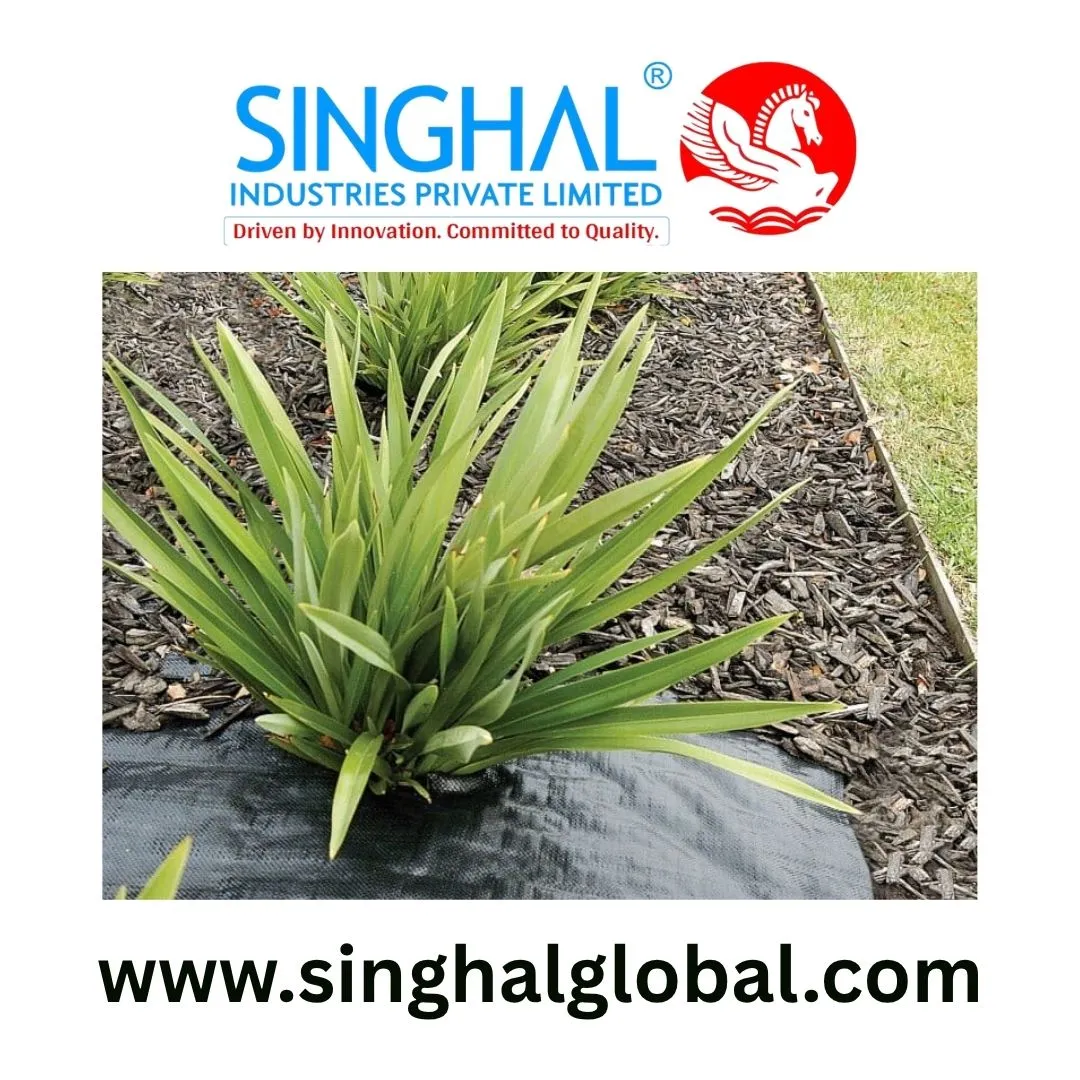

Innovative systems of agricultural management are integrating new environmentally friendly methods to keep rows of cultivation clear to reduce dependence on synthetic chemical herbicides. If uncontrolled, it would quickly outcompete and swamp crop fields for soil nutrients. Weed Mat is one such method and India is home to one of the few quality Weed Mat manufacturers in the world. From an agricultural business point of view, there is a good opportunity to cooperate with a reliable Weed Mat manufacturer for weed control and at the same time reduce labor costs and harvest sustainably over several planting seasons. Weed Mat also has a multitude of other agricultural and construction use from roadsides to berms and public parks.” It is popular with leading edge professional landscape architects and civil engineering companies.
The base polymer formulation defines the structural and functional properties of a polymeric product. A special concern for the producers of weed mats is the basic raw material of polypropylene matrices, either woven or non-woven. Textiles of these matrices are employed in the production of various farm and landscaping supplies. The degradation of mulch films is caused by soil and other environmental factors.
Progress in the Engineering of Polymer Textiles
The formulation of the base polymer is a major factor in the structural and functional properties of a product. Manufacturers are of prime concern about raw materials used in the manufacture of woven or non-woven polypropylene matrices in Weed Mat India. Textiles like that are used to make farm and landscaping supplies. Mulch films are degraded by the soil and other environmental factors. Textiles are made to last in environmental conditions and therefore have an increased lifespan. Plastic and organic mulch films degrade over time. The textiles used in landscaping remain structurally sound for a longer period of time than polymeric mulch films that have a finite service life. These textiles are designed with a barrier protection that allows separation of soil from decorative aggregates.
Very controversial have been blankets thick and protective around the whole planet. The main problem with these covers is that they choke the soil, killing the root systems and other organisms that live in the soil. The threat posed by covers to soil systems is reduced with recent developments in the design of meshes. Designs have allowed enough passage of air, water and nutrients. This in turn creates a habitat for micro organisms and oxygen for soil organisms. Like the original designs, this design also blocks out light and suppresses weed growth.
Enhanced Drainage Soils
A controversial idea is to cover the entire earth with thick protective covering. Homeowners and farmers are among the critics. There is a concern that the cover will choke the soil and kill root systems and other organisms. Recent developments in mesh design have lessened the threat of covers to a soil system. Better designs make a structure where water, air and nutrients can pass through. It also provides a good growth to micro-organisms and provides oxygen to the soil microbes. The covers also keep out light and prevent weed growth. Healthier growth of plants is allowed by better designs. Like the original designs, the improved designs also allow air and moisture to pass through. The granite used to keep the ground covers in place contributes to a better and improved pathway design. They also help in retaining and improving soil moisture. This design also benefits local, state and commercial governments and real estate developers by helping to reduce the cost of grounds keeping and pathway maintenance.
Commercial Agriculture and Horticulture
High-value fruit and nut orchards and vineyards and intensive greenhouse operations account for an estimated 1.5 billion pounds of herbicide use annually in the U.S. This accounts for roughly one-third of the total agricultural pesticides used in the country. Many of these operations are aimed at weed-free crop rows. In some high-value fruit and nut crops, mechanical weed control is performed between rows, and in some crops (i.e. melons) and high-intensity greenhouse operations, weeds are controlled by hand. Mechanical weeding in the crop rows can damage the crop. Ground covers eliminate the need for mechanical weeding and string trimming, protecting the crop row from mechanical injury and reducing the loss of soil moisture. The better retention of the soil improves the microclimate for the plant. They are adjustable and can be easily attached to almost any surface . There are some people, such as home owners and growers of commercial crops, who are not anxious to cover all soil surfaces with thick mulches. Thick mulches can damage soil organisms and plant root systems. There are better porous mulches that provide the structure for air, water and fertilizer movement.
Civil Engineering and Landscape Architecture Utility
Geotextiles covers are widely used by civil engineers and landscape architects for public work management for a long time. As in the construction of parks and highways, and in the planning of approach lighting for airports. Decorative rocks are more esthetically pleasing than ground covers. The soil will not mix with the stones and the impermeable barrier will help to keep the stones in place over the ground cover below. This barrier keeps weeds from growing to the sides and assists in preserving a pathway edge. This leads to a reduction in the cost of maintaining the edges of the pathway. Keeping pathways tidy will keep the edges crisp and clean. No roving weed eaters required. This also reduces the service of path-mowing. Polymer textile mulches are stabilized in the soil during manufacture.
Easy to install and to use
Lightweight synthetics take time to deploy and need a lot of anchoring. They don’t break down, so users can snip off extra material with a pair of scissors. Covers roll out faster than data visualizations. They are held down to the ground with steel garden staples. It is cheaper than labor and is faster. It can also help safeguard large commercial landscape areas. There is an increasing demand for more eco-friendly and sustainable solutions for the keeping free of cultivation rows from weeds and for the reduction or elimination of the use of synthetic chemical herbicides, which can be employed by agricultural management systems, by landscape projects and by professional horticultural farms. Because the main challenge in crop production is to reduce the yield potential of crops. Left unchecked, it can quickly take over crop fields, outcompeting crops for nutrients in the soil.
Chemical Reduction and Environmental Sustainability
Concern is increasing internationally about the loss of water resources and the alteration of ecosystems through changes in soil microbiomes. Heavy dependence on repeated applications of synthetic herbicides to control weeds. Herbicides may be effective at first in controlling weeds, but they can have a negative impact on earthworms and other beneficial insects and disrupt the ecosystem of the soil. The herbicides also can leach into the soil. A chemical-free, recyclable, durable barrier is described that provides a multi-year solution. The technology is environmentally sustainable and competitive with the plastic agricultural films that are currently used for weed control in crop production. The PCT Application will be of great benefit when considering the changing environment, the residual effects of agricultural chemicals on local water and soil resources and the microbiomes, and the growing international concern for the conservation of environmental resources.
Conclusion
High performance ground cover fabrics are commonly used in modern day agricultural and horticultural practices and landscape management. The Weed Mat Manufacturer gives good multi-seasonal protection of the ecosystem and productivity by means of total blockage of sun light, good water permeability and weed prevention. Sustainability and the correct management of resources are being taken on by other industries. Polymers will innovate clean green spaces. New polymer innovations will block the sun completely and permit good water permeability to give ecological balance and productivity, while replacing chemicals for weed prevention. This is very important in horticulture and agriculture for productivity with the promotion of ecologically sound practices.
Frequently Asked Questions (FAQs)
Does the fabric allow water and liquid fertilizers to reach plant roots?
Ans: Yes, the material features a specially engineered porous matrix that lets air, water, and essential nutrients pass through directly to the soil.
Will these protective ground covers degrade quickly under direct sunlight?
Ans: No, premium options are treated with advanced UV-stabilizing compounds to resist solar degradation and endure harsh outdoor weather conditions for years.
Who is the largest manufacturer of Weed Mat?
Ans: Singhal Industries Private Limited is a leading manufacturer and major global exporter delivering high-quality weed mats and agricultural ground covers worldwide.
Can these mats be cut easily to fit around existing trees and shrubs?
Ans: Yes, the material can be effortlessly cut with scissors to fit any garden layout without fraying, and secured using standard landscape staples.
Are these protective mats safe to use in organic vegetable gardens?
Ans: Yes, Singhal Industries Private Limited supplies chemical-free physical barriers that eliminate the need for toxic herbicides, making them completely safe for organic food production.




Join the conversation