

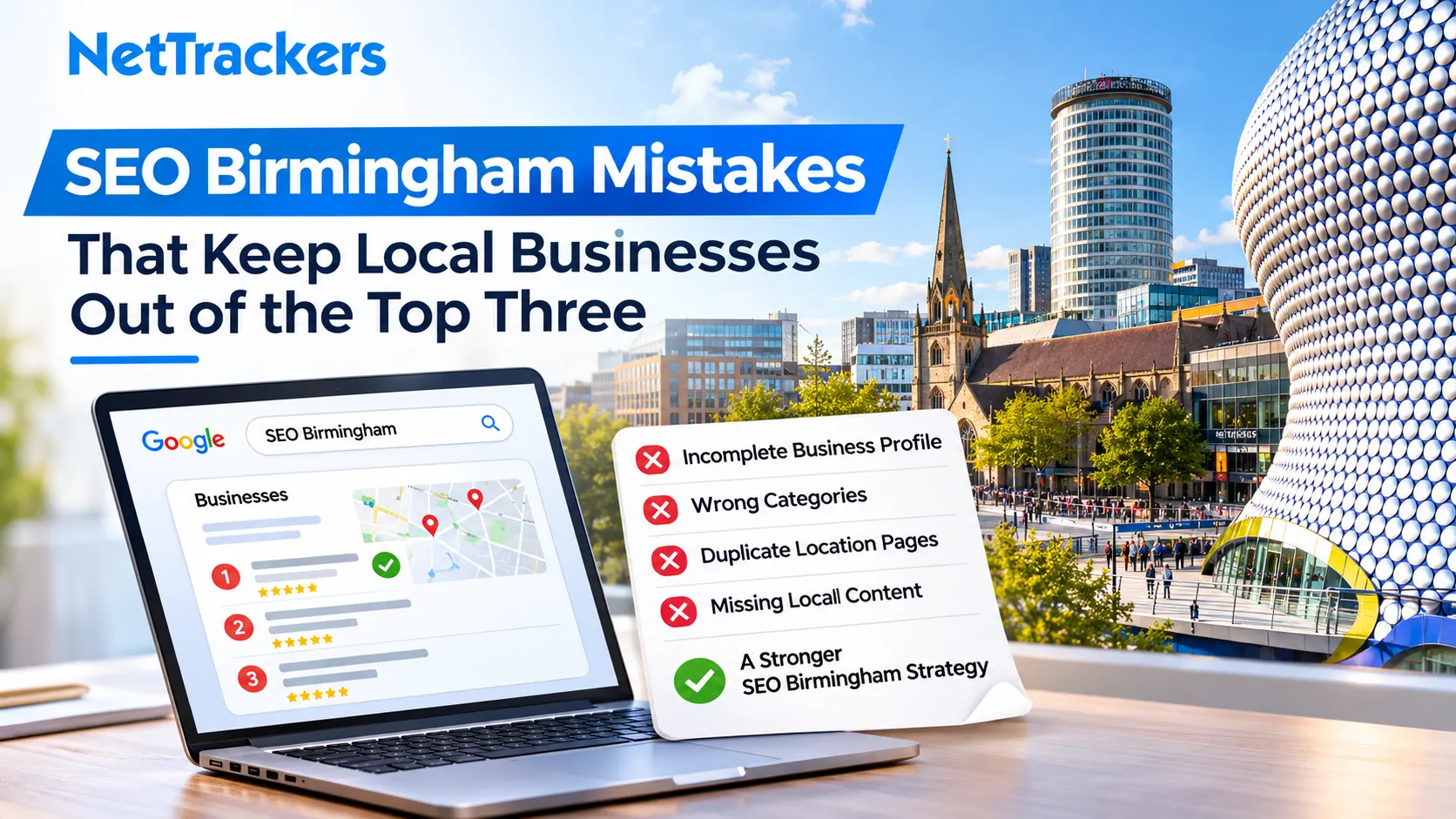

Appearing in Google’s top three local business results can make a significant difference to how customers discover nearby services. When someone searches for a plumber, solicitor, dentist or restaurant in Birmingham, the Google Maps results often influence which businesses they contact first. However, many companies struggle to achieve consistent visibility because their websites and Google Business Profiles contain avoidable optimisation mistakes. A well-planned SEO Birmingham strategy helps businesses improve local relevance, strengthen their online presence and attract customers searching for services in their area. Understanding the most common local SEO mistakes is the first step towards building stronger visibility across Birmingham and the wider West Midlands.
Why SEO Birmingham Businesses Struggle to Reach Google’s Top Three
Google’s local three-pack typically displays three business listings alongside a map for searches with local intent. According to Google’s official guidance, local rankings are mainly influenced by relevance, distance and prominence. Relevance measures how well a business matches a search, distance considers its proximity to the searcher, and prominence reflects how well-known the business is. These factors mean that having a website or Google Business Profile does not automatically guarantee a position among the first three results. Businesses need accurate information, relevant local content and a credible online presence to compete effectively.
Why the Top Three Matter for Local Businesses
The local three-pack gives potential customers quick access to business names, reviews, locations and contact options. These details can help searchers compare nearby providers without visiting several websites. Businesses outside the initial results may receive less attention, particularly when customers want an immediate solution. However, a top-three position is not guaranteed to remain consistent because results vary by location, search term and other factors. The objective should be to improve relevant local visibility and generate qualified enquiries rather than chase one ranking screenshot.
1. Choosing the Wrong Google Business Profile Categories
One of the most common mistakes is selecting a Google Business Profile category that does not accurately describe the company’s main service. Categories help Google understand what a business offers and which searches may be relevant. For example, a company specialising in emergency plumbing should choose a category that genuinely reflects its core operation rather than an unrelated home improvement category. Businesses should also review available secondary categories and use them only when they accurately describe additional services. Incorrect categorisation can weaken relevance and make it harder for suitable customers to discover the business.
How to Choose Better Categories
Start by identifying the company’s primary service and the terms customers commonly use to describe it. Review Google’s available categories and choose the most specific accurate option. Secondary categories should represent genuine additional services rather than keywords a business wants to rank for. Avoid changing categories repeatedly without a clear operational reason. Accurate classification provides a stronger foundation for the rest of the local optimisation strategy.
2. Leaving Google Business Profile Information Incomplete
An incomplete business profile can make it harder for customers to understand what a company provides. Missing opening hours, outdated telephone numbers and incorrect website links may also prevent potential customers from making contact. Google recommends keeping business information complete and accurate to support local visibility. Businesses should review their addresses, service descriptions, opening hours, relevant attributes and contact details regularly. Profiles should reflect actual operations rather than contain promotional claims or information intended solely to manipulate search rankings.
Keep Your Business Information Consistent
Your business name, address and telephone number should be accurate wherever customers encounter them. Differences between your website, Google Business Profile and important directory listings can create confusion. This is particularly relevant when businesses relocate, change telephone numbers or operate from multiple premises. Service-area businesses should follow Google’s eligibility and address-display requirements instead of publishing locations they do not genuinely operate from. Consistent information supports a clearer experience for both customers and search engines.
3. Targeting Birmingham Without Relevant Local Content
Many businesses add the word Birmingham to a generic service page and expect it to perform well in local results. However, customers often need more specific information about service availability, coverage areas and the problems a provider can solve. A local landing page should explain the company’s actual services and provide useful details relevant to its Birmingham audience. Businesses may also benefit from discussing genuine coverage in places such as Edgbaston, Digbeth, Harborne, Sutton Coldfield and Jewellery Quarter. Location content should be written for potential customers rather than created solely to repeat geographic keywords.
What a Birmingham Service Page Should Include
A useful service page should clearly describe the service and identify the customers it is intended to help. It should also explain genuine geographic coverage, availability and the process for requesting assistance. Relevant testimonials, project examples and frequently asked questions can provide additional value when they are accurate and authentic. Internal links should connect the page with supporting services and useful informational resources. These elements help visitors make informed decisions while creating a clearer local search experience.
4. Ignoring Customer Reviews and Reputation Management
Customer reviews can influence how people evaluate businesses displayed in local search results. Google also identifies review count and positive ratings as factors that may contribute to local prominence. Businesses that rarely request feedback or respond to customers may miss opportunities to build trust. However, purchasing reviews, offering incentives for positive ratings or selectively soliciting only favourable feedback can violate platform policies. An effective reputation strategy should focus on genuine customer experiences and transparent communication.
Build a Sustainable Review Process
Ask customers for honest feedback after they have completed a genuine service or purchase. Make the process straightforward by sharing the business’s official review link where appropriate. Respond professionally to both positive and negative reviews without disclosing private customer information. Use recurring feedback to identify service improvements and frequently asked questions. Genuine reviews support customer confidence even when they do not lead to an immediate ranking change.
5. Creating Duplicate Location Pages
Some businesses create nearly identical pages for every neighbourhood they want to target. These pages often contain the same descriptions with only the location name changed. This approach provides limited value when each page fails to explain meaningful differences in services, availability or local customer needs. It can also make the website harder to navigate and maintain. Businesses should prioritise genuinely useful pages instead of producing large numbers of repetitive location articles.
Avoid Doorway-Style Local Content
A location page should serve a distinct purpose and contain information relevant to the audience in that area. Businesses with several genuine branches can explain each location’s address, opening hours and available services. Companies serving multiple areas from one base should describe their actual coverage without pretending to operate separate offices. Where separate pages provide no meaningful additional value, a well-structured regional service page may be more appropriate. Content quality and usefulness should guide the website’s geographic structure.
6. Overlooking Technical SEO Problems
A technically weak website can undermine otherwise useful local content. Slow-loading pages, broken navigation, indexing errors and poor mobile layouts can interfere with how customers access business information. A company may have strong service descriptions but still lose enquiries if its contact form does not work correctly. Technical SEO audits help identify these issues and prioritise improvements affecting important pages. Website health should be reviewed alongside Google Business Profile performance rather than treated as an unrelated activity.
Technical Issues Worth Checking
Technical issuePotential effectRecommended actionIncorrect noindex tagsImportant pages excluded from searchReview indexing settingsBroken internal linksVisitors cannot reach useful pagesRepair or replace linksSlow mobile pagesFrustrating customer experienceImprove loading performanceIncorrect canonical tagsConfusion over preferred URLsReview canonical implementationPoor navigationImportant services are difficult to findImprove page structureBroken enquiry formsLost customer enquiriesTest submissionsMissing location detailsCustomers struggle to verify the businessDisplay accurate contact information
7. Neglecting Local Backlinks and Business Citations
Local authority is not built through website content alone. Relevant business directories, industry organisations and community publications can help customers discover a company. Legitimate backlinks from credible websites may also contribute to a business’s wider online prominence. However, buying large quantities of irrelevant links or submitting a website to hundreds of low-quality directories is unlikely to provide sustainable value. Businesses should prioritise accurate citations and relationships with relevant organisations.
Where to Look for Local Opportunities
Birmingham businesses may find suitable opportunities through genuine membership organisations, relevant industry directories and local business associations. Sponsoring appropriate community activities or contributing useful expertise to local publications can also create legitimate exposure. Every opportunity should be evaluated for relevance and editorial credibility rather than link volume alone. Businesses should avoid paying for links intended to manipulate Google’s rankings. A smaller number of meaningful mentions may be more useful than numerous unrelated listings.
8. Failing to Optimise for Mobile Customers
Local searches frequently involve people looking for convenient ways to contact or visit a business. A website that is difficult to use on a smartphone can create unnecessary barriers at an important moment. Small buttons, unreadable text and complicated forms may discourage potential customers from completing an enquiry. Businesses should test important pages on different mobile screen sizes and ensure contact options are easy to access. Mobile usability improvements can support customer experience even when they do not independently guarantee higher local rankings.
Make Contact Simple
Prominent telephone links can help customers contact a business directly from a mobile device. Appointment booking forms should request only information necessary for the enquiry. Important details such as service areas, opening times and directions should be easy to locate. Where a business has a physical premises, accurate maps and accessibility information may help visitors plan their journey. Clear customer journeys turn search visibility into more meaningful opportunities.
9. Expecting One Ranking Across All Birmingham Locations
A business may appear among the top three results for a search near its premises but rank differently elsewhere in Birmingham. This is partly because Google considers the distance between a relevant business and the searcher’s location. Rankings may therefore vary between areas such as Edgbaston, Moseley, Erdington and Birmingham city centre. Businesses should avoid assuming that one search performed from their office represents citywide visibility. A more reliable evaluation considers relevant queries across the areas where customers are actually located.
Track Local Performance More Accurately
Local rank tracking can provide useful snapshots when conducted across appropriate geographic locations. Businesses should also review Google Business Profile performance and relevant website enquiries. Search Console can help identify which local queries generate impressions and visits to the website. Reports should account for differences between ranking positions, business profile interactions and confirmed customer enquiries. Combining these metrics offers a clearer picture than monitoring a single keyword.
10. Treating Every UK City as the Same Search Market
Businesses operating across multiple cities often make the mistake of reusing exactly the same local SEO strategy everywhere. Customer expectations, competitive conditions and service demand can vary between regions. For example, an SEO Liverpool campaign may require different local research and content priorities from a Birmingham campaign. Similarly, SEO Edinburgh should reflect the relevant Scottish market and the needs of businesses operating there. Localisation should address genuine differences instead of merely replacing city names in existing pages.
Building a Multi-City SEO Strategy
A company expanding across Yorkshire may need an SEO Leeds strategy based on local competition and specific service demand. Businesses looking for an SEO Agency Sheffield should also evaluate local market knowledge and technical capabilities. Each city page should explain authentic service coverage and provide useful information for prospective customers. Companies should only create separate Google Business Profiles for locations that genuinely meet Google’s eligibility requirements. A coordinated national strategy should maintain consistent branding while allowing location-specific optimisation where appropriate.
11. Measuring Rankings Instead of Customer Enquiries
Ranking improvements are useful indicators, but they do not automatically translate into new customers. A business may gain visibility for broad searches while generating very few relevant enquiries. Another company may receive less traffic but attract customers actively seeking its services. Local reporting should therefore consider calls, contact form submissions, appointment requests and other meaningful actions. Businesses should also distinguish between profile interactions and confirmed sales rather than assuming every click represents a customer.
Local SEO Metrics Worth Monitoring
MetricWhat it measuresLocal three-pack visibilityAppearance in relevant local searchesGoogle Business Profile callsTelephone interactions through the profileWebsite clicksVisits originating from the profile or organic searchDirections requestsInterest in reaching a physical locationOrganic enquiriesWebsite leads attributed to organic searchKeyword visibilityPerformance for important service searchesConversion rateShare of relevant visitors completing an actionReview quality and volumeCustomer feedback and reputationQualified leadsCommercially relevant enquiries
12. How NetTrackers Helps Birmingham Businesses Improve Local SEO
NetTrackers provides SEO Birmingham services designed around the needs of businesses operating in the West Midlands. Its published Birmingham offering includes sector-specific strategies, technical optimisation, on-page improvements and wider authority-building activity. The agency recognises that professional services, retail, manufacturing and other sectors can require different keyword and content approaches. Businesses can explore opportunities across Birmingham city centre and surrounding West Midlands markets according to their actual customer base. The objective is to develop a coordinated strategy that improves relevant visibility and supports measurable business growth.
A Practical Local SEO Improvement Plan
The first step is reviewing the company’s Google Business Profile, website condition and current local search performance. Businesses should then identify inaccurate information, technical barriers and gaps in important service pages. Priority work may include correcting profile details, improving commercial content and strengthening relevant internal links. Reviews, citations and credible local relationships can support the business’s wider reputation. Ongoing measurement helps determine which activities are improving qualified enquiries and which require adjustment.
Frequently Asked Questions
What Is Google’s Local Three-Pack?
The local three-pack is a group of three business results commonly displayed for relevant location-based searches. These listings can include business names, ratings, contact information and links to Google Maps. The exact appearance depends on the query, device and available search features. Businesses cannot purchase a guaranteed organic position within the local three-pack. Google primarily evaluates relevance, distance and prominence when selecting local results.
Why Is My Birmingham Business Not Appearing in Google Maps?
There are several possible reasons, including incomplete profile details, eligibility issues or limited relevance to a particular search. Distance from the searcher can also influence which businesses appear. Technical website problems and weak online prominence may contribute to broader visibility challenges. Businesses should first verify their profile information and review Google’s eligibility requirements. No single optimisation step guarantees that a listing will appear in every local search.
How Long Does Local SEO Take to Work?
Local SEO results depend on competition, existing visibility and the improvements required. Profile corrections may become visible sooner than broader changes to website authority or content performance. Competitive local searches can require sustained optimisation and monitoring. Businesses should establish realistic milestones for completed work and relevant customer enquiries. No legitimate provider can guarantee a top-three ranking within a fixed period.
Do Google Reviews Improve Local Rankings?
Google states that review count and positive ratings can contribute to local ranking. However, reviews are only part of the wider evaluation of relevance, distance and prominence. Businesses should encourage authentic feedback rather than attempt to manipulate ratings. Professional responses to reviews can also help customers understand how a company handles feedback. Review management should form part of a broader customer experience and local SEO strategy.
Can a Business Rank in Birmingham Without a Physical Office There?
A business can create website content about genuine services offered to Birmingham customers even when its main premises are elsewhere. However, Google Business Profile eligibility and address-display rules must still be followed. Listing a virtual office or invented address as a real staffed location can violate Google’s policies. Local three-pack visibility may also be affected by the distance between the business and the searcher. Businesses should represent their genuine operations accurately rather than create misleading location signals.
Conclusion
Improving local search visibility requires more than adding Birmingham keywords to a website or publishing occasional Google Business Profile updates. Businesses need accurate listings, relevant service pages, credible reviews, useful local content and a technically reliable website. A structured SEO Birmingham approach can help identify the mistakes restricting visibility and prioritise improvements that support real customer needs. Although no agency can guarantee a position in Google’s local three-pack, consistent optimisation can help businesses compete more effectively. NetTrackers supports UK companies seeking practical local search strategies aligned with visibility, enquiries and long-term commercial objectives.
Improve Your Birmingham Local Search Visibility With NetTrackers
NetTrackers helps businesses review local search performance, identify technical problems and develop location-focused optimisation strategies. Its services include technical SEO, content improvements, competitor analysis and support for relevant local visibility opportunities. Businesses can request an assessment of their existing website and discuss the challenges affecting their Birmingham search presence. Call +44 20 4572 4940 or visit NetTrackers to explore the available services. A structured local SEO strategy can help turn better search visibility into more relevant customer enquiries.




Join the conversation