

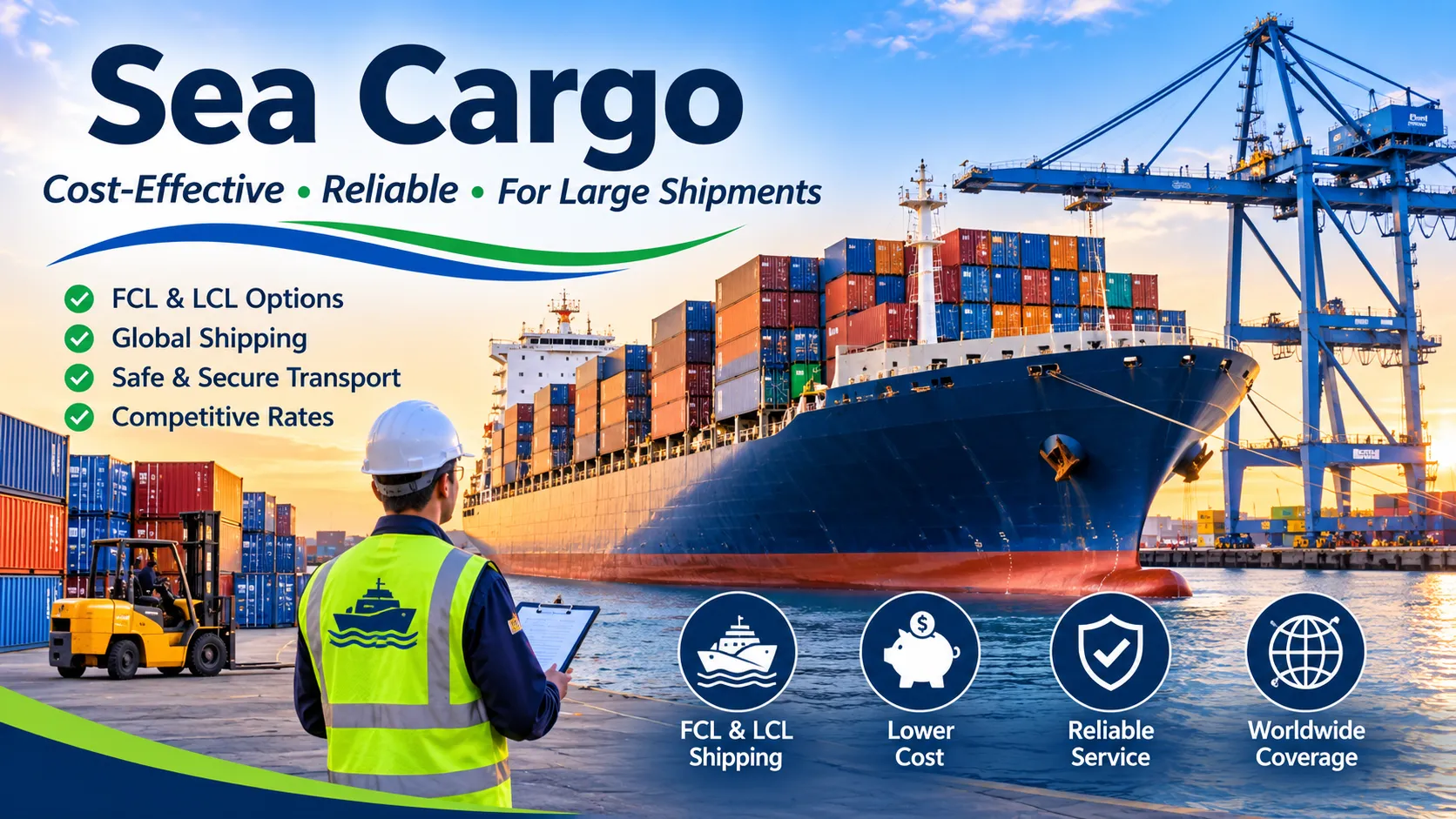

For heavy, bulky or high-volume shipments, cost per kilogram matters more than speed. That is where Sea Cargo stands out. It takes longer, but it offers far lower rates and the ability to move large quantities in one go.
What Is Sea Cargo?
Sea cargo is the transport of goods in containers on ocean vessels between ports. The freight company books container space, handles documentation and coordinates port and customs procedures. It is widely used for commercial stock, machinery, furniture, building materials and household moves.
Who Benefits Most from Sea Cargo?
Importers, exporters, retailers and families relocating abroad all benefit when goods are not urgent and planning is done in advance. The savings on heavy loads can be significant compared with faster modes.
FCL vs LCL in Sea Cargo
- FCL (Full Container Load): You rent a whole 20 ft or 40 ft container. It suits large volumes and keeps your goods separate from others.
- LCL (Less than Container Load): Your goods share a container with other shippers, and you pay by volume in cubic metres (CBM). It suits smaller consignments.
Know your total weight and CBM before requesting a quote. Accurate details lead to accurate pricing.
Transit Time and Planning
Ocean voyages typically take several weeks door to door. Timelines depend on origin, shipping line, transshipment and port congestion. Weather and port delays can shift schedules, so add a buffer instead of promising fixed dates to customers.
Key Documents for Sea Cargo
The bill of lading is the central document. It works as a receipt, a contract of carriage and often proof of ownership. You will also need a commercial invoice, packing list and, where required, certificates of origin or inspection. Check names, addresses and descriptions carefully, since corrections after issue can be costly.
Port Charges and Customs Clearance
The freight rate is only part of the cost. Expect terminal handling, documentation fees, inland transport and possible storage or demurrage if containers stay too long. Customs clearance involves declaring goods, paying applicable duties and passing any inspection. Rules change, so confirm current requirements with your clearing agent or the official customs authority.
Packing for a Long Voyage
Containers face humidity, vibration and stacking over weeks. Use moisture-resistant wrapping, strong crates and proper strapping. Place heavy items on pallets, fill empty spaces so cargo cannot shift, and add silica gel packs to protect electronics.
Tips to Reduce Sea Cargo Costs
- Book early to avoid peak-season surcharges.
- Combine small shipments into one.
- Pack efficiently to reduce volume.
- Compare quotes and check what each includes.
- Arrange customs clearance early to avoid storage fees.
Insurance for Sea Cargo
Marine incidents are uncommon but expensive. Cargo insurance usually costs a small percentage of the goods’ value and covers damage or loss under agreed conditions. For valuable or irreplaceable goods, it is a wise addition.
Choosing the Right Partner
Look for experience on ocean routes, clear communication and transparent pricing. Ask about container tracking, customs handling and the support available if something goes wrong. A good partner explains every charge.
Final Thoughts
Ocean transport rewards those who plan ahead. With accurate measurements, correct paperwork, strong packing and a trustworthy provider, Sea Cargo can move large volumes safely and economically.



Join the conversation