

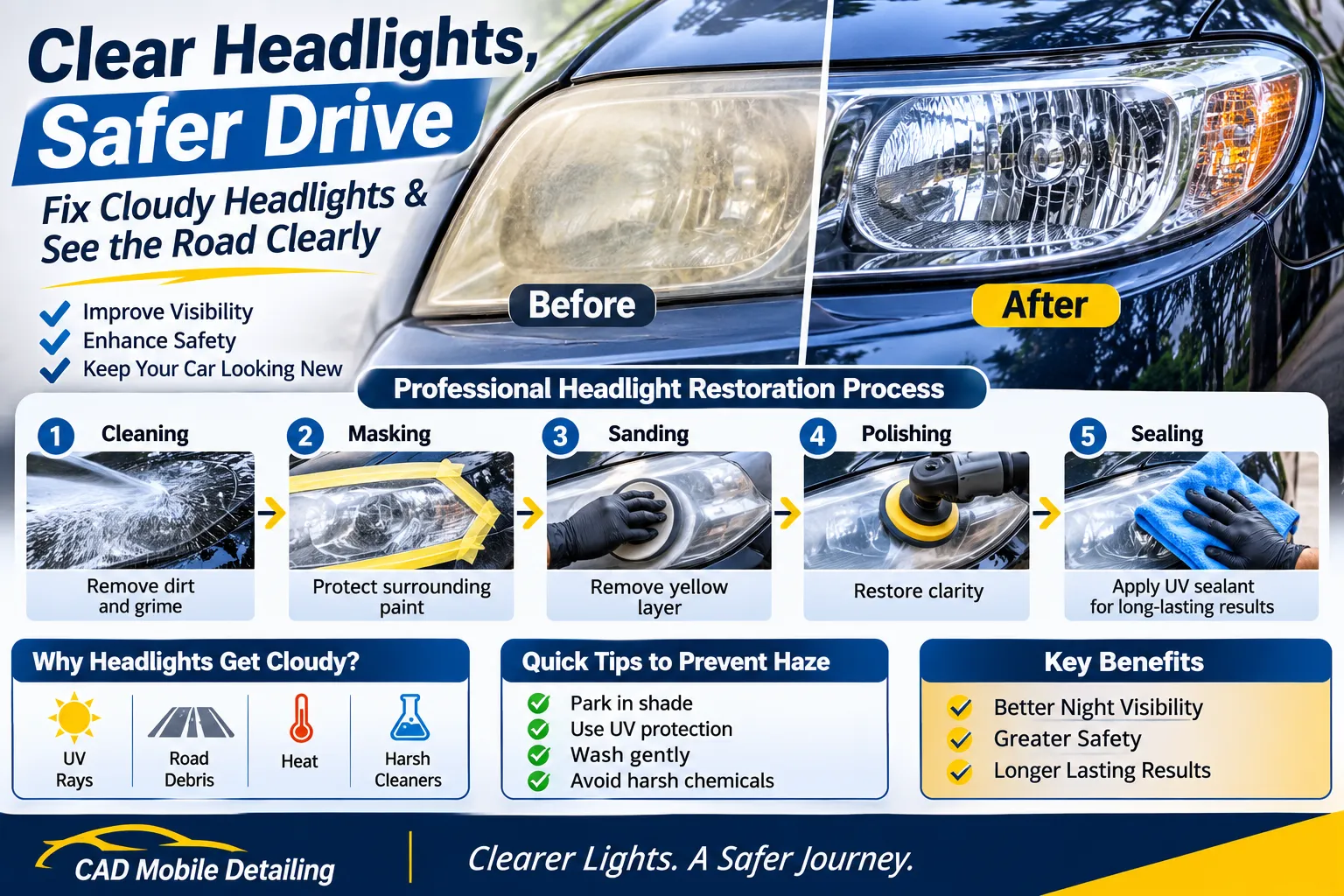

Have you noticed that your headlights look yellow, foggy, or dim? You are not alone. Many cars develop cloudy lenses as they age. This is not just a looks problem. Weak headlights make it harder to see the road at night and in bad weather. This guide explains why it happens and how you can fix it.
Why Headlights Turn Cloudy
Most modern headlights are made of plastic, not glass. New plastic lenses have a clear protective coating. Over time, this coating breaks down because of:
- Sunlight (UV rays): The main cause of yellowing and haze.
- Road dirt and chemicals: Small stones and salt scratch the surface.
- Heat from the bulb: It slowly dries and ages the plastic.
- Harsh washing products: Some cleaners damage the coating.
Once the coating is gone, the plastic becomes rough and cloudy, and light cannot pass through well.
Why It Is a Safety Problem
Cloudy lenses can reduce light output by a large amount. That means you see less of the road, and other drivers see you less clearly. This is a serious risk in rain, fog, and snow. Clear lenses help you spot animals, signs, and turns earlier.
Can You Fix Them Yourself?
Yes, many people try home fixes. Here are the common options.
Toothpaste Method
Some people rub non-gel toothpaste on the lens. It may remove light haze, but results are short-lived.
Home Repair Kits
Store-bought kits include sandpaper pads, polish, and a coating. They can work if you follow every step carefully.
Professional Service
A trained technician has proper tools and products, which usually gives the best and longest-lasting result. A professional headlight lens polishing service removes the damaged layer and brings back the shine.
What Happens During a Professional Fix
- Cleaning: The lens is washed to remove dirt.
- Masking: The paint around the light is taped off for protection.
- Sanding: Fine sanding removes the yellow, damaged layer.
- Polishing: The surface is polished until it is clear and smooth.
- Sealing: A protective layer is applied to guard against future damage.
The last step is very important. A good headlight UV sealant protects the lens from the sun, so the haze does not return quickly.
How Long Do Results Last?
A professional job with a strong UV layer can last two to three years or more. Home fixes without a proper sealant may last only a few months. Parking in shade and washing gently will help results last longer.
Signs You Need Help Soon
- Yellow or brown color on the lens
- A foggy or milky look
- Dim light on the road at night
- Rough or pitted surface
- Failed vehicle inspection because of poor light output
If you notice any of these, a foggy headlight repair will be much cheaper than replacing the whole light assembly.
Tips to Prevent Cloudy Lenses
- Park in a garage or shaded area.
- Apply a UV protection layer once or twice a year.
- Wash lenses with gentle car soap.
- Avoid harsh chemicals and rough brushes.
- Check your lights regularly for early signs of haze.
Final Thoughts
Clear headlights help you see better, drive safer, and make your car look newer. Fixing them is quick and costs far less than new parts. Do not wait until the haze gets worse.
Frequently Asked Questions
1. How long does the service take?
Most jobs take about 30 to 60 minutes for a pair of headlights.
2. Is it cheaper than replacing the headlights?
Yes. New headlight units can cost hundreds of dollars, while a repair costs much less.
3. Will the haze come back?
It can if the lens is not sealed. A UV layer greatly slows down the return of yellowing.
4. Does toothpaste really work?
It may help for a short time, but it does not give lasting protection.
5. Can very damaged lenses be fixed?
Most lenses can be improved. If there is moisture inside or deep cracks, replacement may be needed.



Join the conversation