
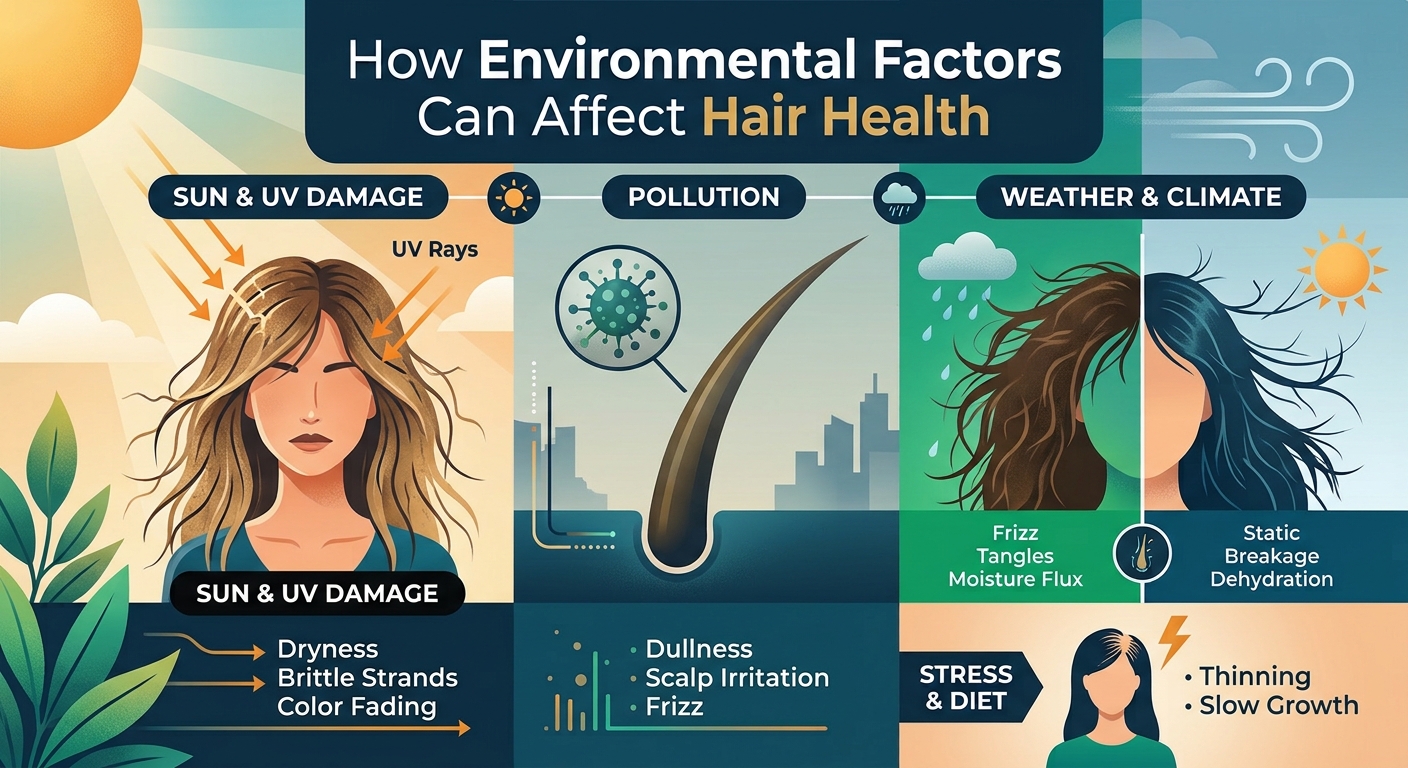

You can eat well, oil regularly, and use gentle products, yet still notice your hair turning dry, dull, or frizzy. Often the reason has nothing to do with your routine. It is the world around you. Sun, wind, humidity, dust, smog, and even the water from your tap interact with your hair every single day, and over time they can leave their mark.
This matters a lot in Pakistan, where people deal with scorching summers, humid monsoons, dry winters, crowded roads, and air quality that can swing from average to poor. The good news is that once you understand how each factor affects your hair, you can protect it with simple, practical habits.
Sun and UV Exposure
Sunlight is the most obvious environmental stress on hair. Ultraviolet rays can break down the proteins in the hair shaft and weaken the outer cuticle layer, the protective coating that keeps moisture inside. Hair exposed to long hours of strong sun often becomes dry, rough, and brittle, and it may lose its shine. Colored or chemically treated hair is more vulnerable, since the color can fade and the strands are already more porous.
The scalp is not immune either. Hair parts and thinning areas can get sunburned, which leads to irritation and flaking. When you are outdoors for long periods, cover your head with a loose cotton scarf, dupatta, or hat. Choose light-colored, breathable fabrics so you do not trap heat and sweat against your scalp. Applying a light oil or leave-in conditioner before going out can also add a thin protective layer.
Heat and Sweat
Pakistan’s summer heat brings another challenge: sweat. Perspiration mixes with natural oil and dust on the scalp, creating the perfect environment for buildup. This can lead to itching, odor, dandruff, and clogged follicles, and a scalp that is constantly irritated is not a comfortable place for healthy hair to grow.
During hot months, wash your hair more often, ideally every second day if you are sweating heavily or spending time outdoors. Use a mild shampoo and avoid scrubbing aggressively. Switch to lighter oils and use less product than you would in winter, as heavy oils can feel sticky and trap sweat. Tie your hair in a loose style so your scalp can breathe, and avoid tight caps or helmets worn for hours without cleaning them.
Humidity and Monsoon Weather
Humid air affects hair in a different way. Hair is naturally porous, and when the air is full of moisture, the strands absorb it and swell. This causes frizz, tangles, and loss of definition, particularly for wavy or curly hair. In the monsoon season, damp conditions can also encourage fungal growth on the scalp, leading to dandruff and itching.
To manage humidity, use a lightweight serum or a few drops of oil on the lengths to seal the cuticle and keep excess moisture out. Dry your hair fully after washing or getting caught in the rain, because staying damp for long periods can invite scalp problems. Clean your combs and brushes weekly, and avoid sleeping with wet hair.
Cold, Dry Winter Air
Winter brings the opposite problem. Cold air holds little moisture, and heated rooms make it even drier. Hair loses water quickly, which leads to static, brittleness, and flaky skin on the scalp. Woolen caps and scarves can add friction, causing extra breakage at the ends and around the hairline.
In winter, richer oils and deeper conditioning treatments make sense. Oil your hair once or twice a week, and reduce how often you wash it, since hot showers strip natural oils. Choose a silk or satin lining inside woolen caps if possible, or wear a thin cotton layer between the wool and your hair. Drinking enough water, even when you do not feel thirsty in the cold, supports hair and skin hydration too.
Air Pollution, Dust, and Smog
Cities like Lahore, Karachi, and Islamabad face noticeable air pollution, especially in the smog season. Tiny particles of dust, soot, and chemicals settle on the hair and scalp throughout the day. This buildup can make hair feel heavy and dull, and it may irritate the scalp, causing itching and inflammation. Some research has linked heavy pollution exposure to increased oxidative stress on the scalp, which may contribute to weaker hair and a less healthy scalp environment.
The most helpful step is regular, thorough cleansing. Wash your hair at least two to three times a week with a gentle shampoo, focusing on the scalp where particles collect. Covering your hair when traveling on busy roads or riding a motorbike helps reduce direct exposure. Avoid touching your hair with dirty hands, and change your pillowcase regularly, since it also collects dust and oil overnight.
Hard Water and Chlorine
Water quality is an overlooked factor. In many parts of Pakistan, tap water is hard, meaning it contains high levels of minerals like calcium and magnesium. These minerals can leave a film on the hair and scalp, making strands feel stiff, dry, and difficult to manage. Hard water may also make it harder for shampoo to lather and rinse away completely, leading to residue and dullness.
Chlorinated water from swimming pools can strip the hair of its natural oils and leave it brittle. If you swim, wet your hair with clean water first and apply a little oil or conditioner before going in, then rinse and wash soon after.
For hard water at home, a shower filter can help if it is available to you. An occasional clarifying shampoo or a rinse made with a diluted splash of apple cider vinegar can reduce mineral buildup, though you should not overdo it. If your scalp is sensitive, use these only occasionally.
Air Conditioning and Indoor Environments
Spending the day in air-conditioned offices, homes, and cars exposes hair to dry, cool air that pulls moisture from your strands and scalp. People who move constantly between the intense heat outside and chilled rooms inside may notice their hair feels dry, static, or frizzy, even in summer.
Keep a small bottle of leave-in conditioner or a light hair serum handy for touch-ups. Drink water through the day, and use a humidifier at night if the air in your bedroom feels very dry. Also be mindful of sleeping directly under a strong air conditioner, as this can dry out the scalp.
Wind, Travel, and Friction
Strong wind tangles hair and roughs up the cuticle, particularly for long strands. Frequent tangling leads to more combing, and more combing leads to more breakage. Riding in open vehicles or spending time in windy areas makes this worse.
Wear your hair in a low braid or bun when you know you will be out in the wind, and avoid pulling it back too tightly. A silk scarf can keep strands in place without causing much friction. When you get home, detangle gently with a wide-tooth comb from the ends upward.
Building a Protective Routine
You cannot change the weather, but you can respond to it. A flexible routine that shifts with the seasons works far better than one fixed method year-round. Cleanse regularly to remove sweat, dust, and pollutants. Condition the lengths and ends after every wash. Protect hair from sun and wind with scarves or hats. Reduce heat styling, since your hair is already coping with environmental stress.
Oiling is one of the most traditional ways to shield hair from these daily pressures, and many people look for the best hair oil in Pakistan to fit their climate and scalp type. A good oil helps reduce moisture loss, adds a light protective coating, and makes the scalp massage ritual more enjoyable. Brands such as Desi Khazanay create herb-inspired oils based on traditional recipes, which can be a convenient option if you prefer a natural approach. Whatever product you choose, read the ingredient list, do a patch test on your inner arm first, and give it three to four months of consistent use before judging results.
Remember to adjust your choice by season: lighter oils in humid summers and richer ones in dry winters.
Nutrition and Lifestyle Still Matter
Environmental stress puts extra demands on your body, so nourishing yourself from the inside is essential. Hair is built mainly from protein and relies on iron, zinc, vitamin D, B vitamins, and healthy fats. Include eggs, lentils, leafy greens, nuts, seeds, fish, and seasonal fruit in your meals. Antioxidant-rich foods such as citrus fruits, berries, and vegetables may help your body cope with oxidative stress from pollution and sun.
Sleep, hydration, and stress management also affect how your hair looks and grows. If you notice sudden hair fall, patchy thinning, or a persistently itchy or painful scalp, consult a doctor or dermatologist. These can signal medical or nutritional issues that environmental protection alone cannot fix.
Final Thoughts
Your hair faces a lot every day, from sunshine and sweat to smog, hard water, and dry indoor air. None of these factors can be avoided completely, but each can be managed with thoughtful habits. Cleanse well, protect your strands, moisturize regularly, and adjust your routine as the seasons change.
Healthy hair is not about perfection or expensive treatments. It is about paying attention to what your hair is exposed to and responding with care. Start with one or two changes, stay consistent, and give your hair time to show the difference.


Join the conversation