

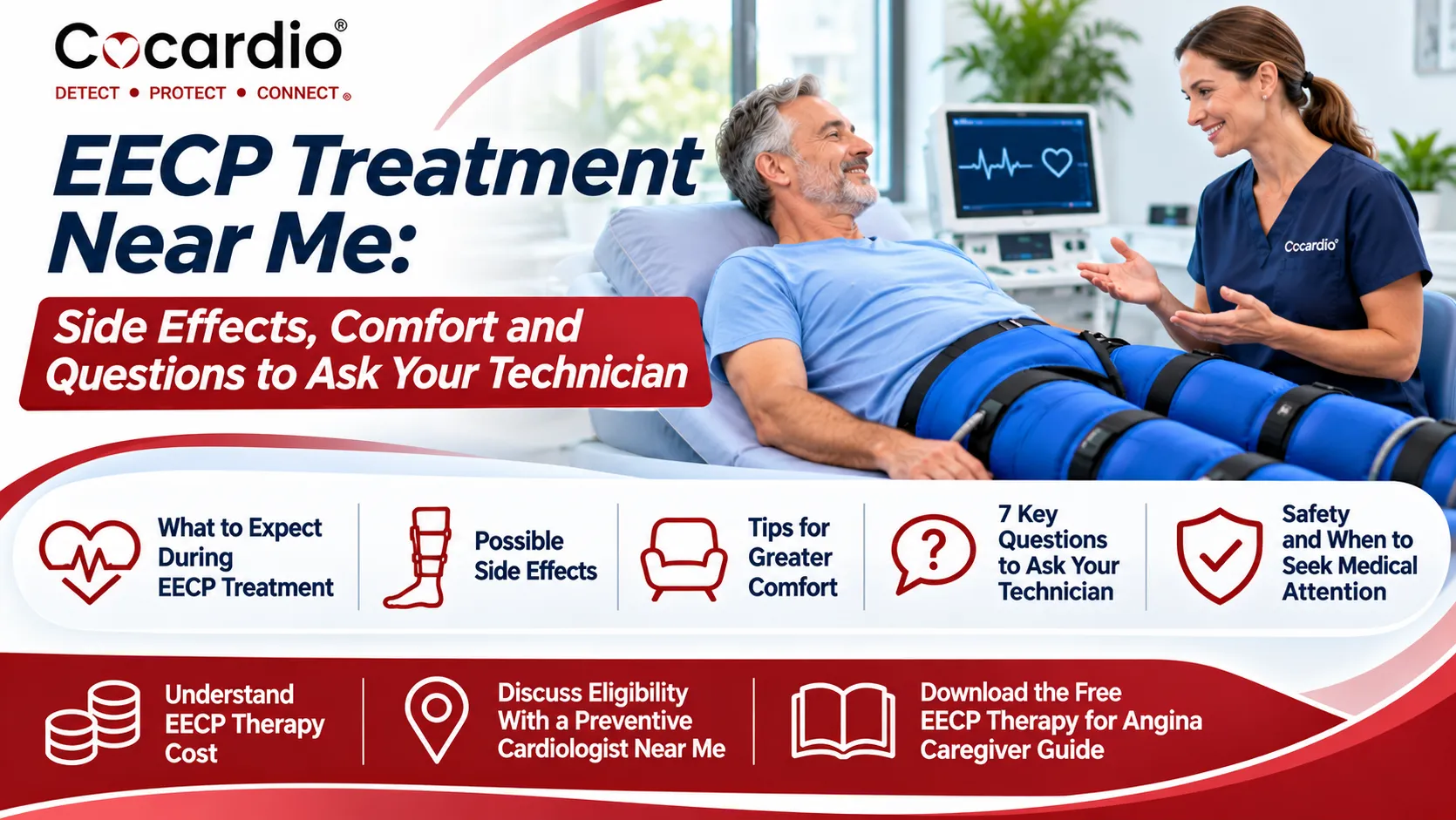

If you are searching for EECP treatment near me, you may have questions about what the procedure feels like, whether it causes discomfort, and what side effects to expect. Enhanced External Counterpulsation (EECP) is a noninvasive cardiovascular treatment that may help selected patients manage persistent stable angina. Although the procedure does not require surgery or anesthesia, understanding its potential risks and comfort considerations can help you prepare for your appointments.
EECP Treatment Near Me and What to Expect During Your Sessions
Patients exploring EECP treatment near me should understand how the procedure works before beginning a treatment course. External counterpulsation therapy uses inflatable cuffs positioned around the calves, thighs, and upper thighs. These cuffs inflate and deflate in synchronization with the heartbeat to increase diastolic blood flow and reduce cardiac workload during treatment.
A standard treatment course typically involves 35 one-hour sessions over approximately seven weeks.
What Does EECP Feel Like During Treatment?
During an EECP session, you lie on a treatment table while inflatable cuffs apply rhythmic pressure to your lower body. Electrocardiogram (ECG) sensors help synchronize cuff inflation and deflation with your heartbeat.
You may experience a firm squeezing sensation as the cuffs inflate. Although this pressure can feel unfamiliar during your first appointment, treatment should not cause severe pain.
As a non invasive heart treatment, EECP does not require surgical incisions or general anesthesia. However, clinical supervision remains essential throughout each session.
Common Side Effects of EECP Treatment
Although many patients tolerate treatment, some experience temporary discomfort or equipment-related side effects.
Potential side effects include:
Mild skin irritation beneath the cuffs.
Bruising on the legs.
Muscle soreness or aching.
Temporary fatigue.
Blisters caused by friction.
Back or leg discomfort from prolonged positioning.
Numbness or tingling.
Inform your technician about any discomfort as soon as it develops. Adjusting cuff positioning, protective clothing, or treatment pressure may help improve comfort when medically appropriate.
Persistent or worsening symptoms should be evaluated by your healthcare provider.
How to Stay Comfortable During Your EECP Sessions
Preparing for each appointment can help reduce avoidable discomfort and make treatment more manageable.
Consider the following practical steps:
Wear close-fitting, seamless clothing recommended by your provider.
Inform your technician about existing skin conditions or injuries.
Empty your bladder before treatment.
Follow your clinician’s instructions regarding meals and hydration.
Report uncomfortable cuff positioning immediately.
Discuss any unusual fatigue or soreness between appointments.
Do not adjust the equipment yourself. Treatment settings should remain under the control of trained clinical personnel.
7 Questions to Ask Your EECP Technician
When researching EECP treatment near me, prepare questions that help you understand treatment procedures, comfort adjustments, and safety monitoring.
1. How Much Pressure Should I Feel?
Ask your technician to explain the expected pressure sensation and how treatment settings are determined.
2. Can the Cuffs Be Adjusted if I Feel Uncomfortable?
Discuss whether cuff positioning or pressure can be modified safely without compromising the prescribed treatment protocol.
3. What Side Effects Should I Report Immediately?
Ask which symptoms require treatment to be paused or stopped, including significant pain, dizziness, shortness of breath, or chest discomfort.
4. How Can I Prevent Skin Irritation?
Your technician may recommend suitable protective garments and appropriate skin care precautions.
5. How Is My Cardiovascular Health Monitored?
Ask how your heart rhythm, blood pressure, symptoms, and treatment tolerance are assessed.
6. What Happens if I Miss a Session?
Discuss rescheduling options and how interruptions may affect your prescribed treatment plan.
7. Who Should I Contact if Symptoms Develop at Home?
Establish clear communication procedures for reporting concerns between appointments.
When Should You Stop Treatment and Seek Medical Attention?
External counterpulsation therapy requires appropriate medical screening because certain cardiovascular and vascular conditions may make treatment unsuitable.
Immediately notify your technician if you experience significant chest discomfort, difficulty breathing, dizziness, severe leg pain, or unusual swelling.
New, severe, or worsening chest pain, especially when accompanied by sweating, nausea, breathlessness, or discomfort spreading to the arm or jaw, could indicate a heart attack.
Call 911 immediately if you experience symptoms of a possible heart attack. Do not wait for your next treatment appointment.
What About Treatment Costs and Insurance?
Before beginning EECP treatment, patients should understand the financial commitment associated with their prescribed treatment course.
Ask about the total EECP therapy cost, including initial consultations, treatment sessions, follow-up assessments, and potential out-of-pocket expenses.
Medicare may cover treatment for qualifying patients with severe stable angina who meet specific medical necessity requirements. Private insurance coverage varies, so confirm your eligibility directly with your insurer.
Discussing Treatment Eligibility With Your Cardiologist
If you are searching for a preventive cardiologist near me, consider discussing your symptoms, medical history, current medications, and cardiovascular risk factors.
Patients exploring EECP therapy for angina should understand that treatment may support symptom management but does not replace prescribed medications or established cardiovascular prevention strategies.
Family members can also help patients prepare for appointments and understand potential side effects.
Download the Free EECP Therapy for Angina Caregiver Guide for additional support when preparing for treatment.
Conclusion
Searching for EECP treatment near me should involve evaluating patient safety, clinical supervision, treatment comfort, and provider experience. Understanding potential side effects and communicating openly with your technician can help you establish realistic expectations throughout treatment.
CoCardio® in Encinitas, California, helps eligible patients explore noninvasive cardiovascular treatment options for managing persistent angina symptoms.
Contact CoCardio® to discuss treatment eligibility, safety concerns, and available appointments.
Call: +1 (858) 500-1399
Medical Disclaimer: This article is intended for educational purposes only and does not constitute medical advice, diagnosis, or treatment. Individual treatment eligibility, side effects, and outcomes vary. Always consult a qualified healthcare professional before making cardiovascular treatment decisions. If you experience symptoms of a possible heart attack, call 911 immediately.




Join the conversation