

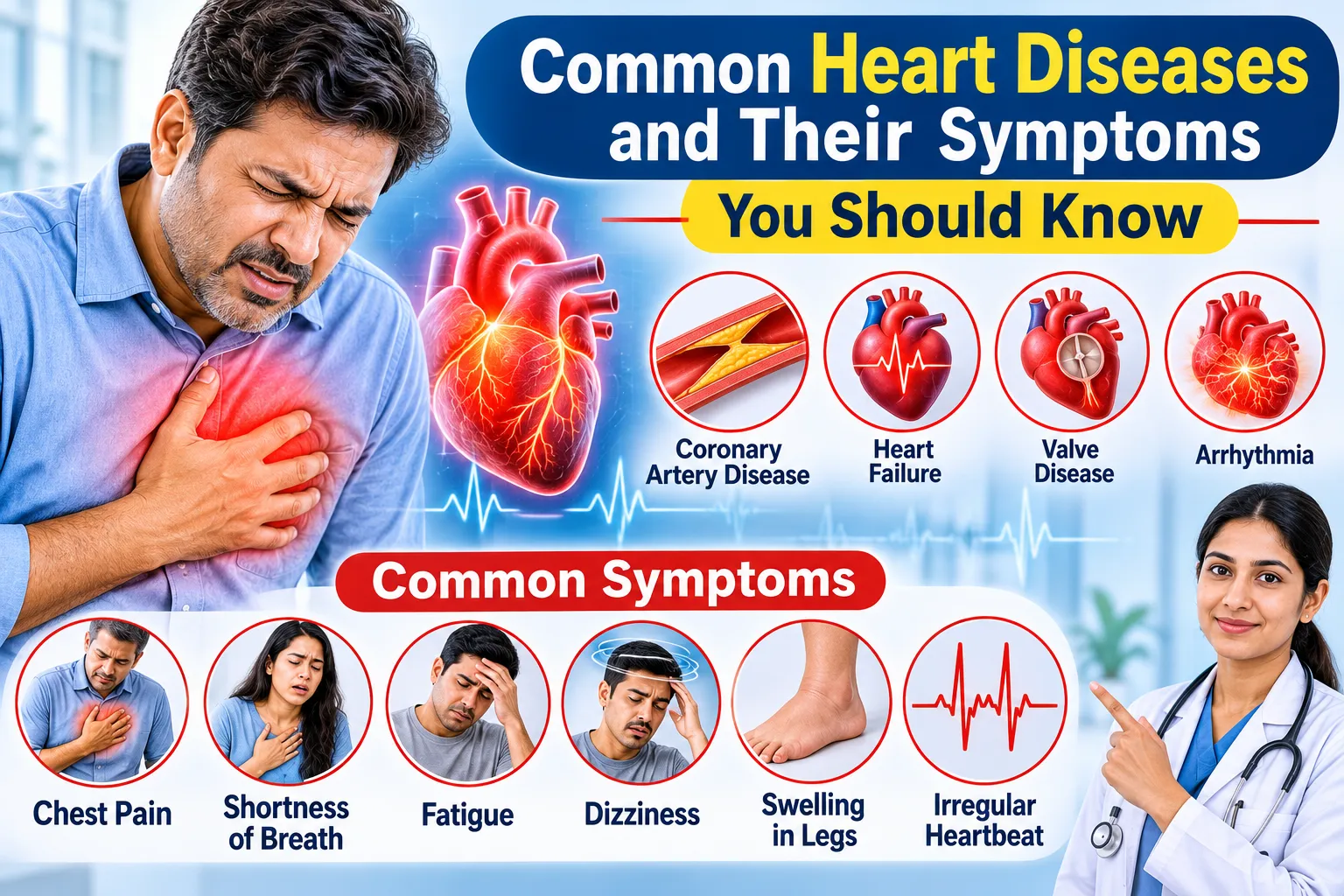

The heart is one of the most important organs in the human body, responsible for pumping blood and supplying oxygen to different organs. However, unhealthy lifestyle habits, high blood pressure, diabetes, smoking, and genetic factors can increase the risk of heart-related problems. Understanding common heart diseases and recognising their symptoms can help people seek timely medical care. Consulting the Cardiology Hospital in Jaipur can help patients receive proper diagnosis, treatment, and preventive heart care.
1. Coronary Artery Disease
Coronary artery disease occurs when the arteries supplying blood to the heart become narrow due to plaque buildup. This condition can reduce blood flow and cause chest discomfort, breathlessness, fatigue, or pain in the arms and shoulders. Early diagnosis and proper treatment can help reduce the risk of serious complications.
2. Heart Failure
Heart failure occurs when the heart cannot pump blood as effectively as the body needs. Common symptoms include shortness of breath, swelling in the legs and ankles, persistent fatigue, and difficulty breathing while lying down. Medical evaluation is important to manage the condition and improve quality of life.
3. Arrhythmia (Irregular Heartbeat)
Arrhythmia refers to an irregular heartbeat that may be too fast, too slow, or inconsistent. Patients may experience palpitations, dizziness, weakness, chest discomfort, or fainting. Some types of arrhythmia require regular monitoring and specialised treatment.
4. Heart Valve Disease
Heart valve disease develops when one or more heart valves do not open or close properly. This can affect normal blood circulation. Symptoms may include chest pain, breathlessness, fatigue, dizziness, and swelling in the feet or ankles.
5. Congenital Heart Disease
Congenital heart disease refers to structural heart problems present from birth. Some conditions are identified during childhood, while others may become noticeable later in life. Symptoms can include breathing difficulties, poor growth, fatigue, and bluish skin or lips.
6. Heart Attack
A heart attack occurs when blood flow to a part of the heart muscle becomes blocked. Common warning signs include:
Chest pain or pressure.
Pain spreading to the arms, back, neck, or jaw.
Shortness of breath.
Cold sweating.
Nausea or vomiting.
Sudden weakness or dizziness.
A suspected heart attack is a medical emergency. Seek emergency medical assistance immediately.
Common Risk Factors for Heart Diseases
Several factors can increase the chances of developing heart-related conditions:
High blood pressure.
High cholesterol levels.
Diabetes.
Smoking and tobacco consumption.
Lack of physical activity.
Unhealthy eating habits.
Obesity and family history of heart disease.
How Can You Maintain Better Heart Health?
Maintaining a healthy lifestyle can help reduce the risk of several heart conditions. Follow these preventive measures:
Eat a balanced diet rich in fruits and vegetables.
Exercise regularly as recommended by your healthcare professional.
Monitor blood pressure and cholesterol levels.
Avoid smoking and tobacco products.
Maintain a healthy body weight.
Get regular health checkups, especially if you have risk factors.
Conclusion
Heart diseases can affect people of different age groups, and ignoring their early symptoms may lead to serious complications. Understanding warning signs, managing risk factors, and getting regular cardiac checkups are important steps towards maintaining a healthy heart. Consulting the Multispeciality Hospital in Jaipur can help patients receive timely evaluation, appropriate treatment, and professional guidance for better long-term heart health.



Join the conversation