

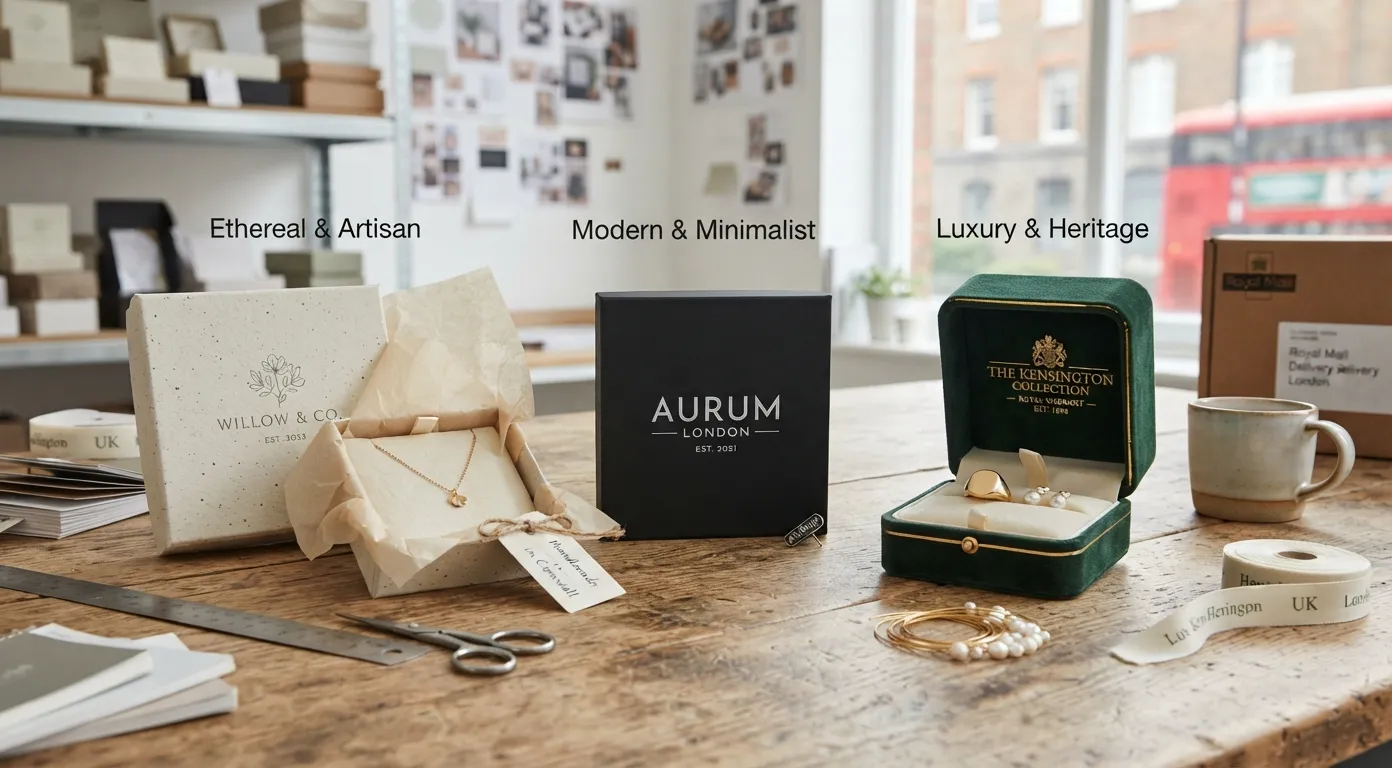

Jewellery is personal. It marks engagements, birthdays, anniversaries and milestones, and it’s often given as a gift. That emotional weight means the box matters almost as much as the piece inside it. A beautiful ring in a flimsy, generic box loses some of its magic. The same ring in a box that feels considered and on-brand becomes a moment to remember.
For independent jewellers and small jewellery brands in the UK, packaging is one of the most powerful brand-building tools available. This guide explains how to choose custom jewellery packaging that suits your pieces, your price point and your brand personality.
Start with your brand personality
Before looking at box styles, define the feeling your brand should create. Jewellery brands tend to fall into a few broad groups:
- Classic luxury: fine jewellery, precious metals, engagement rings. Think rich colours, velvet, rigid boxes and foil.
- Modern minimal: clean lines, everyday pieces. Think matte white or black, simple typography, uncluttered boxes.
- Bohemian and handmade: artisan, natural materials. Think kraft, textured papers, stamped logos and twine.
- Playful and fashion-led: bold colours, trend pieces. Think bright prints, patterns and fun unboxing.
- Sustainable: recycled metals, ethical sourcing. Think recycled board, plastic-free inserts and honest messaging.
Your packaging should feel like a natural extension of your pieces and your website.
Box styles for different pieces
Ring boxes
Ring boxes are small, usually square, with a slotted insert that holds the ring upright. For engagement and fine jewellery, rigid hinged boxes with a velvet or suede-effect lining are traditional. For everyday rings, a small two-piece or drawer box with a card slot works well.
Necklace boxes
Necklace boxes are wider and flatter, with an insert that holds the chain and lets the pendant sit centrally. A hook or slot stops the chain tangling in transit.
Earring boxes and cards
Earrings are often displayed on earring cards, small printed cards with holes or slots, which then go into a box or pouch. Earring cards double as retail display cards on market stalls.
Bracelet and bangle boxes
Bracelets need longer or square boxes with a cushion or slotted insert. Bangles may need deeper boxes to hold their shape.
Multi-piece and set boxes
Matching sets of necklace and earrings, or stacking rings, suit larger boxes with multiple insert cavities.
Pillow boxes and pouches
For lower-priced pieces, jewellery pillow boxes or fabric pouches are affordable and still feel special. Many brands combine a pouch inside a printed box for a layered unboxing.
Popular structures compared
| Structure | Feel | Best for | Cost |
| Rigid hinged box | Classic luxury | Engagement rings, fine jewellery | Higher |
| Two-piece rigid box | Premium | Necklaces, sets, gifts | Medium to high |
| Drawer box | Modern premium | Rings, earrings, small sets | Medium |
| Magnetic box | Luxury gift | Gift sets, special editions | Higher |
| Kraft tuck or two-piece box | Natural | Handmade, everyday pieces | Low to medium |
| Pillow box | Light and pretty | Earrings, small gifts | Low |
Inserts: where presentation happens
The insert is what customers see first when they open the box. It should hold the piece securely and present it beautifully. Options include:
- Foam inserts covered in velvet or suede-effect fabric, the classic luxury choice.
- Card inserts with slots or cut-outs, which are recyclable and can be printed.
- Cushion inserts for bracelets and watches.
- Moulded pulp inserts for sustainable brands.
Match the insert colour to your brand palette. A deep green or navy insert can make gold and silver pieces glow.
Finishes that elevate jewellery boxes
Jewellery packaging is a natural home for premium finishes:
- Foil stamping on the lid, often in gold, silver or rose gold to echo the metals.
- Embossing or debossing for a tactile logo.
- Soft-touch lamination for a velvety feel.
- Textured papers such as linen or leather-effect wraps.
- Ribbon pulls on drawer boxes.
As with most luxury packaging, one or two well-chosen finishes look better than many.
Sustainable jewellery packaging
More customers now ask where their jewellery comes from, and packaging is part of that story. Sustainable jewellery packaging can include:
- Boxes made from recycled or FSC-certified board.
- Plastic-free inserts made from card or moulded pulp.
- Cotton or recycled-fabric pouches instead of synthetic ones.
- Uncoated papers without plastic lamination.
- Clear messaging about how to recycle or reuse the box.
Eco-friendly jewellery packaging also encourages reuse. A well-made box often becomes a permanent home for the piece.
Packaging for online jewellery brands
If you sell online, your jewellery box needs to survive the post as well as look beautiful:
- Use an outer mailer to protect the presentation box.
- Secure the piece firmly in the insert so it can’t move or scratch.
- Add tissue and a card for a layered unboxing.
- Consider letterbox-friendly sizes, which customers appreciate and which can reduce postage costs.
- Include care instructions to help customers look after their pieces.
Branding beyond the box
A complete jewellery packaging set might include:
- Printed boxes in two or three standard sizes.
- Matching pouches.
- Earring and necklace display cards.
- Branded tissue paper and stickers.
- A care card or certificate of authenticity.
- A small branded bag for in-person sales.
Consistency across all these elements makes even a small brand look established.
Costs and quantities
Jewellery boxes are small, which keeps material costs down, but premium structures and inserts add cost. To manage your budget:
- Standardise on a few box sizes that fit most of your range.
- Use premium rigid boxes for fine jewellery and gifts, and simpler boxes for everyday pieces.
- Order bestselling sizes in larger quantities to lower unit prices.
- Ask about low minimum orders if you’re testing a new design.
Seasonal and gift packaging
Jewellery sales rise sharply around Christmas, Valentine’s Day and Mother’s Day, and many pieces are bought as gifts. Make gifting easy:
- Offer a gift box upgrade at checkout, such as a rigid box with a ribbon.
- Include a gift message card that the buyer can personalise.
- Leave prices off the packaging and packing slip for gift orders.
- Use seasonal sleeves or stickers on your standard box to mark the occasion without a new print run.
Common mistakes to avoid
- Boxes that are too big for the piece, which makes small jewellery look lost.
- Loose inserts that let rings or pendants slip out of place in transit.
- Cheap-feeling materials for expensive pieces, which can undermine the price.
- Inconsistent branding across boxes, pouches and cards.
- Ignoring the outer packaging, so a beautiful box arrives scuffed.
Avoiding these simple mistakes helps every order look as carefully made as the jewellery inside.
Choosing a packaging supplier
When you’re comparing suppliers, ask whether they can:
- Make boxes to your exact size, rather than only stock sizes.
- Produce inserts in your choice of material and colour.
- Offer samples before full production.
- Print matching pouches, cards and tissue paper.
- Supply recycled or FSC-certified materials.
A supplier who can handle the whole set keeps your branding consistent and makes reordering simple.
Final thoughts
Great jewellery packaging reflects the care that went into the piece and the emotion behind the gift. Start with your brand personality, choose structures and inserts that suit each type of jewellery, add one or two premium finishes and think about sustainability and shipping.
If you’re ready to create a packaging range, explore custom jewellery packaging in rigid, drawer, magnetic and kraft styles, made to fit your pieces. For brands with a sustainability focus, plastic-free eco-friendly jewellery boxes let your packaging tell the same story as your jewellery.


Join the conversation