

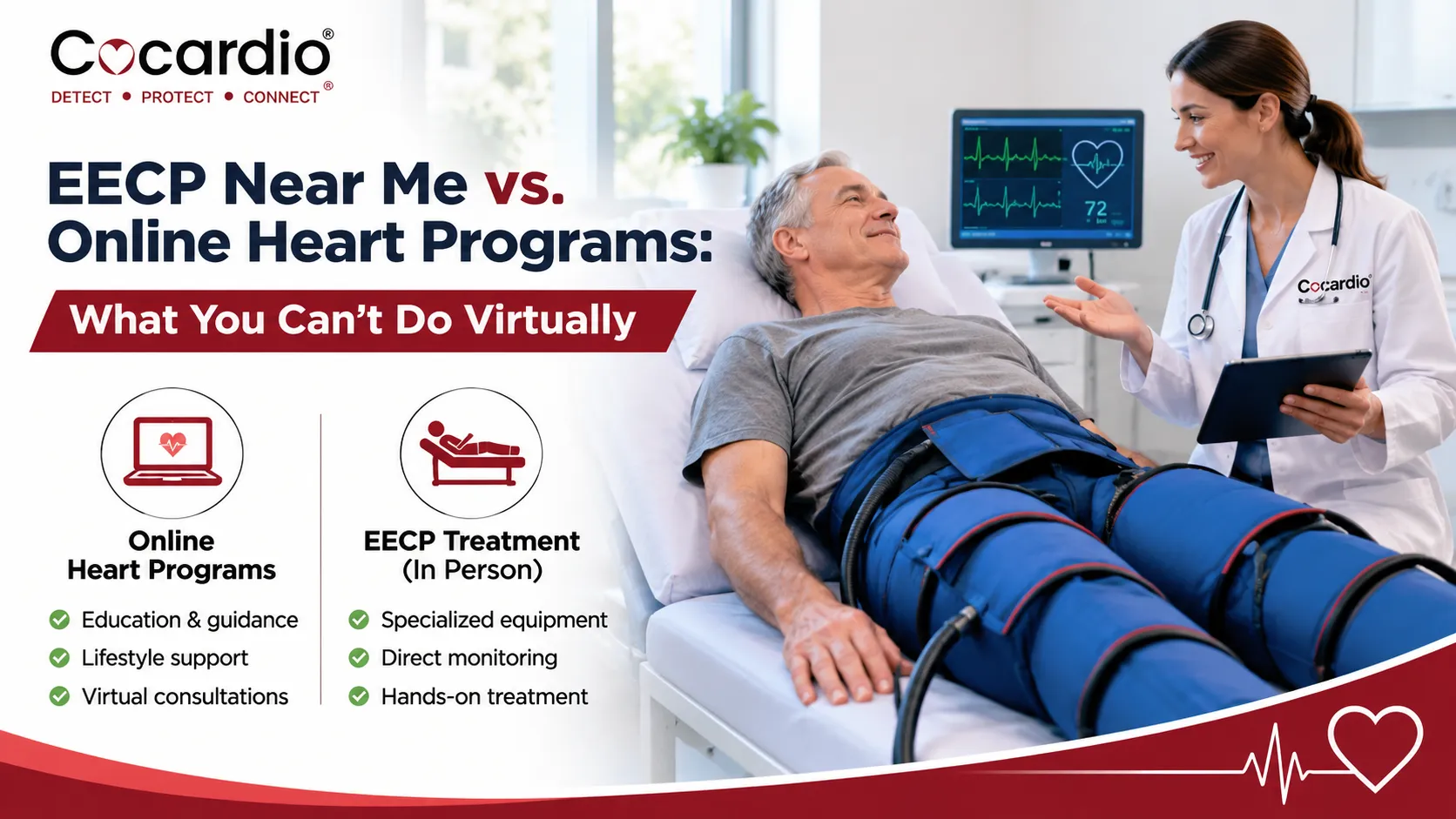

Online heart health programs have made it easier to access educational resources, lifestyle guidance, and certain medical consultations without leaving home. However, some cardiovascular treatments require specialized equipment, direct patient monitoring, and in-person clinical evaluation. If you are searching for EECP therapy near me, understanding the difference between virtual support and hands-on treatment can help you choose appropriate care. This guide explains what online programs can offer, why enhanced external counterpulsation requires physical appointments, and what to consider when comparing treatment providers.
EECP Therapy Near Me vs. Online Programs – Understanding the Difference
Online heart programs may provide education about cardiovascular risk factors, nutrition, physical activity, stress management, and medication adherence. Depending on the provider and clinician’s qualifications, telehealth appointments may also support medical history reviews, symptom discussions, and follow-up care. EECP, however, involves specialized equipment that applies precisely timed external pressure to the lower body while the patient is monitored. Therefore, a virtual consultation may support treatment planning, but it cannot replace the physical procedure.
What Can Online Heart Health Programs Provide?
Virtual programs can help patients understand their cardiovascular conditions and develop healthier daily routines. Some offer video consultations, educational resources, progress tracking, and guidance about questions to discuss with a treating clinician. These services may be especially convenient for people managing ongoing health concerns or living far from specialist facilities. However, the scope of care depends on the provider, and virtual programs cannot perform every examination or treatment available in person.
1. Why EECP Treatment Requires In-Person Appointments
Enhanced external counterpulsation is a noninvasive procedure involving inflatable cuffs placed around the calves, thighs, and buttocks. These cuffs inflate and deflate in synchronization with the heartbeat using electrocardiogram-guided timing. The process is intended to support blood flow and reduce cardiac workload during specific phases of the heartbeat. Because the equipment must be positioned and operated directly on the patient, the treatment cannot be performed through a video appointment.
What Happens During a Treatment Session?
Patients typically lie on a treatment table while trained personnel position the cuffs around their lower body. Electrodes monitor the heartbeat so the equipment can coordinate cuff inflation and deflation. Patients may experience firm pressure around their legs as the cuffs repeatedly inflate during the session. The clinical team should monitor tolerance, investigate concerning symptoms, and make appropriate decisions about continuing treatment.
2. What Online Consultations Cannot Replace
Virtual appointments are useful for discussing symptoms, reviewing medical history, and preparing questions for healthcare professionals. However, they cannot physically apply EECP cuffs, assess every relevant clinical finding, or respond directly to an equipment-related problem during treatment. Certain medical concerns may also require physical examination, diagnostic testing, or assessment at an appropriate healthcare facility. Patients should view telehealth as a potentially complementary service rather than a substitute for all aspects of cardiovascular care.
Why Clinical Screening Matters
EECP is not suitable for every person with chest discomfort or cardiovascular disease. Clinicians must evaluate the underlying diagnosis, current symptoms, medical history, and conditions that could make treatment unsafe. Significant aortic regurgitation, certain rhythm disturbances, and severe peripheral vascular disease are among the concerns that may affect eligibility. Screening may begin remotely, but the treating team must determine what additional examinations or tests are needed before treatment.
3. Understanding Who May Benefit From EECP
The strongest established clinical role for EECP involves selected patients with chronic stable or refractory angina. The 2023 American Heart Association and American College of Cardiology guideline states that EECP may be considered for symptom relief in patients with chronic coronary disease, refractory angina, and no other treatment options. Patients exploring eecp therapy for angina should discuss whether their symptoms, treatment history, and clinical findings meet appropriate criteria. EECP is not established as a replacement for standard medical treatment or a method for removing coronary plaque.
Can EECP Prevent Future Heart Attacks?
EECP should not be presented as a proven intervention for preventing heart attacks or reversing coronary artery disease. Its potential benefit in appropriately selected patients primarily concerns symptom management rather than demonstrated reductions in major cardiovascular events. Preventive care still includes management of blood pressure, cholesterol, smoking, diabetes, and other relevant risk factors. Patients should continue following their cardiologist’s recommendations for medications, lifestyle changes, and further investigations.
4. Comparing Local EECP Centers With Virtual Programs
Patients comparing eecp therapy centers should evaluate more than convenience or promotional claims. Relevant considerations include clinical screening, equipment protocols, staff training, monitoring procedures, and communication with the patient’s cardiologist. A provider should explain which services are delivered in person and which discussions can reasonably take place remotely. Patients should also confirm the practical requirements of repeated treatment visits before committing to a program.
What Should You Ask Before Booking?
Ask whether the provider requires medical clearance and how contraindications are evaluated. Find out who monitors treatment sessions and what happens if you develop discomfort or unexpected symptoms. Confirm whether the provider communicates with your regular cardiologist and maintains records of treatment progress. These questions can help distinguish a structured clinical service from a program that relies mainly on generalized wellness advice.
5. How Many In-Person Visits Are Usually Required?
A conventional EECP course commonly involves 35 one-hour treatment sessions over approximately seven weeks. The schedule may vary based on clinical circumstances, the treatment protocol, and provider availability. This commitment makes location, transportation, appointment flexibility, and personal scheduling important factors. Online education can help patients prepare for appointments, but it cannot replace the required equipment-based sessions.
Why Location Matters for a Multiweek Program
A treatment center that is difficult to reach may create logistical challenges across repeated appointments. Patients searching for EECP therapy near me should confirm the facility’s address, appointment availability, and expected visit duration. It is also worth asking whether the center offers consistent scheduling throughout the recommended course. Convenience should support treatment adherence without taking priority over medical suitability and safe clinical practices.
6. Can Online Heart Programs Support EECP Patients?
Online resources may help patients organize symptom records, review heart health information, and prepare questions for their medical appointments. Depending on the service, remote consultations can also support discussion of lifestyle habits and ongoing cardiovascular risk management. Such programs may complement treatment delivered at a physical facility when the patient’s clinicians consider them appropriate. However, coaching and educational services should not be confused with medical diagnosis, emergency evaluation, or the actual EECP procedure.
What Can Be Managed Virtually?
Heart care activityOnline or virtualIn-person requirementGeneral heart health educationYesNot usuallyLifestyle and nutrition discussionsOftenDepends on clinical needsMedical history reviewOftenAdditional assessment may be requiredPreliminary treatment questionsYesFinal eligibility may require examinationEECP cuff placement and treatmentNoYesDirect monitoring during EECPNo substitute for on-site supervisionYesDiagnostic examinations and testingSome results can be discussed remotelyOften required for testingFollow-up discussionsSometimesDepends on symptoms and clinical findings
7. How to Compare Treatment Costs
Virtual programs and equipment-based treatments may have different pricing structures because the services provided are not equivalent. A remote educational consultation may have a separate fee from medical screening or a complete EECP course. Patients researching EECP therapy cost should request a written estimate explaining the included appointments, sessions, and potential additional charges. Insurance coverage and payment arrangements should be verified directly with the provider and insurer rather than assumed.
Questions About Payment and Scheduling
Ask whether initial consultations and eligibility assessments are included in the quoted amount. Confirm the number of sessions, cancellation policies, payment arrangements, and any charges for additional services. Patients should also establish whether insurance billing is available or whether the provider operates on a self-pay basis. A clear written estimate supports more informed financial decisions before beginning treatment.
8. Finding a Suitable Provider in Encinitas
CoCardio® provides information about external counterpulsation and cardiovascular wellness services in Encinitas, California. Patients who search for ECP therapy near me may find that the terminology varies between providers, even when they are researching related treatment approaches. Before booking, it is important to confirm the specific equipment, service, medical oversight, and screening process offered at the location. A consultation can help clarify what further information a clinician may need before determining whether treatment is appropriate.
Questions for Local Providers
Patients searching for eecp treatment near me should prioritize clinical suitability, safety, and realistic treatment expectations. Ask whether the provider follows an established assessment process and whether medical clearance is required. Verify who supervises sessions and how concerns are addressed during treatment. The provider should also explain how progress and possible adverse effects are documented.
9. What CoCardio® Offers Patients Exploring EECP
CoCardio® maintains a physical location at 162 S Rancho Santa Fe Road, Suite B55, Encinitas, CA 92024. Its website also describes online consultations and educational support for individuals seeking information about cardiovascular wellness. Patients exploring EECP therapy near me can contact the practice to ask about in-person services, appointment scheduling, and the steps involved in discussing treatment suitability. Any treatment decision should be based on appropriate clinical evaluation and coordination with the patient’s established medical care.
Evaluating Local Treatment Options
Not all eecp therapy centers provide identical appointment structures, screening procedures, or complementary services. Patients should therefore compare what each provider actually offers rather than assuming the same clinical processes apply everywhere. Ask about available documentation, referrals, session monitoring, and follow-up arrangements. A transparent discussion can help determine whether the service meets the patient’s practical and clinical requirements.
10. Supporting Your Heart Health Between Visits
Heart health management involves more than attending a specific procedure. Patients should continue following medical advice about medications, appropriate physical activity, nutrition, sleep, and cardiovascular risk factors. Educational programs may help organize daily routines and encourage discussion of symptoms with a healthcare professional. However, these activities should complement rather than replace evidence-based treatment and necessary clinical follow-up.
A Seasonal Resource for Patients
Cold weather, disrupted schedules, and holiday routines can make it harder to maintain consistent heart health habits. Planning ahead may help patients stay organized with medications, appointments, meals, and safe activities. For additional seasonal information, Download the Free Heart-Healthy Winter and Holiday Guide 2027. Use its educational suggestions alongside individualized medical advice, especially if you experience persistent cardiovascular symptoms.
Frequently Asked Questions
Can I Complete EECP Treatment at Home?
Conventional EECP treatment requires specialized equipment, appropriate patient positioning, and direct monitoring during sessions. A video consultation cannot reproduce the physical cuff inflation and heartbeat synchronization involved in the procedure. Patients should seek a qualified treatment provider that can evaluate eligibility and explain the required clinical arrangements. Do not attempt to substitute unsupervised compression equipment for medically supervised EECP.
Are Virtual Heart Programs a Replacement for a Cardiologist?
Virtual education and coaching can support understanding of cardiovascular health but cannot replace comprehensive medical care. Some telehealth appointments are conducted by licensed clinicians and may form part of ongoing medical management. Whether an in-person examination or diagnostic test is necessary depends on the patient’s symptoms and clinical circumstances. Patients with persistent or worsening symptoms should follow appropriate medical advice rather than rely exclusively on wellness programs.
How Long Does a Typical EECP Course Take?
A standard course commonly consists of 35 sessions lasting approximately one hour each. These appointments are frequently scheduled five days per week for seven weeks. The recommended schedule may differ according to clinical needs and treatment protocols. Patients should confirm the expected duration and practical commitments with their provider before beginning.
Is EECP Safe for Everyone?
No, EECP is not appropriate for every individual with chest discomfort or cardiovascular disease. Certain medical conditions may increase the risks associated with cuff compression or the treatment’s effects on circulation. Qualified clinicians should assess relevant contraindications and the patient’s current medical condition. A proper screening process is necessary before deciding whether treatment should proceed.
Can EECP Replace Heart Medication?
EECP is not a substitute for prescribed cardiovascular medication or established disease management. Its potential role is symptom relief for selected patients with refractory chronic stable angina. A cardiologist should determine whether it is suitable alongside other appropriate treatments. Patients should never stop or change medication without medical guidance.
Conclusion
Online heart programs can provide convenient education, selected consultations, and ongoing support for healthy routines. However, the physical process of EECP requires specialized equipment, direct monitoring, and appropriate clinical supervision. Choosing between virtual support and an in-person treatment center is therefore not simply a matter of convenience because the services address different needs. Patients considering EECP therapy near me should discuss eligibility with their cardiologist and evaluate providers based on medical oversight, safety, accessibility, and transparent treatment information.
Contact CoCardio® in Encinitas
CoCardio® provides information about cardiovascular wellness services and external counterpulsation at its Encinitas location. Patients can contact the team to ask about available appointments, the screening process, and practical considerations for repeated visits. Call +1 (858) 500-1399 or visit the CoCardio® website to learn more. Continue working with your cardiologist to determine whether EECP or another treatment is appropriate for your medical condition.
Medical Disclaimer
This article provides general educational information and is not a substitute for professional medical advice, diagnosis, or treatment. EECP is not appropriate for everyone, and treatment suitability must be determined through individualized clinical evaluation. Do not discontinue prescribed medications or delay recommended care because of information presented in this article. If you experience new, severe, prolonged, or worsening chest pain, particularly with shortness of breath, sweating, nausea, or faintness, call 911 immediately.




Join the conversation