

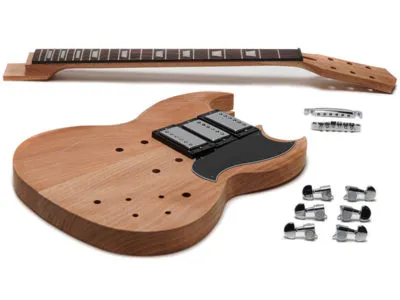

A smooth finish can’t rescue parts that never lined up properly in the first place. Before sanding, sealing, or applying colour, builders should check how the main components sit together while everything is still easy to adjust. Neck fit, bridge position, control plates, pickguards, and hardware clearances can reveal small issues early. A few minutes of test assembly may prevent hours of correction later. Honestly, this stage feels slow, but it often makes the rest of the build much cleaner. In this article, we will discuss which components should be checked together before finishing begins and why early fitting matters.
Check the Neck and Body Relationship First
With guitar kits, the neck-to-body connection deserves attention before almost anything else. The neck should sit firmly in its pocket without obvious side-to-side movement, while still allowing correct alignment toward the bridge area. A tiny shift here can affect string positioning across the fretboard later. For example, a neck that looks fine by itself may reveal poor alignment once temporary strings are run from the tuners toward the bridge location. I prefer checking that relationship before sanding heavily, because correcting wood fit afterward can damage fresh surface work.
Make Sure Hardware Locations Agree With Each Other
The best guitar kits should still be checked carefully rather than assumed to be perfectly matched from the box. Bridge posts, pickguards, pickup rings, control plates, and jack plates can all interact with nearby holes or routed areas. A screw pattern that is off by only a small amount may become obvious once several parts are placed together. This is where temporary assembly helps. Install components lightly, without forcing screws tight, then check spacing and movement. The goal is not final installation yet. It is simply making sure one part does not create trouble for another.
Test the Main Components Before Surface Work
Even original guitar kits can benefit from a full layout check before colour or clear coats are applied. A simple test sequence can reveal problems while they are still easy to correct.
- Place the neck in position and check alignment.
- Set the bridge where it will finally sit.
- Test pickguard and pickup-ring screw locations.
- Fit control plates and output-jack hardware loosely.
- Check cavity covers for clean seating.
- Confirm tuners and bushings fit their holes correctly.
Nothing needs to be fully tightened. The point is to spot interference, misaligned holes, or parts that need small adjustments before the surface becomes harder to repair cleanly.
Unfinished Components Make Corrections Much Easier
Unfinished guitar kits for builders offer one major practical advantage: small fit corrections can be made before decorative work begins. If a neck pocket needs light sanding, a pickguard edge needs trimming, or a control plate sits slightly proud, those changes are much easier on bare wood. Imagine discovering a tight-fitting part after several coats of lacquer have already cured. One careless adjustment could chip the finish. That is the tradeoff. Testing everything first adds time early, but it reduces the risk of damaging completed work later.
Conclusion
A careful test assembly helps confirm neck alignment, bridge position, hardware fit, and cavity clearance before finishing makes corrections more difficult. Checking these relationships early can prevent drilling mistakes, chipped surfaces, awkward string alignment, and unnecessary rework during final assembly.
SOLO Music Gear supports DIY builders, musicians, hobbyists, and repair shops with kits, bodies, necks, parts, tools, finishing supplies, and technical resources. Its online range serves customers across Canada and the USA with practical options for custom builds, maintenance, and repair projects.
Frequently Asked Questions
Question: Should every component be installed before finishing?
Answer: Not permanently. Parts only need to be positioned or lightly fitted so alignment and clearances can be checked. Final hardware installation should normally wait until the surface work is complete.
Question: Why check the bridge before applying finish?
Answer: Bridge position affects string alignment and intonation range. Confirming placement early makes it easier to correct mounting or spacing problems without risking damage to a completed surface.
Question: Can small fitting problems be corrected after finishing?
Answer: They can, but the work becomes riskier. Sanding, drilling, or trimming near a finished surface may cause chips or scratches, so earlier adjustments are usually cleaner and easier.




Join the conversation