
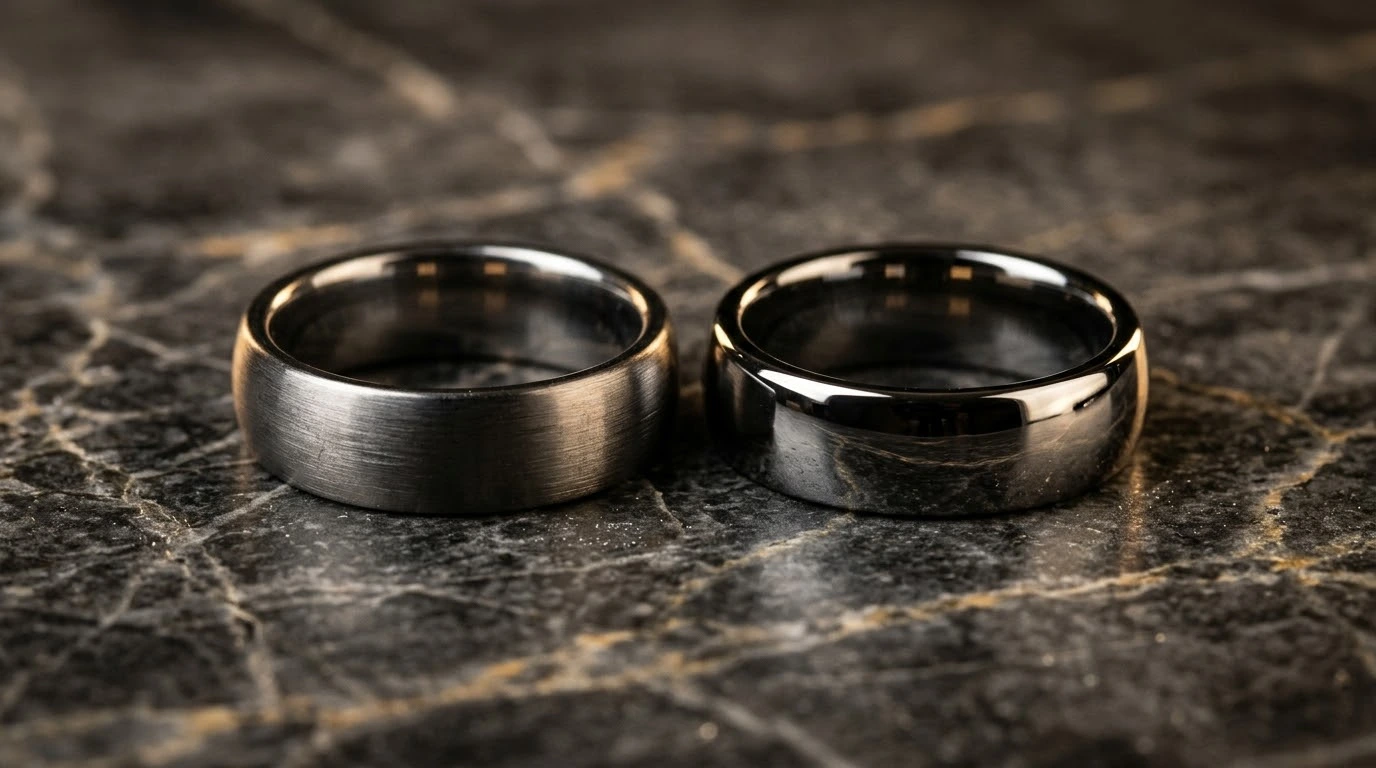

Choosing a ring is rarely just about the metal. It’s about how it sits on your hand day after day, year after year. For anyone weighing their options, tungsten rings bring something most traditional metals simply can’t—a finish that genuinely holds up. The question most buyers hit at some point is whether to go matte or gloss. Both look sharp in the display case. The difference shows up in real life, and that’s where it actually matters.
How Each Finish Is Made on Tungsten Rings
A gloss finish, also called a high-polish or mirror finish, is made by buffing the tungsten surface through gradually finer abrasives until it kind of reflects like glass, sort of. The end result is a bright, tidy shine with almost no surface texture at all. Light hits it and bounces right back, which gives that crisp formal vibe.
A matte finish does the opposite thing. Instead of smoothing everything down to a super reflective state, the makers slightly roughen it, sometimes by brushing, sometimes with sandblasting, so light gets scattered more than it gets reflected. You get this fine, directional grain running across the metal, cutting glare and giving the ring a softer low sheen look. Some folks call it brushed, and honestly those terms get used like they are the same, even though the actual texture can vary depending on how it was applied.
Both approaches hold up exceptionally well on tungsten because the metal is tough enough to keep that surface state pretty much permanently, even with normal daily wear. That’s a big difference compared to gold or silver, where finishes wear down in a noticeable way as time goes on.
The Case for Gloss: When Mirror Polish Makes Sense
Gloss has been the go-to for dress rings for decades, and the reasoning is pretty simple. The polishing process on tungsten creates that mirror-like finish that stays sharp and reflective, and tungsten’s scratch resistance helps it keep its appearance even when the outside world is less gentle. With gold, it’s not really the same deal. If you polish a gold ring, regular daily contact can dull it within months. With tungsten, the shine just… stays.
Gloss tends to look best in formal situations. If you’re shopping for a wedding band you’ll wear with suits or a ring that shows up in photos next to dress clothes, the high-polish option reads as clean and timeless. It has visual weight without feeling flashy, and because tungsten naturally leans dark grey, it catches light in a way that looks pricey, without the precious-metal price tag.
Platinum might develop a dull spot from repeated friction, but a tungsten carbide ring keeps a mirror-like polish through the same kind of contact. So the real argument for gloss on tungsten is staying power: you get the formal look without the constant upkeep.
The Case for a Matte Finish on Tungsten Rings
Matte has been gaining real traction in men’s jewelry. Where gloss is sharp and bright, matte is quieter and more textured. It often feels more modern, less classic. For men who feel like polished metal is too strict-looking or who work in hands-on, everyday conditions, a brushed finish can be more practical.
A matte finish also hides the tiny scratches that show up from everyday use much better than a polished surface. Even though tungsten resists deep scratches better than almost any other ring metal, those micro-marks from keys, tools, and hard surfaces still build up over time. On a polished ring, those marks catch the light and stand out. On a matte ring, they blend right into the texture and end up looking almost invisible.
On wider bands, matte becomes even more noticeable. The grain turns more tactile, and the ring looks solid and substantial. If you’re choosing a wider band, which is pretty common in men’s wedding rings, matte often showcases the design more effectively than gloss, which can look flatter across a bigger surface.
One practical heads-up: matte finishes don’t show fine surface marks the same way as polished ones, and over months and years the surface can develop a gentle patina as micro-marks accumulate. Some people like natural aging because it adds character. Others want the original look, which means occasional professional re-matting. So it’s good to know that up front before you buy.
Your Lifestyle Should Drive the Decision
This is the part most buying guides kind of skim past. Your finish should match how you actually live, not only what looks best in a product photo.
If you work with your hands—construction, mechanics, outdoor labor, any kind of physical job—a matte finish handles that world better. It disguises contact marks, and it doesn’t show fingerprints as loudly. It also keeps its look without extra thought. Tungsten’s durability helps too, especially if you’re active or work in rough settings, and matte keeps that tough look working longer between cleanings.
If your life is more office-based, or the ring is mainly a dresspiece for weddings and formal events, gloss is the better move. It photographs better and works more naturally with formal wear, and tungsten’s hardness means you’re not going to lose that shine just from wearing it through a normal day.
Some rings mix finishes, too—like a brushed outside with a polished inner band or beveled edges—and that can be worth considering if you really can’t pick one direction. That combo gives you matte practicality on the surface that takes the most contact while keeping the refined polish detail where it’s actually visible.
Which Finish Actually Lasts Longer?
Neither of the finishes is really more durable than the other when you look at the metal itself. Durability comes from the metal, not the surface treatment. I mean, the coating is more like a thin layer of style anyway. Tungsten carbide is up near the top of the Mohs hardness scale, so whether your ring is matte or shiny gloss, the actual material keeps its nature the same way. It resists scratches, bending, and tarnishing at basically the same rate.
What changes is how visible wear appears over time. A matte ring looks consistent longer because minor contact marks don’t stand out against the existing texture. A gloss ring looks sharper when new but makes any surface contact slightly more visible. That doesn’t mean it scratches easily—it means when minor marks do occur, the reflective surface shows them more clearly than a brushed one would.
Both finishes will outlast gold, silver, or platinum in terms of maintaining their appearance. That’s the lasting advantage of tungsten rings across the board, regardless of which surface treatment you choose.
Final Verdict
Go gloss if you want something formal, clean, and high contrast. Go matte if you want something modern and better suited to active day-to-day wear. Think a bit about where you spend most of your days and where the ring will kind of live for real on your hand. Let that guide you. The finish that matches your life is the right one.


Join the conversation