
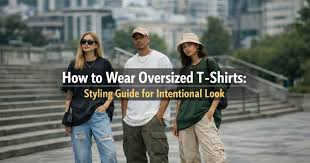

Oversized t-shirts look effortless on the right person, but anyone who has bought one online knows the risk. Order the wrong size and you end up with a shirt that looks like a tent, sits awkwardly on your shoulders or hangs down to your knees. Order the right one and you get that relaxed, modern silhouette that feels as good as it looks.
The difference comes down to fit. “Oversized” does not mean “as big as possible.” It means a shirt that is cut roomier on purpose, with proportions that look deliberate. In this complete guide, we’ll break down exactly how an oversized tee should fit at the shoulders, chest, sleeves and hem, how to pick your size, and how to fix common problems. If you’re also browsing graphic t shirts Pakistan shoppers can choose from, these fit rules apply to nearly every style.
What “Oversized” Actually Means
A standard t-shirt follows your body shape closely. The shoulder seam sits on the edge of your shoulder, the sleeves end near the top of your bicep and the hem falls around your waistband.
An oversized t-shirt changes those proportions in a planned way:
- Wider body with extra room through the chest and waist
- Dropped shoulder seam that sits below the natural shoulder
- Longer, wider sleeves that reach mid-bicep or slightly lower
- Longer hem that falls around the hip
Everything is scaled up together, so the shirt still looks balanced. A shirt that is simply a large size made for someone else usually looks wrong because only some measurements are bigger.
Oversized vs. Regular Fit vs. Baggy
It helps to know the difference between these terms.
- Regular fit: Follows your body with a little ease. Neat and traditional.
- Relaxed fit: Slightly roomier, but shoulders and length remain close to standard.
- Oversized fit: Intentionally loose with a dropped shoulder and extra length.
- Baggy or too big: Loose without structure. The shoulders hang too low, the sleeves swallow your arms and the hem hides everything.
The goal is to land in the oversized category, not the “too big” one.
The Shoulder Seam: Your First Check
The shoulder seam is the most important fit indicator.
On a good oversized tee, the seam sits roughly 2 to 5 centimeters (about 1 to 2 inches) below your natural shoulder point. It should fall onto the top of your upper arm, creating that classic dropped-shoulder look.
Too high: If the seam sits on your shoulder bone, the shirt is a regular fit.
Too low: If the seam hangs near the middle of your upper arm or close to your elbow, the shirt is too big. It will look sloppy and make your frame look smaller.
If you remember one rule from this guide, make it this one.
Sleeve Length and Width
Oversized sleeves are longer and wider than normal, but they should still look controlled.
- Ideal length: Between mid-bicep and just above the elbow.
- Too short: Looks like a regular tee.
- Too long: Reaching or passing the elbow makes the shirt look borrowed.
- Width: There should be visible room around your arm, but the sleeve should not balloon.
Sleeves that are too wide can make slim arms look lost, so check the sleeve opening measurement in the size chart if it’s provided.
Chest and Body Width
The chest should feel roomy without being enormous. A good rule is to have about 10 to 20 centimeters (4 to 8 inches) of extra room across the chest compared with your actual chest measurement, depending on how baggy you want to go.
- A little ease: Looks relaxed and neat.
- A lot of ease: Looks streetwear-inspired and dramatic.
The shirt should hang straight from the shoulders to the hem. It should not cling, twist or bunch around your stomach. If the fabric billows out heavily at the sides, the body is probably too wide for your frame.
Shirt Length: Where the Hem Should Land
Length changes the entire look of an outfit.
- Ideal length: Mid-hip, or just below your waistband.
- Slightly longer: Works for a streetwear look, as long as your legs don’t disappear.
- Too long: Past the middle of your thighs. This shortens your legs and makes the outfit look heavy.
If you’re tall, you can wear a longer hem easily. If you’re short, keep the hem closer to the hip and consider a half-tuck to keep proportions balanced.
The Neckline Should Stay Snug
Here’s a detail many people miss. Even though the body of the shirt is loose, the collar should stay firm and close to the neck. A ribbed crew neck that fits properly keeps the shirt looking structured. A wide, stretched or sagging neckline makes the whole tee look old and shapeless.
Check that the collar has thick ribbing and returns to shape after being stretched slightly.
How to Measure Yourself for the Right Size
The best way to buy an oversized tee online is to compare your measurements with the brand’s size chart.
- Chest: Measure around the fullest part of your chest.
- Shoulder width: Measure from one shoulder point to the other across your back.
- Height: Note this to judge hem length.
- A favorite tee: Lay your best-fitting oversized shirt flat and measure its chest width, length and sleeve length. Compare these numbers with the new shirt.
Using a shirt you already love is one of the most reliable methods. It removes the guesswork and tells you exactly what proportions you prefer.
Should You Size Up?
It depends on how the shirt is made.
- If the tee is already cut oversized: Stick to your regular size. Sizing up will likely make it too large.
- If it’s a regular-fit tee and you want an oversized look: Go up one size, or two at most for a very loose effect.
- If you’re between sizes: Choose the smaller one if you want a neat look, and the bigger one for a more dramatic fit.
Always read the product description. Brands label “oversized,” “relaxed” and “boxy” differently, so the size chart matters more than the label.
Fit by Body Type
Slim or lean builds: Stay close to your normal size in a true oversized cut. Going too big can make you look swamped. Look for medium-width sleeves and a mid-hip length.
Broad or athletic builds: Make sure the shoulders and chest have room without pulling. You may only need your regular size in an oversized cut.
Tall frames: Look for longer hems and sleeves so the proportions stay balanced.
Shorter frames: Choose a shorter hem and slightly narrower sleeves, and use a half-tuck to create shape.
Curvier figures: A boxy cut hangs straight from the shoulders and creates a clean, relaxed line. Tucking the front can define the waist.
Fabric Affects Fit More Than You Think
The same pattern can look completely different depending on the fabric.
- Heavyweight cotton (200–240 GSM): Holds its shape, drapes cleanly and gives a premium, structured look.
- Mid-weight cotton (160–200 GSM): Comfortable and flexible, with a softer drape.
- Thin or lightweight fabric: Clings and wrinkles, which can make an oversized tee look flimsy.
Also check for shrinkage. Pure cotton can shrink slightly after washing, so a shirt that fits perfectly out of the bag may sit a little shorter later.
Signs Your Oversized Tee Fits Perfectly
Use this quick checklist when you try one on.
- The shoulder seam sits a little below your shoulder, not near your elbow.
- Sleeves end between mid-bicep and just above the elbow.
- The hem lands around your hip or just below your waistband.
- The collar is firm and sits close to your neck.
- The body hangs straight without twisting or clinging.
- You can move freely and the shirt doesn’t look like it’s wearing you.
Signs It’s Too Big or Too Small
Too big:
- Shoulder seams hang near the elbow
- The hem reaches the middle of your thighs
- The neckline slips off one shoulder
- Sleeves cover most of your forearm
Too small:
- The shoulder seam sits right on the shoulder bone
- The fabric pulls across the chest or stomach
- The hem rides up when you move
- It looks like a regular tee, not an oversized one
Styling Tips to Perfect the Fit
Even when you choose the right size, a few styling tricks help.
- Half-tuck: Tuck the front corner into your waistband to add shape.
- Balance with bottoms: Pair a loose tee with straight or tapered pants for a clean silhouette.
- Roll the sleeves slightly: A small cuff makes sleeves look tidier.
- Use a belt: It defines your waist when tucking.
- Add a layer: An open overshirt or jacket creates structure.
Common Fit Mistakes to Avoid
- Buying by label alone. Always check measurements.
- Going several sizes up. It’s the quickest way to look drowned in fabric.
- Ignoring shoulder placement. It matters more than chest width.
- Choosing thin fabric. It won’t hang well in a loose cut.
- Forgetting height. A hem that suits a tall person may overwhelm a shorter one.
- Skipping the return policy. Fit can vary, so buy where exchanges are possible.
Caring for Your Tee So the Fit Lasts
Wash inside out in cold water and avoid hot dryers, which shrink fabric and loosen collars. Air dry in the shade and fold the shirt instead of hanging it to prevent shoulder bumps. Good care keeps the fit and shape consistent for much longer.
Final Thoughts
A well-fitting oversized t-shirt is all about intentional proportions: a dropped shoulder that sits just below your natural line, sleeves that end near mid-bicep, a hem that lands at the hip and a snug collar that keeps everything looking neat. Choose quality fabric, check the size chart and don’t be afraid to compare against a shirt you already love.
Get those basics right and the oversized look becomes easy. You’ll feel comfortable, look polished and wear it with complete confidence.


Join the conversation