

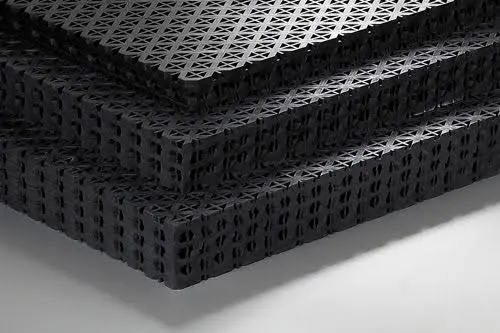

Unwanted vibration is a common challenge in industrial environments. Operating machinery can transmit movement through floors, workbenches, equipment frames, and nearby structures, potentially contributing to noise, wear, and reduced operating stability. Vibration damping pads are among the components considered when designing equipment supports and industrial machine installations, alongside other mechanical components used to improve equipment performance.
Choosing the right damping solution requires more than selecting a pad that fits beneath a machine. Material properties, equipment weight, operating speed, vibration frequency, and environmental conditions all influence performance. Understanding these factors helps maintenance teams, facility managers, and equipment designers make more informed decisions about vibration control.
What Are Vibration Damping Pads?
Vibration damping pads are resilient components placed between machinery and its supporting surface to help reduce the transmission of vibration. They work by absorbing and dissipating some of the mechanical energy generated during equipment operation.
Many designs use elastomeric materials such as rubber, neoprene, or polyurethane. These materials deform slightly under load, helping isolate equipment from its surroundings. Some products combine multiple material layers or incorporate reinforced surfaces to provide additional stability.
It is important to distinguish vibration damping from vibration isolation. Damping reduces the energy associated with vibration, while isolation aims to limit how much vibration passes from one structure to another. A suitable pad may contribute to both, but its actual performance depends on its design and operating conditions.
How Do Damping Pads Work?
When a machine operates, rotating parts, reciprocating movements, and mechanical contact can create vibration. If the equipment is mounted directly onto a rigid surface, some of that movement may transfer into the surrounding structure.
A damping pad introduces a resilient layer between the machine and its base. As the material flexes, it dissipates some vibrational energy as heat. This can help reduce transmitted movement and limit certain forms of equipment noise.
However, a pad cannot eliminate every vibration problem. Resonance, poor machine alignment, damaged bearings, and structural weaknesses may require additional investigation.
Common Types of Vibration Damping Pads
Different materials and designs suit different operating environments. Understanding their characteristics helps narrow the selection.
1. Rubber Damping Pads
Rubber pads are widely used because they offer flexibility, resilience, and useful vibration absorption. They are commonly found beneath pumps, compressors, motors, and other machinery.
Natural and synthetic rubber compounds have different resistance characteristics. The appropriate formulation depends on temperature, exposure to oils, chemicals, moisture, and expected loading.
2. Neoprene Pads
Neoprene is a synthetic rubber valued for its resistance to weathering, moisture, and certain oils. It can be suitable for equipment installed in workshops, manufacturing facilities, and other environments where exposure conditions may vary.
Its performance still depends on the specific compound and operating temperature, so product specifications should be reviewed before selection.
3. Polyurethane Pads
Polyurethane offers a combination of resilience, load-bearing capability, and resistance to abrasion in many applications. It may be considered where equipment supports experience repeated loading or contact with surfaces that can cause wear.
Different polyurethane formulations have different stiffness and damping characteristics. They should not be treated as interchangeable.
4. Cork and Composite Pads
Cork-based and layered composite pads are used in certain installations where vibration control and load distribution are both important. Their construction may combine resilient materials to achieve specific performance characteristics.
The correct choice depends on the machine’s weight, vibration profile, and the manufacturer’s recommended application range.
Benefits of Using Vibration Damping Pads
A properly selected damping pad can contribute to several practical improvements.
- Reduced vibration transmission: Resilient materials can limit the movement transferred from equipment to floors, platforms, and supporting structures.
- Lower noise in suitable applications: Reducing structure-borne vibration may help limit certain types of operational noise.
- Protection of surrounding equipment: Less transmitted movement can reduce disturbance to nearby machinery, instruments, and work areas.
- Improved equipment stability: Appropriate supports can help maintain a more controlled contact between machinery and its foundation.
- Potential maintenance benefits: Reducing unnecessary vibration may help limit stress on some connections and surrounding components.
These benefits depend on correct installation and suitable product specifications. Damping pads should complement regular equipment maintenance rather than replace it.
Industrial Applications of Vibration Damping Pads
Vibration control is relevant across manufacturing, processing, commercial facilities, and equipment installations.
Manufacturing Machinery
Production equipment such as presses, packaging machines, and automated assembly systems can generate repeated movement during operation. Suitable damping supports may help reduce vibration transmission to the floor and nearby workstations.
For example, a packaging machine installed on a concrete floor may benefit from an engineered support arrangement that reduces transmitted vibration while maintaining proper alignment.
Pumps and Compressors
Pumps and compressors often contain rotating or reciprocating components that generate vibration. Resilient supports may help reduce the transfer of some operating movement into the equipment foundation.
However, excessive vibration can also indicate imbalance, misalignment, or mechanical wear. Those issues should be inspected rather than addressed by adding thicker pads.
HVAC and Building Equipment
Heating, ventilation, and air-conditioning systems include fans, motors, and compressors that can transmit vibration through mounting structures. Appropriate isolation components may help reduce disturbances in occupied areas.
The support design should account for equipment weight, connection points, ductwork, and piping so that vibration is not transferred through rigid connections.
Laboratory and Precision Equipment
Sensitive instruments may require a stable operating environment. Depending on the equipment, specialized vibration-control supports can help reduce disturbances from nearby machinery or building structures.
For highly sensitive applications, standard rubber pads may not provide sufficient isolation. Equipment manufacturers or vibration-control specialists should determine the appropriate solution.
How to Choose the Right Vibration Damping Pad
Selecting a suitable product starts with understanding the equipment and its operating environment.
1. Determine the Equipment Load
Calculate the supported weight and understand how that load is distributed across the mounting points. A pad that is too soft may compress excessively, while one that is too stiff may provide limited vibration control.
2. Consider Vibration Characteristics
Identify the machine’s operating speed and the type of movement it produces. Different vibration frequencies require different support characteristics. For complex installations, a qualified engineer may need to assess the system.
3. Review Material Compatibility
Consider exposure to oils, cleaning products, moisture, heat, and outdoor conditions. Select a material rated for the actual environment rather than relying on general descriptions.
4. Check Dimensions and Mounting Requirements
Confirm pad thickness, surface area, shape, and compatibility with the equipment base. The support should distribute the load appropriately and remain stable during operation.
Common Mistakes and Practical Recommendations
One frequent mistake is selecting pads based only on thickness or appearance. Material stiffness, load capacity, and vibration characteristics are equally important.
Another is ignoring the machine’s condition. Loose fasteners, worn components, poor alignment, and unbalanced rotating parts can create vibration that damping pads alone cannot correct.
For better results, record baseline vibration and noise conditions before making changes. Follow the equipment manufacturer’s mounting guidance, inspect pads periodically for cracking or compression, and replace components that show signs of deterioration.
Avoid stacking unrelated pads or modifying supports without checking their effect on equipment stability. Where machinery has significant dynamic loads or safety-critical mounting requirements, use an engineered support arrangement.
Conclusion
Vibration damping pads can help control transmitted movement, reduce certain forms of noise, and support more stable industrial equipment installations. Rubber, neoprene, polyurethane, and composite designs offer different characteristics for different operating conditions. By evaluating equipment loads, vibration behavior, material compatibility, and mounting requirements, facility teams can make better selection decisions. The most effective solution is one matched to the machine and supported by sound maintenance practices.



Join the conversation