


Padel is one of the fastest-growing racket sports worldwide, creating increasing demand for professionally designed and constructed padel courts. Whether you are developing a sports facility, upgrading an existing tennis centre, building a private court, or investing in a commercial sports complex, quality padel court construction is essential for safety, durability, and an excellent playing experience.
A professionally constructed padel court combines a carefully prepared foundation, high-performance artificial turf, strong structural framing, tempered glass panels, and appropriate lighting. Every component must work together to create a reliable playing surface that meets the needs of recreational and competitive players.
What Is Padel Court Construction?
Padel court construction involves designing and installing a specialised enclosed sports court for padel tennis. Unlike traditional tennis courts, padel courts feature glass and metal walls that keep the ball in play, making the surrounding structure an important part of the playing experience.
A standard doubles padel court measures 20 metres long and 10 metres wide. It is enclosed by walls that typically combine glass panels and metal mesh fencing. The playing area is divided by a net, with service lines and markings positioned according to the sport’s regulations.
Professional construction requires careful planning, accurate measurements, suitable materials, and specialist installation techniques. The objective is to deliver a court that offers consistent ball response, player safety, and long-term structural stability.
Planning and Designing a Padel Court
Successful padel court construction starts with a detailed design and site assessment. Before installation begins, contractors must evaluate the available space, ground conditions, drainage requirements, access routes, and intended court usage.
The location should provide sufficient surrounding clearance for players, maintenance activities, and safe access. Outdoor courts also need consideration of sunlight, wind exposure, rainwater management, and neighbouring properties.
Design considerations include:
Court dimensions: Ensure the playing area follows recognised padel court specifications.
Orientation: Consider sunlight and prevailing winds when positioning outdoor courts.
Accessibility: Provide suitable entrances and safe circulation areas.
Drainage: Prevent standing water from affecting the playing surface.
Lighting: Plan appropriate illumination for evening games.
Future expansion: Allow space for additional courts, spectator areas, and supporting facilities.
A detailed construction plan helps prevent costly adjustments and ensures that the finished facility meets its intended purpose.
Essential Components of a High-Quality Padel Court
The quality of a padel court depends on the materials and installation methods used throughout the project.
1. Ground Preparation and Foundation
The foundation provides the structural support for the entire court. Contractors begin by clearing and levelling the site, removing unsuitable materials, and preparing the ground to achieve a stable base.
Depending on the ground conditions and court design, construction may involve compacted sub-base materials and a reinforced concrete slab. The foundation must be sufficiently strong and level to support the glass panels, steel framework, and playing surface.
Drainage is particularly important for outdoor installations. Proper falls and drainage provisions help remove rainwater and protect the court from moisture-related damage.
2. Steel Structure and Glass Panels
The enclosure is one of the defining features of a padel court. A strong steel framework supports the glass panels and metal mesh sections, creating a secure playing environment.
Tempered safety glass is commonly used because it provides visibility, strength, and suitable ball rebound characteristics. The glass must be correctly specified, handled, and installed using appropriate fixing systems.
The metal framework should have a durable protective finish to help resist corrosion, particularly in outdoor environments.
3. Artificial Turf Installation
Artificial turf is the primary playing surface for most modern padel courts. It influences ball bounce, traction, player movement, and overall comfort.
Specialist padel turf is designed to provide consistent playing characteristics while supporting safe movement. Sand-filled artificial grass systems are commonly used, with the quantity and distribution of infill selected according to the turf manufacturer’s specifications.
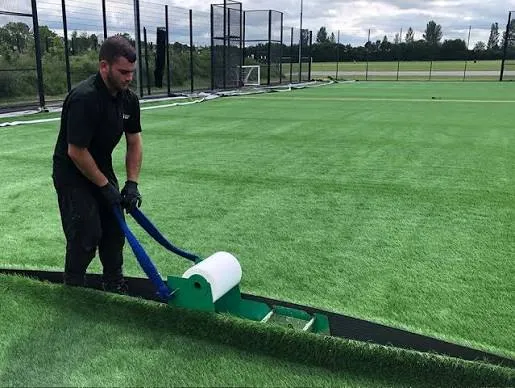
Correct installation includes preparing the underlying surface, laying the turf, securing seams, applying silica sand where specified, and brushing the fibres to distribute the infill evenly.
4. Netting and Court Markings
The central net divides the playing area into two halves and must be installed at the correct height and tension. Court lines should be clearly visible, accurately positioned, and compatible with the playing surface.
Precise markings are important because they help players follow official rules and maintain a consistent playing experience.
5. LED Sports Lighting
Lighting makes it possible to use padel courts during evenings and periods of reduced natural light. LED sports lighting is a popular option because it offers energy efficiency, long operating life, and reliable illumination.
Lighting design should minimise glare, reduce distracting shadows, and provide suitable visibility across the entire playing area. Commercial and competitive facilities may have additional lighting requirements depending on their intended use.
The Padel Court Construction Process
A structured installation process helps ensure quality and minimise construction delays.
The contractor assesses the site, checks ground conditions, reviews access requirements, and finalises the court design.
The installation area is cleared, excavated where necessary, levelled, and compacted to establish a stable foundation.
The specified sub-base and concrete foundation are installed, including suitable drainage provisions and curing time.
The steel framework is assembled and securely anchored. Glass panels and mesh sections are then installed according to the manufacturer’s specifications.
Specialist turf is fitted, seams are secured, and infill is distributed evenly where required.
The net, court markings, lighting, and remaining accessories are installed and checked.
The completed court is inspected for structural stability, surface consistency, glass security, drainage, lighting performance, and general safety before opening.
Indoor vs Outdoor Padel Court Construction
Choosing between an indoor and outdoor padel court depends on the available space, budget, climate, and business objectives.
Outdoor courts can be more straightforward to establish where suitable land is available. They provide an open playing environment but require weather-resistant materials, appropriate drainage, and maintenance against environmental exposure.
Indoor courts offer greater protection from rain, wind, and extreme temperatures. They can support more consistent year-round operation, although building construction, ventilation, ceiling height, and lighting require additional consideration.
Both options can deliver excellent playing conditions when designed and installed professionally.
How Much Does Padel Court Construction Cost?
The cost of constructing a padel court varies depending on several project-specific factors. These include the foundation requirements, court model, glass specification, artificial turf, lighting, site accessibility, and whether the installation is indoors or outdoors.
Additional expenses may include planning approvals, electrical connections, drainage systems, roofing, fencing, landscaping, and spectator facilities.
For an accurate estimate, request a detailed quotation covering materials, groundwork, installation, transport, equipment, and any additional site preparation. Comparing quotations based on specifications rather than price alone can help you make a better long-term investment.
Maintenance and Long-Term Performance
Regular maintenance protects the playing surface, enclosure, and structural components.
Recommended maintenance activities include:
Brush artificial turf regularly to maintain even infill distribution.
Remove leaves, dirt, and other debris from the court.
Inspect glass panels and structural fixings for visible damage.
Check the net tension and condition.
Examine drainage systems to prevent blockages.
Inspect LED lighting and electrical connections.
Arrange professional inspections when necessary.
Following the manufacturer’s maintenance recommendations helps extend the court’s service life and maintain consistent playing conditions.
Choosing the Right Padel Court Construction Company
Selecting an experienced contractor is essential for a successful project. Look for a company with relevant sports construction experience, quality materials, knowledgeable installation teams, and a clear project management process.
Before making a decision, consider:
Previous padel court construction projects.
Quality and specifications of glass, turf, and steel components.
Understanding of recognised court standards.
Foundation and drainage expertise.
Installation warranties and aftercare support.
Transparent quotations and realistic project timelines.
A reliable contractor should explain the construction process, recommend suitable materials, and provide guidance on ongoing maintenance.
Conclusion
Padel court construction is a valuable investment for sports clubs, schools, leisure centres, commercial operators, and private property owners. From ground preparation and structural installation to artificial turf, glass panels, and LED lighting, every element contributes to the safety and performance of the finished facility.
By choosing suitable materials, following recognised specifications, and working with experienced sports construction professionals, you can create a durable padel court that delivers an enjoyable playing experience for years to come. Careful planning and regular maintenance will further protect your investment while supporting the continued growth of this exciting sport.
Frequently Asked Questions (FAQs)
1. What are the standard dimensions of a padel court?
A standard doubles padel court measures 20 metres long and 10 metres wide, with an enclosed playing area featuring glass and mesh walls.
2. How long does padel court construction take?
The timeline depends on site preparation, foundation work, weather conditions, materials, and installation requirements. A straightforward project may take several weeks, while more complex developments require additional time.
3. What flooring is used for padel courts?
Specialist artificial turf is commonly used because it provides suitable grip, ball response, and player movement. Sand-filled systems are widely installed.
4. Can a padel court be built indoors?
Yes. Indoor padel courts are popular at sports centres and commercial facilities. They require adequate ceiling height, ventilation, lighting, and structural space.
5. Does a padel court require regular maintenance?
Yes. Regular turf brushing, debris removal, glass inspections, drainage checks, and structural maintenance help preserve performance and safety.
6. Is padel court construction a good investment?
It can be a worthwhile investment for sports clubs, leisure centres, and commercial operators, particularly where there is strong local demand for padel facilities. However, profitability depends on construction costs, operating expenses, utilisation, and pricing.



Join the conversation