

Businesses have more ways to communicate with audiences than ever before. A company can publish an announcement on its website, share updates through social media, send an email newsletter, or work with journalists and online publications. Among these options, press releases remain a useful format for communicating important business news in a structured and professional way.
However, writing a press release is only one part of the process. Getting the announcement in front of relevant journalists, publications, industry audiences, and potential customers requires an effective distribution strategy. This is where press release distribution services can play an important role.
What Is Press Release Distribution?
Press release distribution is the process of delivering a company’s news announcement to selected media outlets, journalists, news websites, industry publications, and other relevant channels.
A press release may announce a new product, company milestone, executive appointment, partnership, research finding, event, expansion, award, or other newsworthy development.
Instead of publishing the announcement only on a company website, distribution can help make the information available to a broader audience.
The exact reach depends on the distribution provider, selected package, geographic targeting, industry, and type of media included.
Why Is Press Release Distribution Important?
Publishing a press release does not automatically mean that journalists or readers will discover it. Distribution helps address this challenge by placing the announcement where relevant audiences may already be looking for business and industry information.
For example, a technology company launching a new software platform may want its announcement to reach technology publications and business audiences. A local company opening a new location may have a different objective and may focus on regional media.
The value of distribution therefore comes from connecting the right announcement with appropriate audiences.
Common Types of Press Release Distribution
Press release distribution can be organized in several ways depending on the intended audience.
Local Distribution
Local distribution focuses on a specific city, state, or geographic area. This can be useful for businesses whose activities are closely connected to a particular community.
Examples include:
Opening a new business location
Local events
Community initiatives
Regional partnerships
Local business milestones
A local announcement may be more relevant to regional publications than to a national business audience.
National Distribution
National distribution is designed to reach audiences across a larger geographic market, such as the United States.
This approach may be appropriate for announcements that have broader relevance, including major product launches, company expansions, funding announcements, or significant corporate developments.
National distribution does not guarantee editorial coverage. It simply increases the potential availability of the announcement across participating distribution channels.
Industry-Specific Distribution
Some announcements are most useful to a particular professional audience. Industry-focused distribution attempts to reach publications and audiences connected with sectors such as technology, finance, real estate, healthcare, manufacturing, education, or entertainment.
For example, a software company may benefit from reaching technology-focused readers rather than distributing every announcement to unrelated audiences.
International Distribution
Companies operating across multiple countries may choose international distribution. This can help businesses communicate major announcements to audiences in different geographic markets.
International distribution requires careful consideration of language, local media preferences, time zones, and the relevance of the announcement to each market.
What Makes a Press Release Newsworthy?
One of the most important aspects of press release distribution is the quality of the announcement itself.
A distribution service cannot turn an uninteresting announcement into compelling news. The information should have a clear reason for being published.
Potentially newsworthy topics include:
New products or services
Business expansions
Strategic partnerships
Company milestones
Executive appointments
Research or survey results
Awards and recognitions
Major investments or funding
Community initiatives
Important events
Significant organizational changes
A strong press release should explain what happened, why it matters, and who is affected.
Important Elements of a Press Release
Although formats can vary, most professional press releases contain several standard components.
Headline
The headline should communicate the main news clearly and accurately. It should help readers understand the announcement without requiring them to read the entire release.
Dateline
A dateline generally identifies the location and date associated with the announcement.
Introduction
The opening paragraph should summarize the most important information. Readers should quickly understand what the announcement is about.
Supporting Details
Additional paragraphs can provide background, statistics, explanations, quotations, and relevant information.
Quotes
Quotes from company executives, experts, or relevant stakeholders can add context and perspective. A useful quote should contribute information rather than simply repeat the headline.
Boilerplate
A boilerplate provides brief background information about the organization issuing the announcement.
Media Contact
Depending on the distribution format, contact information may be included so journalists can request additional details.
Press Release Distribution and SEO
Press releases can also intersect with digital marketing and search visibility, but expectations should remain realistic.
A distributed press release may appear across news-related websites and online platforms. This can increase the number of places where a company’s announcement can be discovered.
However, businesses should not treat press releases simply as a method for obtaining large numbers of backlinks. Search engines evaluate links and content using many signals, and the presence of a press release does not guarantee improved rankings.
The primary purpose of a press release should remain communication and news distribution.
Businesses looking at the broader digital picture may combine public relations with other activities such as content development, website optimization, and digital marketing. For example, SP Tech Solutions works within the broader digital marketing space, where PR-related communication can be considered alongside other online visibility strategies.
How Distribution Services Work
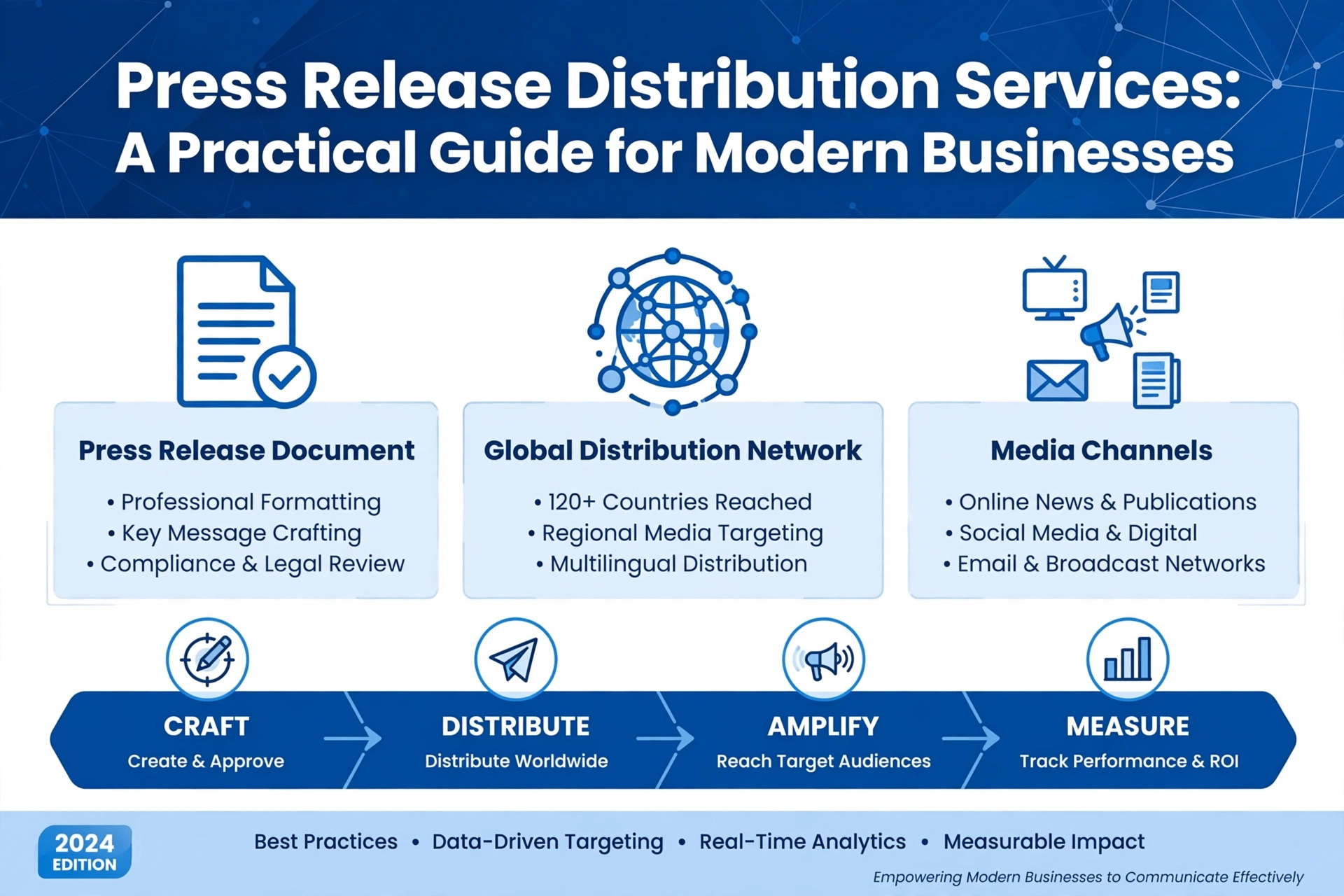
The distribution process generally involves several stages.
First, a business prepares its announcement according to the requirements of the selected distribution provider. The release may then go through a review process to check formatting, content, and compliance requirements.
After approval, the announcement is distributed through the provider’s available network.
Depending on the service, the distribution may include news websites, industry publications, regional outlets, databases, journalists, or other media channels.
After distribution, businesses may receive a report showing where the release was published or syndicated. The amount of reporting varies by provider.
What Should Businesses Consider Before Choosing a Service?
There are several factors worth reviewing before selecting a distribution service.
Distribution Network
Businesses should understand which types of publications and media channels are included. A large list of outlets does not necessarily mean that every outlet is relevant to the announcement.
Geographic Coverage
Consider whether the announcement requires local, national, or international distribution.
Industry Relevance
For specialized businesses, industry relevance may be more useful than broad distribution.
Editorial Requirements
Different providers may have different rules regarding formatting, promotional language, claims, links, images, and other content.
Reporting
Businesses should determine what type of reporting is provided after distribution. Useful reports may show publication locations, audience information, or other available performance data.
Cost
Pricing can vary significantly depending on distribution reach, geographic targeting, media network, and additional features. Businesses should compare what is actually included rather than looking only at the headline price.
Common Mistakes to Avoid
Several mistakes can reduce the effectiveness of a press release.
One common mistake is making every announcement sound like an advertisement. A press release should communicate news rather than read like a sales page.
Another issue is using exaggerated claims without supporting information. Clear facts, credible data, and specific details generally make an announcement easier to understand.
Businesses should also avoid distributing announcements that have little or no news value. Frequent low-value releases can make it harder for audiences to pay attention when genuinely important news is published.
Finally, businesses should review the final version carefully before distribution. Errors in company names, dates, statistics, quotes, or contact information can create unnecessary problems after publication.
Measuring the Results
Measuring press release performance requires more than counting how many websites published an announcement.
Businesses can consider several indicators, including:
Number of publication placements
Referral traffic
Brand mentions
Audience engagement
Media inquiries
Website visits following distribution
Social media activity
Coverage generated by journalists
Interest from potential partners or customers
The appropriate measurements depend on the original purpose of the announcement.
For example, a company seeking media attention may focus on journalist responses, while a business announcing a new location may be more interested in regional awareness and website traffic.
The Role of Press Releases in a Broader Communication Strategy
Press releases are most useful when they form part of a wider communication strategy.
A company might publish a press release for a major announcement, create a detailed article explaining the development, share the news through social media, and provide additional information on its website.
This creates multiple opportunities for audiences to discover and understand the announcement.
The approach also allows businesses to adapt the same core information for different audiences without treating every channel as identical.
Conclusion
Press release distribution is a structured way for businesses to communicate news beyond their own websites. Local, national, industry-specific, and international distribution options allow organizations to select channels based on the nature and audience of an announcement.
The effectiveness of a press release depends on several factors, including the quality of the news, accuracy of the information, relevance of the audience, distribution network, and follow-up strategy.
Rather than viewing press releases as a standalone marketing tactic, businesses can consider them as one part of a broader communications and digital visibility strategy. Companies such as SP Tech Solutions can be part of this broader digital approach by supporting businesses with online visibility and communication strategies. When an announcement contains genuine news value and is distributed thoughtfully, it can provide another way for businesses to share important developments with audiences in the United States and beyond.



Join the conversation