
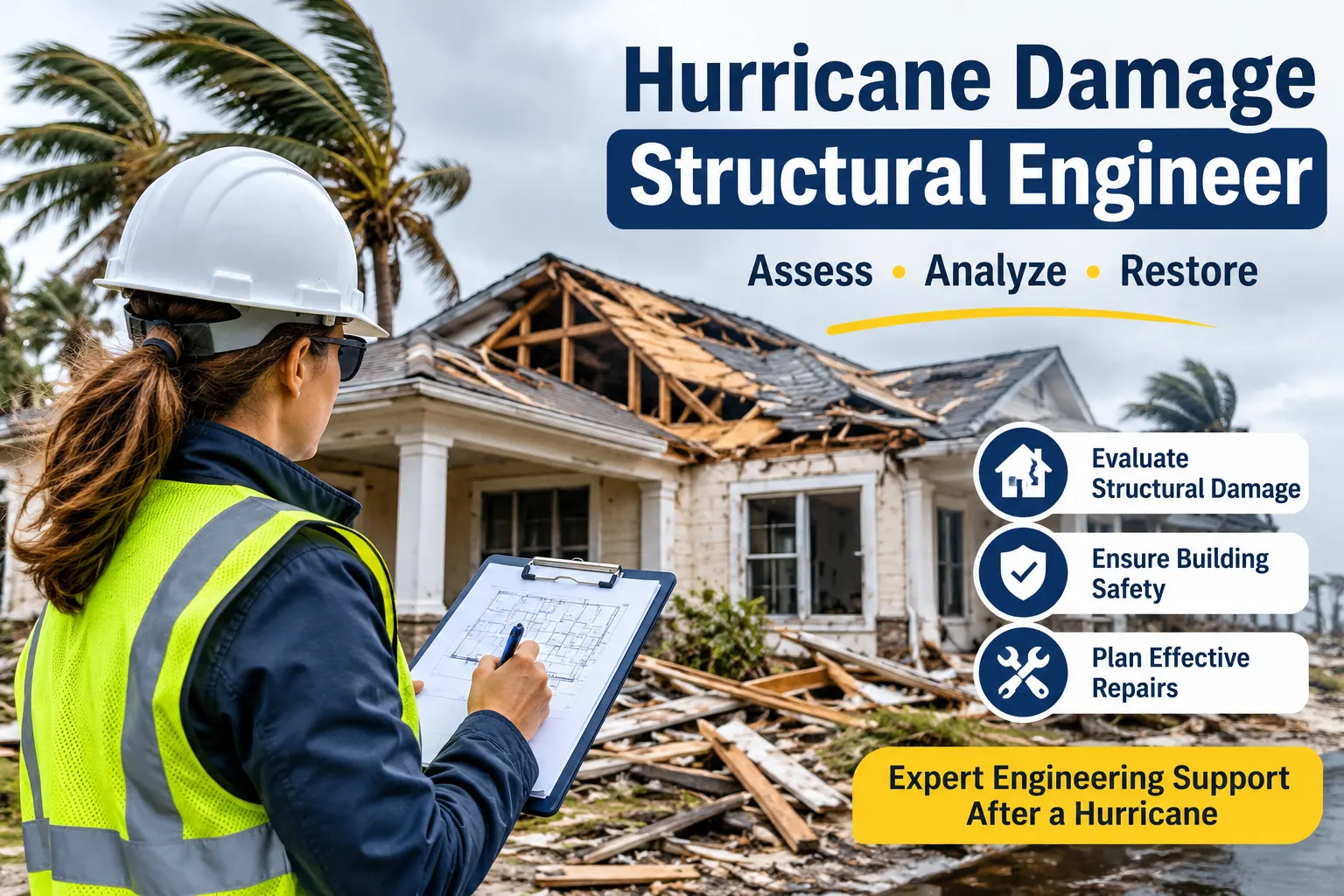

Hurricanes can leave buildings with visible destruction, but some of the most serious structural problems remain hidden beneath walls, roofs, foundations, and other building components. Strong winds, heavy rainfall, flooding, and flying debris can weaken structural connections and compromise a building’s stability long after the storm has passed. A Hurricane Damage Structural Engineer evaluates these conditions, identifies hidden risks, and helps property owners understand what repairs or stabilization measures are necessary to restore building safety.
Why Hidden Structural Damage After a Hurricane Is Dangerous
After a hurricane, property owners often focus on obvious problems such as broken windows, damaged roofs, fallen trees, and water entering the building. However, structural damage is not always visible during an initial walkthrough.
High winds can place unusual pressure on roof systems, exterior walls, and structural connections. Floodwater can weaken soil around foundations, while prolonged moisture exposure can damage building materials and create long-term deterioration.
Some hidden risks include:
- Damaged structural connections: High wind forces can loosen or weaken connections between roof framing, walls, and supporting elements.
- Foundation movement: Flooding and soil erosion can cause settlement, shifting, or instability.
- Hidden moisture damage: Water entering wall cavities and floor systems can contribute to material deterioration.
- Compromised load-bearing components: Beams, columns, and supporting walls may lose strength after prolonged exposure to extreme conditions.
- Roof system weaknesses: Damaged fasteners, framing members, and roof-to-wall connections can increase vulnerability to future storms.
- Structural cracks: Small openings may indicate deeper movement or damage within the building.
Ignoring these conditions can lead to expensive repairs, recurring maintenance problems, and potential safety concerns. A professional structural assessment helps identify problems before they become more severe.
How a Hurricane Damage Structural Engineer Identifies Hidden Risks
A professional structural assessment involves more than looking at visible damage. Engineers use technical inspections, measurements, construction documents, and structural analysis to understand how a hurricane has affected a building.
Here are the major steps involved.
1. Conducting a Detailed Exterior and Interior Inspection
The first step is a systematic inspection of the property. The engineer examines the exterior and interior to identify visible damage, unusual movement, and areas that may require additional investigation.
Exterior inspections may focus on:
- Roof displacement and damaged framing.
- Cracks in exterior walls and masonry.
- Damaged windows, doors, and building envelopes.
- Foundation cracks and visible settlement.
- Disconnected structural components.
Inside the building, the engineer may examine ceilings, floors, load-bearing walls, beams, columns, and roof framing where safely accessible.
The purpose is to understand the overall condition of the structure and identify areas where hidden damage may exist.
2. Evaluating Roof Systems and Structural Connections
Roof damage is one of the most common concerns following a hurricane. However, replacing damaged shingles or roofing materials does not necessarily resolve underlying structural problems.
Strong winds can create uplift forces that affect roof-to-wall connections, trusses, fasteners, and supporting framing. Even when the roof remains in place, individual connections may have loosened or experienced damage.
A Hurricane Damage Structural Engineer examines these connections to determine whether they can continue carrying expected loads.
This evaluation is important because weakened connections can make a building more vulnerable during future severe weather events.
3. Checking Foundations and Soil Conditions
Flooding, storm surges, and heavy rainfall can change the conditions surrounding a building’s foundation. Moving water may remove supporting soil, while saturated ground can contribute to settlement or instability.
Engineers look for signs such as:
- Uneven or sloping floors.
- New cracks in foundation walls.
- Separation around exterior walls.
- Doors and windows that no longer operate properly.
- Visible soil erosion near the building.
Depending on the findings, further investigation may involve foundation measurements, soil evaluations, or additional engineering analysis.
Identifying foundation-related problems early helps property owners avoid repair decisions that address only surface symptoms.
4. Investigating Hidden Water and Moisture Damage
Water damage can continue affecting a building long after floodwater disappears. Moisture may remain trapped inside wall cavities, insulation, ceiling assemblies, and floor systems.
This can contribute to corrosion, wood deterioration, material separation, and damage to structural components.
Engineers evaluate areas where water may have affected load-bearing materials or structural connections. They may recommend additional testing or specialist inspections when conditions cannot be confirmed through visual assessment alone.
Understanding the extent of moisture-related damage helps establish whether repairs should involve simple material replacement or more extensive structural rehabilitation.
5. Using Engineering Analysis and Advanced Inspection Techniques
When visible inspections are not enough to understand the damage, engineers may recommend additional diagnostic methods.
Depending on the building and incident, these may include:
- Drone surveys to inspect difficult-to-reach roof areas.
- Moisture measurements to identify water intrusion.
- Material testing to evaluate concrete, steel, or wood conditions.
- Structural calculations to assess load-carrying capacity.
- Finite element analysis to understand complex structural behavior.
- Detailed photographic documentation to record damage patterns.
A Forensic Engineer uses engineering principles, site evidence, and technical analysis to determine how and why damage occurred. These findings help distinguish hurricane-related damage from pre-existing deterioration, construction defects, or other contributing conditions.
Why Root Cause Analysis Is Important After Hurricane Damage
Identifying damage is only one part of a structural investigation. Understanding why the damage happened is equally important, particularly when insurance claims, repair decisions, or construction disputes are involved.
For example, two buildings may experience similar roof damage during the same hurricane, but the underlying causes may be different. One building may have experienced unusually high wind pressure, while another may have had inadequate roof connections or pre-existing construction defects.
A detailed investigation can help establish:
- The location and extent of structural damage.
- Whether the damage is consistent with hurricane-related forces.
- Whether existing defects contributed to the problem.
- Which structural components require repair or replacement.
- What measures may improve the building’s future performance.
This information supports more accurate repair planning and helps stakeholders avoid unnecessary work.
When a Construction Defect Expert Witness Is Needed
Sometimes, hurricane damage leads to disagreements between property owners, insurance companies, contractors, and other parties. These disputes may involve questions about construction quality, design deficiencies, material failures, or the actual cause of structural damage.
A Construction Defect Expert Witness can investigate these issues by reviewing engineering drawings, construction records, site conditions, and physical evidence.
For example, if a roof connection fails during a hurricane, an investigation may examine whether the connection was properly designed, installed, and constructed according to applicable requirements.
An independent engineering report can explain the technical findings and help attorneys, insurers, and property owners understand the circumstances surrounding the damage.
Special Considerations for Historic Buildings After a Hurricane
Historic buildings require additional attention because their structural systems, materials, and construction methods may differ from modern buildings. Older masonry, timber framing, traditional foundations, and historic roof systems can respond differently to hurricane forces.
Structural Engineering for Historic Restoration focuses on evaluating damaged historic structures while preserving their architectural character and significant original materials wherever practical.
Engineers may examine:
- Deteriorated masonry and mortar joints.
- Damaged timber beams and roof framing.
- Foundation settlement and water intrusion.
- Weakened historic structural connections.
- Previous repairs that may have affected building performance.
A careful assessment helps determine which elements can be repaired, which require reinforcement, and where replacement may be unavoidable.
The Role of a Historical Rehabilitation and Structural Engineer
A Historical Rehabilitation and Structural Engineer evaluates the condition of older buildings and develops suitable solutions for restoring their structural performance.
After a hurricane, this may involve assessing damaged masonry walls, evaluating historic foundations, repairing timber framing, and recommending compatible reinforcement methods.
The objective is to improve structural safety without unnecessarily changing the building’s historic appearance or removing valuable architectural features.
How Building Retrofit Solutions Improve Hurricane Resilience
Once structural damage has been evaluated and necessary repairs have been completed, property owners may consider improvements that help buildings perform better during future severe weather events.
A Building Retrofit and Structural Engineer can evaluate existing structural systems and recommend upgrades based on building conditions, applicable codes, and project requirements.
Possible improvements include:
- Strengthening roof-to-wall connections.
- Reinforcing vulnerable structural members.
- Improving lateral load-resisting systems.
- Upgrading damaged or inadequate connections.
- Strengthening foundations where engineering analysis supports it.
- Improving structural continuity between building components.
Retrofit recommendations should always be based on a project-specific engineering assessment rather than a one-size-fits-all solution.
These improvements can help reduce structural vulnerabilities and support better long-term building performance.
Why Choose a Women-Owned Structural Engineering Firm?
Working with an experienced engineering firm can make a difference when dealing with complicated hurricane damage, forensic investigations, and structural rehabilitation projects.
A Women-Owned Structural Engineering Firm brings professional engineering expertise, technical knowledge, and a commitment to solving complex structural challenges. Preeminent Solutions, Inc. (PS Engineering) is a women-owned and minority-owned engineering firm led by Vanessa Malone, P.E., a licensed professional civil and structural engineer with extensive experience in design, forensic investigations, and expert witness work.
The firm offers services in areas including:
- Hurricane and storm damage investigations.
- Structural failure analysis.
- Construction defect investigations.
- Structural rehabilitation and retrofit consulting.
- Historic building restoration.
- Expert witness and litigation support.
With more than 30 years of combined team experience, PS Engineering supports clients across multiple U.S. states. Its approach focuses on identifying root causes, reducing uncertainty, and providing practical engineering recommendations.
Final Thought
Hurricane damage can affect much more than what property owners see immediately after a storm. Hidden structural weaknesses, foundation movement, damaged connections, and moisture-related deterioration can create long-term safety and repair challenges. Hiring experienced engineering professionals helps property owners understand the condition of their buildings, identify potential risks, and make informed decisions about recovery. A thorough Damage Assessment and Forensic Engineer investigation can provide the technical clarity needed to support safer repairs and stronger buildings.


Join the conversation