
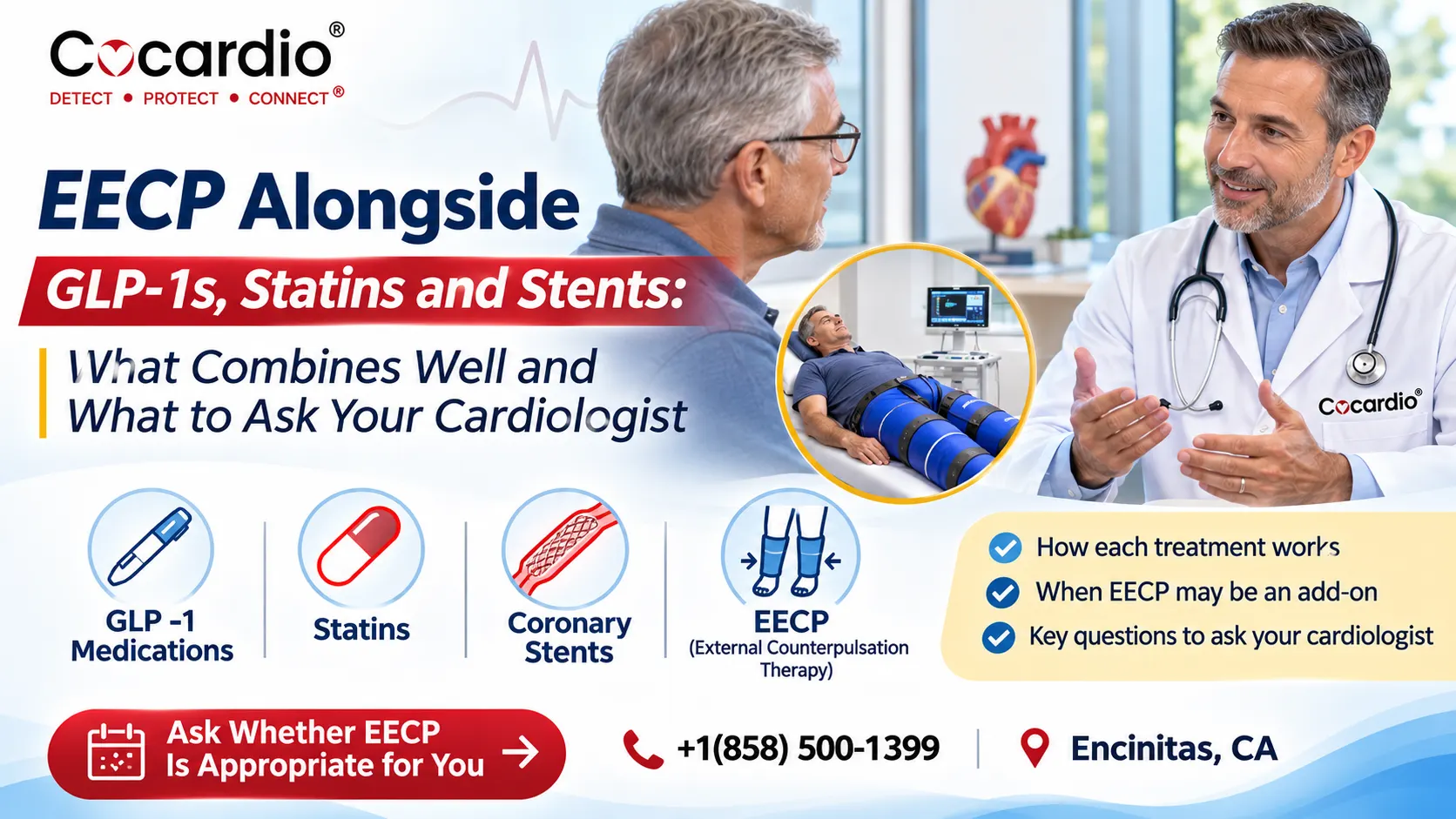

Patients managing coronary artery disease may receive several treatments to control cardiovascular risk and relieve symptoms. GLP-1 medications, cholesterol-lowering drugs, coronary stents, and noninvasive therapies serve different purposes within a personalized treatment plan. People searching for eecp treatment near me often want to know whether external counterpulsation can complement medications or previous cardiac procedures. CoCardio® in Encinitas, California, offers counterpulsation-based cardiovascular services that patients can explore after discussing their medical history and treatment options with their cardiologist.
Can EECP Be Combined With Other Heart Treatments?
Enhanced External Counterpulsation, commonly called EECP, is a noninvasive treatment involving timed compression around the legs and lower body. The procedure is primarily considered for selected patients with refractory angina whose symptoms remain difficult to manage despite appropriate conventional treatment. It may be incorporated into a broader care plan, but its suitability depends on cardiovascular health, existing therapies, and medical contraindications. Patients should never assume that adding another treatment automatically improves outcomes or makes prescribed medications unnecessary.
Why Different Heart Treatments Serve Different Purposes
Cardiovascular care often combines therapies addressing separate aspects of heart disease. Statins primarily reduce harmful cholesterol and cardiovascular risk, while GLP-1 medications have specific metabolic and cardiovascular indications. Coronary stents can restore blood flow through selected narrowed arteries, whereas EECP may provide symptom relief for certain patients with persistent angina. Understanding these differences helps patients discuss treatment combinations without assuming that every therapy produces the same benefits.
What Does the Latest Research Say About GLP-1 Medications and Heart Health?
GLP-1 receptor agonists have attracted attention because research demonstrates cardiovascular benefits in appropriately selected patient populations. A 2026 systematic review and meta-analysis evaluated 11 randomized cardiovascular outcome trials involving 91,490 participants. Researchers found that GLP-1 receptor agonists were associated with approximately a 14% relative reduction in major adverse cardiovascular events compared with placebo. However, these findings relate to the studied medications and populations rather than proving that every GLP-1 drug benefits every patient with heart disease.
Can GLP-1 Medications Replace Angina Treatment?
GLP-1 medications may be prescribed for conditions such as type 2 diabetes, weight management, or cardiovascular risk reduction, depending on the specific product and patient eligibility. They are not established substitutes for appropriate antianginal medications or procedures needed to manage significant coronary narrowing. Patients experiencing persistent chest pain require medical evaluation even when their weight, blood sugar, or cardiovascular risk factors are improving. Treatment decisions should consider symptoms, coronary anatomy, existing medications, and the patient’s overall medical condition.
Can EECP Work Alongside GLP-1 Medications?
Some patients receiving GLP-1 medications may also have coronary artery disease or persistent angina requiring separate management. There is no established clinical evidence that combining EECP with a GLP-1 medication produces additional cardiovascular event prevention beyond the proven effects of the prescribed drug. A cardiologist should review the patient’s medical conditions, treatment response, and overall suitability before recommending external counterpulsation. Patients should also report relevant medication adverse effects, including dehydration or significant gastrointestinal symptoms, during their clinical assessment.
What Should You Ask Your Cardiologist?
Ask whether your current cardiovascular treatment plan adequately addresses both long-term risk reduction and ongoing symptoms. Discuss whether persistent discomfort requires additional testing, medication adjustments, or evaluation for another coronary procedure. If EECP is being considered, ask whether your diagnosis meets the clinical criteria and whether existing medical conditions create additional risks. Your cardiologist can determine whether counterpulsation has an appropriate role without interrupting necessary medication management.
How Do Statins Fit Into a Treatment Plan With EECP?
Statins are a cornerstone of cardiovascular risk reduction for many patients with established coronary artery disease. These medications lower LDL cholesterol and have strong evidence supporting their ability to reduce future cardiovascular events. By comparison, EECP is a symptom-focused treatment and has not been established as a method for removing coronary plaque. Patients should continue prescribed cholesterol-lowering medications unless their healthcare professional recommends a change.
Does EECP Lower Cholesterol or Remove Plaque?
EECP uses synchronized compression to influence circulation rather than directly altering cholesterol production or absorption. Although researchers have investigated several physiological effects of counterpulsation, it is not an established cholesterol-lowering treatment. Patients should not interpret improvement in chest discomfort as evidence that arterial plaque has disappeared. Continuing evidence-based lipid management remains important even when other therapies appear to improve daily symptoms.
Can EECP Help Patients Who Already Have Coronary Stents?
Some patients continue experiencing chest discomfort after coronary stenting because of additional coronary disease, restenosis, microvascular dysfunction, or other conditions. Persistent symptoms should prompt an appropriate clinical assessment rather than an assumption that the previous procedure has failed. Patients researching eecp therapy for angina may be interested in additional symptom-management options when conventional treatment has not provided adequate relief. However, EECP should not replace repeat revascularization when a cardiologist determines that another intervention is medically necessary.
What Should Be Checked Before Starting EECP After a Stent?
The treating cardiologist should review the timing and outcome of the previous procedure, current symptoms, and relevant cardiac investigations. Patients should disclose all prescribed medications, including antiplatelet therapies, anticoagulants, and drugs used for blood pressure or angina control. The clinical team must also assess whether any cardiovascular or vascular conditions make counterpulsation inappropriate. Patients should not stop antiplatelet medications or other prescribed therapies in preparation for EECP unless specifically instructed by their treating clinician.
What Is External Counterpulsation Therapy?
External counterpulsation therapy uses inflatable cuffs placed around the legs to apply pressure in coordination with the heartbeat. A standard course commonly involves 35 sessions of approximately one hour, generally delivered over seven weeks. The treatment does not require coronary surgery, although it can cause pressure-related discomfort, skin irritation, or other adverse effects in some patients. Medical screening and appropriate supervision are important because the procedure is unsuitable for certain cardiovascular conditions.
What Benefits Can Eligible Patients Expect?
Some patients with refractory angina report improvements in chest discomfort, activity tolerance, or quality of life following treatment. The 2023 AHA/ACC chronic coronary disease guideline gives EECP a Class 2b recommendation for selected patients with refractory angina who have no other treatment options. This means the therapy may be considered, but the evidence does not establish consistent benefits for every patient. Individuals should discuss potential advantages, uncertainty, alternative treatments, and possible risks before beginning therapy.
How Can You Find EECP Treatment Near Me in Encinitas?
Choosing a treatment provider involves more than finding a convenient location. Patients should ask about clinical supervision, eligibility evaluations, staff qualifications, appointment schedules, and communication with their existing cardiology team. CoCardio® provides counterpulsation-based cardiovascular services in Encinitas and offers consultations for individuals interested in exploring available options. Before scheduling, patients should confirm the services offered and whether their medical circumstances warrant further evaluation.
What Should You Ask About Treatment Availability?
A standard EECP course usually requires several appointments each week, making scheduling an important consideration. Patients searching for ECP therapy near me should confirm whether the provider offers appointment times compatible with their existing healthcare and personal commitments. It is also helpful to ask about missed-session procedures, monitoring arrangements, and whether a referral or medical clearance is required. CoCardio® can provide information about its current consultation and appointment process when contacted directly.
What Will EECP Cost Alongside Your Existing Heart Medications?
The expense of additional cardiovascular treatment can influence decisions, particularly for patients already paying for prescription medications and specialist appointments. Costs may depend on provider fees, medical eligibility, insurance coverage, and any applicable authorization requirements. Patients should ask whether the proposed therapy is covered under their specific plan and whether separate evaluation charges may apply. Neither Medicare coverage nor private insurance reimbursement should be assumed without reviewing the individual circumstances.
Will Medicare’s 2027 GLP-1 Prices Affect Treatment Decisions?
CMS has published negotiated Medicare drug prices scheduled to take effect January 1, 2027, including pricing associated with semaglutide products such as Ozempic, Rybelsus, and Wegovy. These negotiated amounts are not automatically the same as an individual patient’s pharmacy copayment or final out-of-pocket expense. Coverage still depends on the medication’s approved indication, the applicable Medicare benefit, and relevant plan rules. Changes in prescription drug pricing also do not establish eligibility or coverage for EECP, which must be evaluated separately.
How Can Patients Prepare for a Cardiovascular Treatment Consultation?
Patients should gather their current medication list, relevant laboratory results, and records of previous cardiac testing or procedures. It is useful to describe when chest discomfort occurs, whether symptoms have changed, and how they affect ordinary activities. Individuals considering eecp treatment should also prepare questions about medical eligibility, session scheduling, treatment limitations, and insurance requirements. Sharing this information with appropriate healthcare professionals can help clarify whether additional testing or treatment discussions are necessary.
What Should You Know Before Starting a Treatment Course?
The decision to begin counterpulsation should follow an appropriate cardiovascular assessment rather than online research alone. Patients should understand how the treatment is performed, which symptoms it may help, and why its benefits are not guaranteed. The 2026 Guide to Non-Invasive Heart Treatment provides additional educational information about EECP and related cardiovascular care considerations. Reviewing these details with a clinician can help establish realistic expectations before committing to multiple outpatient sessions.
Why Consider CoCardio® in Encinitas?
CoCardio® provides cardiovascular wellness assessments and counterpulsation-based services for patients interested in exploring noninvasive heart care. Its published offerings include Root Cause Consultations, Heart Function Testing, and the CoCardio Boost™ program. The clinic describes its approach as complementary to standard cardiology care rather than a substitute for prescribed treatment. Patients can contact CoCardio® to discuss available consultation options and the next steps for determining whether further assessment is appropriate.
Request Information About EECP in North San Diego County
CoCardio® serves patients seeking information about circulation-focused cardiovascular services in Encinitas and surrounding communities. Individuals can inquire about consultations, appointment availability, and how their medical history may be reviewed before considering treatment. Complete the CoCardio® patient consultation form to share your concerns and request information about available services. You can also call +1(858) 500-1399 to contact the clinic directly.
Conclusion – Can EECP Complement GLP-1s, Statins and Stents?
GLP-1 medications, statins, coronary procedures, and EECP address different aspects of cardiovascular care and should not be considered interchangeable treatments. For carefully selected individuals with refractory angina, counterpulsation may provide an additional symptom-management option when conventional treatments are insufficient or unsuitable. Patients searching for eecp treatment near me should obtain cardiologist approval and continue established medical care rather than replacing it with an unproven combination. Contact CoCardio® in Encinitas at +1(858) 500-1399 or submit the patient inquiry form to request information about its cardiovascular assessments and EECP services.
Medical Disclaimer
This article is intended for educational purposes only and does not constitute individualized medical advice, diagnosis, or treatment recommendations. EECP, GLP-1 medications, statins, and coronary procedures have different indications, benefits, risks, and contraindications that must be evaluated by qualified healthcare professionals. Do not start or discontinue prescription medications, delay recommended cardiac procedures, or begin EECP without appropriate medical assessment and approval. If you experience new, severe, or worsening chest pain, especially with shortness of breath, sweating, nausea, or fainting, call 911 immediately.
Contact CoCardio®
Address: 162 S Rancho Santa Fe Rd, Suite B55, Encinitas, CA 92024
Phone: +1(858) 500-1399
Website: https://cocardioinc.com/
Request an EECP Consultation: https://cocardioinc.com/#Form



Join the conversation