

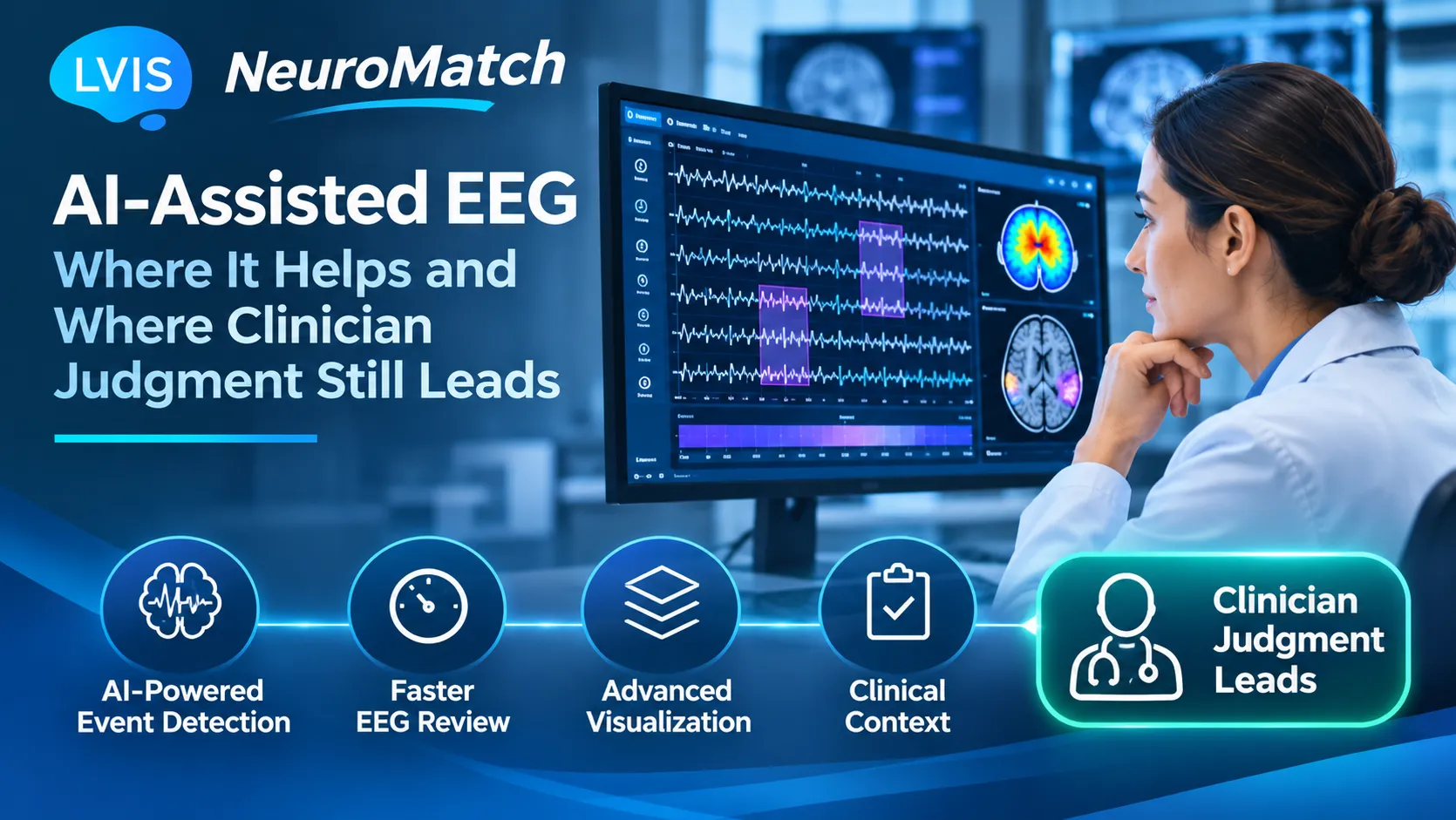

Artificial intelligence is changing how neurologists examine electrical brain activity, navigate prolonged recordings, and identify potentially significant neurological patterns. LVIS NeuroMatch represents an approach to integrating advanced computational analysis with clinician-led EEG interpretation. While automated tools can help healthcare professionals manage complex neurological datasets, they cannot independently account for every clinical variable influencing a diagnosis. Understanding the capabilities and limitations of AI-assisted interpretation is essential for maintaining responsible and effective neurological workflows.
How NeuroMatch Supports Clinician-Led EEG Interpretation
Traditional EEG interpretation requires neurologists to systematically examine waveforms, identify abnormalities, distinguish artifacts, and correlate findings with patient history. Modern analytical platforms such as LVIS NeuroMatch can complement this process by providing additional tools for reviewing neurological recordings. Software-assisted analysis may help clinicians identify patterns that warrant closer examination and navigate extensive datasets more efficiently. The neurologist remains responsible for evaluating the clinical significance of these findings and determining the appropriate interpretation.
Where AI-Assisted EEG Provides Clinical Value
Artificial intelligence can support several aspects of neurological data analysis, particularly when clinicians work with prolonged recordings and complex electrical brain activity. Its primary value lies in organizing information, identifying potentially relevant patterns, and providing additional analytical perspectives. These capabilities may help reduce repetitive review tasks and support more structured clinical workflows. However, the effectiveness of automated analysis depends on recording quality, algorithm performance, and the clinical context.
1. AI-Assisted Seizure and Spike Detection
Identifying seizures and epileptiform discharges is an important component of EEG interpretation. Automated detection algorithms can analyze electrical brain activity and flag patterns that may represent clinically significant events. These tools can be particularly useful when reviewing continuous EEG recordings containing extensive amounts of data. Neurologists can examine flagged events alongside the original waveforms to determine their clinical relevance.
2. Streamlining Long-Duration EEG Review
Continuous and ambulatory EEG monitoring can generate hours or days of neurological recordings. Reviewing these datasets requires considerable attention, particularly when abnormal activity occurs intermittently. Modern AI EEG technologies can help clinicians navigate recordings, examine trends, and prioritize potentially significant events for further assessment. This approach may support more efficient review while preserving the importance of comprehensive clinical evaluation.
3. Advanced Visualization and Source Localization
Conventional EEG recordings display electrical activity through waveforms representing signals captured from scalp electrodes. Advanced analytical technologies can provide additional visualization capabilities that help clinicians examine the estimated spatial distribution of abnormal neurological activity. Source localization and three-dimensional brain visualization may offer complementary perspectives when evaluating seizure-related activity and epileptiform discharges. These findings must still be assessed alongside conventional EEG signals and other relevant clinical information.
4. Reducing Artifact Interference
EEG recordings frequently contain artifacts associated with eye movements, muscle activity, electrode disturbances, and environmental interference. These artifacts can complicate waveform interpretation and potentially resemble abnormal neurological activity. Automated artifact reduction tools may help improve signal visibility and support more focused review. Nevertheless, clinicians must assess whether signal processing has altered or obscured clinically relevant information.
Where Clinician Judgment Remains Essential
Despite advances in artificial intelligence, neurological interpretation requires clinical reasoning that extends beyond automated pattern recognition. Neurologists consider patient history, symptoms, medication use, neurological examination findings, and other diagnostic information when interpreting EEG recordings. Automated algorithms cannot independently integrate every aspect of this clinical context. Consequently, professional oversight remains essential throughout the diagnostic process.
Distinguishing True Abnormalities From False Positives
Automated detection systems may occasionally classify normal physiological activity or artifacts as potentially abnormal events. Conversely, clinically significant patterns may remain undetected under certain circumstances. Neurologists must evaluate these findings using established interpretation principles and their understanding of neurological activity. Reviewing original waveforms helps prevent inappropriate reliance on automated classifications.
Interpreting Complex Neurological Conditions
Patients with complex neurological disorders may present EEG patterns that require specialized clinical assessment. Medication effects, metabolic disturbances, sleep-related changes, and underlying neurological conditions can influence electrical brain activity. Automated findings may provide useful information but cannot independently establish the underlying cause of every abnormal pattern. Clinicians must integrate multiple sources of information before drawing diagnostic conclusions.
Making Treatment and Diagnostic Decisions
Identifying a potentially abnormal EEG event does not automatically establish a diagnosis or determine an appropriate treatment plan. Neurologists must evaluate the significance of detected activity alongside the patient’s symptoms, medical history, and additional diagnostic findings. Treatment decisions may also depend on factors that are not represented within EEG recordings. Artificial intelligence should therefore remain a clinical support resource rather than an independent decision-making authority.
Comparing AI-Assisted Analysis With Clinician Judgment
Clinical FunctionAI-Assisted EEGClinician JudgmentPattern detectionFlags potentially relevant activityDetermines clinical significanceSeizure identificationIdentifies suspected seizure patternsReviews and validates findingsArtifact reductionSupports signal processingEvaluates signal reliabilityExtended recordingsAssists navigation and trend analysisPerforms comprehensive interpretationSource localizationProvides estimated spatial informationEvaluates findings within clinical contextPatient diagnosisSupplies supporting analytical informationEstablishes clinical conclusionsTreatment decisionsProvides relevant data insightsDetermines appropriate clinical management
The combination of computational analysis and professional expertise can support neurological workflows without transferring clinical responsibility to automated systems.
Building Responsible AI-Assisted EEG Workflows
Healthcare organizations implementing AI EEG technologies should establish clear clinical governance procedures that define how automated findings are reviewed, validated, and incorporated into neurological assessments. Appropriate training helps clinicians understand algorithm capabilities, limitations, and potential sources of error. Organizations should also evaluate clinical validation evidence, intended use, regulatory status, and compatibility with existing diagnostic workflows.
A responsible implementation strategy should prioritize:
Clinician verification of automated findings.
Continued access to original EEG waveforms.
Awareness of false-positive and false-negative results.
Appropriate training for neurological specialists.
Patient data security and privacy.
Regular evaluation of analytical performance.
Clearly defined clinical responsibilities.
Establishing these practices can help healthcare organizations introduce advanced analytical technologies while maintaining appropriate clinical oversight.
Conclusion
AI-assisted EEG is creating new opportunities to support neurological interpretation through automated event detection, advanced visualization, artifact reduction, and more structured review workflows. However, clinical expertise remains fundamental when determining the significance of neurological findings and making diagnostic or treatment decisions. The most appropriate approach combines computational capabilities with professional interpretation, rather than treating them as competing alternatives.
LVIS develops neurological data analysis technologies that support clinician-led workflows and provide healthcare professionals with additional analytical resources. By integrating artificial intelligence into established clinical practices, neurological specialists can explore more efficient approaches to reviewing complex brain activity while maintaining responsibility for clinical interpretation.



Join the conversation