
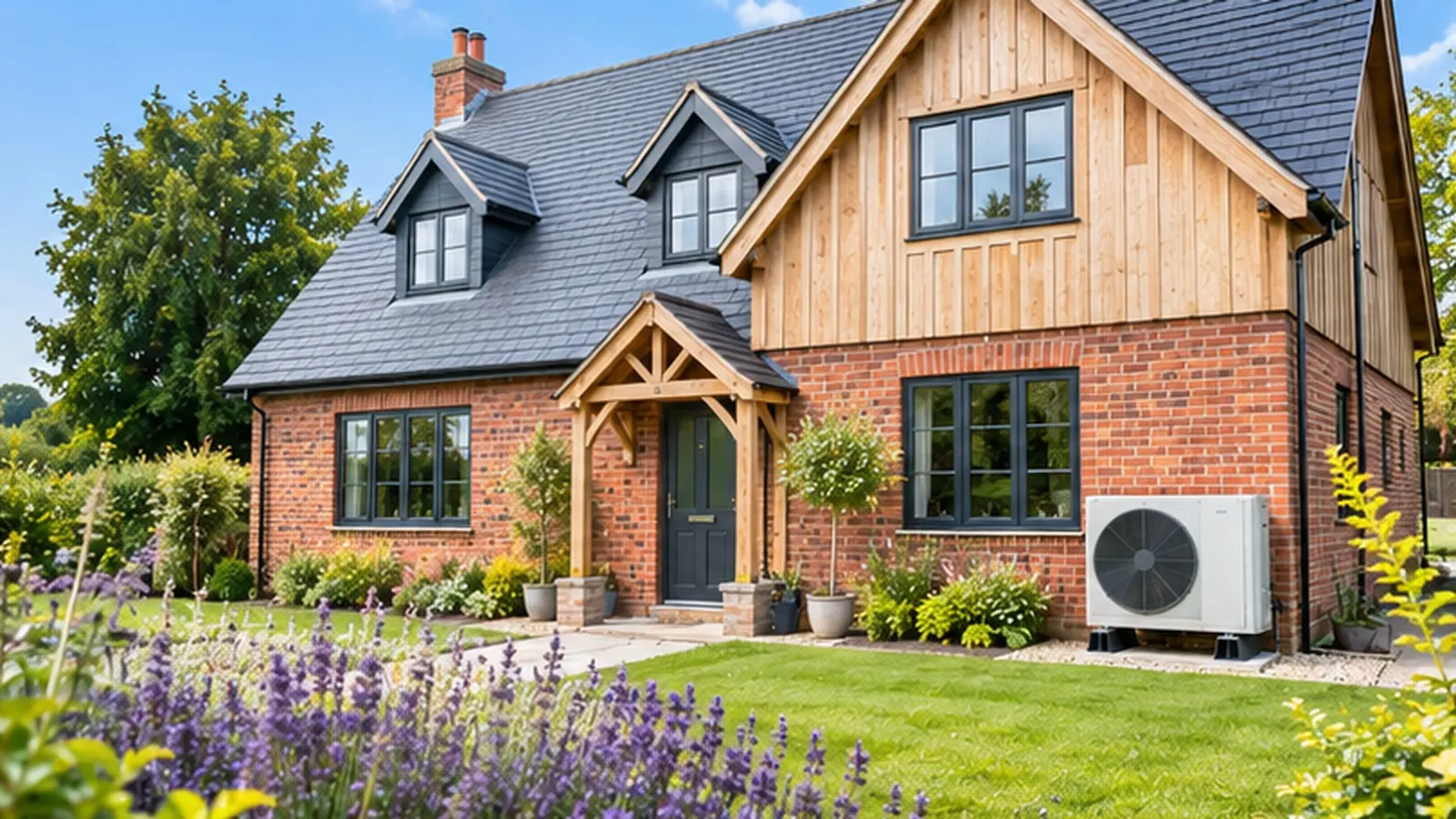

People often assume the Boiler Upgrade Scheme UK is only available for standard owner-occupied houses. In fact, the official scheme includes several different property types, but the conditions vary depending on the building and the heating technology.
If you own a self-build, holiday home, park home or another less conventional property, it is worth checking the rules before ruling out support.
First, Where Does the Scheme Apply?
The Boiler Upgrade Scheme (BUS) operates in England and Wales. It helps eligible property owners replace qualifying existing heating systems with approved low-carbon technology. Scotland and Northern Ireland do not participate in this specific programme.
In November 2026, typical grants include £7,500 for eligible air-to-water and ground source heat pumps, £2,500 for eligible residential air-to-air heat pumps and £5,000 for qualifying biomass boilers. Some eligible oil- or LPG-heated properties with no mains gas connection may receive £9,000 for certain heat pumps until March 2027.
Can Self-Build Properties Receive a Grant?
Some can. Most new-build developments are excluded, but eligible self-builds are an exception. Ofgem explains that a qualifying self-build must have been built mainly using the labour or resources of the first owner, must never have been owned by a business or organisation and must not form part of an excluded property development.
Owners may need to provide title documents or other proof where required. Because a self-build does not always have an old fossil-fuel heating system to replace, its evidence and technology requirements can differ from those of a typical retrofit.
Importantly, BUS funding for biomass boilers is not available to eligible self-build properties. Discuss appropriate heat-pump options with an MCS-certified installer.
What About Second Homes and Holiday Homes?
Second homes and holiday homes are listed by Ofgem among potentially eligible residential property types. This does not mean automatic approval: the heating replacement, property history, location and installation standards still matter.
If the property is used irregularly, ask the installer how the proposed heat pump should be operated between visits. Avoid assuming that an occasional-use property has the same heating profile as a full-time family home.
Where the property is rented to guests, consider simple controls and clear user instructions. A new system will be more useful when occupants understand how to maintain comfortable temperatures safely and efficiently.
Can a Park Home Qualify?
Park homes can also be eligible, according to Ofgem’s property-type guidance. However, space, ownership arrangements, electrical supply and permissions can make design more complicated than in a conventional detached house.
Before applying, confirm that the proposed installation can satisfy the technical requirements and that you have the necessary permission to place equipment outside. The fact that a building is movable or situated on a managed site may make documentation particularly important.
Which Property Types Are Not Covered?
BUS excludes social housing and most new-build developments. Buildings that have already received certain public funding towards the same heat pump or biomass installation also face restrictions.
The technology matters, too: air-to-air heat-pump grants are limited to residential properties. An office or other non-residential building cannot claim that category even where another heat-pump technology might be eligible.
Prepare for a Property-Specific Survey
Ask an installer to inspect insulation, heat loss, existing heating, power supply and available equipment space. A valid EPC is no longer mandatory for applications properly made from 28 April 2026, but where one exists the installer may need its details. Otherwise, evidence of property and heating status may be required.
Do not make major equipment purchases based only on a headline eligibility claim. The MCS installer should confirm the grant type and issue a quote with the full discount clearly shown.
For a starting point, read Berks Insulation’s Boiler Upgrade Scheme UK guide and discuss the unique features of your property with a suitable installer.
Frequently Asked Questions
Does every new house qualify as a self-build?
No. The scheme makes a limited exception for eligible self-builds, not for all newly constructed properties.
Can a holiday home receive a BUS grant?
Potentially yes, if it meets the property, ownership, heating-system and installation requirements.
Do I have to live at the property all year?
Not necessarily. The scheme includes eligible second and holiday homes as well as owner-occupied properties.
Final Thoughts
The Boiler Upgrade Scheme UK can extend beyond traditional family houses, but non-standard properties require careful checks. Confirm the building category, gather evidence and get a tailored installation assessment before relying on the grant.



Join the conversation