

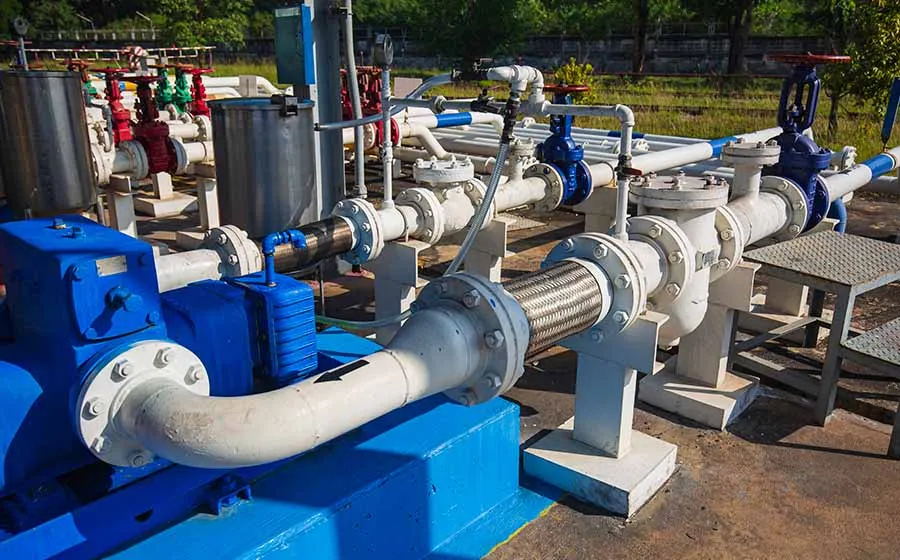
Air entrapment is a common problem in commercial water pumping systems. It can affect pump performance, reduce water pressure, create unusual operating noises, and increase the risk of equipment damage. In buildings that depend on a consistent water supply, even a small amount of trapped air can interfere with normal pumping operations.
The problem often develops when air enters the piping network through suction leaks, poorly designed pipework, low water levels, or improper system filling. In some cases, air remains trapped at high points in the pipeline because the system does not have suitable air-release arrangements.
Understanding what causes air entrapment is important for engineers, contractors, facility managers, and building owners. Identifying the source early helps prevent recurring pressure fluctuations, unnecessary pump cycling, and reduced hydraulic efficiency.
This article explains the common causes of air entrapment in commercial pumping systems, how to recognize the warning signs, and what can help prevent the problem.
What Is Air Entrapment in a Commercial Water Pumping System?
Air entrapment occurs when air or other gases become trapped inside a pump, suction line, discharge pipe, or other parts of a water distribution network. Unlike water, air is compressible. When it collects inside a piping system, it can interrupt the normal movement of water and affect the pressure required to maintain consistent flow.
In commercial buildings, water pumping systems often serve multiple floors, equipment rooms, storage tanks, and distribution lines. These networks can have complex piping arrangements with several bends, vertical sections, and changes in elevation. Such configurations can create locations where air accumulates instead of moving through the system.
Air entrapment is different from cavitation, although the two problems can sometimes produce similar symptoms. Air entrapment involves accumulated gas within the system, while cavitation occurs when local pressure falls below the liquid’s vapor pressure, creating vapor bubbles that collapse when pressure increases.
Both conditions can affect pump operation, but they require different troubleshooting approaches.
8 Common Causes of Air Entrapment in Commercial Water Pumping Systems
Several installation, operating, and maintenance conditions can introduce air into commercial pumping networks. The following are some of the most common causes.
1. Air Leaks in the Pump Suction Line
A leak in the suction line is one of the major causes of air entering a commercial pumping system.
When a centrifugal pump operates, pressure on its suction side can fall below atmospheric pressure. If a connection, gasket, flange, valve, or pipe joint is not properly sealed, outside air can enter the line even when water is not visibly leaking out.
This makes suction-side air leaks particularly difficult to identify. A pipe may appear dry from the outside while continuously drawing air into the system during operation.
Common locations where air can enter include:
Loose flange connections and threaded joints.
Worn or improperly fitted gaskets.
Damaged suction pipes.
Faulty valve connections.
Poorly sealed pump inlet fittings.
As air enters the suction line, it can interfere with water delivery and cause unstable pump operation. Checking suction-side connections and seals is therefore an important part of diagnosing recurring air-related problems.
2. Improper Pump Priming
Priming prepares a pump for operation by filling the pump casing and, where required, the suction line with water and removing unwanted air.
If a centrifugal pump is started without proper priming, air may remain inside the casing or suction pipe. Since conventional centrifugal pumps are not generally designed to pump large volumes of air, they may struggle to establish the required pressure and water flow.
Improper priming can happen for several reasons:
The pump casing was not completely filled before startup.
Air was not released from the suction line.
A foot valve or check valve failed to retain the water.
The priming procedure was not followed after maintenance.
The system was drained without being properly refilled.
In commercial buildings, this issue can occur after pump replacement, pipeline repairs, equipment servicing, or extended shutdowns.
Following the manufacturer’s priming instructions and checking the condition of associated valves can help reduce the risk of air remaining inside the pump.
3. Poor Pipeline Design and Installation
The arrangement of pipes has a direct influence on how air moves through a water pumping system.
Pipelines with incorrect slopes, unnecessary bends, and poorly positioned connections can create high points where air collects. If these locations do not have suitable air-release provisions, trapped air may remain inside the network.
For example, a discharge pipeline that rises and falls repeatedly can create pockets where air accumulates. Similarly, horizontal pipes with unsuitable gradients may prevent air from moving toward designated release points.
Other design and installation concerns include:
Incorrect pipe elevation.
Improperly positioned air-release valves.
Sudden changes in pipe diameter.
Poorly arranged pipeline connections.
Pipe routing that creates unnecessary high points.
These problems can affect both new installations and existing commercial buildings undergoing plumbing modifications.
Proper hydraulic design, suitable pipe routing, and correctly positioned air-release devices help minimize the possibility of air accumulation.
4. Low Water Levels in Storage Tanks
Commercial pumping systems often draw water from underground reservoirs, break tanks, or overhead storage tanks. If the water level drops too low, the pump suction inlet may become insufficiently submerged.
This can allow air to enter the suction line along with water. The problem becomes more likely when the water surface forms a vortex directly above the pump intake.
A vortex creates a funnel-shaped movement in the water. When it reaches the suction opening, it can pull air into the pumping system.
Several conditions can contribute to this problem:
Water levels falling below the recommended operating range.
Poor positioning of the suction pipe inside the tank.
Inadequate submergence above the suction inlet.
Excessive pumping rates compared with the available water supply.
Poor tank design or inadequate anti-vortex arrangements.
For commercial buildings, maintaining appropriate tank levels and providing sufficient submergence around the suction inlet can help prevent air from entering the system. Engineers should also consider the required flow rate when designing tank outlets and suction arrangements.
5. Incorrectly Installed or Faulty Valves
Valves regulate water movement throughout a commercial pumping network. However, incorrectly installed or malfunctioning valves can create conditions that encourage air accumulation.
For example, a partially closed valve can produce a localized pressure drop. Changes in pressure may cause dissolved air in the water to come out of solution and collect in the pipeline.
Faulty check valves can create another problem. If a check valve fails to hold water after the pump stops, the suction line may partially drain. Air can then enter the pipeline, creating priming difficulties during the next startup.
Other valve-related problems include:
Faulty foot valves that allow water to drain backward.
Improperly positioned isolation valves.
Damaged valve seats and seals.
Incorrectly installed air-release valves.
Partially blocked valve openings.
The correct valve selection, installation, and inspection schedule help maintain stable hydraulic conditions and reduce the chances of air entering or accumulating in the system.
6. Changes in Water Pressure and Dissolved Air
Not all air enters a pumping system through external leaks. Some of it may already be dissolved in the water.
Water naturally contains dissolved gases, including air. Under certain pressure and temperature conditions, some of these gases can separate from the water and form bubbles.
This process becomes more likely when water experiences pressure reductions as it moves through pipes, valves, and other components.
For example, water passing through a partially closed valve or a section with high flow velocity may experience a localized pressure drop. This can allow dissolved air to come out of solution.
The released air bubbles can travel through the pipeline and collect at higher elevations.
The process is particularly relevant in large commercial distribution networks with:
Long pipeline sections.
Significant elevation changes.
Multiple pressure-control points.
Different pipe diameters.
High-velocity flow conditions.
According to the American Water Works Association, pressure variations, changes in pipeline elevation, and variations in flow velocity can contribute to dissolved air coming out of solution and collecting at high points.
ANSI Webstore+1
7. Poorly Positioned Air-Release Valves
Air-release valves are designed to remove accumulated air from water pipelines. However, their effectiveness depends on correct selection, sizing, and positioning.
Air naturally moves toward higher points in a water-filled pipeline. If these locations do not have suitable air-release arrangements, pockets can develop and remain trapped.
A common design mistake is installing air-release valves without considering the actual pipeline profile. Simply adding valves at regular intervals may not address every location where air accumulates.
The problem can also occur when:
Air-release valves are blocked by dirt or debris.
Valve openings are too small for the required air discharge.
Internal valve components become worn.
Valves are installed at the wrong elevations.
Maintenance is neglected.
In larger commercial networks, engineers should assess pipeline elevations and operating conditions before determining where air-release devices are required.
The objective is to provide a suitable path for accumulated air to escape without interfering with normal water distribution.
8. Inadequate Maintenance and System Modifications
Air entrapment can also develop when commercial pumping systems are not properly inspected after maintenance or plumbing modifications.
Whenever a pipeline is opened for repairs, replacement, or equipment upgrades, air can enter the system. If the network is not filled and vented correctly before returning to operation, some of that air may remain trapped.
Other maintenance-related causes include:
Replacing pumps without following the correct priming procedure.
Leaving drain or vent connections improperly sealed.
Failing to inspect worn gaskets and mechanical seals.
Ignoring recurring pressure fluctuations.
Neglecting air-release valve inspections.
Changing pipe arrangements without reviewing hydraulic conditions.
These issues are particularly important in commercial buildings where several pumps, tanks, and distribution lines operate together.
A structured maintenance schedule and proper recommissioning procedures can help prevent air-related operating problems.
How Does Air Entrapment Affect Commercial Pump Performance?
Air entrapment is not simply a minor inconvenience. Depending on its location and volume, it can affect water flow, pressure stability, energy consumption, and pump reliability.
Here are some common consequences.
Reduced Water Flow and Pumping Capacity
Air pockets occupy space inside the pipeline that would otherwise carry water. As an air pocket grows, it can reduce the effective flow area and increase resistance to water movement.
This may result in lower flow rates, particularly in pipelines where air accumulates at high points.
In severe cases, an air pocket can create an air lock that restricts or completely stops water movement through a section of the pipeline.
ANSI Webstore+1
Fluctuating Water Pressure
Trapped air can compress and expand as system pressure changes. This may create inconsistent pressure readings and unstable water delivery.
Commercial buildings with multiple floors may experience noticeable differences in water pressure, particularly when demand changes throughout the day.
For example, a building may receive adequate water pressure during low-demand periods but experience inconsistent delivery when several fixtures or equipment connections operate simultaneously.
Increased Pump Noise and Vibration
Air entering the pump can disturb the normal flow of water through the impeller. Depending on the amount of air and pump design, this may cause unusual operating sounds, irregular flow, and vibration.
Operators may notice gurgling, rattling, or fluctuating noise during operation.
However, these symptoms are not exclusive to air entrapment. Cavitation, bearing problems, mechanical misalignment, and other hydraulic issues can produce similar warning signs. Proper inspection is necessary before identifying the actual cause.
Higher Energy Consumption
When trapped air increases hydraulic resistance, the pumping system may need to operate under less favorable conditions to deliver the required flow.
This can affect overall system efficiency and increase energy consumption.
If the system also experiences repeated priming problems or unstable operation, additional operating losses may occur.
Increased Risk of Equipment Damage
Significant air accumulation can interfere with pump operation, particularly in conventional centrifugal pumps that require proper liquid filling to develop the expected pumping conditions.
Prolonged operation under inadequate flow or loss-of-prime conditions can contribute to overheating and mechanical wear.
Pressure changes associated with moving air pockets can also create transient conditions in pipelines. In certain situations, these pressure surges can place additional stress on valves, joints, and other piping components.
ASCE Library+1
How Can You Identify Air Entrapment in a Commercial Pumping System?
Identifying air entrapment early can help prevent recurring pumping problems. Facility managers and maintenance teams should pay attention to changes in system performance rather than waiting for a complete loss of water delivery.
Some common warning signs include:
Warning sign
What it may indicate
Gurgling sounds in pipes
Air pockets moving through the pipeline
Fluctuating pressure readings
Unstable hydraulic conditions
Reduced water flow
Restricted flow due to accumulated air
Repeated loss of pump prime
Air entering the suction line or incomplete priming
Irregular pump operation
Air or other hydraulic problems affecting performance
Unusual vibration
Possible air-related disturbance or another mechanical issue
These symptoms provide useful clues, but they do not confirm air entrapment on their own.
A proper investigation should include checking suction connections, water levels, pump priming, pipeline elevations, valve conditions, and pressure readings.
How to Prevent Air Entrapment in Commercial Water Pumping Systems
Preventing air entrapment requires attention to pump selection, pipeline design, installation quality, and routine inspection. Addressing these factors during system planning can reduce the likelihood of recurring problems.
The following practices can help maintain reliable pumping operations.
1. Design Suction Lines Correctly
Suction piping should be designed to minimize unnecessary bends, fittings, and elevation changes. Where a suction lift is involved, the pipeline should generally rise continuously toward the pump to avoid creating air pockets.
Use appropriately sized pipes and correctly installed reducers. Poor suction-side arrangements can increase friction losses and make it difficult for the pump to maintain proper operating conditions.
2. Ensure Proper Pump Priming
Before starting a conventional centrifugal pump, make sure the pump casing and required sections of the suction line are properly filled with water.
Follow the manufacturer’s priming instructions, particularly after maintenance, repairs, or extended shutdowns.
Also inspect foot valves and check valves to ensure they retain water when the pump is not operating.
3. Maintain Suitable Water Levels
Storage tanks and reservoirs should maintain sufficient water levels to keep the suction inlet properly submerged.
Engineers should consider the required flow rate, tank dimensions, suction inlet position, and potential vortex formation when designing the arrangement.
Where necessary, suitable anti-vortex measures can help prevent air from entering through the tank outlet.
4. Install Suitable Air-Release Devices
Air-release valves can help remove accumulated air from water distribution pipelines.
Their location should be determined by reviewing the actual pipeline profile, including high points, changes in elevation, and other locations where air may accumulate.
Regular inspection is also important because blocked or malfunctioning valves may not release air effectively.
5. Inspect Suction Connections and Seals
Even small leaks on the suction side can allow air to enter the pumping system.
Inspect pipe joints, flange connections, gaskets, mechanical seals, and valve connections for signs of damage or improper sealing.
Remember that suction-side air leaks may not produce visible water leakage. Pressure and vacuum testing, along with suitable inspection methods, may be required to identify the problem.
6. Follow a Preventive Maintenance Schedule
Regular inspections help identify conditions that can contribute to air entrapment before they affect overall system performance.
A preventive maintenance program should include:
Checking suction and discharge pressure readings.
Inspecting pipe connections and pump seals.
Verifying water levels in storage tanks.
Checking air-release and check valve operation.
Inspecting suction strainers for blockages.
Reviewing pump noise and vibration.
Checking for recurring priming and pressure problems.
Maintenance teams should also inspect the system after major plumbing modifications or pump replacements.
What Should You Consider When Selecting Water Booster Systems?
Selecting appropriate Water booster systems is important for commercial buildings that require consistent water pressure across multiple floors and distribution points.
However, pump selection alone cannot eliminate air entrapment. The entire hydraulic arrangement must be considered to ensure that the system operates under suitable conditions.
Here are some important factors to evaluate:
1. Building water demand: Determine the expected flow requirements based on the number of floors, plumbing fixtures, and connected equipment.
2. Required discharge pressure: Consider the building height, pipe friction losses, and pressure requirements at the most demanding outlets.
3. Suction conditions: Evaluate the available water supply, tank arrangement, suction pressure, and potential air-entry points.
4. Pump configuration: Select a suitable pump arrangement based on the required flow, pressure, and operating conditions.
5. Control strategy: Consider whether variable frequency drives (VFDs) and pressure sensors are appropriate for managing changing water demand.
6. System protection: Review the need for low-water protection, pressure monitoring, suitable valves, and air-release arrangements.
A properly selected booster system should match the building’s hydraulic requirements rather than simply deliver a higher discharge pressure. Engineers should evaluate the complete installation to reduce unnecessary pressure losses and air-related operating issues.
Frequently Asked Questions
1. What is the most common cause of air entrapment in commercial water pumps?
Air entering through leaking suction connections, incomplete pump priming, and poorly designed suction piping are common causes. Low water levels and improper valve arrangements can also introduce air into the system.
2. Can trapped air reduce water pressure in commercial buildings?
Yes. Air pockets can restrict the effective flow area inside pipelines and increase hydraulic resistance. This can reduce water flow and contribute to inconsistent pressure at different outlets.
3. How does air enter a pump suction line?
Air can enter through loose pipe joints, damaged gaskets, faulty mechanical seals, and leaking valve connections. It can also enter through a tank suction opening when water levels are too low or vortex formation occurs.
4. Can air entrapment damage a centrifugal pump?
Yes. Excessive air inside a centrifugal pump can interfere with normal hydraulic operation and may cause loss of prime, reduced flow, and overheating. Prolonged operation under these conditions can increase the risk of equipment damage.
5. What is the difference between air entrapment and cavitation?
Air entrapment occurs when air or other gases accumulate inside a pump or pipeline. Cavitation occurs when local liquid pressure falls below its vapor pressure, creating vapor bubbles that collapse as pressure increases. Although their symptoms can overlap, the underlying causes are different.
6. Do air-release valves prevent air entrapment?
Air-release valves help remove accumulated air from pipelines. However, they cannot prevent every instance of air entering a system. Proper suction piping, pump priming, water levels, and leak prevention are also necessary.
7. Why does a water pump make gurgling noises?
Gurgling noises may indicate trapped air moving through the pump or pipeline. However, similar sounds can result from other hydraulic problems. Inspecting the suction line, pump priming, and pipeline conditions can help identify the cause.
8. Can water booster systems experience air entrapment?
Yes. Water booster systems can experience air entrapment due to suction-side leaks, inadequate priming, low tank levels, and air accumulation at pipeline high points. Proper hydraulic design and suitable air-release arrangements help minimize these problems.
Conclusion
Air entrapment can affect the performance, efficiency, and reliability of commercial water pumping systems. From leaking suction connections and improper priming to pipeline design issues and low storage tank levels, several conditions can allow air to enter or accumulate within the network.
The key is to identify the underlying cause rather than repeatedly addressing symptoms such as fluctuating pressure, unusual noise, or reduced water flow. Proper pump selection, suitable pipeline arrangements, effective air-release provisions, and regular inspections all contribute to more reliable pumping operations.
For commercial projects, choosing the right pumping equipment also requires an understanding of the building’s flow and pressure requirements. Callaghan Pump & Controls, Inc. supplies pumping equipment for commercial and industrial applications, helping customers evaluate suitable pump options for their project requirements.



Join the conversation