

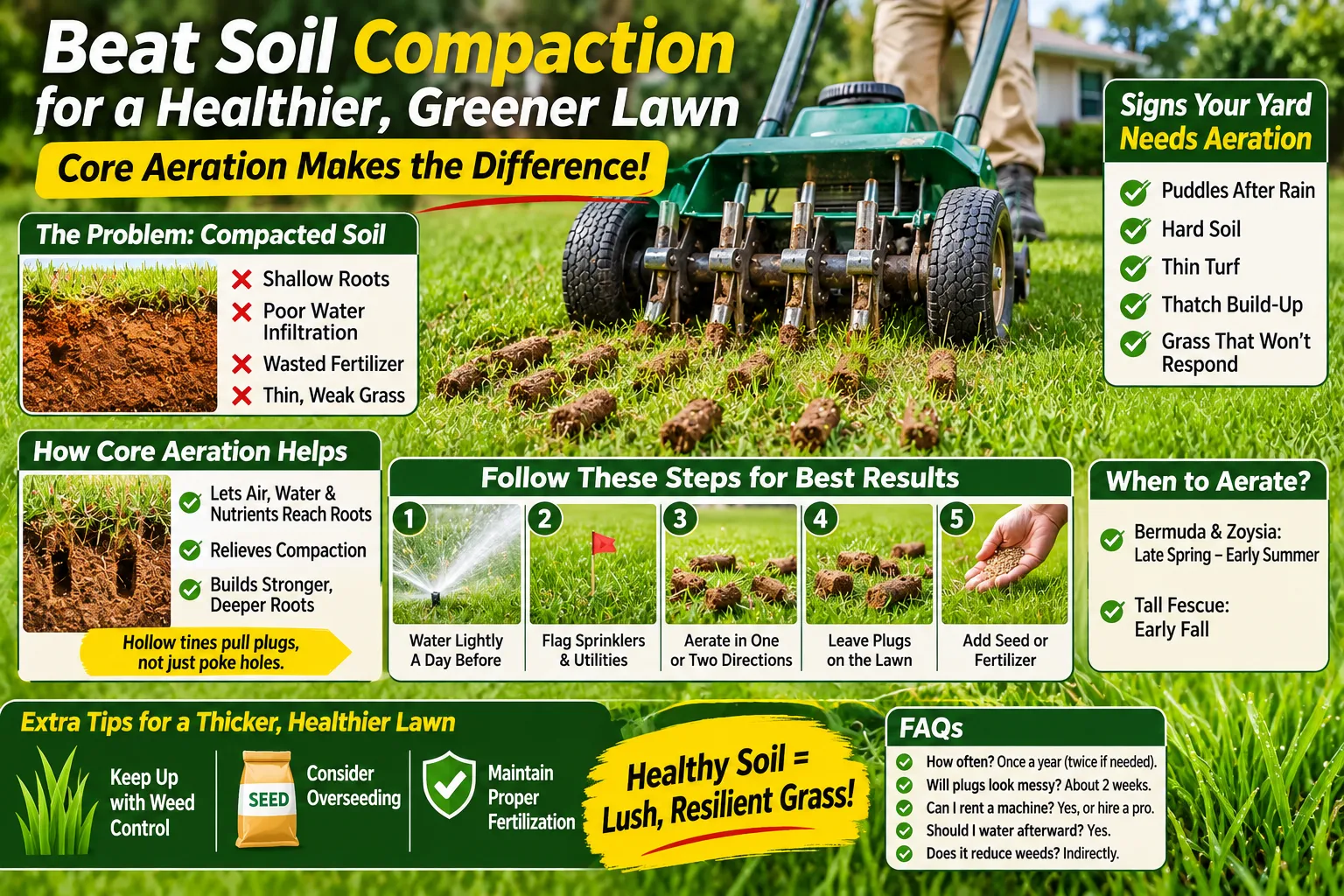

You water, you mow, you feed, and the grass still looks weak. Before you spend more money, look at the ground itself. In much of the Upstate, the soil is heavy red clay, and clay packs down easily. When the soil is too tight, grass cannot get what it needs.
This article explains what is going on underground and how to fix it.
What Happens When Soil Gets Packed Down
Healthy soil is full of tiny gaps that hold air and water. Roots travel through those gaps. Foot traffic, mowers, play, and construction squeeze them shut. Once that happens:
- Roots stay shallow
- Rain runs off instead of soaking in
- Fertilizer is wasted
- The grass struggles in heat and drought
Signs of a Compacted Yard
- Puddles that stay long after rain
- A screwdriver that is hard to push into the ground
- Thin turf in high-traffic spots
- A thick, spongy layer of thatch
- Grass that does not respond to feeding
New neighborhoods often face this problem. Builders usually strip the topsoil, leaving hard clay under the sod.
How Core Aeration Helps
A machine with hollow tines pulls small plugs out of the soil. These holes let air, water, and nutrients move straight to the roots. In the following weeks, roots grow into the open space and reach deeper. The plugs break down on top of the grass and return organic matter to the soil.
Spiked tools and spike shoes may seem easier, but they can press the soil tighter around each hole. Pulling plugs is the better choice. Many homeowners hire a provider of Lawn Treatment Greer SC so the depth and spacing suit their grass type.
The Right Time to Do It
- Bermuda and zoysia: Late spring to early summer, while the grass grows fast.
- Tall fescue: Early fall, when cooler weather helps recovery.
Avoid working on dormant grass. It cannot heal the holes, and weeds may move in.
Getting the Best Results
- Water lightly a day before, so the soil is soft but not muddy.
- Flag sprinkler heads and shallow lines.
- Make a second pass in a different direction on very hard areas.
- Leave the plugs where they fall.
- Add food or seed right afterward, while the holes are open.
Seed and nutrients work better after the soil is opened, because they reach the roots instead of sitting on the surface. This is also the best moment for Overseeding, since the seed drops into the holes and gets the soil contact it needs.
Do Not Forget the Weeds
Open soil can let weed seeds sprout if the yard is thin. A good Weed Control plan alongside soil work keeps unwanted plants from taking the space your grass needs.
Frequently Asked Questions
1. How often should I do this?
Once a year works for most yards. Heavy clay or busy play areas may need it twice.
2. Will the plugs look messy?
For about two weeks, yes. Rain and mowing break them down quickly.
3. Can I rent a machine myself?
You can, but the machines are heavy and tricky to control. Many people prefer to hire a pro.
4. Should I water afterward?
Yes. Light, regular watering helps roots settle into the new openings.
5. Does it reduce weeds?
Indirectly. A thicker, healthier yard leaves less room for weeds.
Final Thoughts
Strong grass starts with loose, healthy soil. Relieving compaction is one of the most effective steps for a thin yard, and the benefits show up in color, thickness, and drought resistance.

Join the conversation