

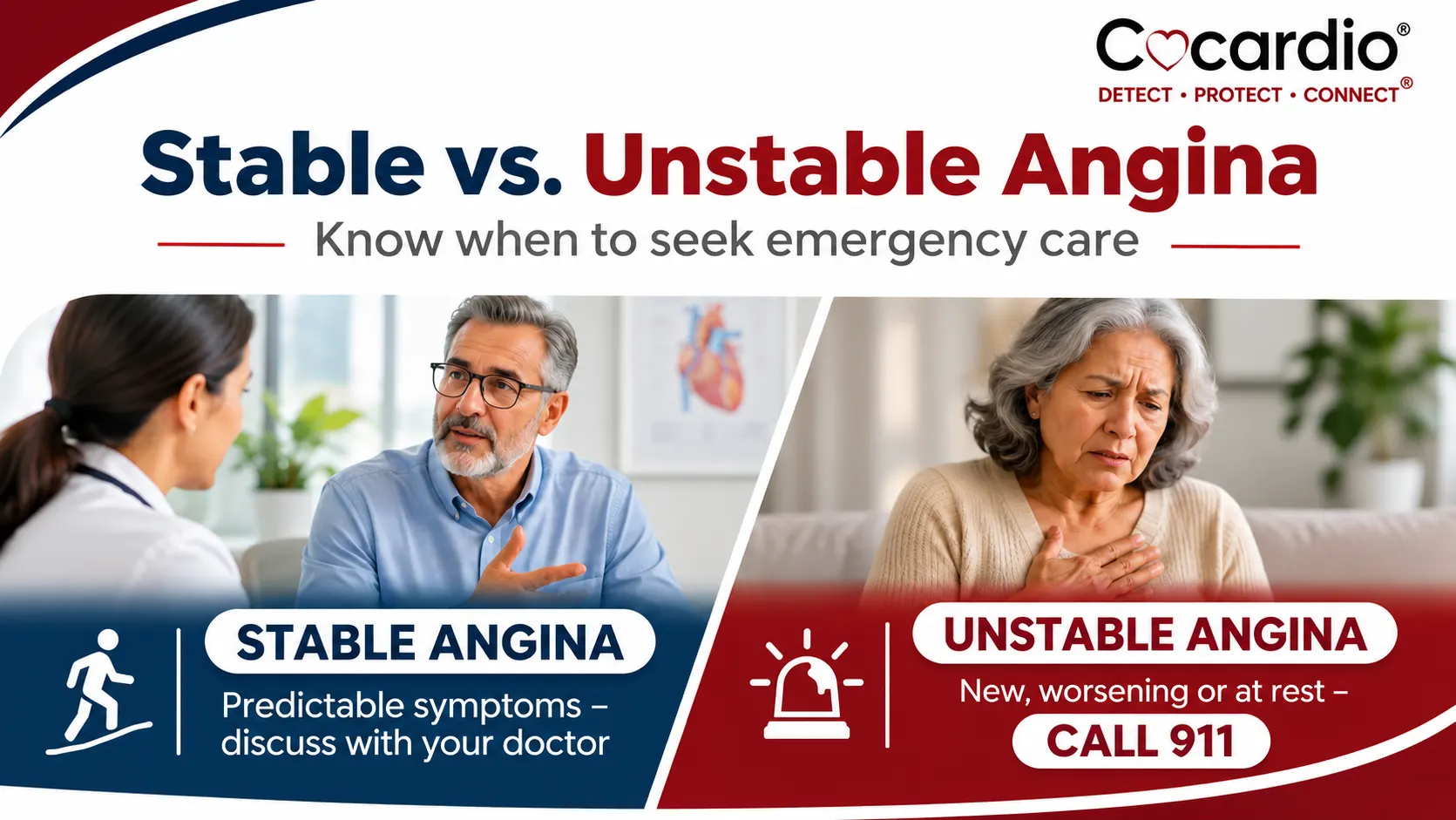

Chest discomfort can be frightening, particularly when you are unsure whether it is a familiar symptom or a medical emergency. Stable and unstable angina can both involve reduced blood flow to the heart muscle, but their patterns and urgency are different. Patients exploring ECP therapy for angina should first understand these differences because external counterpulsation is not an emergency treatment. CoCardio® in Encinitas, California, provides information about noninvasive cardiovascular wellness services that may complement appropriate physician-directed care for selected patients.
What Is Angina and Why Does It Happen?
Angina describes chest pain or discomfort that occurs when the heart muscle is not receiving enough oxygen-rich blood for its needs. It is a symptom rather than a separate disease, and coronary artery disease is one common underlying cause. People may experience pressure, squeezing, tightness, heaviness, or burning rather than sharp pain. Because similar symptoms can occur with other serious medical conditions, unexplained chest discomfort requires appropriate medical assessment.
Can Angina Occur Without Obvious Chest Pain?
Not everyone experiences angina as pressure in the center of the chest. Discomfort can extend to the shoulders, arms, jaw, neck, back, or upper abdomen, and some people experience shortness of breath or unusual fatigue. Women and people with diabetes may have symptoms that are less readily recognized as heart-related. The absence of severe chest pain does not rule out a potentially serious cardiovascular problem.
What Is Stable Angina?
Stable angina generally follows a recognizable pattern associated with exertion, emotional stress, or another familiar trigger. Symptoms often appear when the heart requires additional oxygen and improve after stopping the activity or following a previously prescribed medication plan. The frequency, intensity, and duration tend to remain relatively consistent over time. Stable angina still requires medical care because it can indicate underlying coronary artery disease and ongoing cardiovascular risk.
Common Symptoms of Stable Angina
A person with established stable angina may develop chest pressure while climbing stairs, walking uphill, or performing another predictable activity. The discomfort commonly improves within several minutes after resting or using prescribed medication as directed. Some people notice accompanying breathlessness or discomfort in the arm, shoulder, or jaw. These patterns should be documented and discussed with the treating clinician rather than used to diagnose the condition independently.
Is Stable Angina Harmless?
No, stable angina should not be dismissed simply because the symptoms are familiar. It may indicate coronary artery disease that requires ongoing treatment and risk-factor management. A clinician may recommend medications, appropriate investigations, lifestyle interventions, cardiac rehabilitation, or procedures depending on individual findings. Any change from the patient’s established symptom pattern deserves immediate attention because the situation may no longer be stable.
What Is Unstable Angina?
Unstable angina is part of the group of urgent cardiovascular conditions known as acute coronary syndromes. Symptoms may begin unexpectedly, develop at rest, become more frequent, last longer, or occur with less exertion than before. They may not improve in the usual way with rest or prescribed medication. Suspected unstable angina is a medical emergency because it may be associated with an impending or evolving heart attack.
Warning Signs That Should Never Be Ignored
A sudden change in chest discomfort is particularly concerning when symptoms are more intense or occur without a familiar trigger. New shortness of breath, cold sweating, nausea, lightheadedness, or pain spreading to the arm, jaw, back, or neck can also occur. Some people experience symptoms that come and go, which does not necessarily mean the danger has passed. Do not wait for symptoms to become unbearable before seeking emergency evaluation.
When Should You Call 911?
Call 911 immediately if you experience new, severe, prolonged, or worsening chest pain or pressure, especially when it occurs at rest or with other heart attack symptoms. This includes discomfort accompanied by significant breathing difficulty, fainting, cold sweats, or unexplained pain radiating to the upper body. Do not attempt to determine at home whether the cause is unstable angina or a heart attack. Emergency professionals can assess the situation and arrange appropriate medical care without the delays associated with scheduling a routine appointment.
Stable vs. Unstable Angina – The Differences That Matter
Stable angina usually appears during a predictable activity and improves with rest or prescribed treatment. Unstable angina can occur unexpectedly, at rest, or with much less physical activity than previously caused symptoms. Stable angina requires ongoing medical management, whereas suspected unstable angina requires emergency evaluation. The most important warning sign is a new or changing symptom pattern rather than a particular level of pain.
How Do Symptom Patterns Differ?
With stable angina, someone may recognize that walking a particular distance consistently triggers chest discomfort. Unstable symptoms may begin during sleep, while sitting quietly, or after a much smaller amount of activity. Episodes may become longer or more frequent, and treatments that usually provide relief may no longer work as expected. Because symptoms alone cannot reliably distinguish every cardiac condition, professional assessment is essential.
Can Stable Angina Become Unstable?
Yes, a person with established stable angina can develop new or worsening symptoms that indicate a possible acute coronary syndrome. Changes may include more frequent episodes, symptoms appearing at rest, or discomfort lasting longer than usual. An apparent improvement after an episode does not automatically exclude a serious cardiovascular problem. If symptoms have changed in a concerning way, call 911 rather than assuming the previous diagnosis explains them.
How Do Doctors Diagnose Angina?
Healthcare professionals review symptoms, medical history, cardiovascular risk factors, and examination findings to determine the appropriate evaluation. Tests may include an electrocardiogram, cardiac blood tests, echocardiography, coronary imaging, or other investigations depending on the clinical situation. Emergency evaluation can help distinguish unstable angina from a heart attack and other dangerous causes of chest discomfort. Patients should not attempt to use internet symptom descriptions or home monitoring equipment to make this distinction themselves.
What Is the Role of Cardiac Troponin Testing?
Cardiac troponin is a blood marker used to identify heart muscle injury during the evaluation of a possible acute coronary syndrome. Elevated results can support a diagnosis of myocardial infarction when interpreted with symptoms and other clinical findings. Unstable angina may occur without the degree of heart muscle injury identified by elevated troponin measurements. This distinction requires professional testing and interpretation rather than self-diagnosis.
How Is Stable Angina Usually Managed?
Treatment depends on the underlying diagnosis, symptom severity, medical history, and the results of appropriate cardiovascular testing. Clinicians may prescribe medications for symptom relief and treatments intended to reduce cardiovascular risk. Some patients require coronary procedures, while others benefit from continued medical management and lifestyle changes. The goal is to manage symptoms and address the underlying disease using evidence-based care appropriate to the individual.
Can Lifestyle Changes Help?
Regular physical activity within medically appropriate limits, balanced nutrition, tobacco cessation, and risk-factor management are important parts of heart care. Patients should discuss exercise recommendations with their clinician when angina limits activity or symptoms are changing. Cholesterol, blood pressure, diabetes, and other relevant conditions may also require medications and monitoring. Lifestyle measures are valuable but should not replace prescribed treatment or urgent evaluation of concerning symptoms.
Where Does ECP Therapy for Angina Fit Into Care?
External counterpulsation is a noninvasive procedure using inflatable cuffs around the lower body synchronized with the heartbeat. In appropriately selected patients with persistent chronic stable angina, it may be considered as an additional option when established treatments have not adequately controlled symptoms. It is not used to stabilize suspected acute coronary syndromes or replace emergency care, medication, or indicated cardiac procedures. Treatment decisions require clinical screening, attention to contraindications, and discussion with the patient’s healthcare professionals.
Can EECP Therapy for Angina Improve Symptoms?
Some studies of eecp therapy for angina report improvements in symptom frequency, exercise tolerance, or quality of life among selected patients. However, responses vary, and the evidence does not support a guarantee that every patient will improve. The treatment does not dissolve coronary plaque, cure coronary artery disease, or eliminate the need for ongoing cardiac care. Patients should discuss the potential benefits, limitations, risks, and alternatives with their treating cardiologist.
Who May Be Considered for External Counterpulsation?
Patients with persistent chronic stable angina may be evaluated when symptoms remain troublesome despite appropriate medical management. Relevant clinical considerations include the diagnosis, previous treatments, suitability for revascularization, and conditions that could make counterpulsation unsafe. Certain heart rhythm, valve, vascular, or other medical problems may require additional assessment or rule out treatment. A suitable candidate must be identified through clinical review rather than by matching symptoms to an online advertisement.
How Does ECP Therapy Work?
During ecp therapy, inflatable cuffs apply timed pressure to the legs while the patient rests on a treatment table. The compression is coordinated with the cardiac cycle to influence circulation during the procedure. A commonly studied EECP course involves approximately 35 one-hour sessions over several weeks, although any proposed plan requires individual assessment. Patients should ask about screening, supervision, possible side effects, and realistic treatment expectations before starting.
What Side Effects Should Patients Discuss?
Some patients experience temporary leg soreness, fatigue, bruising, or skin irritation from cuff compression. Other symptoms may require treatment interruption or medical reassessment depending on severity and underlying health conditions. Patients should disclose existing vascular problems, medications, and other relevant health information before treatment. New chest symptoms or serious breathing problems must never be dismissed as routine side effects.
Can EECP Prevent Coronary Artery Disease?
EECP has not been established as a method for preventing the initial development of coronary artery disease or reliably preventing heart attacks. Readers searching for eecp for coronary artery disease prevention should distinguish symptom-oriented counterpulsation from evidence-based cardiovascular prevention. Preventive care includes managing relevant risk factors and following appropriate medical treatment recommendations. CoCardio® wellness services should complement, not replace, a clinician-directed prevention and disease management plan.
How Can Patients in Encinitas Explore Their Options?
CoCardio® provides information about ECP/EECP-related services for patients in Encinitas and surrounding North San Diego County communities. People with previously diagnosed chronic stable angina can ask about the consultation process and whether additional medical review is required. The practice operates on a direct-pay basis and does not bill insurance for its consultations, ECP sessions, or preventive cardiovascular wellness services. For nonurgent questions, patients can request a CoCardio® consultation to discuss screening, payment arrangements, and appointment availability.
What About EECP Therapy Cost?
Patients evaluating EECP therapy cost should request current pricing directly rather than rely on unverified online estimates. The total financial commitment depends on the proposed services and treatment arrangements discussed during consultation. Eligible HSA or FSA payments may be accepted, subject to the patient’s applicable account rules. Financial questions are appropriate for a routine appointment, but suspected unstable angina always requires emergency care first.
How Do You Choose a Local Provider?
Searching for EECP therapy near me can help identify providers, but medical suitability is more important than proximity alone. Ask about clinical screening, staff responsibilities, treatment monitoring, and coordination with your existing medical team. A responsible provider should communicate the limitations of EECP and avoid claims that it cures coronary disease. Patients should also understand payment arrangements and scheduling commitments before deciding whether to proceed.
Is ECP Therapy Near Me the Same as Emergency Chest Pain Care?
The search phrase ECP therapy near me refers to locating information about a scheduled noninvasive procedure. It does not identify an emergency department or establish that the procedure is suitable for newly developed chest pain. Unstable angina requires timely emergency evaluation and may need hospital-based medications or coronary interventions. Never travel to a wellness clinic instead of calling 911 when symptoms suggest an acute cardiovascular emergency.
Prepare for a Nonurgent Heart Care Discussion
Patients with established, medically evaluated stable symptoms may benefit from organizing questions before a follow-up appointment. The resource labeled 2026 Guide to Non-Invasive Heart Treatment currently opens CoCardio®’s 2027 Heart Care Planner, which includes symptom-tracking and appointment-planning materials. This resource can support conversations about existing care, possible treatment options, and practical scheduling considerations. It is not designed to diagnose chest pain, determine EECP eligibility, or guide decisions during a medical emergency.
Frequently Asked Questions
How Can I Tell if Chest Pain Is Stable or Unstable?
Stable angina generally follows a predictable pattern and improves with rest or prescribed medication. Unstable angina may be new, more severe, longer-lasting, unpredictable, or present at rest. However, symptoms can overlap with a heart attack and other serious conditions, making home diagnosis unsafe. Call 911 for new, worsening, or otherwise concerning possible cardiac symptoms.
Can Unstable Angina Go Away on Its Own?
Symptoms associated with unstable angina may temporarily improve or fluctuate. A reduction in discomfort does not prove that the underlying problem has resolved or that a heart attack has been excluded. Emergency evaluation is necessary because further testing and treatment may be required. Do not cancel emergency assistance simply because symptoms become less intense while you are waiting.
Is EECP Therapy for Angina Suitable for Everyone?
No, eecp therapy for angina is not appropriate for every patient with chest pain or coronary artery disease. The procedure may be considered for certain patients with persistent chronic stable symptoms after appropriate medical evaluation. Some cardiovascular, vascular, and other medical conditions can make the treatment unsuitable. It must not be used as an alternative to emergency evaluation for unstable symptoms.
Can ECP Therapy for Angina Replace My Medication?
ECP therapy for angina is not a replacement for prescribed cardiovascular medication or ongoing specialist care. Some appropriately selected patients may consider it as an additional symptom-management option after discussing the evidence and limitations with their clinician. Patients should never stop or reduce medication independently because they are exploring counterpulsation. Their cardiologist or prescribing clinician should direct any changes to established treatment.
What Should I Do if My Angina Happens at Rest?
Chest discomfort that begins at rest can be a warning sign of unstable angina or another serious cardiovascular condition. If you develop new, unusual, persistent, or worsening symptoms, call 911 immediately. Do not wait to see whether a future counterpulsation appointment might relieve the discomfort. Emergency services can arrange timely evaluation for potentially dangerous causes.
Should I Contact CoCardio® Before Seeing a Cardiologist?
If you have undiagnosed chest pain, you need an appropriate medical assessment rather than relying on a wellness consultation to establish the cause. Patients with diagnosed chronic stable angina should continue the care recommended by their treating clinician. CoCardio® can answer nonurgent questions about its direct-pay services and whether further screening is necessary. An inquiry does not establish eligibility or replace a cardiologist’s diagnosis and treatment recommendations.
Conclusion – Recognize the Difference and Seek the Right Care
Stable angina generally follows a familiar pattern, while unstable angina may appear suddenly, worsen, or occur at rest and should be treated as a medical emergency. For selected patients with properly evaluated chronic stable symptoms, ECP therapy for angina may be discussed as an adjunct to established medical care rather than an alternative to it. CoCardio® in Encinitas provides information about noninvasive cardiovascular wellness services and can explain its screening process and direct-pay arrangements. For a nonurgent consultation, call +1 (858) 500-1399 or complete the CoCardio® contact form; for suspected unstable angina or a heart attack, call 911 immediately.
Medical Disclaimer
This article is intended for general educational purposes and does not provide medical advice, diagnosis, individualized treatment recommendations, or emergency triage. Chest discomfort can be caused by life-threatening conditions, and no description in this article can reliably determine whether symptoms represent stable angina, unstable angina, or a heart attack. EECP/ECP is not appropriate for everyone, does not cure coronary artery disease, and must not replace prescribed medications, cardiology follow-up, cardiac rehabilitation, or recommended procedures. For new, severe, prolonged, worsening, or rest-related chest discomfort or other possible heart attack symptoms, call 911 immediately rather than using a routine consultation form.




Join the conversation