

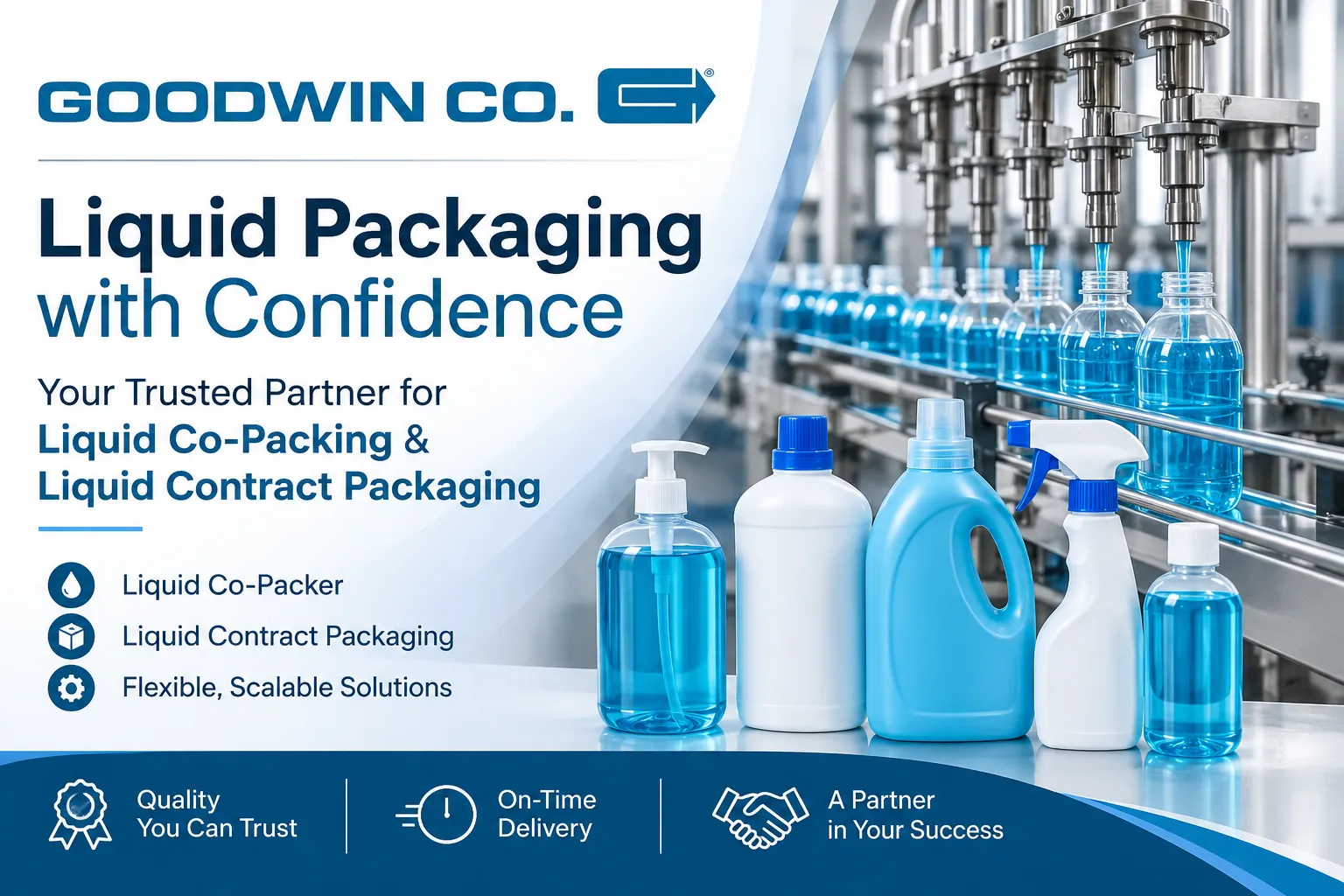

Businesses that manufacture liquid products must manage several interconnected responsibilities. From selecting suitable containers to maintaining consistent filling operations, every production decision can affect product quality, operational costs, and customer satisfaction.
Building an independent packaging operation requires specialized equipment, trained personnel, production facilities, and ongoing maintenance. For many businesses, outsourcing these activities provides a practical alternative.
Professional liquid packaging services help companies manage production requirements while maintaining greater flexibility as their businesses develop.
What Is Liquid Packaging?
Liquid packaging involves filling, sealing, labeling, and preparing liquid products for storage, transportation, and distribution.
The process can accommodate products with different viscosities, chemical characteristics, container requirements, and intended applications.
Packaging operations typically include container preparation, liquid filling, closure application, labeling, quality inspections, and secondary packaging.
Each stage contributes to the overall condition and presentation of the finished product.
Businesses must ensure that packaging materials remain compatible with their formulations and suitable for expected storage and transportation conditions.
Why Businesses Outsource Liquid Packaging
Establishing an internal packaging facility can require substantial financial investment.
Companies must purchase equipment, arrange production space, recruit employees, and develop appropriate operating procedures. They must also manage maintenance and respond to changes in production demand.
Outsourcing to an experienced liquid co-packer allows businesses to access existing infrastructure and manufacturing expertise.
Instead of managing every packaging activity internally, organizations can focus more resources on product development, customer relationships, and market expansion.
However, outsourcing does not eliminate the need for careful planning, supplier evaluation, and quality oversight.
Seven Ways Liquid Packaging Services Improve Efficiency
1. Reduce Equipment Investment
Purchasing industrial filling equipment can place considerable pressure on business budgets.
Companies may need different machinery for various container sizes, liquid viscosities, and packaging configurations.
Contract packaging allows businesses to access suitable equipment without owning every production asset.
This approach can help organizations manage capital expenditure, particularly when launching products or entering unfamiliar markets.
2. Improve Production Flexibility
Product demand can change throughout the year.
Seasonal purchasing patterns, promotional activities, and customer orders may influence production requirements.
A packaging partner with flexible capabilities can help businesses accommodate changing order volumes, subject to available capacity and agreed schedules.
This flexibility reduces the need to maintain excessive internal production infrastructure.
3. Support Consistent Product Presentation
Customers expect products to arrive in appropriate containers with secure closures and accurate labeling.
Professional packaging operations can help businesses maintain consistent product presentation through defined production specifications.
Consistency also makes products easier to identify, store, and distribute.
Organizations should establish acceptable packaging tolerances and quality requirements before production begins.
4. Simplify Product Launches
Launching a new liquid product involves several operational decisions.
Businesses must determine container dimensions, closure types, label designs, production quantities, and distribution arrangements.
An experienced packaging partner can help evaluate manufacturing feasibility and identify potential challenges before production begins.
Early collaboration can reduce unnecessary modifications and support more organized product launches.
5. Improve Resource Allocation
Internal packaging operations require ongoing supervision and administrative support.
Outsourcing selected activities allows companies to concentrate their resources on other business priorities.
Product innovation, sales development, marketing, and customer service may benefit from this additional operational flexibility.
6. Accommodate Multiple Packaging Formats
Businesses frequently offer products in different sizes to serve various markets.
A cleaning product, for example, might require small consumer containers alongside larger commercial formats.
Professional liquid packaging capabilities can support multiple configurations when the equipment and formulation permit.
This flexibility helps businesses develop product ranges suited to different customer requirements.
7. Support Long-Term Business Growth
As sales increase, packaging requirements may become more complex.
Companies may need greater production volumes, additional container formats, or more advanced labeling options.
An established packaging partner can help organizations plan for these changes.
Discussing future requirements early allows businesses to evaluate whether a provider can support their expansion objectives.
Understanding Liquid Contract Packaging
Liquid contract packaging involves outsourcing packaging activities to a third-party manufacturing provider under an agreed commercial arrangement.
The packaging partner performs defined production activities according to the client’s specifications.
These activities may include liquid filling, container sealing, labeling, assembly, and preparation for distribution.
The scope depends on the agreement between the manufacturer and its customer.
A clear contract should establish responsibilities for material procurement, quality inspections, production scheduling, documentation, and finished product acceptance.
Choosing Suitable Containers and Closures
Container selection affects product protection, usability, transportation, and brand presentation.
Businesses should evaluate container materials according to the chemical characteristics of their formulations.
Closure designs should also suit the intended application.
Sprayers, dispensers, standard caps, and other closure systems provide different functionality.
A packaging partner can help determine whether the selected components are compatible with available production equipment.
Compatibility testing remains important before approving commercial production.
Working With Goodwin Inc.
Goodwin Inc. operates 26 liquid filling production lines and accommodates both viscous and non-viscous formulations, with packaging sizes ranging from one-ounce containers to bulk formats.
Chemical Contract Manufacturing
Businesses seeking scalable liquid packaging solutions can explore Goodwin’s manufacturing capabilities and discuss their production requirements.
Its flexible filling infrastructure provides options for organizations with different packaging formats and order volumes.
Frequently Asked Questions
What does a liquid co-packer do?
A liquid co-packer performs agreed packaging activities for another business, including filling, sealing, labeling, and preparing liquid products for distribution.
Can liquid packaging services accommodate different viscosities?
Suitable manufacturing providers can handle products with different viscosities using appropriate filling equipment and production processes.
Is liquid contract packaging suitable for small businesses?
Yes. Businesses with smaller production requirements may benefit from outsourcing when suitable order quantities and commercial arrangements are available.
What factors influence liquid packaging costs?
Product characteristics, container specifications, order quantities, labeling requirements, quality controls, and production complexity can influence packaging costs.
Can outsourced packaging support business expansion?
A packaging partner with scalable infrastructure may accommodate increasing production requirements, depending on capacity and contractual arrangements.
Conclusion
Professional liquid packaging services provide businesses with opportunities to improve operational efficiency, manage manufacturing costs, and support changing production requirements.
Working with an experienced liquid co-packer allows organizations to access specialized equipment and packaging expertise.


Join the conversation