

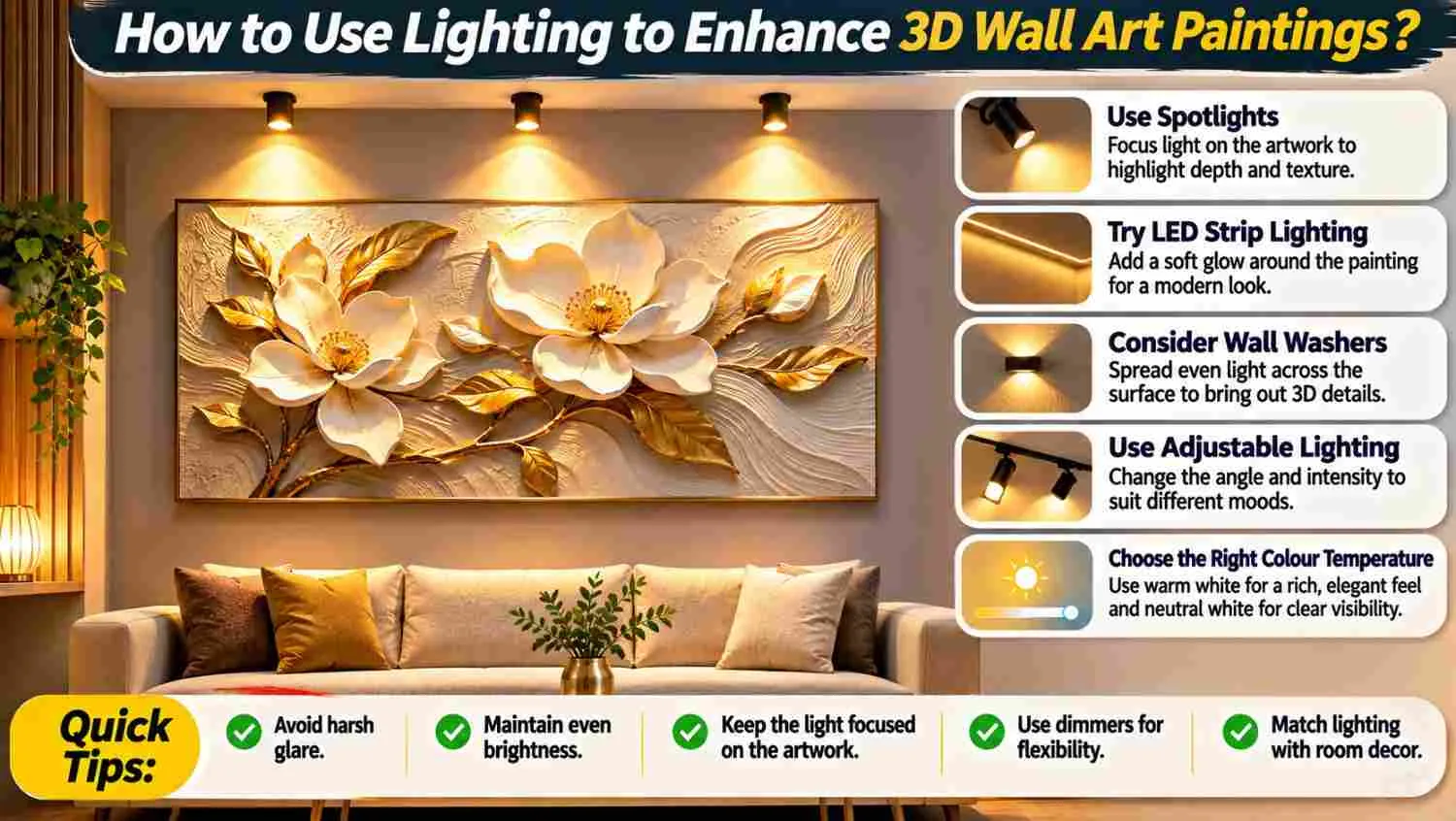

Directional lighting can reveal raised paint layers, accentuate surface details, and strengthen the contrast between highlights and shadows in 3D wall art paintings. However, flat canvas paintings that depict three-dimensional scenes often benefit from more even illumination. Brightness, colour temperature, and fixture positioning also influence how viewers perceive artwork. Excessive glare or poorly positioned lights can obscure details rather than enhance them. Choose a lighting arrangement that complements the actual artwork construction, surface finish, and surrounding interior.
Why Lighting Changes the Appearance of 3D Wall Art?
Light interacts differently with smooth, textured, and reflective surfaces. When light strikes raised paint, protruding sections catch the illumination while neighbouring recesses develop shadows. Consequently, viewers can distinguish variations in surface height more easily.
Flat optical illusion paintings, in contrast, rely on perspective, shading and tonal gradients to communicate depth. Suitable illumination improves the visibility of these artistic techniques without creating physical dimensions. The surrounding wall colour also influences perceived contrast, particularly when the painting contains subtle colour variations. A patterned wall may compete with subtle artwork, even when the painting receives sufficient illumination.
Identify the Type of 3D Artwork
Examine the construction and finish of your painting before selecting fixtures. Different surfaces require different approaches.
Physically Textured Paintings
Thick paint applications, relief elements, and sculptural materials create actual surface variations. Directional light accentuates these features, whereas softer illumination produces less pronounced shadows. Deep relief compositions may require supplementary light to reveal recessed details.
Flat Canvas Paintings With Optical Depth
Artists use overlapping shapes, perspective, geometric arrangements, and shading to create an impression of distance. Broad, balanced illumination helps preserve the relationship between these visual elements. Avoid bright patches that interrupt the composition.
Glossy and Metallic Artwork
Glossy coatings and metallic accents can reflect light towards viewers. Adjust fixture angles and assess reflections from several positions. A larger, softer light source may reduce the intensity of distracting reflections.
Which Lighting Fixtures Suit 3D Wall Art?
Consider the painting dimensions, ceiling configuration, and desired shadow effects before choosing a fixture.
Adjustable LED Spotlights
Spotlights direct illumination towards selected areas, making them useful for textured abstract artwork and paintings with prominent relief elements. However, a narrow beam may illuminate only the centre of a large canvas. Select a beam that covers the intended area without producing excessive brightness.
Track Lighting
Track systems accommodate compatible adjustable fixtures, offering flexibility for gallery walls and large paintings. Homeowners can redirect individual lights when they rearrange artwork. Nevertheless, overlapping beams can produce uneven brightness, and visible tracks may compete with decorative ceiling features. For wide compositions, compare coverage at both ends before fixing the track position.
Picture Lights
Picture lights project illumination from above a painting. Check the fixture width, arm projection, and distribution pattern against the canvas dimensions. Tall artwork may receive considerably less light near its lower edge, particularly when the fixture sits close to the upper frame.
Wall Washing and Wall Grazing
Wall washing distributes illumination across a broad wall area, supporting consistent visibility across large flat canvases.
Wall grazing, by comparison, directs light at a shallow angle to the artwork surface. It emphasises raised textures through distinct shadows and highlights. However, grazing can exaggerate surface imperfections and conceal recessed details.
Indirect Lighting and Backlighting
Concealed LED strips can illuminate the surrounding wall and visually separate a painting from its background. Since conventional opaque canvases do not transmit light effectively, backlighting alone cannot adequately reveal their front surfaces. Combine indirect illumination with suitable front lighting when necessary.
How to Choose the Right Lighting Angle?
The direction of illumination determines where shadows and reflections appear. Test several positions before committing to permanent fixtures.
Front lighting: Direct relatively even illumination towards flat canvas paintings to retain colour visibility and artistic contrast. However, frontal illumination can minimise shadows on textured surfaces and produce glare on glossy finishes.
Side lighting: Position a directional fixture towards one side of a relief painting. Shadows beside raised elements highlight differences in height. Add gentle fill lighting if darker recesses obscure important details.
Overhead lighting: Start with a downward beam approximately 30 degrees from the vertical for ceiling-mounted artwork lighting. Adjust the angle according to ceiling height, surface finish, artwork projection, and viewing position.
Combined lighting: Balance a dominant directional source with softer illumination when a single fixture creates excessive contrast. Avoid equally strong lights from opposing directions because they may produce competing shadows.
Check the result from seated and standing positions. A fixture that looks suitable from directly opposite the painting may produce distracting reflections from a nearby sofa.
Colour Temperature and Colour Rendering
Colour temperature describes the warm or cool appearance of light, whereas colour rendering concerns how a light source reproduces object colours.
Warm, Neutral and Cool White Lighting
Warm white lighting around 2700K to 3000K complements wooden furniture, earthy pigments and warm interior colours. However, it may alter the appearance of some blues and whites.
Neutral white lighting around 3500K to 4000K offers a less warm appearance that may suit contemporary apartments and multicoloured paintings.
Cooler white illumination can complement monochromatic artwork and blue-toned compositions. Nevertheless, it may make certain warm colours appear different from their appearance under warmer light.
Colour Rendering Index (CRI)
CRI compares aspects of colour reproduction under a light source with those under an appropriate reference illuminant. Consider fixtures with a CRI of 90 or above for colour-sensitive artwork. However, even a high rating cannot guarantee accurate reproduction of every pigment. The light spectrum, artwork materials, and surrounding colours also influence the result.
Balance Brightness and Beam Spread
Lumens measure the total luminous flux of a light source, while lux measures illuminance reaching a surface. Consequently, identical lumen ratings do not necessarily produce identical illumination on a painting.
Fixture distance and beam width affect coverage. Wider beams generally suit larger canvases, whereas concentrated beams highlight smaller areas. Excessive brightness may create glare, particularly against dark walls. Conversely, inadequate illumination can obscure fine details.
Choose compatible dimmable fixtures to adjust brightness as daylight and room lighting change. Check the edges and the centre of the painting for uneven coverage.
Combine Different Layers of Interior Lighting
Coordinate dedicated artwork fixtures with existing illumination instead of treating the painting as an isolated decorative element.
Ambient lighting: Maintain sufficient general illumination to prevent uncomfortable contrast between the painting and its surroundings.
Accent lighting: Direct attention towards the composition or selected surface details.
Decorative lighting: Use concealed illumination to complement nearby architectural features.
Fill lighting: Introduce softer supplementary illumination where strong shadows conceal details.
The painting need not occupy the brightest area of every room. Balance its prominence against other interior features.
Lighting Ideas for Different Interior Spaces
Room functions and viewing distances influence practical fixture choices.
Living Rooms and Bedrooms
In Indian apartments with false ceilings, adjustable recessed spotlights can complement artwork above sofas. Check for reflections on nearby television screens. In bedrooms, dimmable picture lights can work alongside bedside lamps without overwhelming the surrounding illumination.
Dining Rooms and Hallways
Dining room pendants may cast shadows across nearby paintings. Therefore, assess dedicated artwork illumination from different seats. In narrow hallways, choose compact fixtures and direct their beams away from approaching viewers.
Offices and Commercial Interiors
Consider operating hours, maintenance access, and consistent illumination across coordinated paintings. Avoid unnecessarily bright displays near workstations.
Common Artwork Lighting Mistakes
Address practical problems before changing fixtures or purchasing additional equipment.
Visible reflections: Reposition reflective artwork or adjust the fixture angle rather than simply reducing brightness.
Excessively dark shadows: Introduce softer fill lighting or reduce the grazing effect.
Uneven colour appearance: Avoid mixing noticeably different colour temperatures across a single canvas.
Ignoring daylight: Examine the painting during daylight and after sunset before finalising fixture positions.
Protect Paintings From Excessive Light and Heat
Prolonged exposure to visible light and ultraviolet radiation can damage sensitive pigments, inks and coatings. Although suitable LED fixtures generally emit relatively little ultraviolet radiation, they still generate heat and expose artwork to visible light.
Use curtains or blinds to limit direct sunlight, maintain appropriate fixture clearance, and switch off dedicated lights when nobody needs them. Follow material-specific care instructions. Consult a conservation specialist for valuable or unusually sensitive artwork.
What to Check Before Buying Artwork and Lighting?
If you plan to buy 3D wall art or a painting online in India, examine close-up photos for texture, reflective finishes, and actual canvas construction. Check dimensions, depth, weight, mounting requirements, and available care instructions. Product photographs may show different lighting conditions from those in your room.
Compare fixture beam angles, adjustment options, colour rendering and electrical compatibility. Temporarily test illumination using a portable light source. Seek qualified professional assistance for permanent electrical installations.
Conclusion
Effective artwork lighting balances direction, brightness, colour rendering and coverage. Physically textured paintings benefit from carefully controlled shadows, whereas flat optical illusion artwork often requires more uniform illumination. Consider surface finish, room colours, and typical viewing positions before selecting fixtures. Test potential arrangements and prioritise artwork preservation alongside visual appeal.



Join the conversation