


List
We have talked a number of times about how choosing the right bedsheet does not depend only on the colour, design and softness. The fabric that you sleep on every night for 7-8 hours, affects the comfort, breathability and your overall sleep experience. There are so many blended fabrics available in the market today, so learning how to identify a pure cotton bedsheet is important. If you are shopping for a pure cotton bedsheet, you can try some tests at your home to identify and understand about the fabric better and in easy steps.
What starts from checking the label of the bedsheet and goes to checking the weave carefully. The following methods can help you in being more informed and making a correct choice for yourself, especially when you are looking for high quality bedsheets.
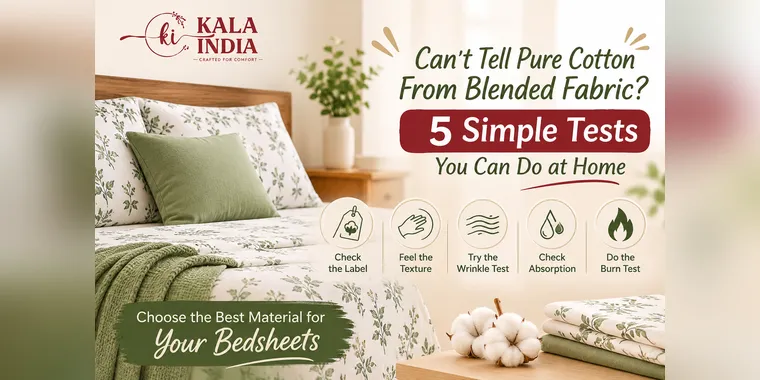
The following are 5 simple tests that you can perform to check if your bedsheet is made of pure cotton:
1. Check the Fabric Label
The first step is to check the label of your bedsheet. Look for a clear and true description that mentions “100% cotton.”
The bedsheet label that mentions cotton-blend, indicates that the fabric is not natural, and that it contains some artificial fibre. For instance, if a bedsheet is labelled as, “80 % cotton”, it should not be considered as a pure cotton bedsheet.
When you are buying cotton bedsheets online, read the description and the fabric structure of the sheet very carefully. Always make sure to order the bedsheet where the seller would have clearly mentioned the material used, rather than depending only upon the terms like soft, natural and premium.
2. Check the texture of the Fabric
The structure of a cotton bedsheet should be soft, breathable and comfortable against the skin. Depending on the weave and the texture of the bedsheet, the sheet may feel crisp, smooth and little textured.
Feel the sheet and the fabric. Pure cotton becomes more soft after washing repeatedly. Whereas, a polyester blend sheet feels smooth and slippery from the very beginning.
Texture can not however confirm whether the bedsheet is made of pure cotton. The fabric treatment, thread count and techniques of weaving can change the feel of the material of the sheet.
3. Try the Wrinkle Test
A sheet made of pure cotton gets wrinkles easily compared to a polyester blend one as it absorbs moisture and acknowledge the pressure differently.
Clutch the end of your sheet and crush it gently for a few seconds, and let it go. If the sheet is made of pure cotton, it may show some creases, whereas a sheet made of cotton blend, would show no or very less wrinkles as they resist creasing.
This test provides a helpful insight. However, the finishing and the construction of the fabric can affect how easily or not the bedsheet forms wrinkles.
4. Notice the Absorption of Water on the Fabric:
A pure cotton bedsheet absorbs moisture which is why it is the best choice for everyday use.
Keep a small drop of water on the sheet and notice if the water is spreading on the sheet or remains on the surface of the sheet. A pure cotton bedsheet absorbs the water immediately or some seconds, while the blend sheet absorbs water very slowly.
This test provides usefulness in comparing the fabrics. You should however remember that it can not create the same fibre composition of its own.
5. Check the Burn Test Carefully:
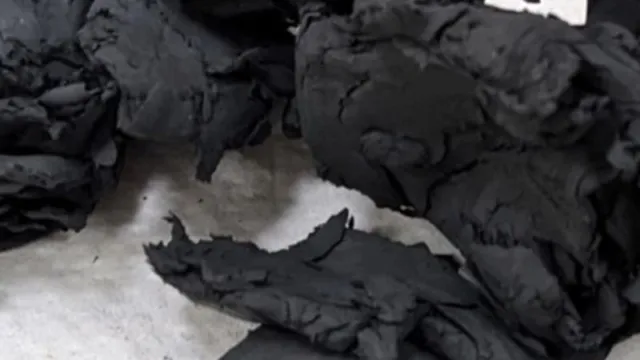
This test is conducted to see the real difference between pure cotton and the synthetic ones. Pure cotton burns like a paper and leaves a soft and grey coloured ash. Whereas, a synthetic fibre melts and the flame leaves a hard residue.
Pick a loose thread from the sheet and place it near the flames, at safety. It it burns in yellow and smells like paper, it is a pure cotton sheet. But, when you burn a thread of synthetic fibre, it would not burn in the flame, but melt and produce a plastic-like smell.
How to Choose the Best Material for Your Bedsheets?
The choice of the best material for a bedsheet should match with your comfort, climate, budget and the upkeeping needs.
Pure cotton is a popular choice as cotton is a natural fibre, breathable, absorbs moisture and is suitable for regular use. A cotton-polyester blend, whereas, is not a natural fibre, breathable and is wrinkle-resistant.
If you want breathable cotton bedsheets, look at the weave, fabric quality, finishing and the care instructions mentioned on the packaging, rather than just going for the high thread count. Percale feels crisp and airy, while sateen feels smooth and silky.
If you are looking for high quality bedsheets, you should prioritize the transparency, material information, craftsmanship and the fabric that suits your preference.
Final Thoughts
To identify a pure cotton bedsheet, the process does not have to be a complicated one. Carefully check the label, feel the texture, observe the wrinkles and test the water absorption. These tests can help you understand the fabric. But you should also remember that no test conducted at home can give you the guarantee that your bedsheet is 100% made of cotton.
Whereas, when you are buying a cotton bedsheet online, select a sheet whose seller clearly mentions the fibre structure and delivers you with the correct information of the product. Purchasing a 100% cotton bedsheet helps you sleep comfortably.
FAQs
1. How do I identify if a bedsheet is 100% cotton?
The label should mention “100% cotton.” The texture, wrinkle and water absorption test at home can give you clues about the composition of the fabric. However, you should rely only on these tests.
2. What is the burn test for cotton fabric?
Take a loose thread from your bedsheet and bring it to the flame carefully. Pure cotton burns like paper and leaves a soft grey ash. While a polyester melts like a plastic and leaves a hard residue. It is very important that you be extra careful while doing this burn test as some fabrics cause fire and release harmful fumes.
3. Is a cotton polyester blend bedsheet bad for skin?
It is not necessarily bad for the skin. A cotton polyester blend bedsheet can be suitable for many people. The comfort however depends upon the factors such as the sensitivity of the skin, fabric finishing, dyes and the breathability. People who have sensitive skin go for more soft, breathable fabric products.
4. Why are pure cotton bedsheets more expensive than blended ones?
The pure cotton bedsheets are more expensive than the blended ones as the raw material, weaving, finishing and manufacturing processes of a pure cotton bedsheets are costly than the blended ones. The variety of cotton, formation of the bedsheet, brand and the craftsmanship also increases the price. However, a higher price does not give a guarantee of a good quality.
5. How do I know if a bedsheet label saying “cotton” is actually pure cotton?
The bedsheet label should clearly mention the ”100% cotton” label. If the label identifies with “cotton blend” , “60% cotton” does not mean that the bedsheet is pure cotton. If the label is not clear, you can request the manufacturer to provide you with the textile test results for reliability.
Also Read – What to Consider Before Choosing a Permanent Hair Removal Method

i love the content, its really usefull