


Anyone who reads a Civil War spy thriller eventually asks a simple question. How did Civil War spies actually get a message from one place to another? Today a secret can cross the world in a second. In the 1860s, it meant paper, horses, trains, and trust. Knowing how it worked makes both the history and the fiction easier to enjoy.
A World Without Instant Communication
The telegraph was the fastest tool of the era. Both armies used it heavily. But a telegraph line was also a weak point. Wires could be cut or tapped. Operators could read what passed through them. Because of that, important messages were often written in code or sent another way.
Ciphers and Codes Used by Civil War Spies
Both sides used ciphers to protect their messages. The Confederacy is known for its brass cipher disk, a small device that scrambled text using a keyword. Union telegraphers often used route ciphers. Words were rearranged in a set pattern, and key names were swapped for code words.
Neither system was perfect. Each side worked to break the other’s messages. The goal was not to be unbreakable. It was to buy enough time for the information to stay useful.
Couriers and Everyday Cover
Much of the real work was done by people. A courier might carry a folded note, a coded letter, or a memorized message. Success depended on looking ordinary. A traveler with a basket, a visitor calling on a neighbor, or a relative sending family news drew far less suspicion than a soldier.
Rose Greenhow, Belle Boyd, and Elizabeth Van Lew show how ordinary social life could double as cover. Their stories also show how dangerous it was when a cover story failed.
Why Occupied Cities Were So Tense
Cities that changed hands brought these risks into daily life. Memphis, a busy river port, came under Union control in June 1862. It stayed under occupation for the rest of the war. Residents faced checkpoints, permits, and neighbors who might talk. In a place like that, a train ticket, a parcel, or a visit could mean more than it seemed.
What This Means for Historical Fiction
These limits give a spy story its tension. Without instant messages, every choice about whom to trust matters more. One mistake can have lasting consequences.
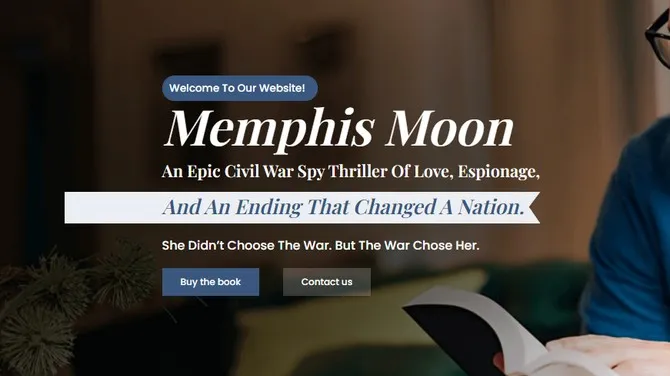
Matthew M. Watkins builds his novel Memphis Moon on this kind of pressure. It follows Virginia “Ginnie” Moon, who grows up in Oxford, Ohio, in a household with ties to both North and South. After her father’s sudden death, she is sent to Memphis. The Moon sisters were real, but the surviving record about them is thin. The author imagined the rest from careful research. Caleb Dawkins, a young miller from Virginia, is a fictional character.
Watkins spent six years in the U.S. Navy and thirty years as an executive in the global plastics industry before retiring to write. He is a mechanical engineer by training. That is why the practical side of secrecy feels believable in the book.
A Simple Way to Read These Stories
When you read historical fiction about spies, three questions help. How does the message travel? Who could see it on the way? What would the character lose if it were found? Asking them turns a good story into a small lesson in how the period worked.
You can find more posts from this author on the author page. To read more about the novel, the research behind it, and the author, visit High Mountain Book.


Join the conversation