
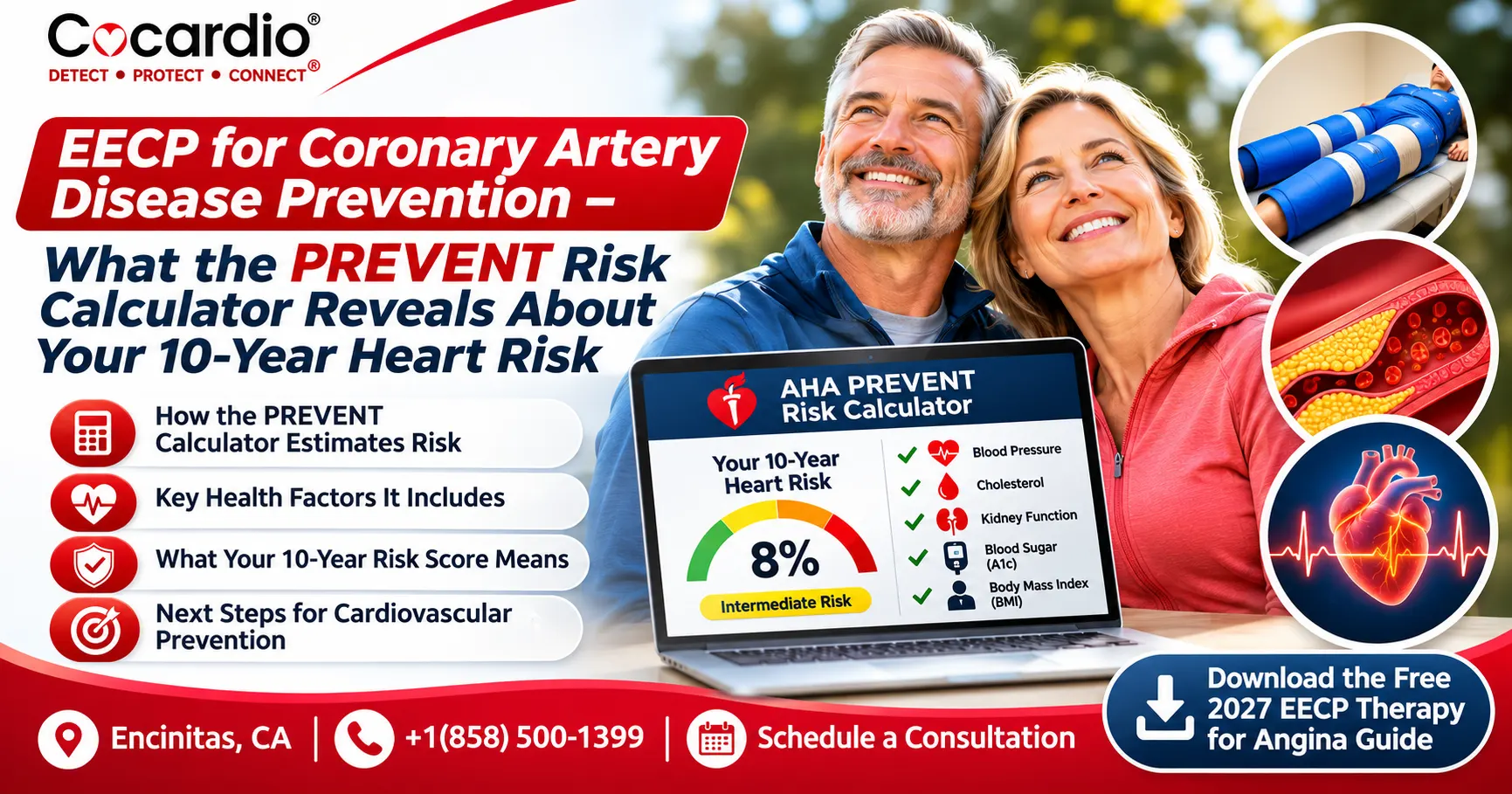

Heart disease prevention begins with understanding your personal cardiovascular risk. Many people know their cholesterol and blood pressure numbers but are unsure how those measurements affect their chances of developing heart disease. The American Heart Association’s PREVENT risk calculator offers a more comprehensive way to estimate cardiovascular risk by considering heart, kidney, and metabolic health together. Understanding the results can help patients and healthcare professionals make informed decisions about long-term prevention.
The calculator is particularly useful for people who want to take action before developing cardiovascular disease. It estimates the likelihood of certain cardiovascular events over the next 10 years and can also provide longer-term estimates for eligible younger adults. However, a risk percentage is not a diagnosis, and it cannot predict exactly what will happen to an individual. The results are intended to support conversations about preventive care, not replace professional medical judgment.
What Is the PREVENT Risk Calculator?
PREVENT stands for Predicting Risk of Cardiovascular Disease EVENTs. Developed by the American Heart Association, the equations were introduced in 2023 using contemporary health data from more than 6.5 million U.S. adults. Unlike older cardiovascular risk models, PREVENT incorporates kidney and metabolic health alongside traditional cardiovascular risk factors. This broader approach helps clinicians assess several interconnected contributors to future heart disease.
The calculator is designed primarily for adults ages 30 through 79 who do not have established cardiovascular disease. It can estimate the likelihood of total cardiovascular disease, atherosclerotic cardiovascular disease, and heart failure. For eligible adults ages 30 through 59, it can also estimate risk over 30 years. The American Heart Association updated its online calculator in October 2026 to correct an issue involving an optional hemoglobin A1c predictor.
Why Was a New Heart Risk Calculator Needed?
Traditional cardiovascular risk calculators primarily focused on factors such as age, cholesterol, smoking, and blood pressure. These measurements remain important, but they do not fully describe the relationship between cardiovascular disease, kidney function, and metabolic health. PREVENT incorporates additional clinical information to provide a more comprehensive assessment. The result is a tool designed to support individualized preventive treatment decisions.
EECP For Coronary Artery Disease: How Does PREVENT Estimate Your 10-Year Heart Risk?
The calculator uses validated statistical equations to estimate the probability of developing specified cardiovascular outcomes within a defined period. Clinicians enter health measurements and medical information, and the equations generate an estimated risk percentage. For example, a hypothetical 10-year risk of 8% means that approximately eight out of 100 people with comparable characteristics would be expected to experience the specified outcome over 10 years. It does not mean that an individual has an 8% chance of experiencing an event every year.
Which Health Measurements Are Included?
The required information includes age, sex, systolic blood pressure, total cholesterol, HDL cholesterol, kidney function, and body mass index. The calculator also considers diabetes, smoking status, and whether the patient takes certain blood pressure or cholesterol medications. Optional measurements, including hemoglobin A1c and urine albumin-to-creatinine ratio, can further personalize the estimate. Clinicians should use accurate, current measurements whenever possible.
Why Kidney Function Matters
Kidney health and cardiovascular health are closely connected. Reduced kidney function is associated with an increased likelihood of cardiovascular complications, even when other risk factors are considered. PREVENT incorporates estimated glomerular filtration rate, commonly called eGFR, to account for kidney function. This is one reason the calculator offers a broader assessment than older risk equations.
Understanding Your PREVENT Risk Score
PREVENT produces different risk estimates depending on the cardiovascular outcome being evaluated. PREVENT-CVD estimates total cardiovascular disease risk, while PREVENT-ASCVD focuses on atherosclerotic cardiovascular disease. PREVENT-HF estimates the risk of heart failure, which is a distinct clinical outcome. Patients should always clarify which estimate their clinician is discussing before interpreting a percentage.
What Counts as Low or High Risk?
Risk categories depend on the specific PREVENT equation and the clinical guideline being applied. Under the 2026 dyslipidemia guideline, 10-year PREVENT-ASCVD risk below 3% is classified as low, 3% to below 5% as borderline, 5% to below 10% as intermediate, and 10% or higher as high. These categories help inform discussions about cholesterol-lowering treatment and other preventive measures. They should not be automatically applied to the calculator’s total cardiovascular disease or heart failure estimates.
What Is PREVENT-Age?
The updated calculator also provides a PREVENT-Age estimate that translates cardiovascular risk into an equivalent risk age. Someone whose estimated risk age exceeds their chronological age may have a less favorable cardiovascular risk profile than expected for their age. Conversely, a lower risk age may indicate a more favorable profile. This measurement is intended to make risk discussions easier to understand rather than provide a literal measure of biological aging.
Who Should Use the PREVENT Calculator?
PREVENT is intended for primary prevention, meaning the assessment of future cardiovascular risk before established cardiovascular disease is present. It is not validated for people who already have known cardiovascular disease, including those with a history of heart attack or established coronary artery disease. Certain other conditions, including severe subclinical cardiovascular disease, may also place a person outside its intended population. A clinician should determine whether the calculator is appropriate before using its results to guide care.
What If You Already Have Coronary Artery Disease?
Patients with established coronary artery disease need individualized management rather than relying on a primary-prevention calculator. Their treatment may involve cholesterol management, blood pressure control, antiplatelet medication, lifestyle changes, and additional interventions when indicated. Some people researching eecp for coronary artery disease prevention may already have diagnosed disease and persistent chest discomfort. For these patients, the focus should be on evidence-based secondary prevention and appropriate symptom management.
Can PREVENT Help You Avoid Future Heart Problems?
The calculator helps identify risk factors that may benefit from medical attention. Depending on the results, clinicians may recommend lifestyle changes, medication, additional testing, or closer follow-up. These decisions also depend on family history, existing conditions, patient preferences, and relevant clinical guidelines. A risk estimate is most useful when it leads to a practical prevention plan.
Lifestyle Changes That Support Cardiovascular Prevention
Regular physical activity, a balanced eating pattern, tobacco cessation, sufficient sleep, and appropriate weight management can support cardiovascular health. Managing blood pressure, cholesterol, and diabetes is also essential for many patients. These interventions may reduce cardiovascular risk, although the size of the benefit varies between individuals. Patients should work with their healthcare team to establish realistic goals and avoid changing prescribed medications independently.
When Additional Testing May Be Helpful
A risk estimate does not capture every factor that influences cardiovascular health. In selected cases, clinicians may consider coronary artery calcium scoring, additional laboratory tests, or other evaluations when treatment decisions remain uncertain. Family history and certain inflammatory or metabolic conditions may also affect the interpretation of risk. Testing should be chosen according to clinical need rather than performed automatically after every PREVENT calculation.
Does EECP Prevent Coronary Artery Disease?
Patients searching for eecp for coronary artery disease prevention should understand the difference between cardiovascular prevention and treatment of existing symptoms. Enhanced external counterpulsation, or EECP, is a noninvasive procedure studied primarily for symptom relief in selected patients with chronic stable or refractory angina. It uses inflatable cuffs synchronized with the heartbeat to produce specific circulatory effects. EECP has not been established as a method of preventing coronary artery disease, eliminating arterial plaque, or preventing heart attacks.
Prevention and Angina Treatment Have Different Goals
Primary prevention aims to reduce the likelihood of developing cardiovascular disease before it occurs. Angina treatment addresses symptoms that may arise when the heart muscle receives insufficient oxygen-rich blood. A patient with established coronary artery disease may require both long-term risk reduction and treatment for ongoing symptoms. These goals are related, but they should not be confused with one another.
How Noninvasive Heart Treatment Fits Into Cardiovascular Care
Non invasive heart treatment can refer to several different approaches, including medication-based management, lifestyle interventions, and selected outpatient procedures. These approaches do not all serve the same purpose or have the same evidence supporting their use. EECP may be considered for certain patients with persistent stable angina when other appropriate treatments have not adequately controlled symptoms. It does not replace medically necessary coronary stenting, bypass surgery, or emergency treatment.
Why EECP Is Not a Replacement for Prevention
The phrase eecp for coronary artery disease prevention can create confusion when patients assume that improved symptoms mean underlying disease has disappeared. EECP does not mechanically remove plaque or reopen an obstructed coronary artery. Even when a patient experiences symptom improvement, medications and cardiovascular risk-factor management may remain necessary. A cardiologist should explain how symptom-focused treatment fits into the patient’s broader medical plan.
When Should You Consult a Preventive Cardiologist?
Patients with elevated cholesterol, hypertension, diabetes, kidney disease, or a strong family history of cardiovascular disease may benefit from preventive cardiology guidance. Someone searching for a preventive cardiologist near me should look for a qualified clinician who can interpret risk estimates and recommend appropriate interventions. A preventive cardiology appointment may include reviewing laboratory results, discussing lifestyle changes, and considering medication when indicated. The goal is to develop a personalized plan based on medical evidence and individual risk.
Questions to Ask About Your PREVENT Score
Ask which cardiovascular outcome your score represents and whether the calculator is appropriate for your medical history. Discuss which risk factors are contributing most to the estimate and what treatment options have demonstrated benefits. Your clinician can also explain whether additional testing would improve the decision-making process. Understanding these details is more useful than focusing on a percentage without clinical context.
How Often Should Your Heart Risk Be Reassessed?
Cardiovascular risk factors can change as people age or develop new medical conditions. Blood pressure, cholesterol, kidney function, diabetes status, and medication use may all affect future risk estimates. Your clinician can recommend an appropriate reassessment schedule based on your health history and current treatment plan. There is no single recalculation interval that is necessary for every patient.
Can Your Risk Score Improve?
A person’s estimated risk may change when relevant health measurements improve or worsen. However, a lower calculated score does not automatically establish that a specific intervention has prevented an event. The American Heart Association advises using evidence from clinical trials when estimating the expected benefit of preventive therapies. Risk scores should therefore be interpreted alongside actual clinical progress and established treatment evidence.
What If You Already Experience Chest Pain?
PREVENT is not intended to diagnose the cause of chest discomfort or determine whether a patient is experiencing a heart attack. Anyone with new, severe, worsening, or unexpected chest pain needs appropriate medical evaluation. Symptoms such as chest pressure accompanied by shortness of breath, sweating, fainting, nausea, or pain extending into the arm or jaw may indicate an emergency. Call 911 immediately if a heart attack is suspected rather than waiting for a routine consultation.
Exploring Outpatient Options for Persistent Stable Angina
Patients who already have diagnosed coronary artery disease may need treatment decisions that extend beyond primary prevention. Some individuals with persistent stable angina may be evaluated for EECP after appropriate cardiology assessment. Patients searching for EECP therapy near me should ask about screening, medical oversight, treatment schedules, and realistic outcomes. Eligibility must be determined by a qualified physician, and symptom relief cannot be guaranteed.
Using the PREVENT Calculator to Plan Your Next Steps
A useful cardiovascular risk assessment should lead to a conversation about specific health priorities. Patients can bring recent laboratory results, blood pressure readings, a medication list, and relevant family history to their appointment. These details can help clinicians determine whether the PREVENT equations are appropriate and how the results should influence care. The most effective prevention strategy is individualized rather than based on a single number.
Prepare for a Productive Medical Appointment
Write down questions about cholesterol targets, blood pressure management, kidney health, and recommended physical activity. Ask whether your current health measurements suggest a need for additional evaluation or treatment. If you are researching a preventive cardiologist near me, prioritize medical qualifications and experience with cardiovascular risk management. A structured discussion can help turn risk estimates into practical decisions.
Learn More About Coronary Artery Disease and EECP
CoCardio® provides educational information about noninvasive counterpulsation services in Encinitas, California. Patients researching ECP therapy near me should understand that the procedure is primarily considered for selected cases of persistent stable angina rather than routine prevention. People exploring eecp for coronary artery disease prevention should discuss proven preventive strategies with their cardiologist before considering symptom-focused therapies. CoCardio® can explain its consultation process and help patients understand the next steps for discussing outpatient services.
Download a Free Angina Patient Guide
Patients with recurring chest discomfort may benefit from reviewing treatment information before their next appointment. Download the Free 2027 EECP Therapy for Angina Guide to explore common treatment questions, eligibility considerations, and discussion points for physicians. The resource is designed to support informed conversations rather than recommend a specific treatment. It does not replace professional medical evaluation or determine whether EECP is appropriate.
Schedule a CoCardio® Consultation in Encinitas
CoCardio® serves patients in Encinitas and surrounding North San Diego County communities who want information about outpatient counterpulsation. The clinic can discuss its consultation process, screening considerations, scheduling requirements, and cash-pay arrangements. CoCardio® does not bill insurance for consultations, ECP/EECP sessions, or preventive cardiovascular wellness services, and HSA/FSA eligibility depends on individual plan rules. Patients should continue following their cardiologist’s recommendations while considering additional symptom-management options.
Request Information About Your Options
If you have questions about persistent stable angina or outpatient EECP services, contact CoCardio® to learn about the consultation process. You can ask about treatment schedules, financial arrangements, and the information needed for an initial evaluation. Complete the CoCardio® consultation request form or call +1(858) 500-1399 to request more information. Submitting an inquiry does not establish treatment eligibility or guarantee a particular clinical outcome.
Conclusion
The PREVENT risk calculator offers a more comprehensive approach to estimating future cardiovascular risk by incorporating cardiovascular, kidney, and metabolic health factors. Its results can help eligible adults and their clinicians make informed decisions about lifestyle changes, medications, and preventive care. Although some patients research eecp for coronary artery disease prevention, EECP should not be presented as a proven method of preventing coronary disease or reversing existing arterial blockages. Understanding the distinction between prevention, risk assessment, and symptom management is essential for making appropriate heart care decisions.
Medical Disclaimer
This article is provided by CoCardio® for general educational purposes and does not constitute medical advice, diagnosis, or a recommendation for a specific treatment. PREVENT risk estimates are intended for appropriate patient populations and must be interpreted by qualified healthcare professionals in the context of individual medical history. EECP has not been established as a cure for coronary artery disease, a method of removing arterial plaque, or a proven treatment for preventing heart attacks. If you experience new, severe, worsening, or otherwise concerning chest pain, call 911 immediately rather than waiting for an outpatient consultation.




Join the conversation