
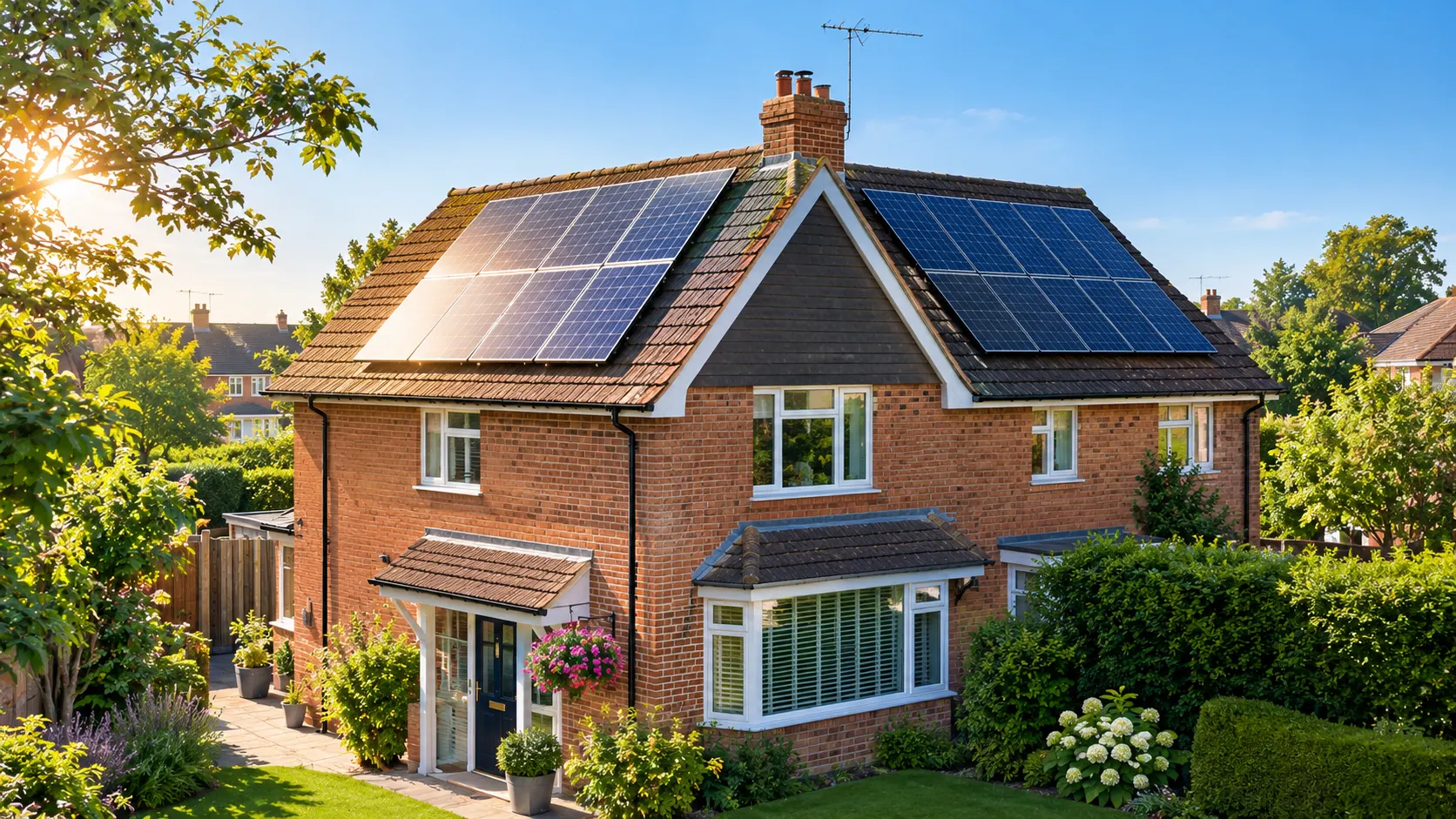

Not every UK home has a south-facing roof. Fortunately, that does not automatically rule out solar power. East- and west-facing panels can generate valuable renewable electricity, especially when their output matches the times a household uses energy.
A carefully planned residential solar panel installation can make use of suitable roof slopes while accounting for shading, pitch and electricity consumption.
How Does Direction Change Solar Generation?
South-facing panels generally produce the most annual electricity in the UK when other conditions are equal. Energy Saving Trust guidance indicates that an east- or west-facing system typically generates around 15–20% less electricity than an equivalent south-facing one.
The precise difference depends on roof pitch, location and shading. A full assessment should estimate yearly kilowatt-hours, not rely on direction alone.
Why Can East-Facing Panels Be Useful?
East-facing roofs receive more direct sunlight earlier in the day. This may suit households using electricity in the morning for breakfast, laundry, home working or other routine activities.
Even if total generation is below that of a south-facing array, using more electricity directly can improve the value of the power you generate.
What About West-Facing Panels?
West-facing panels tend to produce more later in the day. That may be useful when family members return home, appliances are running and evening demand begins to increase.
Generation still falls as daylight fades, so panels will not replace grid electricity after dark without compatible battery storage or another supply.
Is It Better to Use Both Roof Slopes?
An east–west combination can spread solar generation across a longer part of the day. This may align better with household electricity use than a system focused primarily on a lunchtime peak.
However, two roof slopes may need suitable inverter inputs, different strings or panel-level electronics. Your installer should explain the design and whether additional components offer a meaningful benefit.
What Else Matters Besides Orientation?
Roof condition, chimney shading, trees, panel capacity, export limits and installation cost all affect the result. A large, unshaded east-facing roof can be more practical than a small south-facing area with heavy shadows.
Conclusion
East- and west-facing roofs can be practical choices for UK solar. Rather than rejecting a property because it lacks a south-facing roof, request a realistic generation estimate and a tailored layout. Eco Energy Services assesses roof direction, shading and household use when specifying residential solar systems across Great Britain.


Join the conversation