

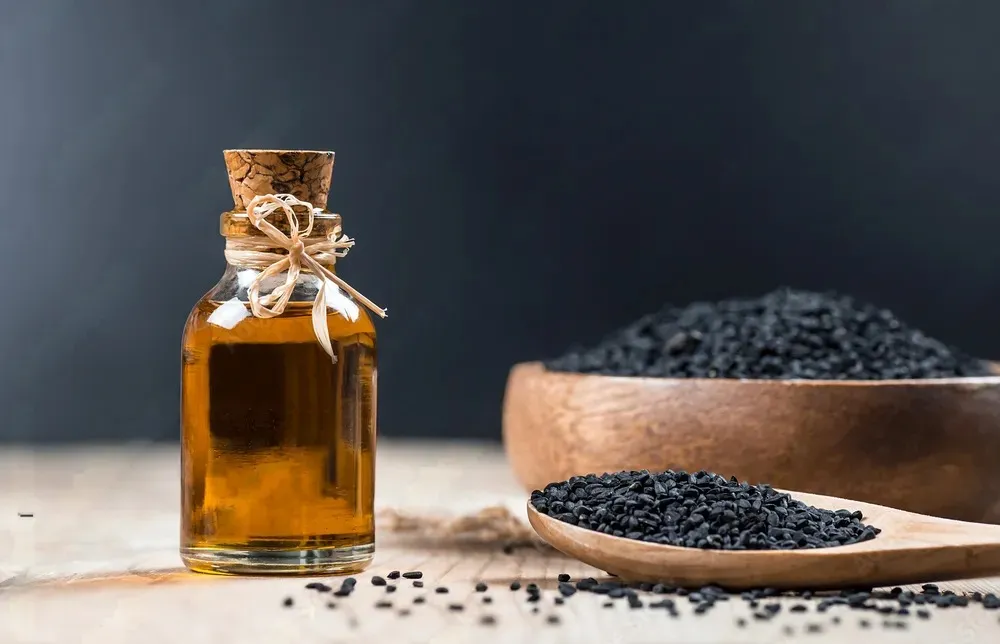

Black seed oil is produced from the seeds of Nigella sativa, an annual flowering plant also known as black seed or black cumin. The crop has a long history of cultivation and use across India, the Middle East and other regions, while Indian agricultural research identifies nigella as an established seed-spice crop with commercial varieties suited to Indian growing conditions.
For commercial buyers, choosing a Black seed oil manufacturer involves much more than comparing price. Seed origin, botanical identity, extraction technology, storage conditions, batch testing, traceability, regulatory compliance and supporting documentation all affect the usefulness of the finished oil. Indian food businesses also operate within FSSAI licensing, hygiene, labelling and contaminant-control requirements where the oil is sold for food applications.
The Indian market is also attracting interest from nutraceutical, food, cosmetics and personal-care buyers. Commercial market research forecasts continued growth in India’s black seed oil category, although such forecasts are proprietary estimates rather than official government statistics and should therefore be treated as directional rather than definitive.
Understanding black seed oil
Black seed oil comes from Nigella sativa seeds. Although the terms “black seed” and “black cumin” are frequently used in commerce, botanical identification matters because common names can be ambiguous. Agricultural researchers at the Indian Council of Agricultural Research describe nigella as an established seed spice in India, and newer varieties such as Ajmer Nigella-20 have been developed for cultivation in Rajasthan.
The oil contains a mixture of fatty components and naturally occurring phytochemicals. Scientific literature frequently discusses thymoquinone as one of the better-known compounds associated with Nigella sativa, but chemical composition can vary according to genotype, growing conditions, seed quality and extraction method. Research therefore should not be converted automatically into therapeutic claims for a commercial oil.
That distinction is particularly important for marketing. Black seed oil may be sold as a culinary ingredient, cosmetic ingredient, carrier oil or raw material for formulations, depending on the product specification and regulatory category. Buyers should confirm the intended use before ordering because documentation, testing and labelling expectations can differ between food, cosmetic and other applications. FSSAI regulations apply specifically to food businesses and food products in India.
Sourcing and manufacturing practices in India
India has established agricultural expertise in Nigella sativa. ICAR research has examined cultivation, seed quality, crop management and Indian nigella varieties, including work carried out at the National Research Centre on Seed Spices in Ajmer, Rajasthan. This makes domestic agricultural sourcing a realistic option for processors, although individual suppliers may also source seeds from other regions or countries. Seed origin should therefore be confirmed lot by lot rather than assumed.
Good sourcing begins with botanical authentication, clean seeds, moisture control and records identifying the grower, trader, region or lot. Buyers seeking natural material should request recognized certification rather than relying on the word “Natural” in marketing. APEDA’s National Programme for Natural Production establishes standards and accreditation procedures for natural production in India, including certified categories such as oilseeds, spices, medicinal plants and processed foods.
Manufacturing may use mechanical pressing or other extraction technologies, depending on the grade required. The extraction method can influence yield, sensory characteristics and chemical profile, so purchasing specifications should identify the required process instead of treating all black seed oils as identical. For edible-oil processing businesses, FSSAI’s FoSCoS framework specifically recognizes vegetable-oil processing through expeller, solvent extraction and refining activities.
Quality standards, testing and certifications
Quality control should begin with a written specification. Useful parameters can include appearance, odour, relative density, refractive index, moisture, acid value, peroxide value and, where commercially relevant, a validated assay for selected marker compounds. Which tests are necessary depends on the intended use and applicable specification. FSSAI’s regulatory framework also addresses contaminants, toxins and residues in food products, making contaminant testing particularly relevant for edible applications.
Indian food manufacturers must be appropriately registered or licensed under the FSS framework, and FSSAI states that licensed food businesses need a documented food-safety management system and compliance with the hygiene requirements in Schedule 4. FSSAI labelling rules also govern information presented on packaged food products.
Buyers often ask about certifications such as FSSAI licensing, ISO 22000, GMP-related systems and natural certification. ISO 22000 is an internationally recognized food-safety management-system standard that integrates HACCP principles, while NPOP is India’s official pure-production programme administered by APEDA. Importantly, ISO itself does not certify companies; certification is performed by independent certification bodies.
The precise certifications currently applicable to Hetaksh Essential Oils should be independently verified from current certificates, their validity periods, issuing bodies and stated scopes before they are quoted in marketing material or procurement documents. Publicly available supplier documentation should not substitute for direct verification of the certificate that applies to the specific facility, product and transaction.
Common uses and responsible usage
Black seed oil appears commercially in food, supplements, cosmetics and personal-care formulations. Market research on India divides demand among nutraceuticals/supplements, cosmetics and personal care, food and beverage, and other applications, although market-size figures remain analyst estimates rather than official statistics.
For topical formulations, black seed oil manufacturer can be incorporated as an oil-phase ingredient subject to formulation testing, compatibility assessment and appropriate concentration. Consumers using any new cosmetic oil should consider a small-area patch test, particularly because published literature documents occasional allergic contact reactions associated with black-seed preparations.
For ingestion, the product should be explicitly suitable and legally marketed for food use. It is inappropriate to assume that an industrial, cosmetic or aromatic grade is edible. People who are pregnant, breastfeeding, taking medication or managing medical conditions should consult a qualified healthcare professional before using concentrated botanical products. The LactMed database notes that evidence regarding black seed during breastfeeding remains limited, while a safety review concludes that additional toxicological evidence is still needed for definitive conclusions.
The same evidence-based caution applies to promotional language. Laboratory and clinical studies investigating Nigella sativa do not justify promising that commercial oil will diagnose, treat, cure or prevent disease. A professional supplier should communicate composition, grade, specifications and intended uses rather than relying on unsupported therapeutic claims.



Join the conversation