
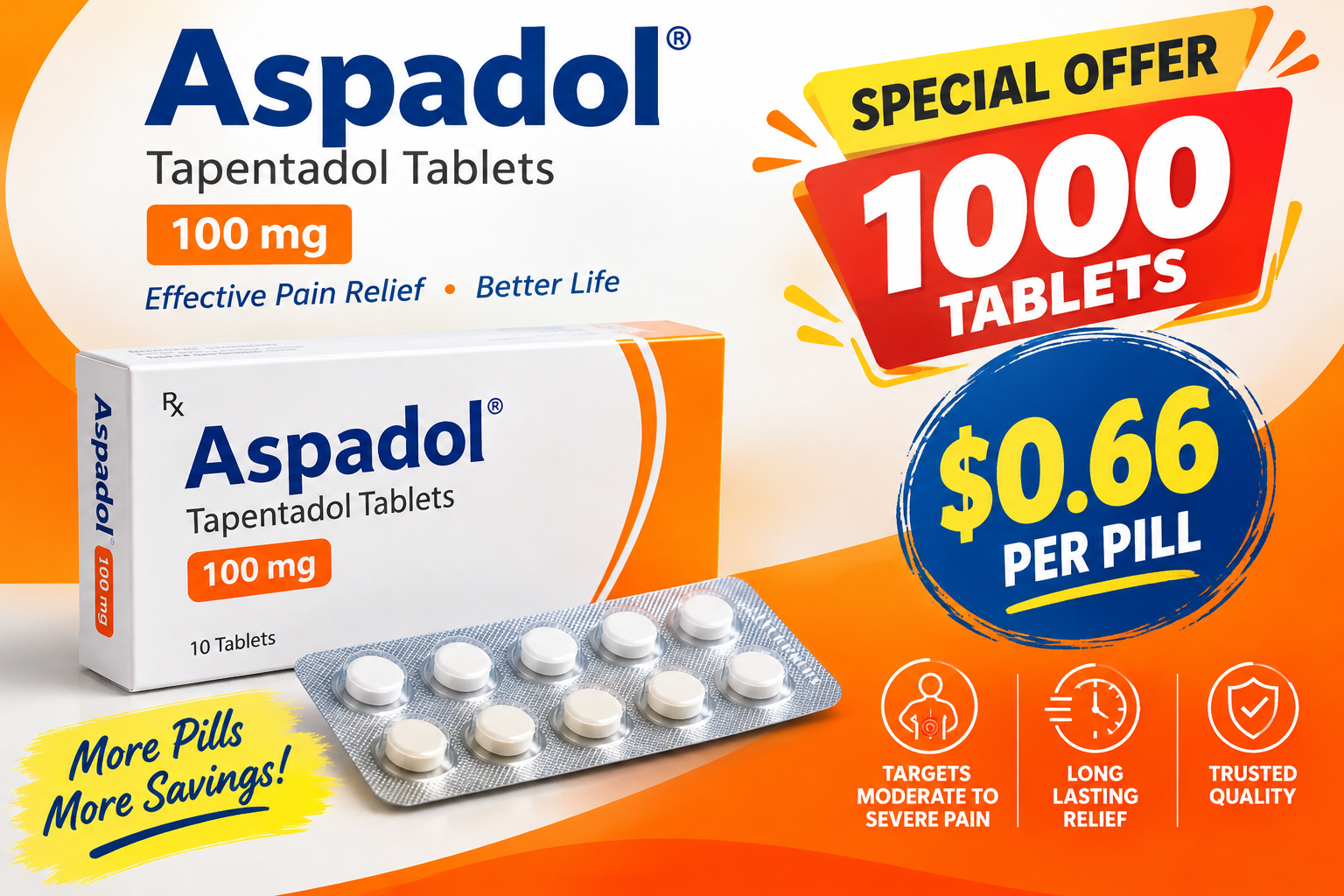

Aspadol can relieve severe pain when prescribed appropriately. However, misuse can lead to dependence, addiction, dangerous breathing problems, and potentially fatal overdose.
What Is Aspadol Tablet?
Aspadol is a brand name associated with tapentadol, an opioid analgesic used in some countries for certain types of severe pain. Tapentadol acts on the central nervous system to reduce the perception of pain. It also affects norepinephrine signalling, which contributes to its pain-relieving effect.
Aspadol tablets may be discussed online under search terms such as Aspadol 100mg, Aspadol tablets, Aspadol painkiller, Tapentadol 100mg, and Aspadol pain relief tablet. However, a tablet’s strength, formulation, approved uses, and availability must be verified through its official product information and a qualified pharmacist. Brand names and authorisations can vary by country.
Tapentadol may be prescribed for selected cases of acute pain severe enough to require an opioid when other treatments are inadequate. Certain extended-release formulations have different indications. It should not automatically be considered the best treatment for every injury, joint problem, or type of nerve pain. The choice depends on the diagnosis, medical history, other medicines, and individual risks. [1][2]
What Does Aspadol Addiction and Misuse Mean?
Aspadol tablet addiction and misuse are related but different issues. Misuse occurs when a medicine is taken in a way that does not follow the prescription. Examples include taking more than prescribed, taking doses more frequently, using another person’s tablets, or using the medicine for its intoxicating effects rather than for the prescribed medical purpose.
Addiction, clinically described as opioid use disorder when diagnostic criteria are met, involves a problematic pattern of opioid use that causes significant distress or impairment. A person may experience cravings, difficulty controlling use, or continued use despite serious consequences.
Physical dependence is different. It develops when the body adapts to repeated exposure to a medicine. A dependent person may experience withdrawal if the dose is reduced too quickly or the medicine is stopped suddenly. Physical dependence alone does not prove addiction, and it can occur during legitimate medical treatment. [1][2]
For example, a patient may take tapentadol after surgery and develop withdrawal symptoms when treatment ends. That situation requires medical guidance, but it does not automatically mean the patient has an addiction. In contrast, repeatedly taking extra tablets, hiding use, or continuing despite serious harm may indicate a need for a more detailed assessment.
Why Can Tapentadol Be Addictive?
Tapentadol acts on opioid receptors in the brain and spinal cord. These actions reduce pain, but they can also affect alertness, breathing, reward pathways, and emotional responses. Repeated use may lead to tolerance, meaning that the same dose produces less of an effect over time.
Tolerance can create a dangerous cycle. A person may believe that more medicine is needed to control pain. However, increasing the dose without medical supervision can raise the risk of respiratory depression and overdose. A higher dose is not necessarily a safe or appropriate solution to worsening pain.
Addiction risk varies between individuals. Factors that may increase concern include a personal or family history of substance-use problems, previous opioid misuse, some mental health conditions, and prolonged exposure to opioids. Nevertheless, addiction can occur in people without these risk factors and in patients who initially follow their prescriptions. No individual can be considered completely risk-free. [1][2]
Common Signs of Aspadol Misuse
Recognising changes early can help a person receive support before serious harm occurs. One possible warning sign is taking more tablets than prescribed or requesting early refills because the medicine runs out too soon. Repeatedly using tablets for reasons other than the prescribed pain condition also deserves attention.
Behavioural changes may include strong cravings, preoccupation with obtaining medication, unsuccessful attempts to cut down, or continuing to use it despite relationship, financial, work, or health problems. Some people may hide their use or obtain opioids from multiple sources.
Physical warning signs can include unusual drowsiness, dizziness, constipation, nausea, confusion, or poor coordination. These effects do not independently establish addiction. However, they should be discussed with a healthcare professional, particularly if they are severe or become more frequent.
A person who notices these patterns should not be shamed or dismissed. Opioid use disorder is a treatable medical condition. A compassionate assessment can help distinguish undertreated pain, physical dependence, medication misuse, and addiction.
Serious Health Risks of Aspadol Misuse
Respiratory depression and overdose
One of the most serious risks associated with tapentadol is respiratory depression, in which breathing becomes dangerously slow or shallow. This can occur when treatment begins, after a dose increase, or when the medicine is combined with other substances that suppress the central nervous system.
Possible overdose signs include extreme sleepiness, inability to wake up, slow or shallow breathing, unusual snoring or gurgling, limpness, and cold or clammy skin. The person may be unresponsive. These symptoms require immediate emergency assistance.
Do not wait for every symptom to appear. Call the local emergency number if an overdose is suspected. If naloxone is available, use it according to its instructions while emergency help is being arranged. Naloxone may temporarily reverse an opioid overdose, but medical assessment remains essential because symptoms can return. [1][2]
Dangerous drug interactions
Alcohol should be avoided unless a treating clinician has specifically advised otherwise. Combining tapentadol with alcohol, benzodiazepines, sleeping medicines, other opioids, or certain sedating drugs can increase sedation and breathing risks.
Patients should tell their doctor and pharmacist about all prescription medicines, over-the-counter products, supplements, and recreational substances they use. Do not assume that a medicine is safe to combine with Aspadol simply because it is available without a prescription.
Other possible effects
Tapentadol can cause nausea, vomiting, constipation, dizziness, drowsiness, and impaired coordination. It may also affect a person’s ability to drive or operate machinery safely. Long-term opioid treatment can raise additional concerns, including hormonal effects and physical dependence.
These risks make regular medical review important. The treatment plan should be reassessed if pain persists, side effects interfere with daily life, or the patient feels unable to control their use.
Can Aspadol 100mg Be Used for Every Type of Pain?
No. The suitability of an opioid depends on the cause and severity of pain, the patient’s condition, and the availability of safer or more appropriate options. A strength such as Aspadol 100mg does not mean the medicine is suitable for every adult or every injury.
People searching for Aspadol for pain relief, Aspadol for severe pain, or Tapentadol for injury pain should first obtain a proper diagnosis. Pain from an ankle sprain, back strain, knee injury, or muscle problem may often be managed with measures that do not require an opioid.
Ankle pain and ankle sprain
For many uncomplicated ankle sprains, initial care may include protection, relative rest, a wrapped cold pack, elevation, and gradual rehabilitation. A clinician or pharmacist can advise whether an appropriate non-opioid pain reliever is suitable. Severe swelling, deformity, inability to bear weight, numbness, or persistent pain may require prompt assessment.
Search phrases such as Aspadol for ankle pain, Tapentadol for ankle pain, ankle pain medication, ankle sprain pain relief, and pain relief tablets for ankle pain do not establish that tapentadol is the right treatment. The cause of the pain must be assessed before an opioid is considered.
Back, joint, muscle, and nerve pain
People may search for Aspadol for chronic back pain, Aspadol for joint pain, Aspadol for neuropathic pain, or Tapentadol for chronic pain. However, these terms cover different conditions. Back pain may result from muscle strain, arthritis, a disc problem, or another cause. Neuropathic pain may be related to diabetes, nerve injury, or other disorders.
Treatment can include physiotherapy, activity modification, condition-specific medication, and other approaches. In selected circumstances, a doctor may consider an opioid after evaluating the expected benefits and risks. Long-term treatment should be reviewed regularly rather than continued automatically.
Pain after surgery or a significant injury
Some patients experience severe pain after surgery or major injury. When an opioid is appropriate, the prescriber should explain how it should be taken, how long it may be needed, which interactions must be avoided, and how unused tablets should be secured or disposed of. The lowest effective exposure for the appropriate duration is generally preferred.
Dependence and Aspadol Withdrawal
Withdrawal symptoms can develop when a physically dependent person abruptly stops tapentadol or substantially reduces the dose. Symptoms may include anxiety, restlessness, sweating, yawning, a runny nose, muscle aches, abdominal cramps, nausea, diarrhoea, and difficulty sleeping. Symptoms and their severity vary.
A person who has been taking Aspadol regularly should not abruptly discontinue it without medical advice. A clinician can develop an individualised tapering plan and monitor pain, withdrawal symptoms, and mental wellbeing. The appropriate approach depends on the formulation, duration of use, dose, other medicines, and the person’s health.
If someone is taking more than prescribed or feels unable to reduce their use, an honest conversation with a healthcare professional is an important first step. Treatment may include structured medical support, psychological care, and evidence-based treatment for opioid use disorder when appropriate. Treatment should address pain and substance-use concerns together.
How Can Aspadol Misuse Be Prevented?
Safe use begins with a valid prescription and a clear understanding of the instructions. Patients should take tapentadol only as prescribed, avoid sharing tablets, and ask their clinician before making changes. If pain is not controlled, the correct response is to seek reassessment rather than increase the dose independently.
Medicines should be stored securely and kept away from children, visitors, and anyone who might take them accidentally or intentionally. Keep track of the quantity remaining. Unused medicine should be returned through an authorised pharmacy take-back or local disposal programme where available. Follow local guidance rather than transferring tablets to another person.
Patients should also attend follow-up appointments and report excessive sleepiness, breathing problems, escalating cravings, or repeated difficulty following the prescribed schedule. A clinician may reassess the diagnosis, review other medicines, or recommend a different treatment approach.
Buying Aspadol Online: Prescription and Safety Considerations
Online searches often include phrases such as buy Aspadol online, Aspadol tablet online, where to buy Aspadol 100mg, Aspadol online pharmacy, buy Tapentadol online, and Tapentadol 100mg online. These phrases reflect search interest; they do not establish that a website or seller is legitimate.
Tapentadol is a controlled prescription medicine in several jurisdictions. Online access must comply with the laws of the country where the patient is located. A legitimate pharmacy should require the appropriate prescription, provide verifiable licensing information, identify the dispensing pharmacist where required, and supply clear product and safety information.
Be cautious of websites promoting cheap Tapentadol, Aspadol discounts, no-prescription sales, guaranteed delivery, or bulk and wholesale orders to individuals. Offers involving Aspadol with BTC, Aspadol USDT payment, or other cryptocurrency payments should not be treated as evidence of legitimacy. Cryptocurrency transfers may be difficult or impossible to recover if a seller is fraudulent. Payment options do not establish that a medicine is genuine, legally supplied, or medically appropriate.
For safety, this article does not recommend suppliers, bulk orders, wholesale purchasing, or cryptocurrency transactions for tapentadol. Patients should obtain advice from a licensed clinician and use a pharmacy authorised under local law.
Country-Specific Guidance: USA, UK, Australia, and Europe
In the United States, tapentadol is a controlled prescription opioid. Patients should consult a licensed prescriber and a pharmacy operating legally in their state. Official medicine information is available through MedlinePlus and DailyMed.
In the United Kingdom, patients should seek advice from their GP, prescribing clinician, or registered pharmacist. Prescription requirements and medicine availability should be checked through official UK sources.
In Australia, tapentadol is a prescription medicine subject to strict controls. Patients can consult their doctor or pharmacist and use the Australian health information service Healthdirect for general medicine guidance.
Across Europe, rules and authorisations vary by country. A medicine available under a particular brand in one market may not have the same brand name or authorisation elsewhere. Patients should consult their national medicines regulator, prescriber, or licensed pharmacy.
Searches may include location phrases such as Tapentadol New York, Tapentadol Los Angeles, Tapentadol London, Tapentadol Sydney, Tapentadol Melbourne, Tapentadol Berlin, and Tapentadol Paris. Adding a city to a search does not remove prescription requirements or verify a seller. Local laws and authorised dispensing channels should always be checked.
When to Seek Professional Help
Medical help should be sought promptly if pain is worsening, treatment no longer provides adequate relief, or side effects interfere with normal activities. A prescriber should also be contacted if a patient repeatedly takes extra doses, feels intense cravings, experiences withdrawal, or worries about losing control of their medication use.
Call emergency services immediately if a person is unresponsive, has very slow or absent breathing, or may have overdosed. Do not leave the person alone while waiting for help. If naloxone is available, administer it according to its instructions.
If you are worried about your own use, you do not need to wait until a crisis occurs. A doctor, pharmacist, addiction specialist, or local substance-use support service can discuss confidential treatment options and help develop a safer plan.
Frequently Asked Questions
Is Aspadol addictive?
Yes. Aspadol contains tapentadol where that brand is authorised, and tapentadol can cause addiction and physical dependence. Risk varies between individuals, and dependence may occur even during prescribed use.
Is Aspadol 100mg safe for long-term use?
There is no single answer for every patient. Long-term opioid treatment requires regular review of benefits, side effects, dependence, and alternative treatments. Do not increase or stop the dose without medical advice.
Can Aspadol be used for ankle pain?
The cause and severity of ankle pain should be assessed first. Many sprains can be managed without opioids. Tapentadol should only be considered when a qualified prescriber determines that its benefits outweigh its risks.
What should I do if I think someone is misusing Aspadol?
Approach the person without judgement and encourage them to speak with a healthcare professional. If they are difficult to wake or have slow or shallow breathing, seek emergency help immediately.
Can I stop taking Aspadol suddenly?
If you have been taking it regularly, sudden discontinuation can trigger withdrawal. Ask your prescriber for an individualised plan rather than stopping abruptly.
Are online discounts or cryptocurrency payments a sign of a trustworthy pharmacy?
No. Discounts, bulk offers, and payment methods such as Bitcoin or USDT do not prove that a seller is licensed or that the medicine is genuine. Verify pharmacy authorisation and follow local prescription laws.
Conclusion
Aspadol and other tapentadol medicines can have a role in treating selected cases of severe pain. However, their opioid action carries real risks, including misuse, physical dependence, addiction, respiratory depression, and overdose. These risks should be understood before treatment begins and reviewed throughout care.
Patients should follow the prescription, avoid dangerous drug combinations, store medication securely, and seek help if use becomes difficult to control. Pain that persists deserves reassessment, not unsupervised dose escalation. Above all, suspected overdose requires immediate emergency assistance.
For anyone searching for Aspadol or Tapentadol for pain relief, the safest next step is a clinical assessment and access through an authorised pharmacy—not an unverified online seller.



Join the conversation