
A Kentucky distillery road trip can be exciting to plan, particularly when several well-known destinations are on your wish list. But simply adding every location to a navigation app does not guarantee a practical itinerary. Tour times, road distances, hotel locations, and meal breaks all influence how much you can comfortably accomplish in a day.
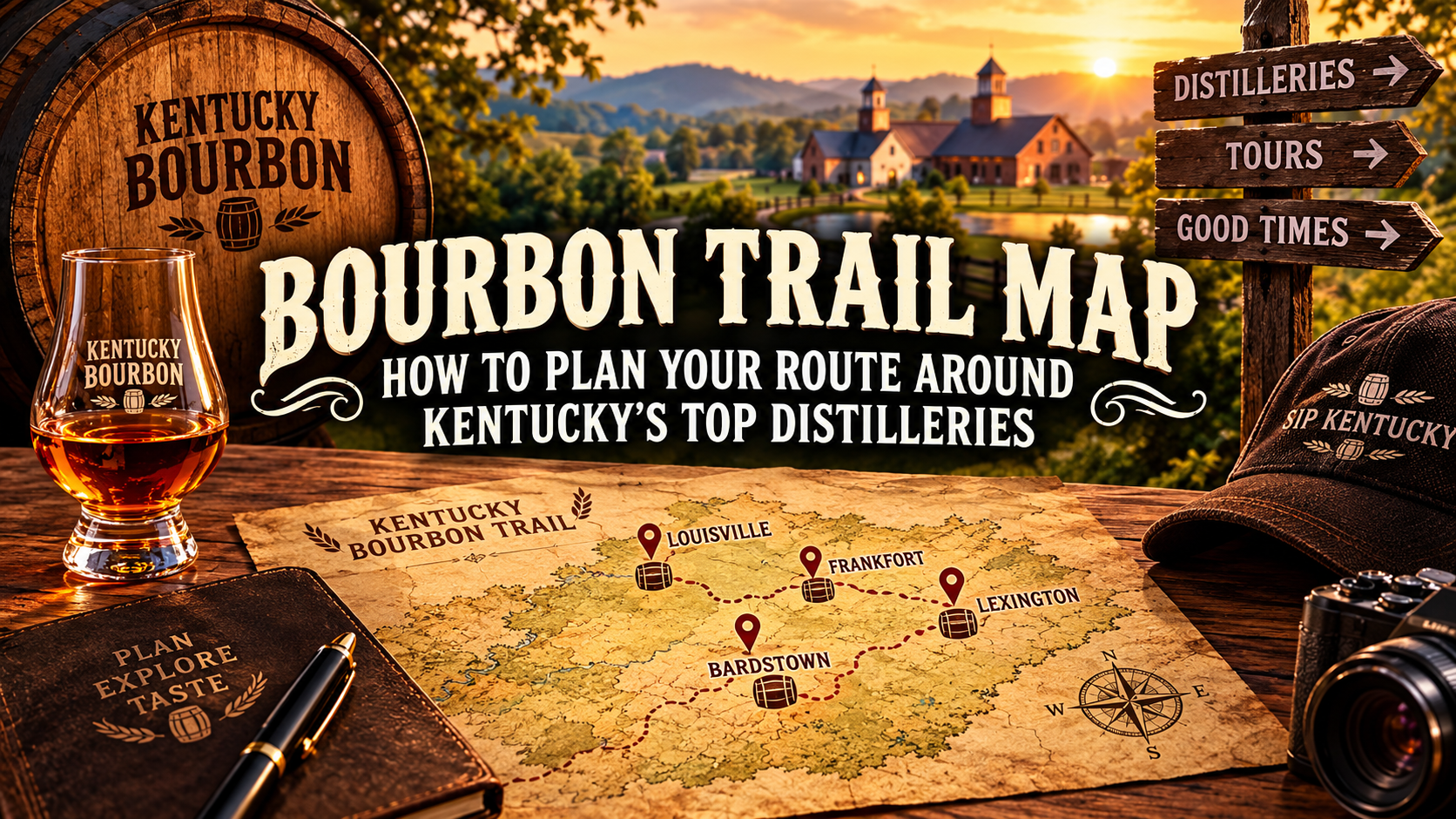
A bourbon trail map gives you a useful overview of Kentucky’s distillery destinations. The real planning begins when you turn that overview into a route that fits your available time, interests, and transportation arrangements.
Step One: Establish Your Starting and Finishing Points
Before selecting distilleries, decide where you will arrive and where your trip will end. Your starting airport, hotel, and departure arrangements can affect the order of every other activity.
Louisville is a practical choice for visitors who want city-based bourbon attractions, restaurants, and museums. Bardstown is useful for exploring bourbon heritage and nearby distilleries, while Lexington provides access to the Bluegrass region and other central Kentucky attractions.
If you are flying into Louisville, for example, it may make sense to explore the city first before traveling toward another region.
For a longer trip, consider whether changing hotels would reduce unnecessary driving. Spending the night closer to your next destination may give you more time to explore and less time returning along the same roads.
Step Two: Create a Shortlist of Must-See Destinations
Do not begin by trying to visit every distillery you recognize. Start with the experiences that genuinely interest you.
Create three categories:
Must-see destinations: These are the places you most want to visit and would be disappointed to miss.
Optional additions: These fit into the itinerary if time and availability allow.
Backup activities: These can replace a canceled or unavailable tour without disrupting the entire day.
This approach makes decision-making easier. If your first-choice tour is unavailable, you can choose an alternative without starting the planning process from scratch.
It also helps prevent a common problem: filling the schedule with too many stops simply because they appear close together on a map.
Step Three: Group Locations by Region
Once you have a shortlist, plot the destinations and look for convenient regional clusters.
You might spend one day exploring Louisville and another around Bardstown. A longer vacation could include Lexington or additional destinations in central Kentucky.
When using a bourbon trail map, remember that visual distance is not the same as driving time. Check actual roads, estimated journey times, and possible traffic delays.
You should also consider what happens before and after each tour. A 90-minute experience may require additional time for check-in, parking, walking, and browsing the visitor center.
Build a realistic daily schedule
Instead of scheduling one appointment immediately after another, include a buffer between them. This gives you time to eat, handle unexpected delays, and enjoy each destination without constantly checking the clock.
If the venues are far apart, consider limiting the day to one major tour and a nearby attraction.
Step Four: Book Fixed Activities First
Tour availability should guide the final route. A distillery may offer several departures on some days and only one or two on others.
Check official websites for current schedules, prices, ticket inclusions, age requirements, and reservation policies. Book essential experiences before adding optional attractions.
If your preferred tour is unavailable, consider changing the order of your regional visits or choosing another date. Avoid making nonrefundable hotel arrangements based on an unconfirmed assumption.
Keep a record of each reservation, including the exact meeting point and required arrival time. These details are easy to overlook when several bookings are involved.
Step Five: Choose the Right Transportation
Transportation affects your budget, flexibility, and overall experience.
Self-driving
A personal or rental vehicle provides flexibility for exploring multiple regions. It works best when a designated sober driver is available throughout the day.
Private transportation
A professional driver can be useful for groups visiting several distilleries. The convenience may justify the additional cost, particularly when the itinerary includes rural destinations.
Organized tours
Some providers combine transportation with selected distillery experiences. This can simplify logistics, although you should confirm which admission tickets are included.
Rideshare services
These may be practical for selected urban journeys, but availability can vary outside major cities. Check the options before relying on them for a return trip from a rural distillery.
Never drive after consuming alcohol. Arrange safe transportation before the first tasting rather than deciding at the end of the day.
Step Six: Give Every Day a Clear Purpose
An itinerary becomes easier to follow when each day has a central focus.
Here is an example of a three-day framework:
Day 1: Louisville. Explore a city-based bourbon attraction, enjoy lunch, and leave the evening flexible.
Day 2: Bardstown area. Schedule one or two confirmed experiences and allow time to explore the town.
Day 3: Another regional stop. Choose a destination that fits your route and departure arrangements.
The right number of stops depends on distance, tour duration, and your preferred pace. You do not need to visit several distilleries in a single day to make the trip worthwhile.
Step Seven: Plan Meals and Overnight Stays
Meals should be part of the itinerary rather than an afterthought. Include time for lunch, especially on days involving multiple tours.
For longer trips, compare the cost of staying in different areas with the time you would spend driving back to the same hotel. An overnight stop can sometimes make the route more comfortable, even if it adds another accommodation expense.
If you are traveling with a group, agree on shared costs before departure. Discuss hotel preferences, transportation, and the budget for optional experiences.
Step Eight: Leave Room for Shopping and Practical Details
Visitors often underestimate how much time they might spend in a distillery gift shop. If you plan to purchase bottles or souvenirs, allow time after the tour.
Check airline rules for carrying alcohol in checked or carry-on luggage, and review available shipping arrangements if necessary.
Wear comfortable shoes, carry water, and dress for the weather. If anyone in your party has mobility needs, contact the venue before booking to confirm walking distances and available accommodations.
Step Nine: Prepare a Backup Plan
Even a carefully planned itinerary can be affected by weather, traffic, or a canceled reservation.
Identify a few alternative activities near your main destinations, such as a museum, historic downtown, or local restaurant. Keep these options flexible so you can adjust the day without losing your essential experiences.
A bourbon trail map becomes much more useful when you know not only where you want to go but also what you can do if your original plans change.
Build a Route You Can Enjoy
The goal is not to cover the greatest possible distance. It is to create a trip that balances meaningful experiences with convenient travel.
Choose your base, shortlist your preferred distilleries, confirm availability, and arrange transportation. Then add meals, overnight stays, and optional sightseeing around those fixed plans.
With realistic driving times and a flexible schedule, your route through Kentucky’s bourbon country can feel organized without becoming exhausting. Start with the places that interest you most and build the rest of the journey around them.