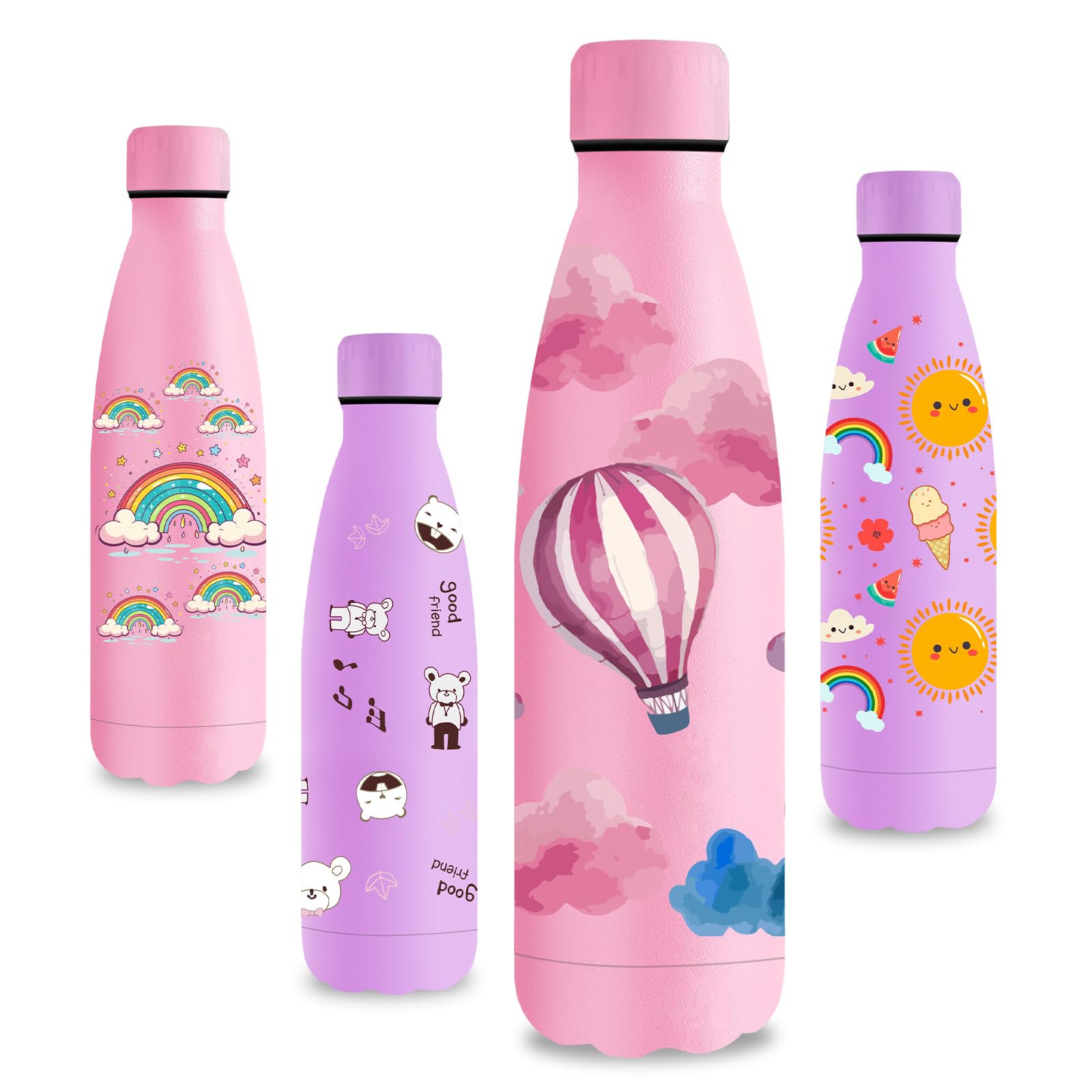
Character bottles for kids are popular for school, travel, outdoor activities, and everyday hydration because colorful designs can make drinking more enjoyable. However, a bottle designed for cold water or juice may not be suitable for hot beverages. Heat can affect different materials, lids, seals, and decorative coatings in different ways. Before filling character bottles for kids with tea, milk, soup, or another warm drink, checking the manufacturer’s temperature guidance is important. Bottle construction, material type, insulation, and lid design all influence safety. Understanding these factors helps prevent burns, leaks, material damage, and other problems while keeping children’s drinks convenient and appropriate.
Why Hot Drinks Require Extra Care
Hot beverages create several safety concerns that do not normally occur with cold drinks. High temperatures can increase pressure inside a sealed bottle, especially when steam develops. A tightly closed lid may become difficult to open or could release hot liquid suddenly. A bottle can also become hot on the outside if the insulation is poor, creating a burn risk for small hands. For children, temperature control is particularly important because accidental spills can cause serious burns. A bottle suitable for water is not automatically suitable for hot beverages.
Check the Bottle Material First
The material used in a bottle is one of the most important factors when considering hot drinks. Stainless steel bottles often have better heat resistance than many plastic bottles, but construction still varies between products. Some plastic bottles are specifically manufactured for warm or hot beverages, while others are intended only for cold liquids. Certain plastics may soften, deform, or release unwanted odors when exposed to excessive heat.
The safest approach involves checking the product packaging or manufacturer instructions for a stated temperature range. If no hot-drink guidance is provided, using the bottle for cold or room-temperature beverages is generally more appropriate.
Are Stainless Steel Character Bottles Suitable for Hot Drinks?
Stainless steel character bottles for kids can sometimes be designed for hot beverages, particularly insulated models. Double-wall vacuum insulation can help maintain drink temperature while keeping the outer surface more comfortable to hold. However, stainless steel alone does not guarantee that a bottle is safe for hot liquids.
The lid, gasket, straw, spout, and other components must also be designed to handle heat. Some children’s bottles include plastic straws or spill-resistant mechanisms that are intended specifically for cold drinks. Hot liquid passing through these components may create additional safety concerns. Product instructions should therefore be checked before using an insulated children’s bottle for tea, milk, or another hot drink.
Why Plastic Bottles Need More Attention
Plastic character bottles are often lightweight and convenient, but heat compatibility depends heavily on the specific plastic and bottle design. A bottle marked as BPA-free does not automatically mean that the product is suitable for boiling or very hot liquids. BPA-free describes a particular chemical characteristic rather than providing a complete temperature-safety guarantee.
Heat can also affect the shape and durability of some plastic components. A bottle that becomes warped may no longer seal correctly, increasing the possibility of leakage. For children’s drinkware, selecting a product with clear hot-liquid instructions is more reliable than assuming that a plastic bottle can handle heat.
Consider the Lid and Straw Design
The lid is often overlooked when assessing hot-drink safety. A sealed bottle containing a hot beverage can build pressure as steam develops. Opening the lid quickly may cause hot liquid or steam to escape unexpectedly.
Straw-style bottles require particular caution. Hot liquids can travel directly through the straw toward the mouth, increasing the chance of burns. Some manufacturers specifically warn against placing hot beverages in straw bottles. A bottle intended for hot drinks should have a lid system designed for that purpose and clear instructions for safe use.
Avoid Very Hot Drinks for Young Children
Even when a bottle is technically designed to tolerate high temperatures, the beverage itself may still be too hot for a child. Children’s mouths and skin are sensitive to heat, and a drink that feels comfortable to an adult may still cause a burn.
Warm beverages should be allowed to cool to a suitable drinking temperature before being placed in a child’s bottle. Extremely hot liquids should not be given directly to children. Temperature testing can be done carefully before serving, rather than relying only on the bottle’s heat-retention ability.
Important Safety Checks Before Use
Several simple checks can reduce the risk associated with hot beverages:
- Read the manufacturer’s temperature instructions.
- Confirm that the bottle is specifically approved for hot liquids.
- Check whether the lid and straw are also heat-compatible.
- Avoid filling a sealed bottle with boiling liquid unless the manufacturer specifically permits it.
- Leave appropriate space rather than filling completely to the top.
- Check the outside of the bottle for excessive heat.
- Inspect seals, gaskets, and lids for damage.
- Replace bottles or components that become cracked, warped, or damaged.
- Allow hot drinks to cool before giving them to a child.
- Avoid shaking or squeezing a sealed bottle containing a hot beverage.
These precautions are especially useful for school bags and travel situations where a child may handle the bottle independently.
How Insulation Affects Children’s Bottles
Insulated bottles can keep beverages hot for extended periods. While this feature can be useful for adults, it requires extra attention when used for children. A drink may remain much hotter than expected because heat escapes slowly.
A bottle can feel relatively comfortable on the outside while the liquid inside remains hot enough to cause burns. For this reason, insulation should not be treated as a signal that a drink is ready to consume. The actual beverage temperature remains the key safety factor.
When Character Bottles for Kids Are Better Used for Cold Drinks
Many character bottles for kids are designed primarily for water, juice, milk, or other cool beverages. Such bottles may feature playful designs, lightweight construction, straw lids, and spill-resistant openings that make them convenient for everyday use. If the packaging does not mention hot-drink compatibility, cold or room-temperature drinks are the safer intended use.
Keeping a bottle within its recommended purpose can also extend its usable life. Excessive heat may damage plastic parts, printed characters, seals, and lid mechanisms over time.
Cleaning and Maintenance Matter Too
Proper cleaning is another important part of children’s bottle safety. Warm water and mild dish soap can generally be used for routine cleaning when permitted by the manufacturer. Bottle components should be separated when possible so that liquid does not remain trapped around seals or inside narrow passages.
Dishwasher use should also be confirmed through the product instructions. Some decorative finishes, printed character designs, lids, and plastic components may not tolerate high dishwasher temperatures. Regular inspection helps identify cracks, discoloration, loose seals, or other signs of deterioration.
What to Look for When Buying a Character Bottle
When selecting character bottles for kids, several product details can help determine whether a model is suitable for a particular purpose:
- Material: Check whether the bottle uses stainless steel, plastic, or another material.
- Temperature rating: Look for clear information about hot and cold beverage limits.
- Lid design: Confirm whether the lid is suitable for the intended beverage.
- Straw compatibility: Avoid assuming that a straw bottle is suitable for hot drinks.
- Insulation: Check whether the bottle is designed to retain heat.
- Safety instructions: Read warnings and usage recommendations carefully.
- Cleaning instructions: Confirm whether individual parts are dishwasher-safe.
- Age suitability: Select a design appropriate for the child’s age and ability to handle the bottle.
These details provide a more reliable basis for selecting children’s drinkware than appearance alone.
A Practical Rule for Hot Drinks
A simple rule can make hot-drink decisions easier: never assume that a character bottle is suitable for hot beverages unless the manufacturer clearly confirms it. Material, insulation, lid construction, and temperature limits all matter. When the information is unclear, using the bottle for cool or room-temperature beverages avoids unnecessary risk. For children, beverage temperature should always receive more attention than the ability of a bottle to retain heat.
Why Bachaa Party Is Useful for Children’s Drinkware
Bachaa Party provides a convenient place to explore children’s products, including drinkware designed around practical everyday needs. Character-themed bottles can add a fun element to school routines while offering a useful way to carry beverages. Product details such as material, size, lid style, and intended use can help narrow down suitable options. For parents and caregivers, checking these specifications before purchase is important, especially when a bottle may be used for warm beverages. Bachaa Party can therefore be a useful source for exploring children’s drinkware while keeping practical features, age suitability, and everyday convenience in consideration.