
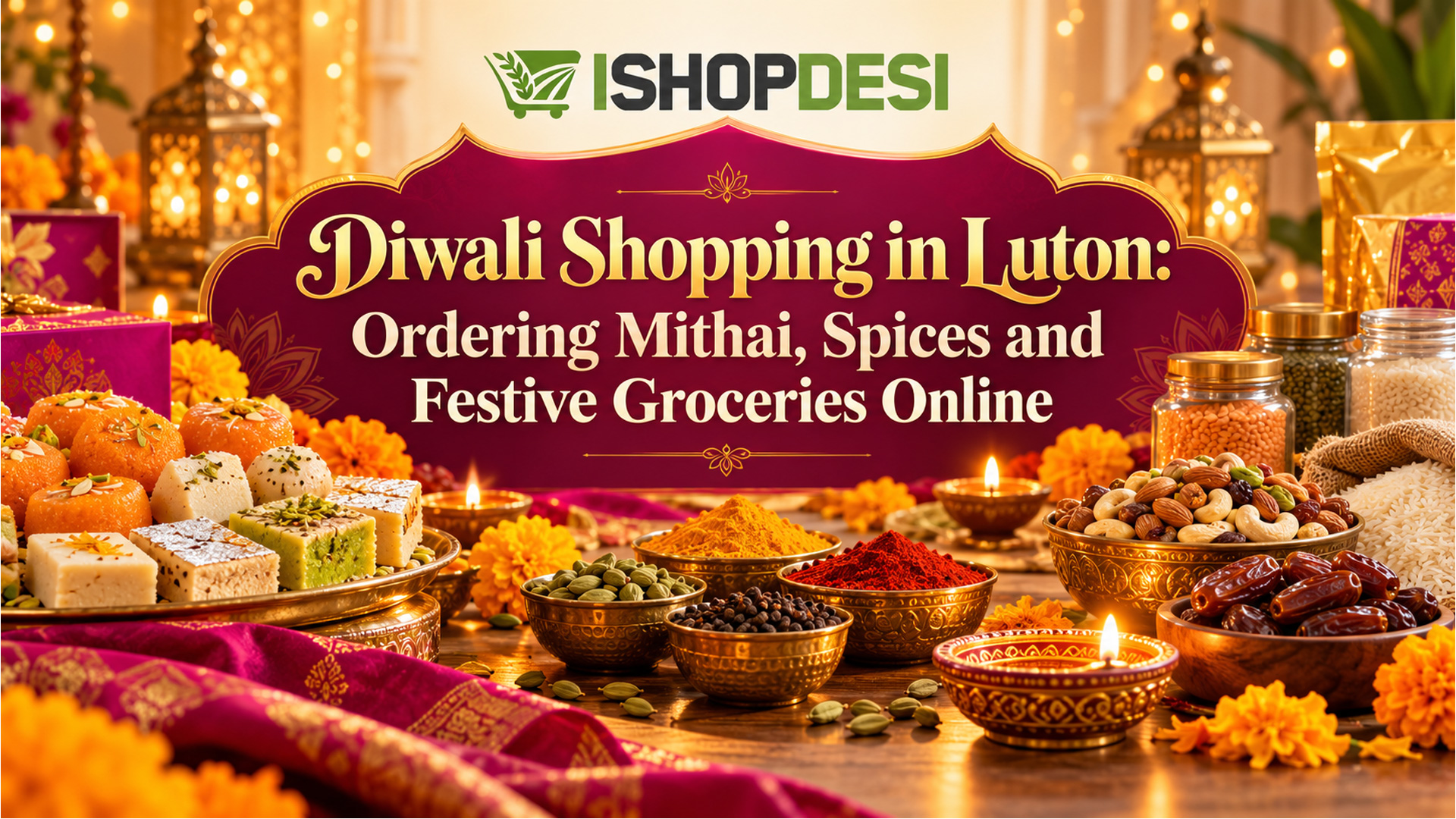

The first sign that Diwali preparations have begun isn’t always a string of lights in the window.
Sometimes, it’s the smell of cardamom drifting from the kitchen. A familiar sweet recipe is being discussed, someone is deciding which snacks to prepare, and a relative has already asked what time everyone should arrive.
These are the small details that give the festival its character.
Diwali celebrations vary between families and communities, but preparing food, sharing sweets and spending time with loved ones are important traditions for many households.
In Luton, where people bring different cultural backgrounds and cooking preferences to their celebrations, festive food preparation can take many forms.
One home might prepare homemade besan ladoo. Another may serve savoury snacks alongside assorted mithai. Some families prefer to order Diwali sweets while concentrating their cooking efforts on the main meal.
Whatever the approach, selecting suitable ingredients can help make the occasion more enjoyable.
And as online grocery shopping becomes another option for finding familiar South Asian foods, it offers a different way to organise festive preparations without changing the traditions that make them meaningful.
The Food Behind Diwali’s Most Memorable Moments
Ask someone what they remember about a favourite Diwali celebration, and the answer may have surprisingly little to do with the decorations.
They might remember the first piece of warm mithai offered by an aunt, the smell of freshly fried snacks or the excitement of helping prepare a special family dish.
Food has a way of making celebrations personal.
A recipe can connect people to childhood memories, regional traditions or relatives who taught them how to cook.
Those connections are particularly noticeable during festivals, when dishes that rarely appear during the working week return to the family table.
Every Household Has Its Own Festive Menu
There is no single Diwali menu that represents every Indian household.
Some celebrations feature an elaborate vegetarian meal. Others centre on homemade snacks, desserts and tea.
Regional traditions also influence which ingredients appear in the kitchen.
Gujarat, Punjab, Maharashtra, Tamil Nadu and other regions have distinctive festive food traditions.
Rather than assuming every celebration follows the same format, it is worth recognising the variety of foods and customs involved.
This diversity is part of what makes festive cooking so interesting.
Mithai: More Than a Box of Colourful Sweets
Mithai is among the most recognisable elements of many Diwali celebrations.
But traditional Indian sweets are remarkably varied.
Their textures range from smooth and dense to soft, crumbly or syrup-soaked. Their flavours may feature nuts, cardamom, saffron, coconut or other ingredients.
Understanding those differences helps explain why particular sweets hold a special place in certain households.
Kaju Katli and the Appeal of Simplicity
Kaju katli is commonly prepared using cashews and sugar.
Its smooth texture and characteristic diamond shape make it a familiar festive choice.
Although its appearance may seem simple, achieving the intended consistency in homemade versions requires careful attention to preparation.
Besan Ladoo and the Importance of Roasting
Besan ladoo illustrates how cooking technique can influence the finished sweet.
Gram flour is traditionally roasted with fat before being combined with other ingredients.
The roasting process affects the flavour and texture.
Preparing it too quickly may produce a different result from the one intended.
Barfi, Gulab Jamun and Regional Favourites
Barfi includes numerous varieties, with ingredients and textures differing between recipes.
Gulab jamun offers a contrasting experience, with its soft texture and sweet syrup.
Other families may prepare regional specialities that are less familiar outside their own communities.
The important thing is not to collect every possible variety.
It is to choose the sweets that have meaning for the people sharing them.
Homemade or Shop-Bought Mithai? Both Have Their Place
Homemade sweets can be deeply personal.
A familiar recipe may have been prepared in the family for decades, with small details passed from one generation to another.
However, making mithai from scratch requires time, ingredients and an appropriate cooking method.
Some sweets also demand considerable precision.
Buying prepared mithai can therefore be a practical choice, especially when the household is preparing several other dishes.
There is no reason the two approaches cannot coexist.
A family might make its signature ladoo recipe at home while purchasing another variety to offer guests.
What Should You Check When Buying Prepared Sweets?
Product information matters, particularly for gifts or shared celebrations.
Check the ingredients, allergen declarations, quantity and storage instructions.
Traditional sweets may contain milk, nuts, wheat or other allergens.
Some products require refrigeration, while others have different storage conditions.
A decorative box should never be treated as a substitute for clear food information.
The Spices That Make Festive Cooking Feel Different
Festive dishes often introduce ingredients that aren’t used in every everyday meal.
A sweet preparation may require cardamom or saffron.
A savoury snack might use cumin, coriander, chilli or other seasonings.
But the role of spices is not simply to make food stronger or hotter.
Different spices contribute aroma, warmth, colour and flavour.
Cardamom in Traditional Sweets
Cardamom appears in numerous South Asian desserts.
Its distinctive aroma can complement certain milk-based and nut-based preparations.
The amount required depends on the recipe.
Adding more than necessary may overpower delicate flavours.
Saffron and Festive Presentation
Saffron is used in some traditional sweets and rice dishes.
It can contribute colour and aroma when prepared appropriately.
However, not every festive recipe needs saffron, and substitutes may not create the same result.
Whole and Ground Spices
Whole spices and ground seasonings can behave differently during cooking.
A recipe using whole cardamom pods may require a different preparation from one calling for ground cardamom.
Similarly, whole cumin seeds are often used differently from cumin powder.
Following the recipe’s instructions helps preserve the intended flavour.
Planning a Festive Menu Without Making Everything Complicated
One of the pleasures of Diwali is bringing people together.
That experience can become less enjoyable when the menu includes too many elaborate dishes for the time and equipment available.
A good festive spread doesn’t have to involve preparing every traditional food you can think of.
Instead, consider how the different dishes complement each other.
Begin with a Signature Dish
This might be a family-favourite savoury preparation, a special rice dish or a homemade sweet.
Choose something that feels important to your celebration.
Allow enough time to prepare it properly.
Add a Few Complementary Foods
If the main dish is rich and heavily seasoned, lighter accompaniments may provide welcome contrast.
If the celebration is centred on tea and sweets, a suitable savoury snack can offer variety.
The aim is balance rather than quantity.
Think About Serving Requirements
Food that needs to be served hot may require different preparation from products that can be presented at room temperature.
Refrigerated sweets and other perishable dishes need appropriate storage.
Consider these details before deciding how many items to prepare.
How Online Grocery Shopping Fits into Diwali Preparations
Finding familiar ingredients can be an important part of festive cooking, particularly when a recipe calls for a speciality product.
A particular flour, spice, nut or traditional sweet may not be available in every supermarket.
Specialist online grocery platforms provide another way to explore such products.
For shoppers considering Indian grocery delivery Luton, the useful starting point is to understand which ingredients are essential to the planned celebration.
Online shopping may make it easier to compare product descriptions and available quantities before purchasing.
However, it does not guarantee that every product will be in stock or that a particular delivery date will be available.
Check the Exact Product
A general category name may not provide enough information.
For example, gram flour, wheat flour and semolina are used in different recipes and cannot always be substituted freely.
Likewise, nuts may be sold whole, chopped, ground, salted or prepared in other ways.
Choose the form required by the recipe.
Read the Ingredients and Allergens
This is particularly important when purchasing mithai, snacks or prepared festive foods.
Review all relevant product information and ask the retailer for clarification when necessary.
Confirm Delivery Arrangements Early
Festive periods can affect product demand and delivery availability.
Check the retailer’s current service information and postcode eligibility.
Do not plan a celebration around an unconfirmed delivery slot.
Dry Fruits and Nuts: Small Ingredients with Several Uses
Almonds, cashews, pistachios, raisins and dates can play different roles in festive food.
Some appear in sweets.
Others are used as garnishes or served separately.
Nuts and dried fruits can also form part of a gift selection.
The same ingredient may therefore contribute to more than one element of the celebration.
Choose the Correct Form
A recipe requiring ground almonds will not necessarily produce the intended result with whole almonds.
Similarly, chopped pistachios may be more appropriate for certain garnishes than whole nuts.
Pay attention to the preparation specified.
Consider Allergies Carefully
Tree nuts are important allergens.
If food will be shared with guests, provide accurate information about ingredients where possible.
Avoid assuming that a sweet is nut-free simply because nuts aren’t visible on its surface.
Store Products Appropriately
Follow the storage instructions on the packaging.
Protect suitable dry ingredients from moisture, contamination and excessive heat.
Products with different preparations or coatings may have different storage requirements.
Three Practical Diwali Shopping Mistakes to Avoid
Buying Ingredients Before Choosing the Recipe
A packet may look festive or familiar, but that doesn’t mean it belongs in the dish you intend to prepare.
Select recipes first, then identify their actual requirements.
Choosing Too Many Perishable Sweets
An oversized assortment can be difficult to finish safely, especially in a small household.
Consider the number of people eating and the products’ storage requirements.
Ignoring the Complete Purchase Cost
A grocery order may include delivery charges or minimum-order conditions.
Compare the total amount rather than relying on individual product prices.
A thoughtful festive purchase should suit the occasion and the household’s circumstances.
Keeping Diwali Cooking Connected to Family Traditions
The preparation of festive food is often as meaningful as the meal itself.
Children may help arrange sweets.
Older relatives may explain why a particular ingredient is important.
Someone might use a handwritten recipe that has survived several house moves.
These moments are difficult to replace with convenience alone.
Modern shopping methods can support the practical side of a celebration, but they do not have to define it.
The cooking knowledge, personal preferences and shared memories remain central.
Make Space for Family Recipes
A celebration can be an opportunity to record a recipe that has never been written down properly.
Ask about ingredient quantities, cooking stages and the small adjustments that experienced cooks make instinctively.
Those details may be more valuable than an elaborate festive menu.
Allow Traditions to Evolve Naturally
Not every household has the same equipment, schedule or food preferences.
Recipes may be adjusted thoughtfully to suit changing circumstances.
Understanding the original method helps make those changes more meaningful.
Preserving tradition does not always mean preparing food in exactly the same way forever.
Sometimes it means retaining the knowledge and intention behind the dish.
Frequently Asked Questions
What sweets are traditionally enjoyed during Diwali?
Popular examples include kaju katli, barfi, ladoo and gulab jamun, although preferences and regional traditions vary.
What ingredients are useful for homemade Diwali sweets?
Depending on the recipe, ingredients may include gram flour, milk-based products, sugar, nuts, cardamom, saffron or semolina.
Can I buy mithai online for Diwali in Luton?
Online retailers may offer traditional sweets and festive products. Check current availability, ingredients, storage instructions and delivery eligibility before ordering.
What should I check before ordering festive groceries online?
Review product descriptions, allergens, quantities, storage requirements, total charges and current delivery arrangements.
Are dry fruits and nuts suitable for Diwali gifts?
They can be a thoughtful option, provided the products suit the recipient’s preferences and dietary requirements, including any nut allergies.
Do all Indian households celebrate Diwali with the same food?
No. Festive menus differ by region, community, family traditions and personal preferences.
How can I make Diwali food preparation more manageable?
Choose a realistic menu, identify essential ingredients, allow suitable preparation time and avoid purchasing more perishable food than needed.
Conclusion: The Best Diwali Preparations Leave Room for the Celebration
The most memorable festive gatherings are rarely remembered for the number of items on the table.
People remember the conversations, the familiar flavours and the small gestures that made them feel welcome.
Perhaps someone prepared a favourite sweet from childhood. Perhaps a relative brought an unexpected box of mithai. Maybe the kitchen filled with the aroma of cardamom while everyone helped arrange the food.
These details give Diwali its warmth.
Online grocery shopping can offer another way to find ingredients for traditional cooking, while carefully selected prepared foods can complement homemade favourites.
Yet the real character of a celebration still comes from the people sharing it.
Choose the recipes that matter, prepare what you can with care and leave enough time to enjoy the occasion.
After all, the purpose of festive food is not simply to fill the table.
It is to bring people around it.



Join the conversation