
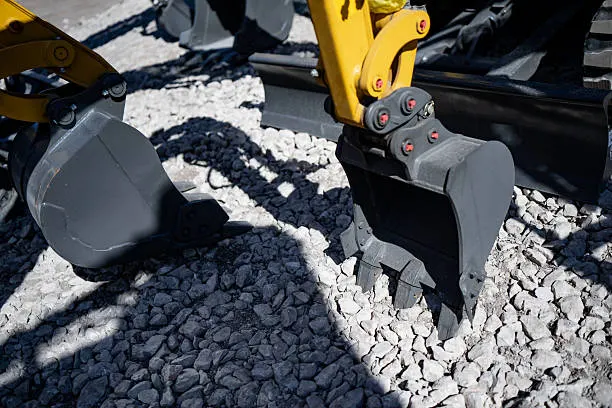

Mining operations depend on heavy equipment to support excavation, material handling, drilling, crushing, hauling, and other demanding activities. At the same time, operators must manage equipment availability, maintenance requirements, capital commitments, site conditions, and changing project schedules. These factors are increasing the relevance of rental-based equipment access as an alternative to maintaining entirely owned fleets.
According to Vyansa Intelligence, the global mining equipment rental market was valued at USD 109 Billion in 2025 and is projected to reach USD 150 Billion by 2032, registering a CAGR of 4.67% during 2026-2032. The trajectory highlights the expanding role of flexible equipment access within mining operations and reflects the industry’s broader focus on controlling asset commitments while maintaining operational capability.
Rental Models Offer Greater Operational Flexibility
Mining projects rarely operate under completely static conditions. Equipment requirements can change as extraction areas develop, production activities shift, or individual project phases move forward. Purchasing every machine required for peak operating requirements can leave companies carrying assets that are not consistently utilized.
Rental arrangements provide an alternative by allowing operators to obtain equipment for specific operational requirements. Short-term arrangements can support temporary projects or unexpected requirements, while longer-term rentals can provide equipment availability without the same ownership structure.
In this report, rental equipment is best understood as part of a broader asset-management strategy. The decision to rent is not simply about obtaining machinery. It can also involve managing capital allocation, equipment utilization, maintenance responsibilities, replacement requirements, and project-specific needs.
Equipment Selection Is Closely Linked to Mining Conditions
Mining environments can differ significantly depending on the extraction method, material being handled, terrain, operating conditions, and infrastructure available at the site. Equipment selection therefore requires a careful assessment of the intended application rather than relying on a standardized fleet configuration.
Excavators, loaders, haulage equipment, drills, breakers, crushers, and screening systems each perform different functions. The suitability of a machine depends on its operating capacity, mobility, power requirements, attachments, serviceability, and compatibility with other equipment working at the site.
According to this industry report, rental providers can create value by offering equipment configurations that correspond to specific operating requirements. This makes fleet composition an important consideration for mining companies evaluating rental arrangements.
Capital Management Supports Rental Adoption
Heavy mining equipment represents a substantial investment, particularly when machinery must be deployed across large and technically demanding sites. Ownership also involves expenses associated with maintenance, storage, transportation, depreciation, repairs, and eventual replacement.
Rental models can shift part of this financial structure toward predictable equipment-access arrangements. This can be particularly relevant when operators need additional machinery for a defined project period or when future equipment requirements remain uncertain.
The latest market analysis suggests that flexibility is becoming an important consideration in equipment procurement decisions. Rather than treating ownership as the default option, mining companies can compare rental and ownership according to utilization expectations, project duration, financing priorities, and equipment availability.
Maintenance and Equipment Reliability Remain Essential
Mining equipment operates under demanding conditions, making preventive maintenance and equipment inspection critical components of safe and productive operations. Rental providers therefore have an important role in ensuring that machinery supplied to mine sites is properly maintained and fit for service.
The U.S. Mine Safety and Health Administration emphasizes pre-operational examinations for mobile equipment and recommends removing equipment from service when safety defects are identified. Its guidance also highlights braking, steering, hydraulic systems, tires, lighting, operator visibility, alarms, and other equipment conditions that should be assessed.
For rental companies, maintenance quality can directly influence customer confidence. Equipment that is unavailable because of preventable mechanical problems can disrupt mine-site schedules and create additional operational costs.
Safety Becomes a Shared Responsibility
Safety considerations extend beyond equipment condition. Mining companies, rental providers, contractors, and operators must understand how machinery will be used within specific site conditions.
Mobile equipment can create risks involving vehicle interaction, pedestrians, uneven ground, visibility limitations, reversing, rollover potential, and unintended movement. MSHA guidance recommends mine-specific assessment of these hazards and the development of safety practices suited to local operating conditions.
This means rental agreements should be considered alongside operator training, site procedures, equipment inspections, communication protocols, and emergency practices. A machine’s technical capability alone does not determine whether it can be used safely.
Digital Capabilities Improve Fleet Management
Technology is becoming increasingly relevant to mining equipment management. Telematics, equipment monitoring, remote diagnostics, and digital maintenance systems can provide operators and rental providers with greater visibility into machine utilization and condition.
For rental fleets, these capabilities can help identify maintenance requirements, monitor operating performance, coordinate equipment availability, and support faster responses to potential mechanical issues.
From an industry analysis perspective, digital fleet management can also strengthen the relationship between equipment availability and operational planning. Rental providers that understand how machines are being utilized can make more informed decisions about maintenance scheduling, deployment, and fleet allocation.
Regional and Project Requirements Shape Demand
Mining activity varies considerably across regions, and equipment rental requirements consequently depend on local mineral production, infrastructure conditions, project development, regulatory environments, and equipment availability.
Large mining projects can require substantial machinery during particular development or production phases. Rental providers capable of moving equipment efficiently between locations can therefore support operators facing temporary capacity requirements.
A market research report examining the sector must consequently consider the relationship between mining activity and equipment-access strategies. Rental demand is influenced not only by the quantity of machinery required but also by when, where, and for how long that machinery is needed.
The Role of Rental Providers Is Expanding
Mining equipment rental providers increasingly function as equipment-access partners rather than simply machinery suppliers. Their responsibilities can extend across equipment selection, delivery, inspection, maintenance coordination, replacement, and technical support.
This creates opportunities for providers to differentiate themselves through fleet availability, equipment condition, service responsiveness, digital monitoring capabilities, and understanding of mining-specific requirements.
Detailed market insight indicates that the long-term relevance of rental models will depend on how effectively providers balance flexibility with reliability. Mining companies need equipment when production requires it, but they also need confidence that rented machinery can perform under demanding site conditions.
As mining operations continue to manage changing project requirements and increasingly complex asset decisions, equipment rental offers a practical mechanism for improving access to heavy machinery while maintaining greater flexibility in fleet planning. The combination of equipment availability, maintenance support, safety practices, and digital management will remain central to how rental models develop across the mining sector.



Join the conversation