

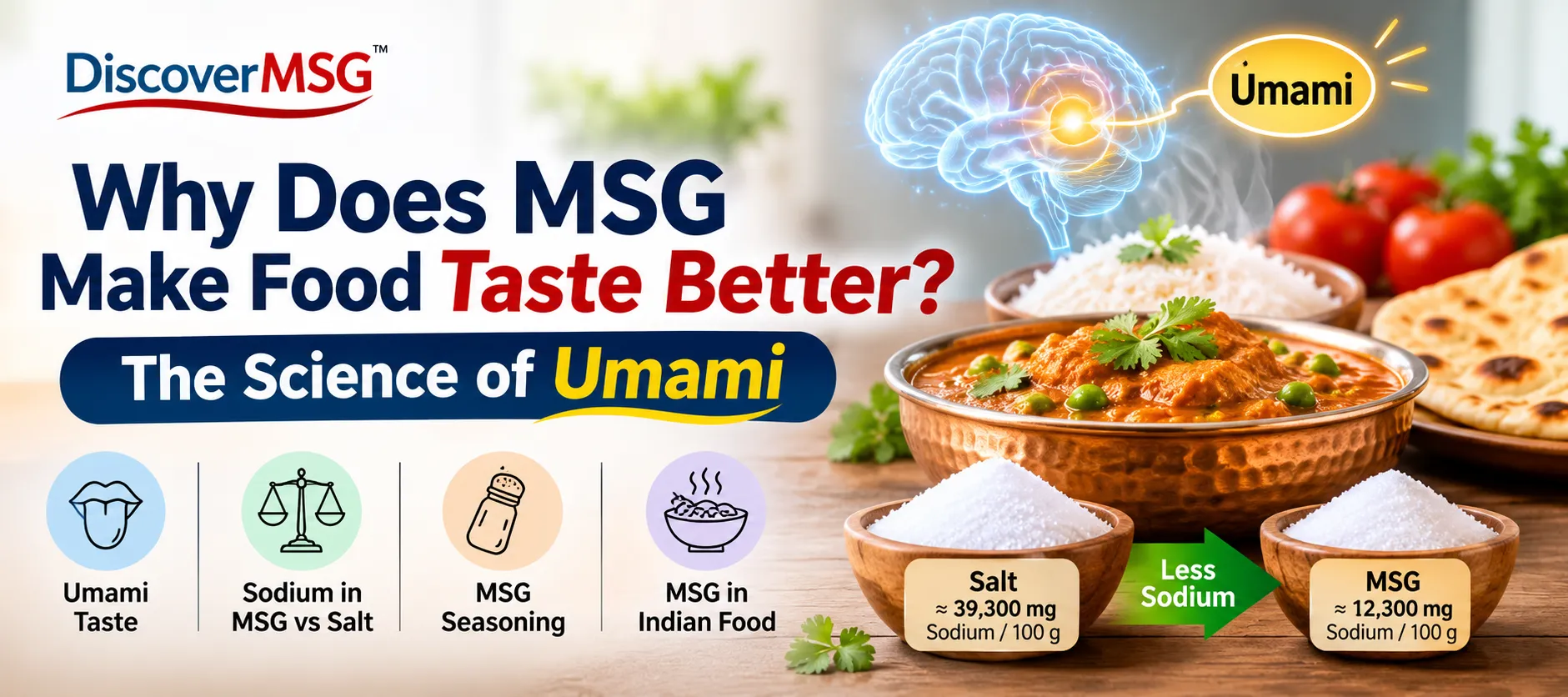

Have you ever wondered why certain foods taste rich, savoury and satisfying even when they contain only a few ingredients? The secret often lies in a unique flavour experience known as umami. From soups and sauces to traditional Indian dishes, umami plays an important role in making meals more enjoyable. One ingredient closely associated with this taste is monosodium glutamate (MSG), a flavour enhancer that helps bring out the natural savoury qualities of food.
Understanding how MSG works can help us appreciate the science behind flavour, explore its role in everyday cooking and make more informed seasoning choices.
What Is Umami Taste?
Umami is recognised as the fifth basic taste, alongside sweet, sour, salty and bitter. The word comes from Japanese and describes a pleasant, savoury or broth-like flavour commonly found in foods such as ripe tomatoes, mushrooms, cheese, meat and fermented products.
The umami taste is mainly associated with glutamate, an amino acid naturally present in many ingredients. When glutamate interacts with specific taste receptors on the tongue, it creates a distinctive savoury sensation.
Unlike salt, which mainly contributes a salty sensation, umami adds depth and fullness to flavour. This is why ingredients rich in glutamate are frequently used in cooking to make dishes taste more balanced and satisfying.
How Does MSG Enhance Food Flavour?
Monosodium glutamate is the sodium salt of glutamic acid, a naturally occurring amino acid. It dissolves easily in food and provides glutamate, which stimulates umami taste receptors.
When added in suitable quantities, MSG can enhance the existing savoury characteristics of a dish rather than simply introducing a completely different flavour.
Here are some ways MSG contributes to food flavour:
- Enhances savouriness: MSG strengthens the savoury character of soups, gravies, sauces and other dishes.
- Creates flavour balance: It can complement salty, sweet and sour flavours when used appropriately.
- Improves flavour perception: MSG helps make certain foods taste fuller and more rounded.
- Supports ingredient combinations: Glutamate can work together with naturally occurring nucleotides found in ingredients such as meat, mushrooms and seafood to produce a stronger umami sensation.
The result is a more pronounced savoury experience without necessarily needing to increase the amount of salt.
Sodium in MSG vs Salt: Understanding the Difference
Many people assume MSG and regular table salt contain similar amounts of sodium. However, their sodium concentrations are different.
Table salt is sodium chloride, whereas MSG contains sodium combined with glutamate. Because of this difference in chemical composition, MSG provides considerably less sodium by weight than ordinary salt.
A comparison makes this easier to understand:
| Ingredient | Approximate sodium content |
| Table salt (100 g) | 39,300 mg |
| MSG (100 g) | 12,300 mg |
MSG contains approximately one-third the sodium of table salt by weight. This difference makes it an interesting ingredient when exploring ways to reduce sodium in recipes.
However, the actual sodium reduction depends on how much MSG and salt are used together. Simply adding MSG without reducing salt will not automatically lower a dish’s sodium content.
Using MSG as part of a balanced seasoning approach may help maintain savoury flavour while reducing the amount of added salt in certain recipes.
MSG Seasoning: A Simple Way to Enhance Everyday Dishes
MSG seasoning is used in different types of cooking to strengthen savoury flavour and improve the overall taste experience. It is particularly useful in recipes where ingredients such as vegetables, spices, broths and sauces contribute to a rich flavour profile.
MSG does not replace every seasoning ingredient. Instead, it works alongside other ingredients to create a more complete taste.
Some common applications include:
- Soups and broths: Adds a deeper savoury character to vegetable and meat-based soups.
- Vegetable dishes: Complements the natural flavours of cooked vegetables.
- Rice preparations: Can enhance the savoury notes in fried rice and other rice-based recipes.
- Marinades: Works with spices and other seasonings to develop a fuller flavour.
- Sauces and gravies: Helps create a more rounded taste profile.
The key is moderation. A small amount is often sufficient, and the quantity should be adjusted according to the recipe and personal preference.
MSG in Indian Food: Exploring the Connection with Traditional Flavours
Indian cuisine offers an excellent example of how umami contributes to enjoyable meals. Many familiar ingredients already contain naturally occurring glutamate, which gives them their characteristic savoury qualities.
Tomatoes, mushrooms, onions and fermented ingredients are commonly used in Indian kitchens. Their flavour compounds contribute to the complexity of dishes such as curries, vegetable preparations and gravies.
The use of MSG in Indian food is also associated with certain restaurant-style preparations, including noodles, fried rice, soups and savoury snacks.
For example, in vegetable fried rice, MSG can complement the flavours of vegetables, sauces and spices. In soups, it can strengthen the broth’s savoury character. When used appropriately, it can work alongside traditional Indian seasonings without overpowering their individual flavours.
This demonstrates how umami can complement different culinary traditions rather than being limited to one particular cuisine.
Natural Glutamate and Added MSG: Are They Different?
Glutamate is naturally present in various foods, including tomatoes, mushrooms, cheese, meat and some fermented products. It is also present in the human body as part of normal biological processes.
The glutamate in MSG is chemically the same as the glutamate found naturally in food. The difference is mainly how it enters the dish: through naturally occurring food ingredients or through the addition of MSG as a seasoning.
Both sources contribute to umami flavour.
Understanding this distinction helps separate the scientific facts about glutamate from common misconceptions about its presence in food.
Is MSG Safe to Use in Everyday Cooking?
MSG has been studied extensively by food scientists and regulatory organisations. The US Food and Drug Administration (FDA) classifies added MSG as generally recognised as safe (GRAS) for its intended uses.
Like other food ingredients, it should be used appropriately and in accordance with applicable food regulations. Some individuals report temporary symptoms after consuming large quantities of MSG, particularly without food, although scientific evidence has not consistently established a causal relationship at typical consumption levels.
For most people, MSG can be used as a flavour-enhancing ingredient within a balanced diet.
Conclusion
MSG makes food taste better by enhancing umami, the savoury fifth basic taste. Its ability to complement existing ingredients makes it useful in soups, sauces, vegetable preparations and many Indian dishes.
Understanding the difference between sodium in MSG vs salt also highlights its potential role in lower-sodium cooking when it is used to replace some of the added salt. From everyday MSG seasoning to traditional recipes, the science of umami shows how a small ingredient can make a meaningful difference to flavour.
At DiscoverMSG, exploring the science behind monosodium glutamate helps readers understand its natural connections, culinary applications and role in modern food preparation.
Discover the science of flavour with DiscoverMSG.com.



Join the conversation