
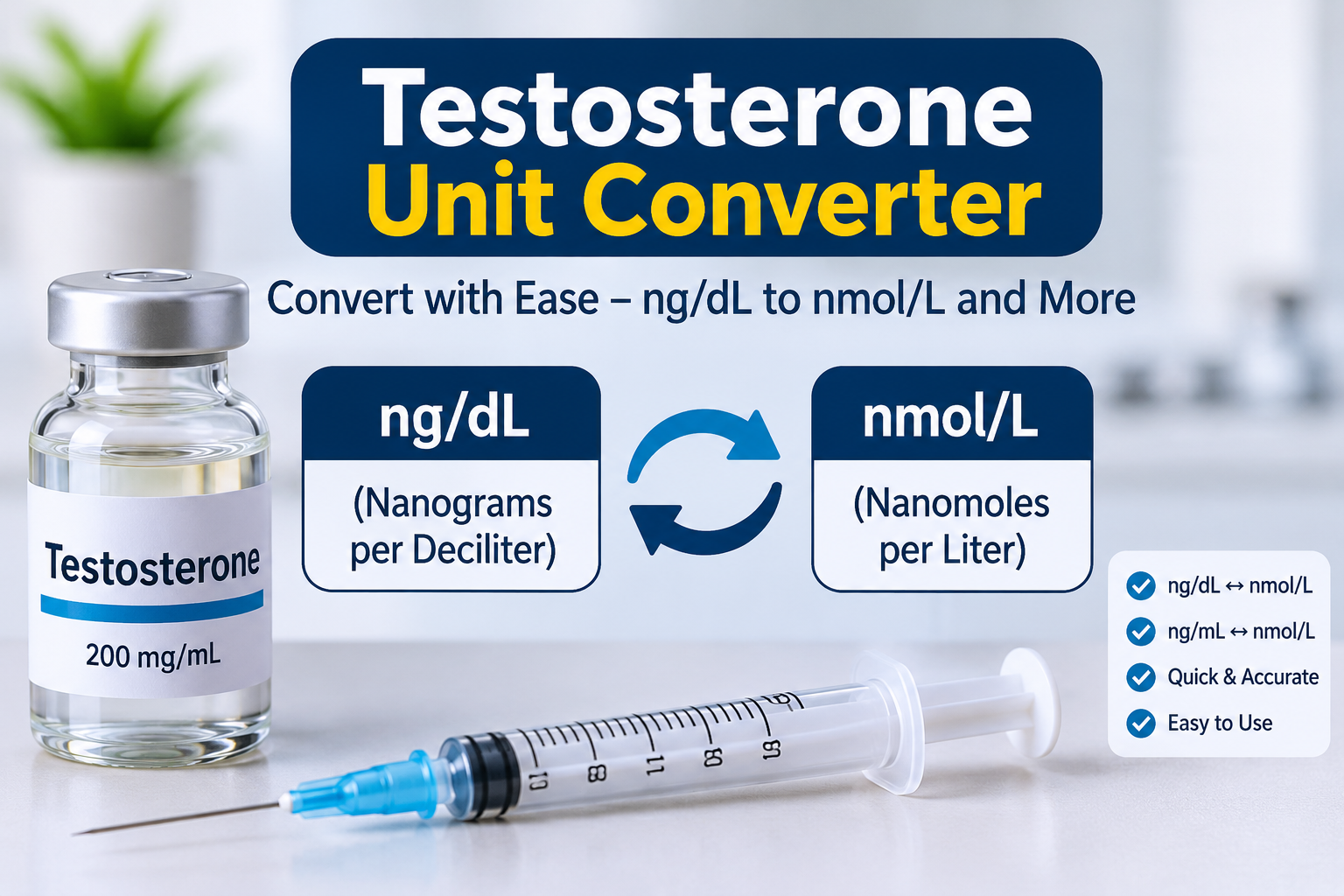

Testosterone is an important hormone that plays a role in male reproductive health, muscle development, bone strength, energy, and sexual function. Doctors often recommend a testosterone blood test when someone experiences symptoms such as reduced sex drive, fatigue, erectile difficulties, or changes in muscle mass.
When you receive your blood test report, you may notice numbers written in different units, such as ng/dL, nmol/L, or ng/mL. These units measure the same hormone concentration but use different measurement systems. Understanding them can make it easier to read your report and discuss the results with your healthcare provider.
This guide explains the common testosterone measurement units, how they relate to each other, and what to consider when reviewing your results.
1. What Does a Testosterone Blood Test Measure?
A testosterone blood test measures the amount of testosterone present in your blood. Testosterone is produced mainly in the testicles in men, although smaller amounts are produced by the adrenal glands. Women also produce testosterone, primarily through the ovaries and adrenal glands.
Doctors may request this test to investigate symptoms or monitor hormone levels during testosterone replacement therapy (TRT).
A testosterone report may include:
-
Total testosterone: Measures the total amount of testosterone in the blood, including testosterone attached to proteins and testosterone circulating freely.
-
Free testosterone: Measures the portion that is not attached to blood proteins and is available for use by the body’s tissues.
-
Bioavailable testosterone: Refers to free testosterone and testosterone loosely attached to albumin.
These measurements provide different information. Your doctor may recommend one or more tests depending on your symptoms, medical history, and initial results.
2. Common Testosterone Measurement Units
Laboratories use different measurement systems depending on their location and testing methods. The most common units found on testosterone reports include the following.
ng/dL (Nanograms per Deciliter)
Nanograms per deciliter is a commonly used unit in the United States. It measures the number of nanograms of testosterone present in one deciliter of blood.
For example, a laboratory report showing 450 ng/dL means that the measured testosterone concentration is 450 nanograms per deciliter.
Many American laboratories report total testosterone in this format. It is also commonly used in medical discussions about testosterone levels and TRT monitoring.
nmol/L (Nanomoles per Liter)
Nanomoles per liter is another common unit, particularly in the United Kingdom, Europe, and several other countries.
It measures the concentration of testosterone in nanomoles within one liter of blood.
For example, a testosterone result of 15 nmol/L represents a concentration of 15 nanomoles per liter.
If you compare reports from laboratories in different countries, you may notice that one uses ng/dL while another uses nmol/L. This does not necessarily mean the testing methods or hormone levels are different. The results may simply be expressed using different units.
ng/mL (Nanograms per Milliliter)
Some laboratory reports and medical resources use nanograms per milliliter.
This unit measures the amount of testosterone in one milliliter of blood. Although it is less commonly used for routine total testosterone reporting than ng/dL, it is useful to understand when reviewing different laboratory documents.
For example, 5 ng/mL is equivalent to 500 ng/dL because one deciliter contains 100 milliliters.
3. How to Convert Testosterone Measurement Units
Converting testosterone measurements helps when comparing reports that use different units. The conversion process is based on the molecular weight of testosterone.
Here are the common conversion formulas:
To convert ng/dL into nmol/L:
Divide the ng/dL value by 28.84.
To convert nmol/L into ng/dL:
Multiply the nmol/L value by 28.84.
To convert ng/mL into ng/dL:
Multiply the ng/mL value by 100.
To convert ng/mL into nmol/L:
Multiply the ng/mL value by approximately 3.47.
Example of Testosterone Unit Conversion
Suppose your blood test report shows a total testosterone level of 500 ng/dL.
To convert it into nmol/L:
500 ÷ 28.84 = approximately 17.34 nmol/L.
Similarly, if your report shows 20 nmol/L:
20 × 28.84 = approximately 576.8 ng/dL.
These calculations help you compare values across different measurement systems. You can also use an online Testosterone unit converter to perform these calculations quickly without working through the formulas manually.
Remember that a converted result is only a different expression of the same measurement. It does not change the actual testosterone level or provide a medical diagnosis.
4. What Is a Normal Testosterone Level?
There is no single reference range that applies to every person. Testosterone levels can vary according to age, sex, health conditions, laboratory methods, and other individual factors.
For adult men, some commonly referenced total testosterone ranges are around 300 to 1,000 ng/dL, or approximately 10 to 35 nmol/L. However, individual laboratories may use different reference intervals.
The Endocrine Society also highlights the importance of symptoms, repeat testing, and reliable laboratory measurements when evaluating possible testosterone deficiency.
For women, testosterone levels are generally much lower than those found in men. Their reference ranges are different and depend on factors such as age and menopausal status.
Always compare your result with the reference range printed on your own laboratory report rather than relying on a general online range.
5. Why Can Testosterone Test Results Differ?
Two testosterone reports may show different results even when they belong to the same person. Several factors can influence the measurement.
Time of testing: Testosterone levels generally tend to be higher in the morning and lower later in the day. Doctors often recommend early morning testing when evaluating possible low testosterone.
Laboratory methods: Different laboratories may use different testing equipment and measurement methods. These differences can affect the reported result.
Age: Testosterone levels can change as people get older. Age is one factor doctors consider when reviewing results.
Health conditions: Acute illness, sleep problems, certain medical conditions, and some medications can affect testosterone levels.
Treatment timing: People receiving TRT may have different results depending on when their blood sample is collected in relation to their treatment schedule. The appropriate timing depends on the treatment formulation and the clinician’s instructions.
These factors explain why one result should not always be viewed in isolation.
6. Total Testosterone vs Free Testosterone
Understanding the difference between total and free testosterone is important when reviewing a hormone report.
Total testosterone measures the overall amount of testosterone in the blood. Most testosterone is attached to proteins, particularly sex hormone binding globulin (SHBG) and albumin.
Free testosterone is the small portion that circulates without being attached to these proteins.
Sometimes, a person’s total testosterone may fall within the laboratory reference range while free testosterone is different from what a doctor would expect. Changes in SHBG levels can influence this relationship.
Depending on the clinical situation, a healthcare provider may recommend checking SHBG, albumin, or free testosterone to get a clearer understanding of hormone status.
7. How to Read Your Testosterone Report Correctly
Before drawing conclusions from your blood test, review a few important details:
-
Check the measurement unit: Confirm whether the result is reported in ng/dL, nmol/L, or another unit.
-
Review the laboratory range: Look at the reference interval printed beside your result.
-
Check the test type: Confirm whether the report shows total, free, or bioavailable testosterone.
-
Consider the testing time: Note when your blood sample was collected.
-
Compare previous reports carefully: Make sure the units and testing methods are comparable.
-
Discuss unusual results: Ask your healthcare provider whether repeat testing or additional hormone tests are appropriate.
If you are monitoring testosterone during TRT, follow your clinician’s instructions about blood testing schedules and treatment adjustments. Do not change your dose based on a single laboratory number.
8. Why Accurate Unit Conversion Matters
Accurate conversion is useful when reviewing medical reports from different countries, comparing previous test results, or discussing hormone levels with healthcare professionals.
For example, a report from a US laboratory may show testosterone in ng/dL, while a UK laboratory may use nmol/L. Converting both values into the same unit makes comparison easier.
However, conversion alone cannot explain whether a result is healthy or whether treatment is needed. Reference ranges, symptoms, medical history, and laboratory methods must also be considered.
A reliable conversion tool can help reduce calculation errors and make different measurement formats easier to understand.
Conclusion
Understanding testosterone test results starts with knowing what the measurement units mean. Whether your report uses ng/dL, nmol/L, or ng/mL, each unit represents a way of expressing testosterone concentration in the blood.
Learning the basic conversion formulas can help you compare reports and understand the numbers more clearly. However, interpreting those numbers requires more than mathematics. Factors such as age, symptoms, testing time, laboratory methods, and medical history all matter.
If your testosterone results are outside the laboratory’s reference range or you have concerns about your hormone levels, discuss them with a qualified healthcare professional before making any treatment decisions.



Join the conversation