
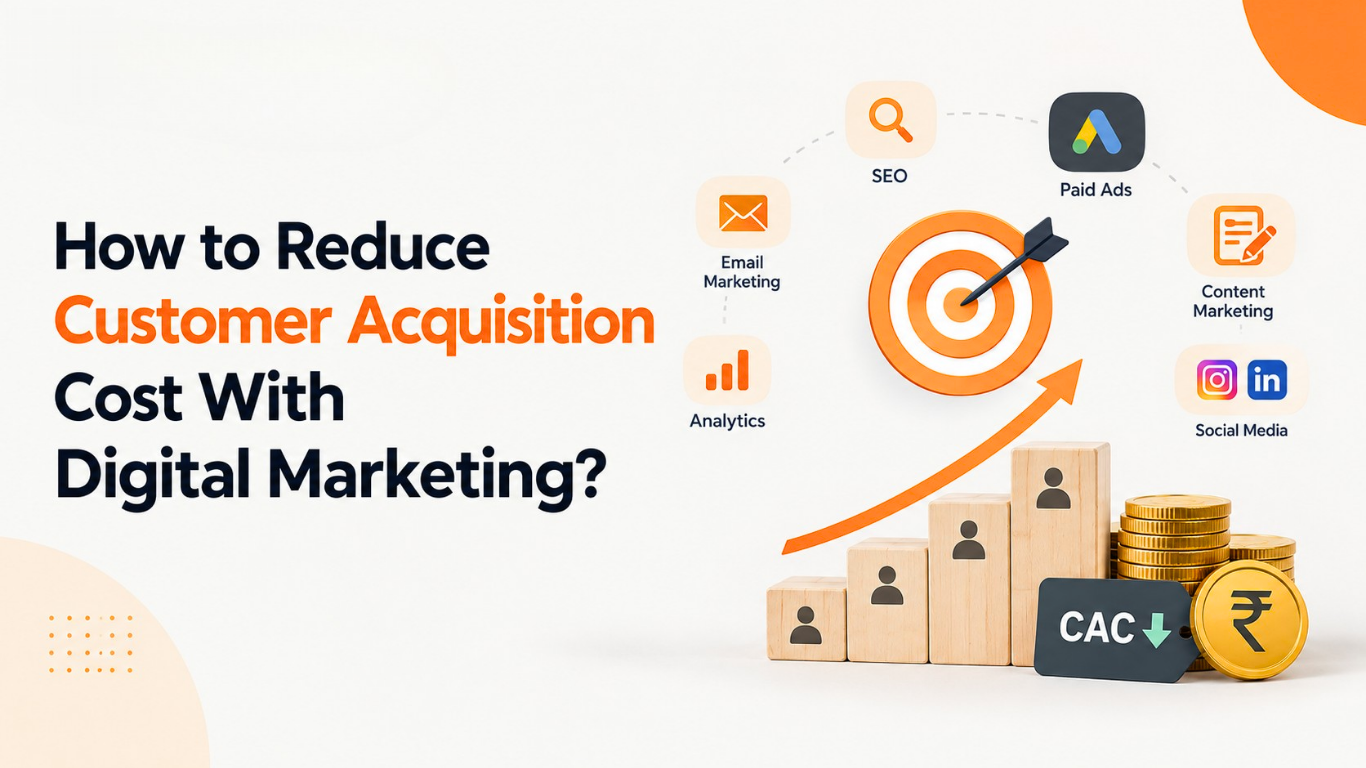

Every business wants more customers, but not every business can afford the price of winning them. Ad costs keep climbing, competition for attention is fierce, and many companies find that each new customer costs more than the last. When acquisition costs rise faster than revenue, growth becomes expensive and profits shrink.
This is why customer acquisition cost (CAC) has become one of the most important numbers in marketing. It tells you how much you spend, on average, to win one new customer. If that number is too high, even a busy marketing calendar can quietly drain your budget. The good news is that CAC is not fixed. With smarter strategy, better targeting, and stronger conversion, you can bring it down without sacrificing growth.
Many businesses speed up that process by working with a provider of digital marketing services Karachi companies trust to audit their campaigns, find wasted spend, and build more efficient funnels. Whether you get outside help or work in-house, the practical steps below will show you how to lower your acquisition costs and make every rupee in your marketing budget work harder.
What is customer acquisition cost?
CAC is calculated by dividing your total sales and marketing spend over a period by the number of new customers gained in that period.
For example, if you spend PKR 500,000 in a month and win 100 new customers, your CAC is PKR 5,000.
To get an accurate figure, include everything: ad spend, agency or freelancer fees, software tools, creative production, and the salaries of people involved in marketing and sales. Many businesses underestimate CAC because they only count ad spend.
Why CAC matters
CAC does not mean much on its own. It becomes useful when compared with how much a customer is worth over time. This is called customer lifetime value (LTV). A healthy business generally earns far more from a customer than it costs to acquire them. If you spend PKR 5,000 to win a customer who brings in PKR 20,000 in profit over time, the numbers work. If you spend PKR 5,000 to win a customer who brings in PKR 4,000, you have a problem.
Track both numbers together, and aim to lower CAC while protecting or increasing LTV.
1. Fix your tracking first
You cannot reduce what you cannot measure. Many businesses waste money because they do not know which channels, campaigns, or ads actually produce customers.
- Set up conversion tracking for every important action, such as form submissions, calls, purchases, and WhatsApp clicks
- Use unique tracking links or UTM parameters for each campaign
- Connect your website data with your CRM or sales records
- Compare platform reports with real sales numbers
Once you can see which sources bring in paying customers rather than just clicks, you can cut what does not work and invest in what does.
2. Focus on the right audience
Broad targeting often means paying to show ads to people who will never buy. Narrowing your focus usually improves results and lowers costs.
Start by studying your best existing customers. Look at their age, location, interests, job roles, and how they found you. Then use these insights to:
- Build detailed audience profiles
- Create lookalike audiences from your customer list
- Exclude groups that rarely convert
- Tailor messages to different segments
A smaller, well-targeted audience often delivers a lower cost per lead than a large, loosely defined one.
3. Invest in SEO and content for long-term savings
Paid ads stop delivering when the budget stops. Organic channels build an asset that keeps bringing visitors without a cost per click. Over time, this can significantly reduce your overall CAC.
- Publish helpful content that answers real customer questions
- Optimize service and product pages for relevant searches
- Improve local visibility with a complete Google Business Profile and customer reviews
- Update older content so it keeps ranking
SEO takes patience, but the customers it brings in tend to be cheaper to acquire as the content matures.
4. Improve your conversion rate
Most businesses focus on getting more traffic, but improving conversion can lower CAC faster. If your website converts 2% of visitors and you raise it to 3%, you win 50% more customers from the same traffic, without spending extra on ads.
Quick conversion improvements include:
- Making your headline and offer clear within seconds
- Speeding up page load times
- Using mobile-friendly layouts with easy-to-tap buttons
- Shortening forms and simplifying checkout
- Adding reviews, testimonials, and guarantees near calls to action
- Offering easy contact options such as WhatsApp and click-to-call
Test one change at a time and measure the effect. Even small gains multiply across all your channels. If you want a deeper walkthrough, our conversion rate optimization guide covers the basics in plain language.
5. Strengthen your ad creative
Creative is one of the biggest drivers of ad performance. A compelling ad can earn more clicks at a lower cost, while a weak one wastes budget no matter how well you target.
- Test several hooks, headlines, images, and videos
- Use short, authentic video content that feels native to each platform
- Highlight clear benefits instead of listing features
- Include one simple call to action
- Replace ads that show signs of fatigue, such as falling click rates and rising costs
Keep a simple testing routine, and record which messages work best so you can reuse them.
6. Use email and messaging to nurture leads
Winning a new lead is expensive, so make sure you do not lose it. Many people need several touchpoints before they buy, and email and messaging are inexpensive ways to guide them.
- Create a welcome sequence that introduces your brand and best content
- Share case studies, FAQs, and honest comparisons
- Send abandoned cart or abandoned form reminders
- Follow up quickly on inquiries, ideally within minutes
- Use WhatsApp or direct messages where customers prefer them
Nurtured leads often convert at a lower cost than cold traffic because trust has already been built.
7. Retarget visitors who did not convert
Most visitors leave without taking action. Retargeting reaches those who already know you, so it often costs less than prospecting.
- Show ads to people who visited key pages or watched your videos
- Offer a reminder, a testimonial, or a small incentive
- Segment audiences by behavior, such as cart abandoners versus blog readers
- Limit how often ads appear to avoid annoying people
Keep the message relevant to what the person viewed rather than showing the same generic ad to everyone.
8. Build a referral and word-of-mouth system
Referred customers usually cost less to acquire and often have higher trust and retention. Create simple ways for happy customers to recommend you.
- Offer rewards or discounts for successful referrals
- Ask for reviews and testimonials after a positive experience
- Encourage customers to share photos or stories
- Make referring easy with a short link or code
Satisfied customers are a powerful marketing channel, and they cost far less than paid acquisition.
9. Work with the right specialists
Cutting CAC often requires a mix of skills: analytics, paid media, SEO, creative, and conversion optimization. Hiring a full in-house team can be costly for smaller businesses. Many choose to partner with a digital marketing agency in Karachi for structured campaign management and regular reporting. A good partner will review your numbers honestly, explain where money is being wasted, and set realistic targets rather than promising overnight results.
10. Improve customer retention to raise lifetime value
Lowering CAC is one side of the equation. Raising the value of each customer is the other. If customers buy more often or stay longer, you can afford to spend more to acquire them, or you can keep your spending steady and see better profitability.
- Deliver a smooth onboarding or first-purchase experience
- Send useful follow-ups, tips, and offers
- Create loyalty programs or subscription options where relevant
- Ask for feedback and fix recurring problems quickly
A business with strong retention can compete more confidently, even when ad costs go up.
11. Allocate budget based on performance
Not every channel deserves equal funding. Review results regularly and move budget toward what delivers customers at the lowest cost.
- List each channel and its cost per lead and cost per customer
- Identify the top performers and the weakest
- Reduce spend on poor performers, and test improvements before cutting entirely
- Scale winners gradually, rather than doubling budgets overnight
- Keep a small test budget for new channels or ideas
Metrics to monitor
- Customer acquisition cost (overall and by channel)
- Customer lifetime value and the LTV to CAC ratio
- Cost per lead and lead-to-customer conversion rate
- Website conversion rate by device and source
- Return on ad spend
- Payback period, meaning how long it takes to earn back the acquisition cost
- Repeat purchase rate and retention
Review these monthly, and compare trends rather than reacting to a single day or week.
Common mistakes to avoid
- Ignoring total costs. Include tools, salaries, and fees when calculating CAC.
- Chasing cheap leads. Low-quality leads can raise your real cost per customer.
- Scaling too quickly. Fast budget jumps can hurt efficiency.
- Neglecting follow-up. Slow replies lose sales you have already paid for.
- Sending ads to a weak landing page. Fix the destination before increasing spend.
- Stopping tests too early. Reliable results need enough data and time.
Final thoughts
Reducing customer acquisition costs is not about spending less for the sake of it. It is about spending smarter: tracking accurately, targeting the right people, improving conversion, nurturing leads, and building channels that keep delivering over time.
Start by calculating your current CAC and LTV, then pick the biggest leak in your funnel and fix it first. Test one improvement at a time, measure results, and keep refining. Over a few months, these small gains can add up to a more efficient marketing system and a healthier, more profitable business.



Join the conversation