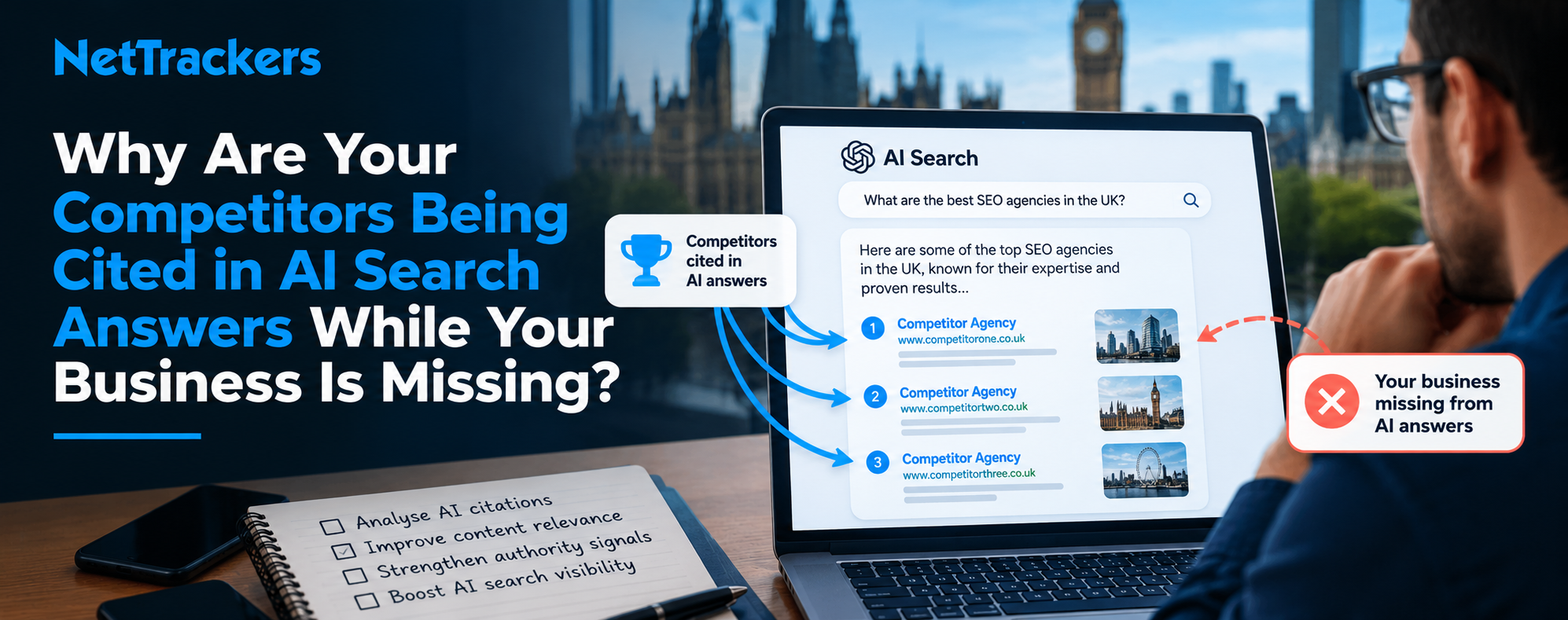
Your competitors may appear as cited sources in AI-generated search answers even when your business has a well-designed website and established Google rankings. This can be frustrating when your company publishes useful content but rarely appears in responses from Google AI Overviews, ChatGPT Search or other AI-powered discovery tools. The problem is not necessarily that competitors offer better services, but that their pages may be easier for search systems to discover, interpret and use as supporting evidence. AI search visibility depends on several factors, including content relevance, accessibility, source quality and the way information is retrieved for individual questions. Working with an AI SEO agency can help businesses investigate these factors without relying on promises of guaranteed citations. The starting point is understanding why particular pages are selected as sources and whether your website provides information that AI systems can reliably use.
How Do AI Search Tools Discover and Cite Website Content?
AI-powered search tools use different systems to retrieve information and generate responses. Some search experiences retrieve relevant webpages when a question is submitted, while others combine information retrieval with previously learned knowledge. When citations are provided, the system may link to pages used during retrieval or supporting the generated response. The exact methods vary between platforms and are not fully disclosed to website owners. A citation therefore does not represent a universal quality score or guarantee that a business will appear consistently. Understanding these limitations is important before deciding how to improve your website’s discoverability.
How Does AI Search Differ From Traditional Google Rankings?
Traditional search results generally present a selection of webpages that users can open and evaluate. AI-generated answers may instead combine information from multiple sources into a single response. The system may retrieve pages that address a specific part of the question rather than simply reproduce the highest-ranking traditional search result. As a result, a website can perform well in conventional search without being cited in every relevant AI answer. Conversely, a page may occasionally receive an AI citation without ranking first for a broad keyword. Businesses should therefore evaluate AI citations separately from traditional keyword rankings.
Do AI Systems Always Cite Their Sources?
Not every AI-generated answer includes citations, and citation behaviour differs between products and query types. Some systems display source links prominently, while others provide fewer references or none at all. Even when links appear, they may not represent every source that influenced the response. The wording of the question can also change which pages are retrieved or cited. This makes citation visibility difficult to measure through a single search. Businesses should use repeatable testing methods and avoid treating one response as conclusive evidence.
Can Technical Accessibility Affect AI Discoverability?
Search systems need access to useful information before they can retrieve it effectively. Important content hidden behind authentication, blocked from relevant crawlers or dependent on inaccessible scripts may be harder to discover. Poor internal linking can also make valuable pages less prominent within a website’s structure. However, allowing crawling does not guarantee that a particular AI system will index, retrieve or cite a page. Technical accessibility is a foundation rather than a complete visibility strategy. A website audit should examine which important pages are available to search systems and how their content is presented.
Why Might Competitor Pages Be Cited Instead of Yours?
A competitor may publish a page that answers a specific question more directly than your website does. Their content might contain clearer definitions, practical comparisons or relevant supporting evidence. External references and consistent information about the business may also help establish useful context. However, AI citation selection is not determined by a single publicly documented ranking formula. Different questions, platforms and retrieval conditions can produce different cited sources. An effective investigation should compare the usefulness and accessibility of competing pages rather than assume that citation frequency proves overall business superiority.
Are Competitors Answering More Specific Questions?
Broad service pages often describe what a business offers without addressing the detailed questions potential customers ask. A competitor may have separate resources explaining implementation challenges, evaluation criteria or common purchasing concerns. These pages can provide relevant passages for AI systems responding to specific questions. For example, a B2B buyer may ask how to evaluate suppliers rather than simply search for a general service category. A detailed answer addressing that question may be easier to retrieve than a generic sales page. Businesses should identify important customer questions that their current content does not adequately answer.
Does Content Structure Make a Difference?
Clear headings and logically organised sections help readers locate relevant information. They can also make individual topics easier for automated systems to process. A page that answers a question directly before explaining the details may be more useful than one that begins with several paragraphs of promotional language. Tables and concise definitions can improve clarity when they genuinely help explain the subject. However, no particular heading format or content structure guarantees AI citations. The objective should be to publish information that is understandable, accurate and useful to the intended audience.
Could External References Support Source Credibility?
Third-party references can help establish context about a business, its services and its published expertise. Relevant industry publications, professional directories and legitimate mentions may provide information beyond the company’s own website. However, the presence of backlinks or external mentions does not automatically cause an AI system to cite a page. Quality, relevance and accuracy matter more than accumulating references without a clear purpose. Businesses should avoid purchasing artificial citations or publishing unsupported claims on third-party websites. Credible external visibility should develop from genuine expertise, useful resources and accurate business information.
Are Your Competitors Publishing Better Supporting Evidence?
A page containing clear methodology, original findings or properly attributed evidence may be more useful for certain research-oriented questions. For B2B audiences, relevant evidence can include documented processes, technical explanations and verified case studies. Businesses should not invent client outcomes, statistics or endorsements to make their content appear authoritative. If original evidence is unavailable, reliable external sources can be referenced where appropriate. Clear distinctions between facts, professional judgement and marketing claims help readers assess credibility. This approach also creates content that can be evaluated independently of promotional language.
Does Your Website Provide Clear Answers and Supporting Evidence?
AI search visibility begins with publishing information that addresses real customer questions. Many commercial websites focus heavily on service descriptions while offering limited explanation of how buyers should evaluate their options. This can leave gaps when users ask AI tools detailed questions about requirements, costs, implementation or potential risks. A useful content strategy should connect those questions to the business’s actual expertise. It should also distinguish established facts from assumptions and unsupported claims. Stronger content does not guarantee citations, but it improves the usefulness of the information available to readers and search systems.
Are Your Service Pages Too Promotional?
Service pages need to explain commercial offerings, but excessive promotional language can obscure important details. A page filled with claims such as “industry-leading solutions” may provide little information about the actual service. Prospective customers often want to understand the process, deliverables and situations in which the service is appropriate. Clear explanations can help them decide whether the provider meets their needs. Businesses should therefore combine relevant commercial information with genuinely useful answers. This approach supports both customer decision-making and content discoverability.
Do You Explain Your Methods and Processes?
Process information can help distinguish a useful service page from a generic description. For example, a business may explain how an assessment begins, what information is reviewed and how recommendations are prioritised. The explanation should reflect the company’s actual working practices rather than a fabricated methodology. Specificity can help prospective customers understand what they are considering purchasing. It may also provide relevant information for AI-generated responses to procedural questions. Businesses should keep these explanations accurate as their services and workflows change.
Are Your Claims Supported by Reliable Evidence?
Unsupported statistics and exaggerated results can undermine the credibility of commercial content. If a business claims that a particular approach produces measurable improvements, the basis for that claim should be clear. Relevant evidence might include published research, official guidance or genuine first-party findings. Where results depend on individual circumstances, that limitation should be explained. Businesses should avoid presenting estimates or marketing assumptions as verified facts. Accurate evidence makes content more useful regardless of whether it receives AI citations.
Should You Publish Detailed B2B Buying Guides?
B2B customers often conduct substantial research before contacting a provider. They may compare implementation requirements, pricing structures, security considerations and expected deliverables. A business working with a B2B SEO agency may benefit from creating resources that address these questions at different stages of the buying journey. Buying guides should provide meaningful comparisons rather than disguise promotional material as independent advice. They can also link readers towards relevant service pages when further assistance is appropriate. This helps connect informational discovery with commercial enquiries.
How Can Content Marketing Improve AI Search Discoverability?
Content marketing can expand the range of useful questions a business answers on its website. Rather than publishing articles solely to target keyword variations, businesses can develop resources around genuine customer concerns. These may include practical guides, decision frameworks, technical explanations and frequently asked questions. The content should reflect real expertise and be reviewed when industry requirements change. A content marketing agency London can help organise these resources around relevant audience needs and business services. The aim is to improve discoverability while providing readers with a logical route towards further engagement.
Should You Build Content Around Customer Questions?
Customer questions can provide a useful foundation for content planning. Sales conversations, support enquiries and consultation requests may reveal recurring concerns. These questions often contain more detail than broad keyword research alone. A business can use them to create resources that address practical decision-making needs. Each resource should have a distinct purpose rather than repeat information already available elsewhere on the website. This approach can improve content relevance without creating unnecessary duplication.
How Can Topic Clusters Support Discoverability?
A topic cluster connects a central service page with related resources that explore specific questions in greater detail. The supporting pages can explain different aspects of the service without forcing every answer into one long commercial page. Relevant internal links help visitors navigate between general explanations and more specialised information. They also make the relationship between pages clearer to search engines. However, a large number of articles does not automatically establish expertise or improve AI citation visibility. The value of a cluster depends on its accuracy, usefulness and relevance to the audience.
Do You Need Original Research to Be Cited?
Original research can provide information that is not readily available elsewhere. However, not every business has the resources or data required to publish meaningful original studies. Useful content can also explain established information clearly, compare legitimate options or provide accurate practical guidance. The important distinction is whether the page adds value rather than merely repeating generic claims. Businesses should identify where their actual experience can inform a topic without inventing examples or results. Reliable information remains more valuable than unsupported attempts to appear unique.
Why Does Consistent Business Information Matter for AI Search?
AI-powered search systems may encounter business information across official websites and external sources. Conflicting details can make it harder to establish which information is current and accurate. Previous company names, outdated addresses and discontinued services may continue appearing on third-party pages. These inconsistencies can affect how customers understand the business, even when they do not directly explain citation selection. Accurate information should therefore be maintained across important business profiles and website pages. Consistency is a practical credibility measure rather than a guarantee of inclusion in AI answers.
Could Outdated Business Details Cause Confusion?
A business may update its website while leaving old information on directories or industry listings. Search systems can potentially encounter those older references when retrieving information. This may create inconsistencies between the official website and external sources. Businesses should review important profiles and correct information they control. Where third-party publishers manage the content, corrections may need to be requested. Keeping records of these updates can help maintain accuracy over time.
Can Online Reputation Affect How Buyers Evaluate AI Answers?
AI citations may introduce a potential customer to a business they have not previously encountered. That customer may then investigate reviews, professional profiles and other available information. Accurate public information can help them evaluate whether the provider appears relevant and credible. Businesses seeking online reputation management UK support should focus on legitimate review practices, factual corrections and consistent communication. Reputation management should never involve fabricated testimonials or misleading representations. The objective is to make trustworthy information easier for customers to find.
How Can You Evaluate AI Search Citation Visibility?
AI citation visibility should be assessed through a structured set of relevant questions rather than occasional searches. Businesses need to identify the prompts their target customers are likely to use and the sources cited in the resulting answers. Testing should cover more than one platform where relevant because retrieval and citation behaviour differ. Results should be recorded with enough context to allow future comparisons. However, AI-generated responses can vary between sessions, locations and time periods. A useful assessment should acknowledge this variability instead of presenting a single citation count as a definitive market ranking.
Step 1: Identify Commercially Relevant AI Search Questions
Begin by listing questions that reflect genuine customer needs. These may include service comparisons, supplier evaluation criteria, implementation requirements and industry-specific challenges. A B2B software provider, for example, may want to understand which sources appear when buyers compare different implementation approaches. The questions should relate to the services the business actually provides. Avoid relying exclusively on prompts containing the company name, because these do not reflect all discovery opportunities. A balanced question set provides a more useful picture of potential visibility gaps.
Step 2: Record Which Sources Are Being Cited
For each question, record the platform, prompt wording, date and cited URLs where available. Identify whether the citations lead to competitor service pages, educational articles, directories or other sources. Note which types of information those pages provide. Some answers may contain no citations, while others may cite several websites. The objective is to identify patterns rather than assume every citation represents a direct commercial opportunity. Consistent records make later comparisons more meaningful.
Step 3: Compare Your Content With Cited Competitor Pages
Review the cited pages to understand what they offer that your content may not. Consider whether they answer the question more directly, provide stronger evidence or explain a topic in greater depth. Also examine technical accessibility and whether the information is clearly organised. Avoid copying competitor content or producing superficial variations of existing articles. Instead, identify genuine information gaps that your business is qualified to address. This helps translate citation observations into practical content improvements.
Step 4: Review Technical and Organic Search Performance
AI citation testing should be supported by a broader review of website accessibility and search performance. Important pages should be checked for indexing problems, incorrect canonical tags and other technical barriers. Google Search Console can provide useful data about conventional search impressions and clicks. However, those metrics should not be treated as a complete measure of citations across all AI platforms. Businesses should distinguish between traditional search performance and AI-specific observations. Combining the two perspectives can reveal where technical or content improvements may be useful.
Step 5: Monitor Changes Without Expecting Guaranteed Citations
After making improvements, repeat the same set of relevant questions at appropriate intervals. Record whether the cited sources change and whether your pages appear more frequently. Results should be interpreted cautiously because AI systems and search interfaces change over time. A new citation may be encouraging but does not necessarily establish a lasting improvement. Businesses should also monitor relevant website visits and enquiries where reliable attribution is available. The ultimate objective is meaningful customer discovery rather than citation counts alone.
How Can Organic SEO Support AI Search Visibility?
Traditional SEO and AI search optimisation are related but not identical activities. Both benefit from accessible content, clear site structure and information that satisfies user needs. However, strong conventional rankings do not guarantee AI citations, and occasional citations do not prove that a page has a strong organic ranking. Businesses using organic SEO services should continue addressing technical quality, internal linking and relevant content. These improvements provide a sound website foundation even when AI search behaviour remains unpredictable. The most practical strategy is to strengthen discoverability across multiple search experiences without relying on a single platform.
Why Should Technical SEO Remain a Priority?
Technical SEO helps ensure that important pages can be accessed and understood by search engines. Incorrect indexing directives, broken links and inconsistent canonical signals can limit conventional search visibility. Some technical restrictions may also affect how particular AI search systems access website content. However, different AI providers use different crawlers and retrieval processes. Businesses should avoid assuming that one technical change will improve visibility across every platform. A structured audit can identify confirmed website issues before additional optimisation work begins.
Does Internal Linking Help AI Content Discovery?
Internal links connect related pages and help users move between topics. They also support conventional search engines in discovering and understanding website structure. For AI retrieval systems, the precise influence of internal links varies and is not fully documented. Nevertheless, clear navigation and logical relationships between pages remain useful website practices. Important resources should not be hidden several levels deep without relevant links. A well-organised site makes information easier for people to find regardless of the search interface they use.
When Should You Consider an AI Search Visibility Audit?
An AI search visibility audit can be useful when competitors repeatedly appear as cited sources for questions relevant to your business. It may also help when your website contains substantial useful content but has limited visibility in AI-powered discovery experiences. The audit should examine content discoverability, technical accessibility, source relevance and the consistency of business information. Findings should distinguish observable problems from hypotheses about systems whose ranking methods are not fully disclosed. An AI SEO agency should provide a prioritised improvement plan rather than promise that specific platforms will cite your website. The assessment should also consider how any improvements support qualified visits and enquiries.
What Should an AI Search Visibility Audit Include?
A useful audit should begin with a set of commercially relevant customer questions. It should document cited sources across selected platforms and examine the content those sources provide. Technical checks can identify whether important pages have accessibility or indexing problems. The review should also consider internal linking, evidence quality and gaps in existing content. Relevant third-party information may need to be assessed for accuracy and consistency. Recommendations should be ranked according to business relevance and implementation effort.
Should You Work With an SEO Consultant?
Some businesses have internal marketing teams but need specialist assistance interpreting AI search observations. An SEO Services Consultant can help evaluate whether the main problems relate to content, technical implementation or broader search strategy. The review should use documented evidence rather than unsupported claims about secret AI ranking factors. Recommendations should also fit the business’s existing organic search priorities. Clear reporting helps stakeholders understand what can be measured and what remains uncertain. This approach supports better decisions about where to invest time and resources.
How Can NetTrackers Help Your Business?
NetTrackers helps UK businesses evaluate search visibility and identify opportunities to improve how their content is discovered. An assessment can examine whether important pages answer relevant customer questions and provide information that search systems can access. It can also identify gaps between your website and sources appearing in AI-generated answers. Recommendations should prioritise practical improvements to content, site structure and business information. The objective is to support relevant discovery and qualified enquiries rather than promise guaranteed citations. Businesses can begin by requesting a review of their current search visibility.
Conclusion
Competitors may be cited in AI search answers because their pages provide information that is more relevant, accessible or useful for a particular question. However, citation selection varies between platforms and cannot be reduced to a guaranteed optimisation formula. Businesses should focus on clear answers, reliable evidence, accurate information and a technically sound website. A structured AI SEO agency assessment can help identify discoverability gaps while distinguishing measurable issues from uncertain ranking factors. NetTrackers can help you review your AI search presence and prioritise improvements that support meaningful customer discovery. Request a free SEO visibility audit, contact NetTrackers or call +44 20 4572 4940 to discuss why your business may be missing from AI-generated search citations.