

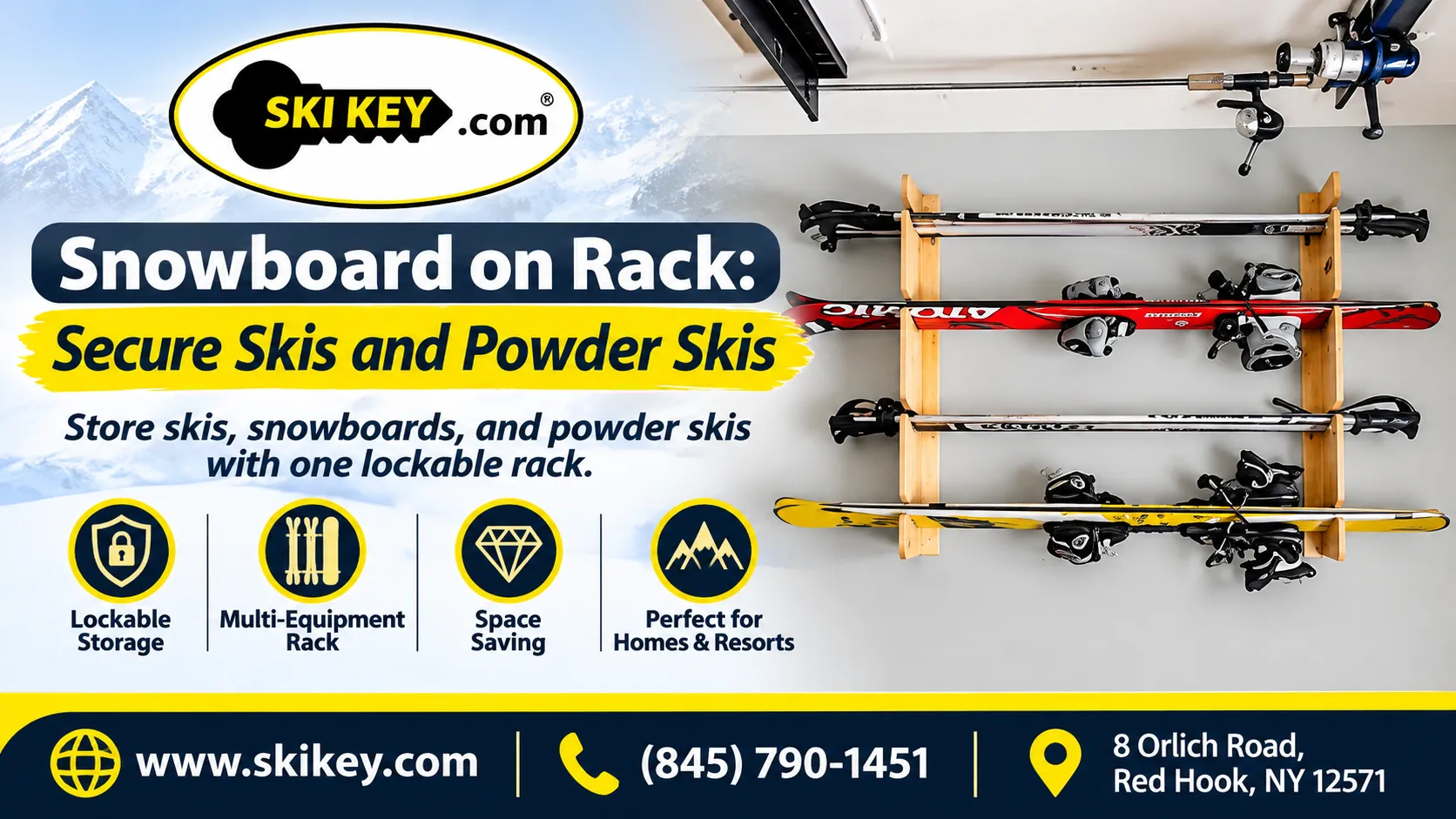

A family arrives at the ski resort with downhill skis, a snowboard, and wide powder skis packed for different mountain conditions. The equipment serves different purposes, but it creates one practical challenge: how can everything be stored securely without needing separate racks for every type of gear?
The answer depends on choosing a rack designed for multiple equipment types. Ski Key offers combination storage solutions that accommodate skis, snowboards, and powder skis in one organized system. Understanding the rack’s configuration, capacity, and compatibility helps skiers and resort operators choose a solution that fits their equipment needs.
How Does a Multi-Equipment Lockable Rack Work?
A multi-equipment rack uses designated rails or slots to accommodate different types of snow sports equipment. Instead of relying on one uniform holding arrangement, it provides sections suited to standard skis and wider equipment, including snowboards and powder skis.
For example, Ski Key’s combination wall-mounted rack has five locking positions: three for skis and two for snowboards or powder skis. Its snowboard rails can also accommodate two snowboards in one slot when positioned bottom to bottom, depending on their thickness.
This configuration makes a snowboard on rack setup more versatile, allowing several equipment types to share one organized storage area while maintaining individual locking points.
2. Can the Same Rack Hold Standard Skis and Powder Skis?
Yes, provided the rack is designed for both equipment types. Standard skis generally fit into narrower ski rails, while wider powder skis require more space around the bindings and sidewalls.
Ski Key’s combination rack accommodates three pairs of standard skis alongside two snowboard or powder-ski positions. The wider rails are intended for powder skis without binding plates, or with plates no thicker than one inch. Checking these specifications before installation helps ensure the equipment fits correctly.
A suitable ski lock system adds security by securing equipment within the rack’s designated locking positions. This arrangement makes mixed-equipment storage practical for households, ski condos, and resorts where different users bring different gear.
3. What Is the Rack’s Storage Capacity?
Capacity depends on the rack configuration and how the equipment is positioned. Ski Key’s combination wall rack provides five locking positions, while its snowboard and powder-ski wall rack is designed to hold five snowboards or powder skis, or a combination of both.
The combination rack can also accommodate up to four snowboards when two boards fit back to back in each of the two wider slots. Actual capacity depends on board thickness and compatibility.
For anyone planning a snowboard on rack arrangement, it is important to distinguish between the number of locking positions and the total number of pieces of equipment. Reviewing both figures helps prevent overcrowding and supports a more organized storage layout.
4. How Does the Locking System Protect Different Equipment?
A versatile rack is most useful when securing equipment is straightforward. Ski Key locks work with compatible Ski Key racks, allowing users to position their equipment in the appropriate rail, align the lock with the locking point, and secure it using the locking pin.
The system is designed to secure skis, snowboards, powder skis, and other compatible ski types. Homeowners and resort operators can choose individually keyed locks or family locks that use the same key across multiple locks.
A reliable ski lock routine helps reduce opportunities for opportunistic theft while keeping equipment accessible when it is time to return to the slopes. Users should always confirm that their particular equipment fits the intended rack configuration.
5. Where Can a Multi-Equipment Rack Be Used?
A combination rack can be useful wherever several types of snow sports equipment need organized, secure storage. In a ski house or condo, it can keep family members’ skis and snowboards together without requiring separate storage arrangements for each type.
Resorts and rental properties can also benefit from designated locking positions for different equipment. Wall-mounted racks provide a fixed storage location, while Ski Key’s freestanding combination rack is designed for commercial resort use.
When planning a snowboard on rack setup, consider the available wall or floor space, the number of users, equipment dimensions, and the rack’s installation requirements. Choosing the appropriate configuration makes shared storage more practical for everyday use.
6. What Should You Check Before Choosing a Rack?
Before selecting a rack, identify the equipment you need to store and compare its dimensions with the manufacturer’s compatibility guidelines. Pay particular attention to ski width, binding plates, sidewall thickness, and snowboard thickness.
For wall-mounted systems, also check the mounting surface and follow the manufacturer’s installation instructions. Ski Key provides guidance on mounting height, fasteners, and positioning equipment correctly within its racks.
The right ski lock and rack combination should accommodate your current gear while leaving enough capacity for your household or facility’s actual needs. Checking these details beforehand helps you choose a system that delivers both convenience and dependable equipment security.
One Rack, Multiple Equipment Types
One lockable rack can store skis, snowboards, and powder skis when it is specifically designed for these different equipment profiles. Ski Key’s combination rack offers dedicated locking positions for standard skis and wider boards or powder skis, helping households and resorts organize mixed equipment in one place.
The key is to match the rack’s capacity and compatibility requirements to the equipment being stored. With the right configuration and compatible locks, a single system can simplify storage, improve organization, and help protect valuable snow sports gear.



Join the conversation