
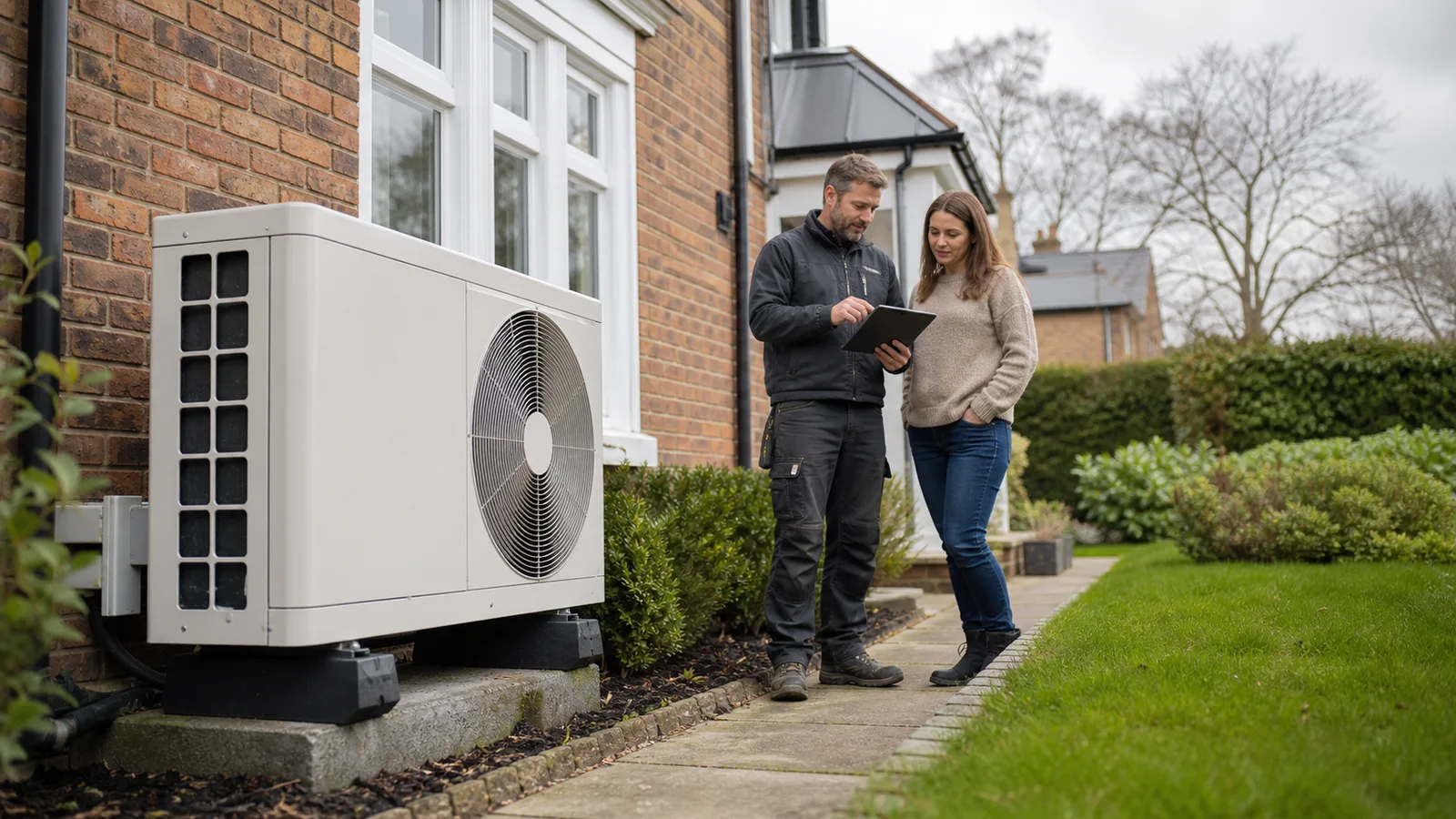

People don’t expect the Boiler Upgrade Scheme to be complicated. The grant exists, they qualify, they find an installer, and then weeks pass with nothing to show. What usually went wrong isn’t the scheme itself. It’s something much smaller: a certificate that expired two years ago, a confirmation email sitting unread in spam, or an installer who isn’t on the MCS register.
These aren’t rare edge cases. They’re the most common reasons BUS applications stall.
Why Do So Many Applications Hit a Wall Early On?
Ofgem runs the grant on strict eligibility rules. When any part of the application doesn’t match what the scheme requires, the whole thing pauses, and sometimes it doesn’t restart at all.
The issues that come up most often:
- An outdated or missing EPC. No valid Energy Performance Certificate means no grant, full stop.
- An uncertified installer. Only MCS-registered businesses can submit a BUS voucher request to Ofgem. If your installer isn’t on that list, your application can’t progress.
- Incomplete ownership records. Ofgem needs to confirm who owns the property. Missing or mismatched documents create a back-and-forth that eats time.
- A late response to Ofgem’s confirmation email. Homeowners must personally verify the application. Miss that window and the voucher doesn’t move.
None of these are difficult to fix, but only if you catch them before the installer submits.
Is an Expired EPC the Reason Your Application Is Stuck?
This trips up more homeowners than anything else. Your Energy Performance Certificate must be current, meaning issued within the last ten years, and it must reflect your property’s actual address, exactly as it appears on other documents.
Check the national EPC register using your postcode. It takes under two minutes. You’re looking for three things: the issue date, the listed address, and whether your heating system type is recorded correctly.
A discrepancy as small as “Flat 2A” versus “2A Flat” has been enough to generate a query from Ofgem. If your certificate needs updating, order a new one before your site survey, not after. Booking the assessment first and chasing the EPC later is one of the easiest ways to add a month to your timeline.
What Should You Pull Together Before the Process Starts?
Preparation at the front end saves weeks at the back end. Before you apply for boiler upgrade scheme support, get these in order:
- A valid EPC for the property
- Proof of ownership
- Your current heating system details, fuel type, whether it’s a boiler, storage heaters, or something else
- Confirmation that no heating grant has been claimed on this property recently
- An active email address that you actually monitor daily
That last one carries more weight than people expect. Ofgem sends a direct confirmation request to the homeowner partway through the process. If that email goes unread for more than a few days, the application freezes. Set a reminder on your phone the day your installer submits.
Does Your Property Actually Meet the Scheme Criteria?
Some applications fail not because of paperwork, but because the property was never eligible in the first place. BUS covers homes and certain non-domestic buildings in England and Wales that currently run on fossil-fuel or electric heating.
Properties that can’t receive the grant:
- Homes already running on a heat pump or biomass boiler
- Social housing and council-owned properties
- New builds purchased from a developer
- Any property where a previous government scheme already funded heating work
Self-builds sit outside that last restriction. If the first owner built the home using their own labor and resources, it can still qualify even if it’s new. When there’s any doubt about where a property sits, a free eligibility check is the fastest way to find out, before any installation work is quoted or planned.
How Does the Ofgem Confirmation Step Actually Work?
After your installer submits the voucher request, Ofgem sends you an email. It asks you to confirm that the installer is acting on your behalf and that you understand the terms. You have to respond before Ofgem will issue anything.
This step exists to protect homeowners from being signed up to work without their full knowledge. In practice, it catches a lot of people off guard.
To stop it becoming a delay:
- Give your installer the exact email address you check every day.
- Add Ofgem’s sending domain to your contacts so it doesn’t land in spam.
- Watch your inbox carefully in the few days after submission.
- Reply the same day it arrives, not the next morning.
Once the voucher is issued, a validity period starts. The installation has to complete within that window. Keep your schedule flexible around the likely install dates so you’re not scrambling to accommodate engineers at the last minute.
What Does Our Team Take Off Your Plate?
We handle the Ofgem application directly. As an MCS-certified and TrustMark-registered installer, we’re authorized to submit voucher requests on your behalf, which means you don’t fill in grant paperwork or navigate Ofgem’s portal yourself.
The process runs in three stages:
- Initial conversation. We check your eligibility and confirm whether an air-to-water heat pump is right for your home.
- Property survey. We assess your EPC status, existing system, radiators, hot water cylinder, and anything else that affects grant approval.
- Grant application and installation. With your sign-off, we apply, secure Ofgem’s approval, and complete the work.
We check eligibility before any installation begins. That matters because a rejected voucher after a completed job leaves the homeowner in a very difficult position. The grant, £7,500 for gas or electric properties, £9,000 for those on oil or LPG, comes straight off your quoted price. Any remaining balance can be spread into monthly payments rather than paid upfront.
What Practical Habits Keep the Process Moving?
Speed in a BUS application comes from communication and consistency. Nothing technical, just a few disciplines that prevent the small delays from compounding.
- Reply to your installer within a working day whenever they need something.
- Don’t change the system specification after submission. Scope changes require revised quotes and restart parts of the process.
- Make sure your property is accessible for the survey. Engineers need to reach your boiler, loft space, and the likely outdoor unit position.
- Keep a folder, digital or physical, with your EPC, proof of ownership, quote, and all Ofgem correspondence in one place.
- Ask your installer at the very start what the expected timeline looks like, and what would extend it.
These habits don’t require extra time. They just prevent lost time.
Should You Be Paying Attention to Funding Updates?
The BUS operates on annual funding cycles, and government decisions can change grant amounts, eligibility rules, or the scheme’s overall budget. What’s available now isn’t guaranteed to remain the same.
Keeping an eye on the budget 2026 boiler upgrade scheme announcements helps you time your application well. An application in progress when a policy change lands is almost always better positioned than one still in the planning stage.
Fuel costs for oil and LPG don’t sit still. Every additional month on an old system adds to your bills, and waiting for a “better time” to apply often means paying more for longer.
Where Do You Start If You Haven’t Already?
Run a free eligibility check first. It confirms whether your home qualifies, which documents you’ll need, and what grant amount to expect. From there, we take over: survey, Ofgem application, installation, and final claim, all handled by our certified team with no hidden charges.
Look up your EPC on the national register today, then book your check. That single step is what separates the applications that move quickly from the ones that don’t move at all.

Join the conversation