
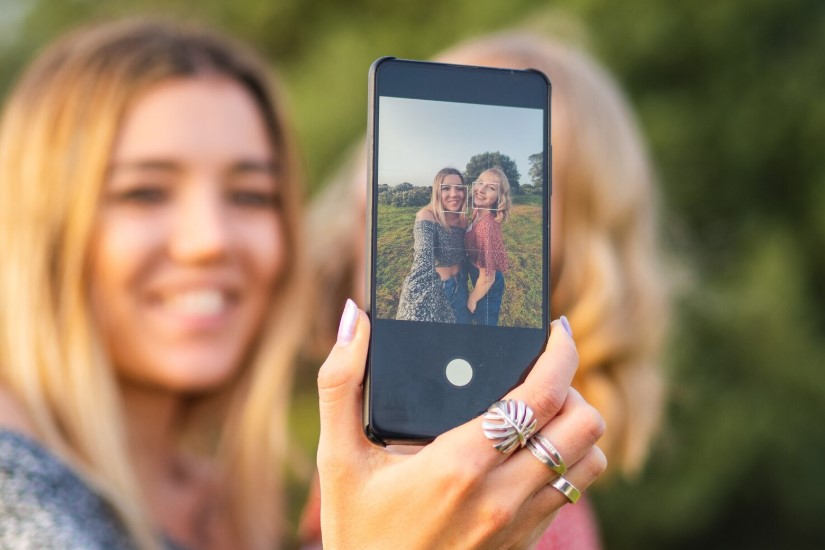

Think about the last wedding you attended. The photographer shot for hours and probably took four or five thousand frames. Then came the aftermath: a shared drive link, a noisy WhatsApp group, and fifty guests asking, “Bhaiya, my photos kab milenge?”
Anyone who has been through this knows the real problem. Taking photos in India isn’t hard. Finding them afterwards is.
How Is AI Changing the Way People Share and Discover Photos Online in India? 1
Why Doesn’t the Old Way of Sharing Photos Work Anymore? 1
How Does AI Make Finding Your Photos Easier? 1
Why Does an Online Photo Sharing App Need to Be Mobile-First? 2
Is Face Recognition Safe for Your Event Photos? 2
How Is Photo Discovery Becoming More Personal? 2
What Does AI Mean for Photographers and Event Planners? 2
What Comes Next for Photo Sharing in India? 3
Why Doesn’t the Old Way of Sharing Photos Work Anymore?
For years, sharing event photos meant one of three things: a huge ZIP file, a cloud folder full of unsorted images, or a pile of pictures sent over WhatsApp and squashed by compression. Guests scrolled endlessly, and photographers spent days sorting and forwarding files.
India’s celebration culture makes it harder. Weddings run for several days. School annual days, marathons, college fests and corporate events all produce thousands of images. The more memories there are, the harder it is to find your own.
How Does AI Make Finding Your Photos Easier?
The biggest change is face recognition. Instead of scrolling through a thousand photos, a guest uploads a selfie and sees only the pictures they appear in. This is what a good AI photo sharing app does best. It turns one messy gallery into a personal one for every guest.
The Pixoye Photo Sharing App works this way. The photographer uploads the event, shares a single link, and guests get matched to their photos in seconds. Guests don’t even need a separate account to view a gallery. Hosts can also choose whether to share the full album with everyone or turn on face matching so each person sees only their own moments.
Why Does an Online Photo Sharing App Need to Be Mobile-First?
Most Indians look at photos on a phone, and most links travel through WhatsApp. Any online photo sharing app has to work with that habit, not against it.
Pixoye galleries are built for mobile first. A host can send the link through WhatsApp, email, SMS or a QR code, and guests can browse, match and download without installing anything complicated. For a big event, a QR code placed at the venue can save a lot of “send me the link again” messages.
Read more: The Impact of AI on Modern Photography
Is Face Recognition Safe for Your Event Photos?
Face recognition raises fair questions, and it’s worth asking any platform how it handles them. Pixoye lets hosts require OTP verification before guests view photos, set an expiry date for a gallery, and control who can download. In a country where people are rightly careful about their family photos, access control isn’t a bonus feature. It’s the baseline.
How Is Photo Discovery Becoming More Personal?
Photo galleries used to be sorted by time. You scrolled from the first frame to the last and hoped to spot yourself.
AI changes that logic. Matched photos come first. Client favourites and starred highlights rise to the top. Recent events stay within easy reach. The question is no longer “where is my photo in this folder?” The platform brings your photo to you.
That’s the idea behind Pixoye’s tagline, “Where Pics Find You.”
What Does AI Mean for Photographers and Event Planners?
AI isn’t only useful for guests. It also takes a lot of repetitive work off the people behind the camera.
Pixoye is an AI-powered photo sharing platform that allows folders to be synced directly from Google Drive eliminating the need for double uploads by photographers. It is capable of transferring photographs from camera to cloud during an event enabling guests to view their snapshots the same day. The AI story making feature ensures choosing good pictures, skipping duplicates, and assembling an album out of photographs with the help of templates.
There’s even an Apple Watch companion, so a photographer can trigger the iPhone camera from the wrist at a fast-moving event.
One wedding photographer from Jaipur says in a testimonial on Pixoye’s site that post-wedding photo management used to take days, sometimes weeks. Now he uploads, shares one link, and guests find their own photos in minutes. Speed like that changes how clients feel about a photographer’s service.
What Comes Next for Photo Sharing in India?
India’s photo-sharing habits are shifting from “send everything to everyone” to “show each person what matters to them.” As AI face matching gets faster and more accurate, expect that expectation to become standard for weddings, school functions, sports meets and corporate events alike.
For photographers and organisers, the message is simple. If your clients are still hunting through endless folders for their pictures, there’s a better way to deliver them.
How Can You Try Pixoye?
Pixoye AI Photo Sharing App in India has a free plan with 1 GB of storage and two active events, so you can test it on a real shoot before committing. You can find the app on iOS and Android, or start at pixoye.com.



Join the conversation